Aoudad
The aoudad - also called the Barbary sheep - is one of the most exciting free-range exotic big-game animals in the United States.
🗓️ Last reviewed: June 2026
Overview
The aoudad - also called the Barbary sheep - is one of the most exciting free-range exotic big-game animals in the United States. Native to the mountains of North Africa, aoudad were introduced to the American Southwest in the mid-1900s and have thrived spectacularly in the rugged, arid country of West Texas and parts of New Mexico. Today they support a popular, accessible, and challenging hunt.
For beginner-to-intermediate hunters, the aoudad offers something special: a genuine mountain-style spot-and-stalk hunt without the cost, draw odds, or extreme remoteness of a wild sheep tag. Because aoudad are an introduced exotic, regulations are generally more relaxed than for native game - in much of Texas they can be hunted year-round on private land. This guide treats the aoudad as the demanding, rewarding free-range hunt it is, with an emphasis on fair chase, sharp shooting, and respect for a wary and tough animal in unforgiving terrain.
Identification & Appearance
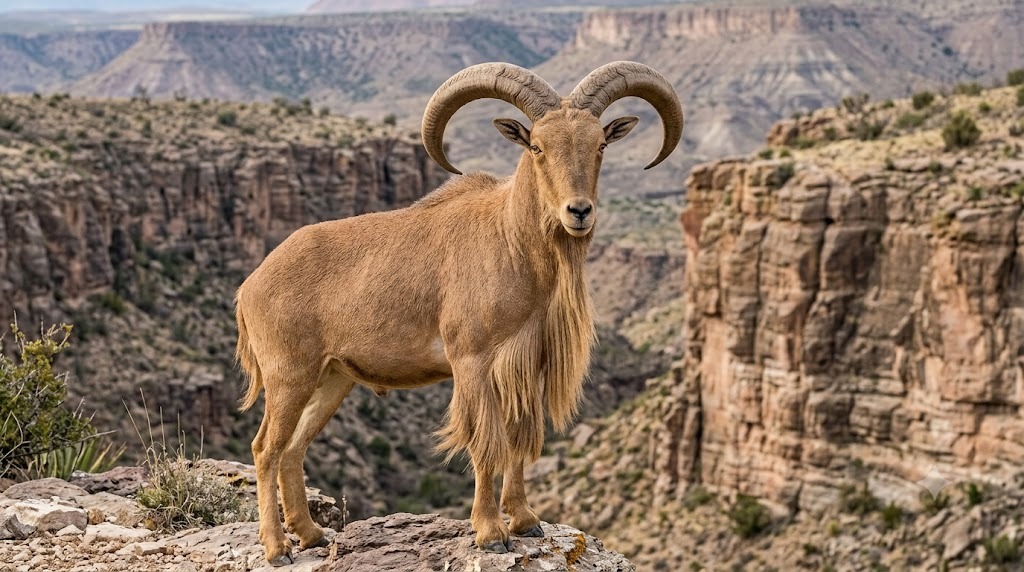
The aoudad is a large, powerfully built member of the goat-antelope group - neither a true sheep nor a true goat. Mature rams stand around 3.25 feet at the shoulder and can weigh 250-300 pounds or more; ewes are noticeably smaller. The coat is a sandy reddish-tan that blends almost perfectly with desert rock and brush, making aoudad notoriously hard to spot.
The signature feature is the long flowing "chaps" - a mane of soft hair hanging from the throat, chest, and upper front legs, most dramatic on mature rams. Both sexes carry horns that curve outward, back, and inward in a broad sweep; ram horns are heavy, deeply ridged, and impressive, while ewe horns are thinner and shorter. The combination of sandy camouflage, flowing chaps, and sweeping horns makes a mature aoudad ram an unmistakable and striking trophy.
Range & Habitat (US)
In the United States, free-range aoudad are concentrated in West Texas - especially the rugged canyon and mountain country of the Trans-Pecos, the Davis Mountains region, and the broken terrain along the Pecos and into the Texas Panhandle's canyonlands such as the Palo Duro country. They also occur in parts of New Mexico and have scattered populations elsewhere. Aoudad favor steep, rocky, arid terrain: canyon walls, rimrock, mesas, scree slopes, and brushy desert mountains. They are supremely adapted to dry country and rough ground, thriving where few other big-game animals do.
Behavior & Sign
Aoudad are herd animals, often found in groups of ewes, lambs, and younger animals, with mature rams sometimes solitary or in bachelor bands. They are most active in the cool of early morning and late evening, bedding in shade or on protected ledges through the heat of the day. Aoudad have excellent eyesight and a strong instinct to flee uphill into the roughest terrain - a hunter who is spotted will watch the herd vanish into the rimrock.
Sign in this rocky country includes:
- Tracks - two-toed prints in dust, sandy washes, and trails, often hard to find on bare rock.
- Droppings - pellet groups on bedding ledges and along trails.
- Beds - pawed-out depressions on shaded ledges, under rimrock, and on canyon benches.
- Trails - worn paths traversing steep slopes and following contour lines.
- Rubs and wear on rocks and brush in heavily used areas.
Hunting Seasons & Timing
Because the aoudad is a free-range exotic, hunting rules are relaxed compared with native game. On private land in much of Texas, aoudad may be hunted year-round, with no closed season and often only a hunting license required - though specifics depend on the property and state. On certain Texas public lands and wildlife management areas, special draw or scheduled hunts are offered. New Mexico manages aoudad with set seasons and tags in some areas. The cooler months are most comfortable for hunters tackling the steep terrain. Always confirm current rules with the state agency and the landowner for the property you hunt.
Hunting Methods
- Spot-and-stalk is the premier method and the heart of aoudad hunting. Hunters glass canyon walls and rimrock from a distance, locate a herd, then plan a careful stalk.
- Glassing from high vantage points at first and last light to catch aoudad feeding in the open.
- Still-hunting slowly through canyon systems and along rim edges.
- Ambushing water and travel routes in the driest country, where aoudad must come to water.
Where to Find Them - Reading the Terrain
Aoudad live in vertical country, so reading terrain means thinking in slopes, rims, and escape routes. Glass the canyon walls, rimrock benches, and scree slopes - aoudad bed on shaded ledges and feed on the grassy and brushy pockets between rocks. They favor the steepest, most broken ground available, where they can flee upward fast. Look on cooler, shaded faces during warm weather and sunny exposures on cold mornings. Aoudad blend perfectly into the rock, so glass slowly and look for movement, the flash of pale chaps, or the curve of a horn rather than a whole animal. Water sources concentrate animals in the dry season.
Gear & Optics Needed
Aoudad hunting is glassing-heavy and shots can be moderate to long across canyons, so optics and a flat-shooting rifle both matter. Quality 10x42 binoculars and a spotting scope on a tripod are essential for picking apart rock-colored animals. A capable rifle in 6.5 Creedmoor, 6.5 PRC, .270, .280, .30-06, or .300 Win Mag with good bullets handles the country well - aoudad are tough and tenacious, so bullet performance counts. Add a rangefinder, shooting sticks or a tripod for a steady rest, rugged broken-in boots with good ankle support, trekking poles, gloves, durable clothing, plenty of water, and a sturdy pack. The terrain is steep and punishing.
Shot Placement & Field-Dressing
Aoudad are famously tough and hard to put down, so bullet placement and a steady rest are critical. Aim for the heart-lung area, tight behind the shoulder on a broadside or quartering-away animal, take a solid rest, and be ready for a prompt follow-up shot if needed - a hit aoudad will often try to reach the roughest terrain. Pass on shots beyond your proven range. After the harvest, field-dress promptly, then quarter and bag the meat for what is usually a tough pack-out of steep ground. The mane and horns are the trophy; cool the meat quickly in the dry heat.
Meat & Eating Quality
Aoudad meat is good, lean table fare when handled well, with a mild flavor and a texture comparable to other wild sheep and goat-family game. Older rams can be tougher and stronger-flavored, so younger animals and ewes tend to eat best. The meat shines in slow-cooked dishes, ground preparations, sausage, and braises, and well-trimmed loins and backstraps can be very good grilled. As always, cool the meat fast, keep it clean, and cook wild game thoroughly. Ethical hunters make full use of the harvest from this challenging hunt.
Common Mistakes
- Underestimating how tough aoudad are and using marginal bullets or shot placement.
- Not glassing carefully - aoudad blend into the rock and are easy to walk past.
- Letting the herd spot you; once alerted, they pour uphill into the rimrock.
- Taking long shots without a steady rest and proven range.
- Arriving unprepared for steep, punishing, rocky terrain.
- Skimping on water and footwear in hot, dry, vertical country.
Regulations & Conservation Note
As a free-range introduced exotic, the aoudad is managed differently from native big game - generally with relaxed seasons and licensing, especially on private Texas land. This relaxed status reflects management goals, since large aoudad populations can compete with native desert bighorn sheep for habitat and resources; in some areas wildlife managers actively encourage aoudad harvest to protect native species. Hunters should still carry the proper license, secure clear landowner permission, respect property boundaries, and confirm current state rules. Fair-chase hunting and full use of the meat remain the ethical standard.
Best Suited For
The aoudad is well suited for beginning and intermediate hunters who want a true mountain-style hunt without the expense and draw odds of a wild sheep tag. It rewards good glassing, careful stalking, physical fitness, and steady shooting. It is more physically demanding than many entry-level hunts because of the steep terrain, so a reasonable level of fitness is important. For hunters dreaming of a sheep-style spot-and-stalk experience, the free-range aoudad of West Texas is one of the most accessible and rewarding ways to get it.
FAQ
Is the aoudad a sheep or a goat? Neither, exactly - the aoudad is a goat-antelope from North Africa, with traits of both. In the U.S. it is called the Barbary sheep, but it is its own distinct animal.
Where can I hunt aoudad in the U.S.? Mainly free-range in West Texas - the Trans-Pecos, Davis Mountains, and canyonlands - plus parts of New Mexico. Texas private land often allows year-round hunting.
Do I need a draw tag? On most private Texas land, no - a hunting license is generally enough and seasons are open. Some public-land hunts use draws, and New Mexico has set seasons. Always confirm current rules.
Why are aoudad considered hard to hunt? They have keen eyesight, blend perfectly into rocky terrain, live in steep country, flee uphill fast when alarmed, and are notably tough animals that demand good shot placement.
Is aoudad meat good to eat? Yes - lean and mild when handled well. Younger animals and ewes eat best; older rams are better in slow-cooked dishes. Cool the meat fast and cook it thoroughly.