Black Bear
The black bear is North America's most widespread bear and an increasingly popular big-game pursuit for hunters who want something different from deer or elk.
🗓️ Last reviewed: June 2026
Overview
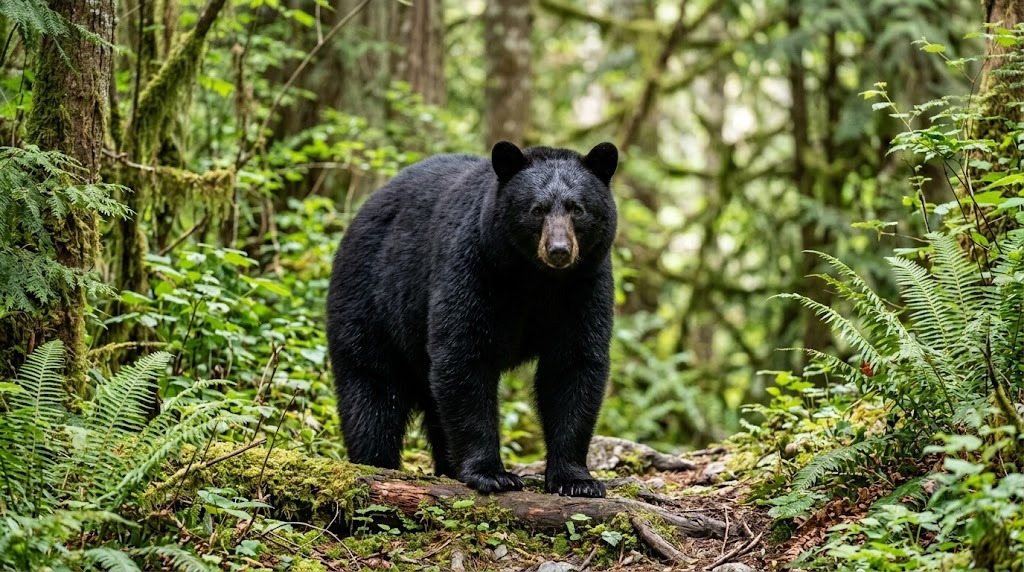
The black bear is North America's most widespread bear and an increasingly popular big-game pursuit for hunters who want something different from deer or elk. Bears are intelligent, secretive, surprisingly elusive for their size, and live in some of the most beautiful country on the continent. Hunting them rewards patience, woodsmanship, and a sharp eye, because despite their bulk they can be remarkably hard to find. Black bear hunting also serves an important wildlife-management role: in many states, regulated bear harvest helps keep populations balanced with available habitat and reduces conflict. For the hunter, a black bear hunt offers a genuine challenge, a beautiful rug or mount, and - handled correctly - very good meat.
Identification & Appearance
Despite the name, black bears come in a wide range of colors: black, of course, but also brown, cinnamon, blond, and, in parts of the West, even a rare bluish or near-white phase. Most have a tan or brown muzzle and sometimes a white chest blaze. Adults stand around three feet at the shoulder on all fours; boars (males) typically weigh 150 to 400 pounds, with sows (females) smaller. Key field marks separating black bears from grizzlies, where ranges overlap, include the absence of a prominent shoulder hump, a straight facial profile, taller ears, and shorter, more curved claws. Judging a bear's size in the field - boar versus sow, mature versus young - is a critical and learned skill.
Range & Habitat (US)
Black bears occupy forested habitat across much of the United States - the Northeast and Appalachians, the upper Midwest, the Rocky Mountain West, the Pacific states, and parts of the South. They favor heavy cover: dense timber, brushy mountainsides, swampy bottoms, river corridors, and regenerating clearcuts. The constant requirement is food and seclusion. Bears use a large home range and shift with the seasons to wherever the calories are - green-up slopes in spring, berry patches in summer and fall, oak and beech mast as autumn deepens. Good bear country is defined by abundant natural food and thick escape cover.
Behavior & Sign
Black bears are intelligent, food-driven, and mostly solitary outside of family groups and breeding. They are not true hibernators but den through winter in a state of reduced activity, emerging lean and hungry in spring. Their lives revolve around eating: bears are omnivores that follow seasonal food sources relentlessly. They have an outstanding sense of smell, decent hearing, and poorer eyesight. Sign includes large five-toed tracks, distinctive scat that reflects their diet (berry seeds, grass, mast), claw marks and bites on trees, flipped rocks and torn logs where they have searched for insects, and matted feeding areas in berry patches.
Hunting Seasons & Timing
Black bear seasons vary widely by state and fall into spring and fall windows. Spring hunts target bears recently out of the den, when they concentrate on early green-up and are visible feeding on open slopes - a prime time for spot-and-stalk in the West. Fall hunts coincide with bears feeding heavily on berries and mast to build fat for winter, and often overlap deer seasons. Methods such as baiting and the use of hounds are legal in some states and prohibited in others, and tag systems range from over-the-counter to limited draw. Always confirm your state's seasons, legal methods, and any restrictions, including rules protecting sows with cubs.
Hunting Methods
The legal methods depend entirely on the state. Spot-and-stalk is the classic fair-chase approach, especially in the spring West: glass green slopes, avalanche chutes, and berry fields, then plan a careful, wind-conscious stalk. Baiting, where legal, involves establishing a bait site and hunting it from a stand or blind as bears pattern to the food. Hound hunting, legal in some states, uses trained dogs to trail and tree a bear. Calling - imitating a prey-in-distress sound - can draw curious or hungry bears. Whatever the method, judging the bear before any shot, and never shooting a sow with cubs, are non-negotiable ethical standards.
Where to Find Them - Reading the Terrain
Find the food and you find the bear. In spring, focus on the first green-up: sunny south-facing slopes, avalanche paths, logging roads, meadow edges, and grassy benches where new growth emerges early. In summer and fall, key on berry patches - huckleberry, blueberry, chokecherry - and on oak and beech ridges as mast drops. Bears travel timbered corridors, creek bottoms, and saddles between feeding areas, and they bed in the thickest, most secluded cover nearby. Glass feeding openings at first and last light, and look for the dark shape that "moves" against the green.
Gear & Optics Needed
Quality optics are central to fair-chase bear hunting. A good 10x42 binocular and a spotting scope let you pick black shapes out of dark timber and, crucially, judge a bear's size and sex before committing. A rangefinder is important. Because spring slopes can be steep and remote, build the kit around mobility: sturdy boots, layered clothing for variable weather, and a capable pack. For the harvest itself, carry a sharp knife and game bags, and know that bear hides and skulls require specific care. A mapping app helps locate green-up slopes and berry country for e-scouting.
Shot Placement & Field-Dressing
Bears are heavily built and their long hair and loose hide can disguise their true body line, so understanding anatomy matters. The ethical shot is broadside into the heart-lung area, tight behind the front leg - and the front leg of a standing or walking bear is set farther forward than many hunters expect. Wait for a calm, clearly presented, well-ranged broadside opportunity and pass everything marginal. Field care is specialized: bears must be skinned promptly and the hide cooled and kept clean, especially in warm spring weather. Handle the meat carefully - proper cooling and trimming make a real difference in quality.
Meat & Eating Quality
Black bear meat, properly handled, is good to very good - most often described as rich, sweet, and a little like pork. Eating quality depends heavily on the bear's recent diet: a bear fattening on berries and mast eats much better than one feeding on less savory foods. One essential rule: bear meat must always be cooked thoroughly to a safe internal temperature, because it can carry trichinella parasites. Never eat bear rare. Cooled, trimmed, and fully cooked - in roasts, stews, sausage, and ground dishes - bear is a worthwhile and traditional wild food.
Common Mistakes
The most serious mistake is failing to judge the bear: shooting a small bear thinking it is large, or worst of all, shooting a sow accompanied by cubs. Always watch a bear long enough to be sure. Other errors include ignoring the wind - a bear's nose is extraordinary - and rushing the stalk. Hunters also underestimate how a bear's loose hide and long hair hide its body line, leading to poorly placed shots. In warm spring weather, slow field care spoils meat and hides. Finally, many hunters look in the wrong place: bears are where the seasonal food is, not spread evenly across the woods.
Regulations & Conservation Note
Regulated black bear hunting is an established wildlife-management tool. Healthy and expanding in much of its range, the black bear is managed by state agencies through carefully set seasons, tag numbers, and method restrictions designed to keep populations in balance with habitat and to limit human-bear conflict. Hunter license dollars fund bear research and monitoring. Hunt strictly within the law: respect legal-method rules, harvest reporting, sealing or tooth-submission requirements, and the absolute prohibition on taking sows with cubs. Ethical bear hunting is both a privilege and a contribution to sound bear management.
Best Suited For
Black bear hunting suits patient, observant hunters who enjoy glassing and want a hunt distinct from chasing antlered game. Spring bear hunting in particular appeals to those itching to be afield before fall and willing to learn the skill of judging bears. It is well suited to spot-and-stalk hunters who like big country, and it rewards anyone who studies seasonal bear foods. Because judging size and sex is critical, it is a hunt that rewards discipline and a slow, careful approach.
FAQ
Are all black bears black? No. Black bears come in black, brown, cinnamon, and blond color phases, with rare bluish or near-white phases in parts of the West. Color alone does not indicate the species.
How do I tell a boar from a sow? It takes practice. Boars generally appear blockier, with a heavier build, smaller-looking ears set wide, and a bigger frame; sows look leaner with proportionally larger ears. Watching a bear over time, and never shooting a bear with cubs, is essential.
Is black bear meat safe and good to eat? Yes, when handled and cooked correctly. It is rich and often compared to pork, but it must always be cooked thoroughly to a safe internal temperature to eliminate any risk of trichinella. Never eat it rare.
When is the best time to hunt black bear? Spring, during early green-up, offers excellent spot-and-stalk hunting on open slopes. Fall hunts capitalize on bears feeding heavily on berries and mast. Both can be productive depending on your state.
What is the most important skill in bear hunting? Judging the bear before the shot - confirming its size and that it is not a sow with cubs - and playing the wind. A bear's sense of smell is exceptional.