Elk
The elk is the animal that turns deer hunters into mountain hunters.
🗓️ Last reviewed: June 2026
Overview
The elk is the animal that turns deer hunters into mountain hunters. Big, vocal, and dramatic, a bull elk in September - bugling across a timbered basin in the cold dark before dawn - delivers one of the most thrilling experiences in North American hunting. Elk are large enough to test your gear and your legs, smart enough to test your woodsmanship, and beautiful enough to test your composure. They live in spectacular country, mostly on public land in the West, and a successful hunt yields hundreds of pounds of superb meat. Elk hunting is demanding: it asks for fitness, patience, and a willingness to fail repeatedly while learning. For many hunters, it becomes the obsession that defines their season.
Identification & Appearance
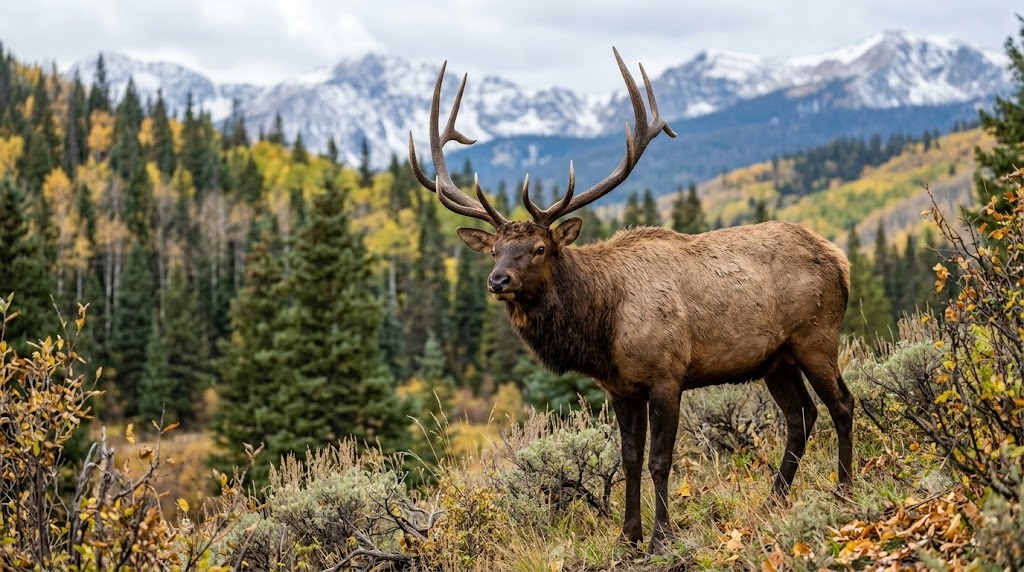
Elk are the second-largest member of the deer family in North America, behind only the moose. A mature bull stands roughly five feet at the shoulder and can weigh 600 to 800 pounds or more; cows run 400 to 500 pounds. The body is a rich tan to brown with a darker mane on the neck and a pale, cream-colored rump patch - the field mark that often reveals elk at a distance. Bulls grow massive antlers each year, sweeping back with long tines; a mature "six-by-six" carries six points per side. Calves are reddish with spots. The bull's signature is his voice: the high, eerie bugle that rises and falls and ends in grunts during the autumn rut.
Range & Habitat (US)
Elk are primarily a Western big-game animal, with strong populations across the Rocky Mountain states and the Pacific Northwest, plus reintroduced herds in parts of the East and Midwest. They use a wide elevation range - high alpine and subalpine basins in summer, mid-elevation timber and meadows through fall, and lower foothills and valleys in winter. Prime elk habitat blends dark timber for security and bedding, open parks and meadows for feeding, water, and broken terrain. They migrate seasonally and roam large home ranges, so elk country is measured in drainages and ridgelines, not acres.
Behavior & Sign
Elk are herd animals and intensely social. Outside the rut, bulls hold in bachelor groups while cows and calves form larger herds. They feed in openings at night and the edges of light, then retreat into timber to bed through the day. Their senses - nose, ears, eyes - are all excellent, and a herd's many eyes make them hard to approach. During the September rut, herd bulls gather harems of cows and bugle to advertise and challenge. Sign is large and obvious: dinner-plate tracks, big pellet droppings, shredded "rubs" on saplings, churned and pungent wallows, and well-worn trails. Fresh sign and the sound of bugles tell you a herd is close.
Hunting Seasons & Timing
Western states manage elk through a mix of draw-only and over-the-counter tags depending on the state, unit, and weapon. Archery seasons typically run through September, overlapping the rut - the most exciting and, for many, most productive time, when calling can work. Rifle seasons generally fall in October and November; the rut has usually wound down, so hunting shifts toward locating herds in their feeding-and-bedding pattern. Late seasons can intercept elk on winter migration. Research the unit's tag system, dates, and any antler or weapon restrictions far in advance, because elk tags often require years of planning.
Hunting Methods
Two methods dominate. The first is calling during the archery rut: locating a bugling bull, then using bugles and cow calls to either pull him in or slip into his herd. It is interactive, intense, and demands woodsmanship and aggressive but careful movement. The second is spot-and-stalk: glassing feeding parks and open slopes at dawn and dusk, then planning a wind-conscious approach to a located herd - the staple of rifle hunting. Still-hunting through timber where elk bed, and ambushing wallows or water in dry country, also produce. Whatever the method, covering country and reading the wind are constant themes.
Where to Find Them - Reading the Terrain
Elk balance security and food. Look for dark north-facing timber where they bed, adjacent to grassy parks, meadows, and old burns where they feed at the edges of light. Benches halfway up a slope, saddles, and the heads of drainages funnel travel. In hot, dry early season, water and wallows concentrate elk. As the season progresses, snow and pressure push herds lower and into the heaviest cover. Listen at dawn for bugles to pin a herd's location, then read the terrain to plan an approach that keeps the wind in your face and uses ridges and timber to hide your movement.
Gear & Optics Needed
Elk country demands optics and conditioning. A quality 10x42 binocular and often a spotting scope let you locate herds across big basins; a rangefinder is essential. Build the rest of the kit around hauling a very large animal off a mountain: a sturdy pack frame, game bags, a sharp knife with extra blades or a sharpener, and the fitness to make multiple heavy trips. Quiet layered clothing handles September warmth and October cold. Add diaphragm and external cow/bull calls for the rut, sturdy boots, trekking poles, water capacity, and a mapping app for e-scouting drainages.
Shot Placement & Field-Dressing
Elk are big, tough animals, so shot discipline is paramount. Wait for a calm, broadside or slightly quartering-away presentation and place the shot into the heart-lung area, low and behind the shoulder. Range carefully, build a steady rest, and pass anything marginal - an elk hit poorly can travel a long way through difficult country. After the shot, give time, then track carefully. Because elk are often down miles from a road, the gutless quartering method is the standard: it breaks the animal into clean, packable loads without opening the body cavity. Cool the meat fast, keep it in game bags, and protect it during the pack-out.
Meat & Eating Quality
Elk is among the finest wild meat in North America - lean, mild, fine-grained, and lacking any strong flavor. Many hunters consider it the best red meat available, wild or domestic. A single elk yields a great deal of meat - backstraps, tenderloins, roasts, steaks, and grind - enough to fill a freezer for a family. As always, quality depends on field care: fast cooling, clean handling, and protecting the meat from heat and dirt during a long pack-out. The reward of carrying elk off a mountain is matched by the reward of eating it through the winter.
Common Mistakes
The biggest mistake is showing up unprepared physically - elk country humbles the unfit, and exhaustion leads to bad decisions. Other common errors: ignoring the wind, which a herd's many noses will catch instantly; calling too much or too aggressively and educating bulls; giving up after a few quiet days when elk hunting rewards persistence; and underestimating the pack-out, both the labor and the time. Hunters also frequently hunt too far from the elk, or too close to roads where pressure has pushed herds out. Stay where the fresh sign is, hunt the wind, and keep grinding.
Regulations & Conservation Note
Elk are a triumph of conservation. Reduced to remnant populations a century ago, they were restored through regulated hunting, reintroduction, and habitat protection - work funded heavily by hunters. Today, license dollars and the federal excise tax on equipment continue to fund elk research, habitat improvement, and winter-range protection, while conservation groups focused on elk have permanently protected millions of acres of habitat. Hunt with the proper tags, follow unit rules and bag limits, respect winter-range and migration closures, and follow carcass-transport and disease regulations. Ethical, legal hunting keeps elk on the landscape.
Best Suited For
Elk hunting suits the hunter who wants a true mountain challenge - fit, patient, and willing to invest in scouting, tag strategy, and the long game. It is ideal for those drawn to public-land, do-it-yourself adventure and to the drama of the September rut. Archers who want an interactive, calling-based hunt will find elk thrilling, while rifle hunters who enjoy glassing big country are equally well served. It demands more than a deer hunt, and it rewards more.
FAQ
How fit do I need to be to hunt elk? Fitter than you think. Elk live in steep, high country, and you may climb thousands of feet and pack heavy loads for miles. Train with hikes under a loaded pack in the months before your hunt.
When is the best time to hunt elk? The September archery rut is the most exciting, with bugling bulls responsive to calling. October and November rifle seasons rely more on locating herds in their feeding-and-bedding pattern. Both can be productive.
Can a beginner hunt elk successfully? Yes, but expect a learning curve. Scout hard, hunt the wind, stay on fresh sign, and be persistent. Many elk hunters hunt several seasons before their first success - that is normal.
How much meat does an elk yield? A great deal - often enough boned-out meat to fill a chest freezer. Plan the pack-out before you shoot, because moving an elk is a serious job.
What is the gutless method? A field-dressing technique that removes the quarters, backstraps, and tenderloins without opening the body cavity. It keeps meat clean and breaks the animal into packable loads - the standard for backcountry elk.