Axis Deer
The axis deer - also called the chital - is widely considered one of the most beautiful big-game animals a U.S.
🗓️ Last reviewed: June 2026
Overview
The axis deer - also called the chital - is widely considered one of the most beautiful big-game animals a U.S. hunter can pursue, and one of the best-eating. Native to the Indian subcontinent, axis deer were introduced to the United States in the early 1900s and have established thriving free-range populations, most famously across the Texas Hill Country and on the Hawaiian islands.
For beginner-to-intermediate hunters, the axis deer is an outstanding and accessible target. As a free-range exotic, it is generally subject to relaxed regulations - in much of Texas it can be hunted year-round on private land. It is strikingly handsome, challenging to hunt because of its sharp senses, and it provides what many hunters call the finest venison in North America. This guide covers the axis deer with an emphasis on fair chase, accurate shooting, and full, respectful use of an exceptional game animal.
Identification & Appearance
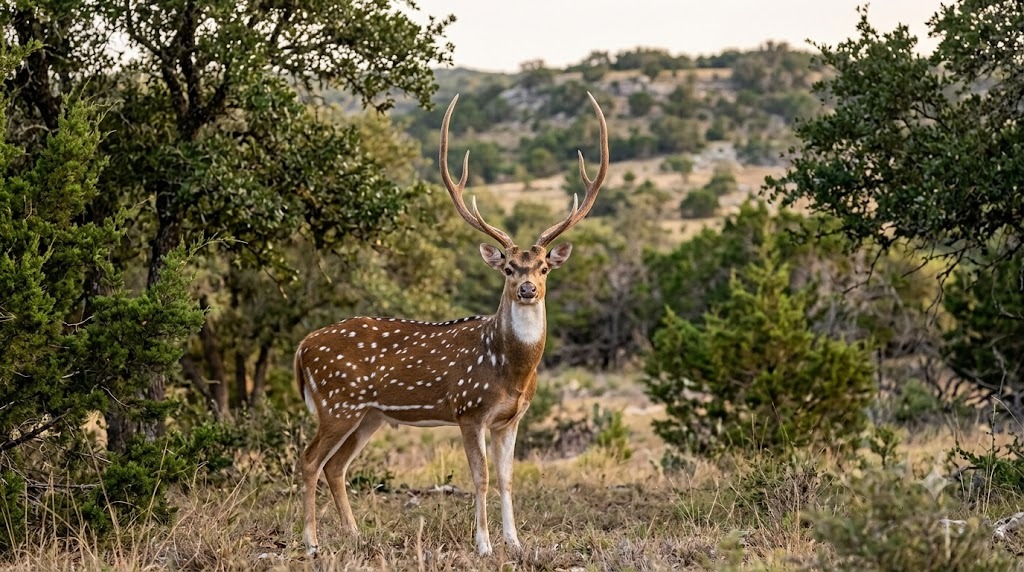
The axis deer is a medium-sized, elegant deer that keeps its spots for life. The coat is a rich reddish-tan to golden-brown, brilliantly marked with rows of clean white spots running the length of the body, a white throat patch, and a white belly. A dark stripe runs along the spine. Mature bucks weigh roughly 150-250 pounds, does considerably less; the body is sleek and athletic.
Bucks carry distinctive antlers - typically three points per side on a mature animal, with long, gracefully sweeping main beams, a forward-reaching brow tine, and a forked top. The antlers are tall and lyre-shaped rather than heavily branched like a whitetail's. Because axis deer in mild climates can be on different breeding cycles, mature bucks in hard antler and bucks in velvet may be seen in the same area at the same time of year - a notable difference from native deer.
Range & Habitat (US)
In the United States, free-range axis deer are concentrated in the Texas Hill Country - the rolling, brushy, oak-and-juniper limestone country of central Texas - with additional populations across other parts of Texas. They are also well established in Hawaii, particularly on islands such as Maui, Molokai, and Lanai, where they range over open grassland, brush, and forest edge. Axis deer favor a mix of grassland and woody cover: oak savanna, brush country, river bottoms, and the edges where open feeding areas meet thicker bedding cover.
Behavior & Sign
Axis deer are social herd animals, often found in groups of does, fawns, and young deer, with mature bucks running together in bachelor groups or tending herds when in rut. They are most active in the cool hours of early morning and evening, feeding in the open and bedding in shade or thick cover by day. Axis deer have excellent eyesight, sharp hearing, and a keen nose, and they are notably alert and quick to flee - they often spook before a hunter even knows they are there.
A distinctive behavior is their alarm call: a loud, sharp bark that carries well and signals the whole herd, much like a warning system. Other sign includes:
- Tracks - two-toed prints, similar to whitetail but often found in herds.
- Droppings - pellet groups along trails and feeding areas.
- Trails - well-worn paths between feed, water, and bedding cover.
- Rubs - bark scraped from saplings by antlered bucks.
- Beds - matted depressions in shaded grass and brush.
Hunting Seasons & Timing
As a free-range exotic, the axis deer is generally subject to relaxed rules. On private land across much of Texas, axis deer can be hunted year-round with only a hunting license, with no closed season and no antler restrictions - though property rules and current state regulations always apply. Because axis breeding is not tightly synchronized, hard-antlered bucks can be found at almost any time of year, although many hunters target the late-spring to summer window when a high proportion of bucks are in hard antler. In Hawaii, axis deer hunting is managed by island and land type, with specific rules. Always confirm current regulations and landowner permission.
Hunting Methods
- Spot-and-stalk is highly effective in the open oak-savanna and brush country axis deer favor.
- Glassing feeding areas at first and last light, when herds move into the open.
- Still-hunting quietly through brush and along trail systems.
- Stand or blind hunting over feeding areas, field edges, water, and travel routes - popular and effective in Texas.
- Ambushing water in dry conditions, when deer must come to drink.
Where to Find Them - Reading the Terrain
Axis deer country reading centers on the edge between open feed and woody cover. Glass grassy openings, oak flats, food plots, and meadows in the cool hours, then watch the brush, river bottoms, and shaded thickets where herds bed through the day. Well-worn trails connecting feed, water, and bedding are prime ambush spots. In hot, dry weather, water sources become reliable magnets. Listen for the alarm bark - it will tell you a herd is nearby and alerted. Because axis are herd animals, finding one often means finding many, so glassing patiently and locating a group is the key to a productive stalk or stand setup.
Gear & Optics Needed
Axis deer hunting fits standard deer gear well. Quality 8x42 or 10x42 binoculars help locate herds and pick bucks out of cover. A flat-shooting deer rifle in .243, 6.5 Creedmoor, .270, .280, .308, or .30-06 with good bullets is ideal; archers use standard deer setups. Add a rangefinder, shooting sticks or a rest, sturdy boots, durable brushproof clothing, and game bags and coolers - Texas hunts are often warm, so fast meat care matters. For stand hunting, bring a comfortable blind setup; for spot-and-stalk, keep gear light and quiet. The terrain is moderate, not mountainous.
Shot Placement & Field-Dressing
Aim for the heart-lung area, tight behind the shoulder, on a broadside or quartering-away axis deer, taking a steady rest and a shot within your proven range. Axis deer are alert and may not give a second chance, so wait for a calm, clear, ethical presentation rather than rushing. After the harvest, field-dress promptly and cool the meat quickly - Texas and Hawaii hunts are frequently warm, and fast, clean processing is essential to protect the famously good meat. Quarter and bag the meat, keep it shaded and clean, and get it on ice without delay.
Meat & Eating Quality
Axis venison is widely regarded as the finest wild venison in North America - and many hunters rank it among the best red meat of any kind. The meat is mild, lean, fine-grained, tender, and notably free of the strong "gamey" flavor some associate with venison; it does not have a pronounced rut-related taint the way some native deer can. Backstraps and tenderloins are exceptional grilled or pan-seared, and the rest makes superb roasts, steaks, ground meat, and sausage. The combination of beautiful trophy and outstanding table quality is a big part of the axis deer's appeal. Cool it fast, keep it clean, and cook it well.
Common Mistakes
- Underestimating how alert and skittish axis deer are - they often spook first.
- Ignoring the wind and the herd's keen senses during a stalk.
- Not glassing enough to locate a herd before moving in.
- Failing to plan for fast meat care in warm Texas or Hawaii conditions.
- Rushing a shot at an alert, moving deer instead of waiting for a clean presentation.
- Assuming a fixed "rut" timing - axis breeding is not tightly synchronized.
Regulations & Conservation Note
As a free-range introduced exotic, the axis deer is managed with relaxed seasons and licensing in much of Texas, reflecting the species' established, self-sustaining populations. In some places, particularly parts of Hawaii, axis deer numbers can grow large enough to affect native habitat and agriculture, and managers may encourage harvest accordingly. Hunters should still carry the proper hunting license, secure clear landowner permission, respect boundaries, and follow current state and island regulations. Fair chase, clean ethical shots, and full use of this excellent meat remain the standard.
Best Suited For
The axis deer is an excellent choice for beginning and intermediate hunters. It is accessible, often huntable year-round on Texas private land, set in moderate and forgiving terrain, and approachable with standard deer gear and skills. It still offers a real challenge thanks to the animal's sharp senses, and it delivers a stunning trophy and the best venison many hunters will ever eat. It is equally appealing to seasoned hunters who simply want a beautiful, rewarding hunt and outstanding meat for the table.
FAQ
Where can I hunt axis deer in the U.S.? Mainly free-range in the Texas Hill Country and other parts of Texas, and on several Hawaiian islands. Texas private land often allows year-round hunting.
Do axis deer keep their spots as adults? Yes. Unlike native whitetail and mule deer, axis deer retain their bright white spots throughout their entire lives, which makes them especially striking.
When is the best time to hunt them? Because axis breeding is not tightly synchronized, hard-antlered bucks can be found year-round. Many hunters favor late spring into summer, when a high share of bucks are in hard antler.
Why is axis venison so highly regarded? It is mild, lean, tender, and fine-grained, without the strong gamey flavor some associate with venison - widely called the best wild venison in North America.
Is axis deer a good hunt for a beginner? Yes - very much so. Accessible tags, moderate terrain, standard deer gear, and year-round opportunity in Texas make it one of the best big-game hunts to start with.