Desert Bighorn Sheep
The desert bighorn sheep is the wild sheep of the American Southwest - a hardy, heat-adapted survivor of some of the harshest landscapes on the continent.
🗓️ Last reviewed: June 2026
Overview
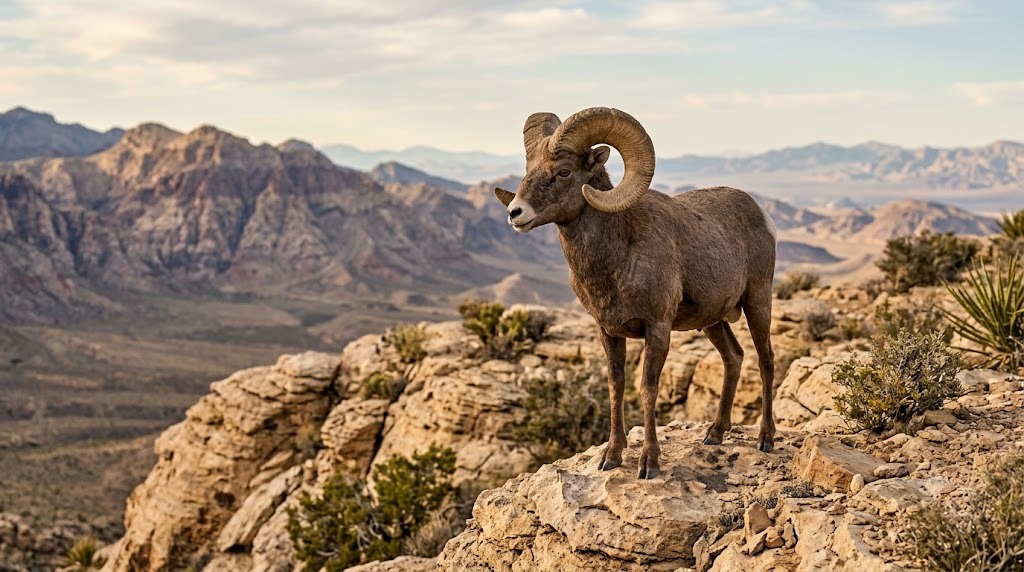
The desert bighorn sheep is the wild sheep of the American Southwest - a hardy, heat-adapted survivor of some of the harshest landscapes on the continent. Where Rocky Mountain bighorns inhabit cool alpine peaks, desert bighorns cling to scorched, broken mountain ranges rising out of cactus and creosote flats. Hunting one is widely considered the most demanding and exclusive of all North American sheep hunts, in part because the country is so unforgiving and in part because tags are nearly impossible to draw.
For most hunters a desert bighorn tag is a true once-in-a-lifetime event, the final or most prized of the "Grand Slam" of North American wild sheep. The hunt is a test of heat tolerance, water discipline, glassing patience, and respect for animals that thrive where almost nothing else can.
Identification & Appearance
Desert bighorns are smaller and leaner than their Rocky Mountain cousins, an adaptation to heat and sparse forage. A mature ram weighs roughly 150 to 220 pounds; ewes 75 to 130 pounds.
The horns remain impressive - heavy, brown, and spiraling toward a full curl - though they tend to be somewhat smaller in mass than Rocky Mountain bighorn horns and often flare outward more widely at the tips. As with all bighorns, the horns grow annual rings that allow field aging.
The coat is paler than that of mountain sheep - light tan to grayish-brown, blending into desert rock - with the characteristic white rump patch and muzzle. The body is trim, the legs proportionally longer, built for moving across rough desert terrain and for shedding heat.
Range & Habitat (US)
Desert bighorns occupy the desert mountain ranges of the Southwest: Arizona, Nevada, Utah, New Mexico, California, and parts of Texas. They favor steep, rocky desert mountains and canyon country - isolated ranges, rugged escarpments, and broken cliffs surrounded by low desert.
The two non-negotiable habitat features are escape terrain and water. Sheep stay near steep, broken rock for safety, and in the arid Southwest they must remain within reach of reliable water sources - natural springs, tinajas (rock catchment pools), and man-made guzzlers built specifically for wildlife. Vegetation is sparse: desert browse, cactus, and seasonal forbs.
Behavior & Sign
Desert bighorns are supremely adapted to heat and drought. They can go long stretches between drinks, drawing moisture from forage, and they regulate activity around temperature - feeding and moving in the cooler hours, bedding in shade through the brutal midday.
Like all bighorns they are social, with rams in bachelor bands and ewe-lamb groups separate outside the rut. Their eyesight is exceptional. The desert rut generally falls in late summer into early fall, earlier than the mountain bighorn rut, timed so lambs arrive with the cooler season.
Sign includes tracks and pellet droppings concentrated near water and along trails between water and feeding areas; well-worn beds on shaded ledges and points; and trails contouring the steep slopes. Water sources are magnets - fresh sign around a spring or guzzler tells you sheep are using it.
Hunting Seasons & Timing
Desert bighorn seasons typically run from roughly October into December, with exact dates set by each state and unit.
- October-November: The most common season window. Daytime heat is easing, sheep are active, and rams may be near or with ewes during the rut depending on the unit.
- December: Cooler, comfortable hunting; sheep behavior is settled post-rut.
Because a desert bighorn tag is so rare, most hunters take whatever season their tag allows and prepare thoroughly for it. Even in late fall, Southwest deserts can be hot - heat planning is part of every desert sheep hunt.
Hunting Methods
Desert bighorn hunting is glassing-intensive spot-and-stalk, much like mountain sheep hunting but shaped by heat and water. Hunters take high vantage points and glass for hours, scanning shaded ledges and cliff faces for bedded sheep that blend perfectly into the rock.
A reliable tactic is watching water. Sheep must drink, and glassing or sitting within sight of a productive spring, tinaja, or guzzler - especially in the warmer parts of the season - can produce sightings. Once a legal ram is located, the stalk uses canyons, washes, and terrain folds to close the distance unseen.
Because of the heat, hunters often work hard in the cool morning and evening hours and rest through the midday. Backpack-style hunts are common, as is hiring an experienced desert sheep guide. Water management - carrying and caching enough - governs every plan.
Where to Find Them - Reading the Terrain
Start with escape terrain: the steepest, most broken cliffs and rocky escarpments on a desert range. Then connect those to water. Desert bighorns live in the triangle between cliffs, feed, and a drink.
Shaded north and east-facing ledges hold bedded sheep through the heat of the day. Saddles, ridge spines, and the heads of canyons concentrate travel between bedding, feeding, and water. Look for sheep on the rocky slopes at dawn and dusk and bedded in shadow at midday.
Glassing the right country at the right light is everything - a pale ram bedded against pale rock is nearly invisible until it moves or until low-angle sun catches it. Patience and methodical glassing of every shaded ledge separate success from a long, empty hunt.
Gear & Optics Needed
Optics are paramount: a quality spotting scope on a sturdy tripod, plus 10x or 12x binoculars and a long-range rangefinder. You will spend more time glassing than walking.
Heat and water gear is equally critical. Carry far more water than feels necessary, plus electrolytes and sun protection - wide-brim hat, sun hoody, light-colored breathable clothing. Quality boots with good soles for sharp volcanic and limestone rock are essential; desert terrain destroys footwear.
A flat-shooting rifle in a cartridge such as .270, 7mm magnum, .280 Ackley, or a .300 magnum, with reliable glass, suits the open desert ranges where shots can be long. Bring a capable pack for hauling meat out of rough terrain, sturdy game bags, and dependable navigation in featureless desert basins.
Shot Placement & Field-Dressing
Take only a steady, well-supported shot at a range you have proven on the practice range. Aim for the heart-lung area behind the shoulder on a broadside ram, adjusting for steep angles common in cliff country. Never take a shot that could send a ram tumbling into an unrecoverable canyon - wait for it to move onto safer footing.
Field-dress quickly. Desert heat is the enemy of meat quality, so cooling and protecting the meat is urgent. Use the gutless method to remove quarters, loins, and trim, get the meat into breathable game bags, and into shade immediately. Plan the pack-out for cooler hours. Caping for a mount and care of the horns and skull follow, along with any state-required check-in or plugging.
Meat & Eating Quality
Desert bighorn meat is excellent - lean, mild, and fine-textured, comparable to good lamb or alpine venison, despite the harsh desert diet. Because the tag is so precious, hunters take exceptional care to cool and handle the meat fast in the desert heat, and well-managed desert sheep is fine table fare. As with all sheep hunts, the animal is fully and respectfully used.
Common Mistakes
- Underestimating the heat. Dehydration and heat illness are real dangers; poor water planning ends desert sheep hunts.
- Glassing too fast. Desert rams blend into rock perfectly. Hunters who scan quickly walk past them.
- Ignoring water sources. Failing to locate and watch reliable water overlooks one of the best ways to find sheep.
- Poor footwear. Sharp desert rock and steep terrain punish weak boots and unfit ankles.
- Risky shots in cliff country. Sending a ram into an unrecoverable canyon can waste a once-in-a-lifetime tag.
Regulations & Conservation Note
Desert bighorn hunting is strictly draw-only, and the odds are among the lowest in all of hunting - many states issue only a handful of tags per year for vast areas. For nearly every hunter this is a once-in-a-lifetime tag, and most states restrict you to a single desert bighorn for life. A limited number of premium auction and raffle tags raise substantial conservation funding. Nonresidents typically must hunt with a licensed guide.
Desert bighorns suffered severe declines from disease transmitted by domestic livestock, habitat fragmentation, and competition. Recovery has come through hunter-funded conservation: water development projects (guzzlers), disease management, transplants, and the work of organizations such as the Wild Sheep Foundation. The species remains sensitive to drought and disease. Always confirm the specific regulations, tag rules, and reporting requirements for your state and unit.
Best Suited For
A desert bighorn hunt suits the hunter who is heat-tolerant, fit, disciplined about water, and patient behind glass. Because the tag is so rare, any drawn hunter should commit fully to preparation. It is not a typical first hunt, but a less-experienced hunter who draws a tag can succeed with a strong guide and serious conditioning. It best suits those who appreciate stark desert beauty and the long conservation effort that keeps these sheep on the mountain.
FAQ
How hard is it to draw a desert bighorn tag? Extremely hard - among the lowest draw odds in North American hunting. Many hunters apply for life without success. Auction and raffle tags are an alternative for those able to afford them.
Is the desert bighorn hunt easier than a mountain hunt because the peaks are smaller? No. The ranges are lower but the terrain is brutally rough, and the heat and water logistics make it arguably the most demanding sheep hunt.
When is the best time to hunt? Most tags fall in October through December. Later in that window is cooler and more comfortable, but you hunt whenever your drawn tag allows.
Do I need a guide? Resident hunters generally do not. Most states require nonresidents to hire a licensed guide for sheep.
Why do hunters watch water sources? Desert sheep must drink from limited springs and guzzlers. Locating and glassing reliable water is one of the most effective ways to find rams.