Javelina
The javelina - also called the collared peccary - is the desert Southwest's most accessible and underrated big-game animal.
🗓️ Last reviewed: June 2026
Overview
The javelina - also called the collared peccary - is the desert Southwest's most accessible and underrated big-game animal. Often misunderstood, the javelina is not a pig; it belongs to the peccary family, a separate group of New World hoofed mammals. It is a small, social, sharp-nosed animal that lives in family herds across the brushy deserts and oak foothills of Arizona, New Mexico, and Texas.
For beginner-to-intermediate hunters, the javelina is one of the best big-game hunts to learn on. Tags are generally affordable and available, the seasons are pleasant, the country is open enough for classic spot-and-stalk hunting, and the animal's poor eyesight makes a careful stalk genuinely achievable. It is a hunt of glassing, patience, and woodcraft - a perfect proving ground for new big-game hunters.
Identification & Appearance
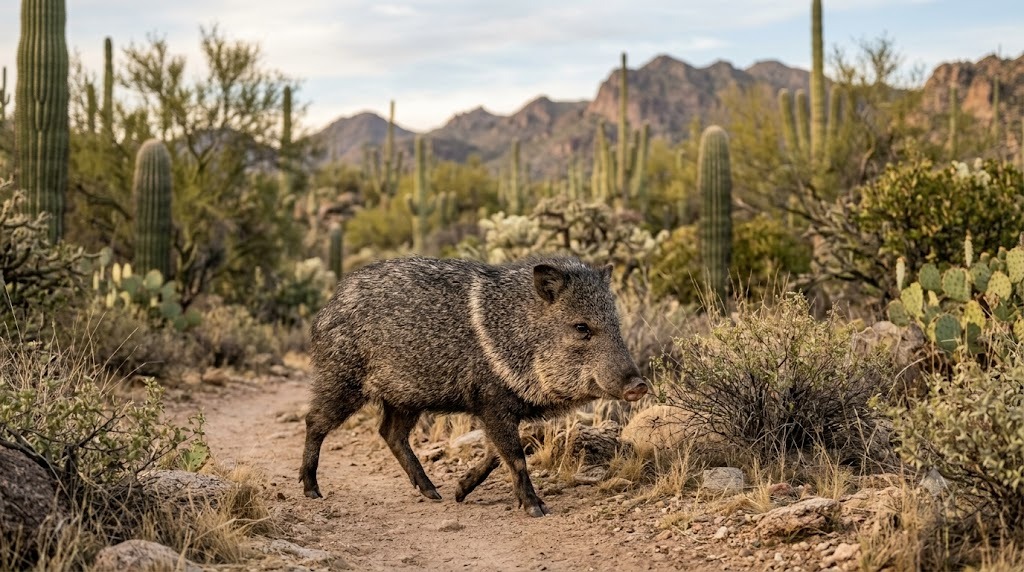
Javelina are small and compact, standing about 20-24 inches at the shoulder and weighing 35-60 pounds - far lighter than most people expect. The coat is coarse, bristly, and salt-and-pepper grizzled gray to black, with a distinctive pale band of hair around the neck and shoulders that gives the "collared peccary" its name.
Other features: a large blocky head, a flexible pig-like snout, short legs, and small dark eyes. Both sexes carry short, straight canine teeth (the canines point straight up and down, unlike a feral hog's curved tusks). Javelina have a prominent scent gland on the rump that produces a strong, musky odor - often the first sign a hunter detects of a herd nearby. Sexes look alike in the field, which is fine because hunting is typically by herd rather than by trophy selection.
Range & Habitat (US)
In the United States, javelina occupy the desert Southwest: Arizona (the heart of javelina hunting), New Mexico, and Texas (especially South and West Texas). They favor brushy, semi-arid country - Sonoran and Chihuahuan desert with prickly pear cactus, mesquite, catclaw, oak-grassland foothills, and rocky canyon slopes. Prickly pear is a dietary staple, so javelina habitat almost always includes good stands of it. They are absent from true high mountains and deep forest.
Behavior & Sign
Javelina live in tight family herds, commonly 6-20 animals, that travel, feed, and bed together. They are most active in the cool of morning and evening, and in cold weather may feed through midday; in hot weather they shift activity earlier and later and bed in shade. Their eyesight is poor, but their sense of smell is excellent - wind, not visibility, is the stalker's main concern.
Sign is distinctive once learned:
- Smell - the musky scent of a herd often hangs in still air.
- Tracks - small, neat, two-toed prints, much smaller than deer.
- Rooted ground - areas where javelina have dug for roots and bulbs.
- Chewed prickly pear - pads bitten and shredded, a classic feeding sign.
- Beds - shallow depressions and dug-out hollows under brush or in caves and washes.
- Droppings - small dark pellet-to-clumped scat along trails.
Hunting Seasons & Timing
Javelina seasons vary by state and weapon. Arizona offers archery, handgun-archery-muzzleloader (HAM), and general (rifle) seasons, generally falling across late winter into early spring, with some areas open in fall. Many Arizona hunts are by draw, though leftover tags are often available. Texas, by contrast, has long seasons and javelina are huntable across much of the year in many counties. New Mexico runs winter seasons. Mild winter weather makes javelina hunting a comfortable, popular cold-season pursuit. Always confirm current dates, tag types, and draw deadlines with the relevant state agency.
Hunting Methods
- Spot-and-stalk is the classic and most effective method. Glass brushy slopes and washes in the cool hours, locate a herd, then close the distance using their poor eyesight and favorable wind.
- Still-hunting slowly through prickly-pear flats and washes, watching and listening for feeding animals.
- Glassing from vantage points at dawn - a herd feeding on a hillside is often visible at long range.
- Calling - distressed-animal calls can occasionally pull a herd in, as javelina may investigate herd-mate distress sounds.
Where to Find Them - Reading the Terrain
Find the food and you find javelina. Prickly pear is the anchor - concentrate on slopes and flats thick with it. South-facing slopes warm first on cold mornings and pull herds out to feed. Check washes, canyon bottoms, and the brushy edges between desert flats and rocky hillsides. In cold weather, javelina favor sunny exposures and may feed late into the morning; in warm weather, hunt the cool edges of the day and look for shaded bedding in caves, rock overhangs, and dense brush. Fresh rooting and chewed cactus tell you a herd is using an area now.
Gear & Optics Needed
Javelina hunting is glassing-intensive, so good binoculars (8x42 or 10x42) and a tripod are the most important tools - many hunters say you "hunt javelina with your eyes." A spotting scope helps in big country. Because shots are usually moderate range on a small animal, modest calibers work well: .243, 6.5 Creedmoor, .25-06, .270, or .308 are all plenty; archers use standard deer setups. Bring a rangefinder, sturdy boots and brush-resistant clothing (desert plants are sharp), gloves, leather chaps or thornproof pants, a daypack, water, and game bags. The terrain is rugged but not high-altitude punishing.
Shot Placement & Field-Dressing
Aim for the heart-lung area, low and behind the shoulder, on a broadside or quartering-away javelina. The vitals on this small animal sit a little farther forward and lower than on a deer, so place the shot tight behind the front leg. Take a steady rest and pick a clear lane through the brush. After the harvest, field-dress promptly and carefully remove the rump scent gland early to avoid tainting the meat, keeping that gland away from the meat. Cool the carcass quickly in the mild desert air. The animal is small and easy for one person to handle and pack out.
Meat & Eating Quality
Javelina meat has an undeserved bad reputation that usually traces back to poor field care. Handled properly - gland removed promptly, carcass cooled quickly, meat kept clean - javelina is good, lean table fare with a flavor often compared to mild pork or robust game meat. It excels in slow-cooked dishes: green chile, tamales, carnitas-style braises, chili, and sausage. As with all wild game, cook it thoroughly. Hunters who take care in the field consistently report javelina as a worthwhile, tasty harvest.
Common Mistakes
- Treating javelina like a feral hog - they are a different animal with different behavior.
- Ignoring the wind because the animal's eyesight is poor; their nose is excellent.
- Not glassing enough - rushing through country instead of picking it apart.
- Failing to remove the scent gland promptly, then blaming the meat.
- Underestimating how rugged and thorny the brush country is.
- Overestimating the animal's size and using far more gun than needed.
Regulations & Conservation Note
Javelina populations across the Southwest are healthy and well-managed, with regulated seasons and bag limits set by each state. Always carry the proper license and tag, hunt only legal seasons and units, and respect the boundaries between public and private land - much of the Southwest is a checkerboard of ownership. Javelina are a native species and a valued part of desert ecosystems; fair-chase hunting funded by hunter dollars supports their continued management. Take only clean, ethical shots and use the meat.
Best Suited For
The javelina is ideal for beginning and intermediate big-game hunters. The tags are accessible, the weather is pleasant, the country is huntable, and the animal's poor eyesight forgives a slightly imperfect stalk. It teaches the core skills of big-game hunting - glassing, reading sign, stalking with the wind, shooting from a rest - in a low-pressure, affordable package. It is also a great hunt for those who want a genuine spot-and-stalk experience without the cost and physical demands of mountain hunting.
FAQ
Is a javelina a pig? No. Despite the resemblance, javelina are peccaries - a separate New World family. They differ from true pigs and feral hogs in teeth, scent glands, behavior, and biology.
How big is a javelina? Small - most weigh only 35-60 pounds and stand around 20-24 inches at the shoulder, much smaller than first-time hunters expect.
Why does javelina meat have a bad reputation? Almost always poor field care. If the rump scent gland is removed promptly and the carcass is cooled quickly, the meat is genuinely good and lean.
What is the best way to hunt them? Spot-and-stalk. Glass brushy, prickly-pear country in the cool hours, locate a herd, then stalk in using their poor eyesight and a favorable wind.
Is javelina a good hunt for a beginner? Yes - one of the best. Accessible tags, mild weather, and a forgiving animal make it an excellent way to learn big-game glassing and stalking.