Moose
The moose is the largest member of the deer family on Earth and the heavyweight of North American big game.
🗓️ Last reviewed: June 2026
Overview
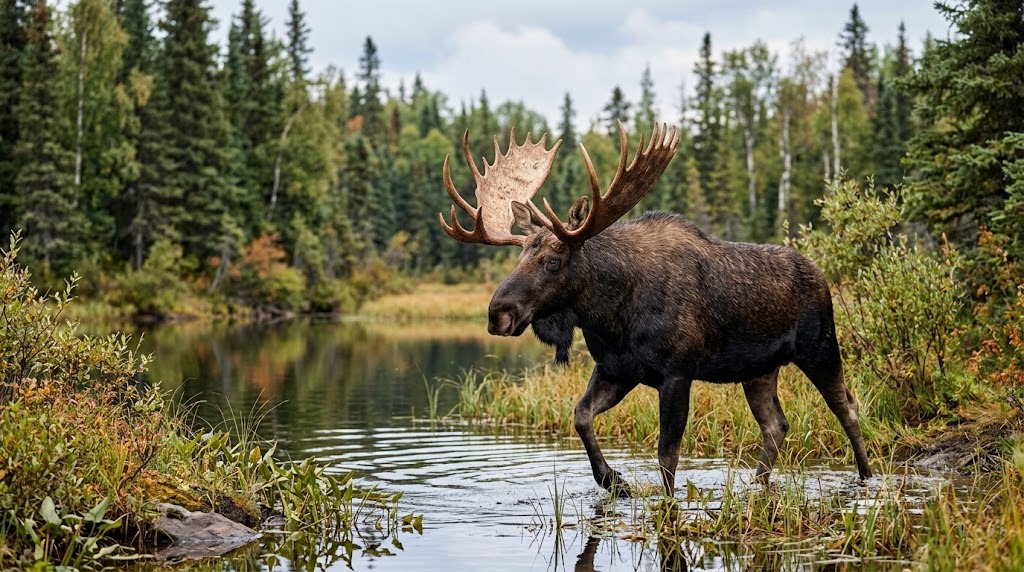
The moose is the largest member of the deer family on Earth and the heavyweight of North American big game. A bull moose in autumn - towering, dark, palm-antlered, framed by golden willows and the first dusting of snow - is one of the most imposing sights in the hunting world. Hunting moose is a hunt of scale: big country, a huge animal, and a huge job once the animal is down. In the United States, moose tags are scarce and highly prized, often a once-in-a-lifetime draw, so a moose hunt is something most hunters anticipate for years. The pursuit rewards patience, preparation, and respect - for the animal, for the remote country it lives in, and for the serious work of recovering several hundred pounds of meat.
Identification & Appearance
Nothing else in the woods looks like a moose. It is enormous - a mature bull stands six to seven feet at the shoulder and can weigh well over a thousand pounds; cows are smaller but still massive. The coat is dark brown to nearly black, the legs long and pale, the shoulders high and humped, and the muzzle long, drooping, and bulbous. A flap of skin called the "bell" or dewlap hangs from the throat. Bulls grow broad, flattened "palmated" antlers with points along the edges - a structure shared by no other North American deer. Calves are reddish-brown without the dark adult coat. The moose's sheer size is its most reliable field mark from any distance.
Range & Habitat (US)
In the United States, moose occupy the northern fringe of the country: Alaska holds by far the largest population, with additional herds across the northern Rocky Mountains, the Upper Midwest, northern New England, and a few other northern states. Moose are tied to cold climates and to a specific habitat blend - young willow, aspen, and birch for browse; wetlands, marshes, lakes, and slow rivers for aquatic plants and relief from heat and insects; and conifer cover for shelter. Classic moose country is a mosaic of boggy wetlands, willow flats, beaver ponds, and burned or logged areas of regenerating browse, often far from roads.
Behavior & Sign
Moose are generally solitary, unlike herd-oriented elk, though they may loosely congregate in good feeding areas. They are most active at dawn and dusk and spend hot midday hours bedded in shade or standing in water. Despite their bulk they move quietly and can be surprisingly hard to spot in willow and timber. Their hearing and sense of smell are excellent; eyesight is less keen. During the autumn rut, bulls become more vocal and active, responding to calls and seeking cows. Sign is appropriately large: enormous cloven tracks, big droppings, browsed and broken willow and aspen, churned rutting wallows, and shredded saplings from antler rubbing.
Hunting Seasons & Timing
Moose hunting in the United States is tightly controlled. Most states issue moose tags only through a limited draw, and many hunters apply for years or accumulate preference points before drawing - in several states a moose tag is a once-in-a-lifetime opportunity. Seasons generally fall in autumn, commonly September and October, timed around the rut. The rut is the prime window because bulls move more, are more vocal, and respond to calling. Cooler weather also benefits meat care on this very large animal. Because the draw is the gateway to the hunt, researching each state's application process, deadlines, and point system well in advance is essential.
Hunting Methods
Calling is the signature moose method during the rut, and it is a thrilling one: the hunter imitates the long, mournful cow call or the grunt of a bull to draw an interested bull into range, sometimes raking brush to mimic a rival. Spot-and-stalk works well where the country opens up - glassing willow flats, burns, and marshy basins from a vantage point, then planning an approach. Still-hunting through travel corridors and feeding areas suits dense habitat. In many moose regions, boats or canoes are used to access remote shorelines, marshes, and river systems where moose feed. All methods demand attention to wind and a careful plan for getting the animal out.
Where to Find Them - Reading the Terrain
Look for the food and the water. Moose key on young, regenerating browse - willow flats, aspen and birch saplings, recent burns and logged areas - and on aquatic vegetation in shallow lakes, marshes, beaver ponds, and slow river edges. In warm early-season conditions, moose are drawn to water to feed and to escape heat and insects, so wetlands and shaded shorelines are prime. They travel timbered corridors between feeding areas and bed in nearby conifer cover. Glass openings, willow bottoms, and water edges at first and last light, and listen during the rut for the sounds of a moving bull.
Gear & Optics Needed
A dependable binocular is important for picking dark moose out of willow and timber, and a rangefinder removes guesswork. But the defining gear consideration for moose is the recovery: this is the largest animal most hunters will ever take, often in remote, wet, roadless country. Plan for a major pack-out - a sturdy pack frame, multiple large game bags, several sharp knives or a reliable sharpening system, and ideally the help of a hunting partner or two. Build the rest of the kit for cold, wet northern conditions: waterproof boots, layered insulating clothing, and rain gear. A boat or canoe is part of the kit in many moose areas.
Shot Placement & Field-Dressing
A moose is an enormous, powerful animal, so a calm, well-placed shot is both an ethical obligation and a practical necessity - a poorly hit moose in thick country is a serious problem. Wait for a broadside or slightly quartering-away presentation and place the shot into the heart-lung area, low and behind the front shoulder. Range carefully, use a solid rest, and pass anything marginal. The real work begins after the shot: a moose must be broken down where it falls, almost always using the quartering or gutless method, and the meat carried out in many heavy loads. Cool the meat quickly, keep it clean and dry, and never attempt a moose recovery without a realistic plan and enough help.
Meat & Eating Quality
Moose is superb meat - lean, mild, fine-grained, and abundant. A single moose yields a staggering quantity of meat, often hundreds of pounds boned out, enough to stock a freezer for a long time. Many hunters rank moose among the very best wild red meats. As always, quality depends on field care, and with an animal this large in potentially mild early-autumn weather, getting the carcass broken down, cooled, and kept clean quickly is critical. Backstraps and tenderloins are exceptional; roasts, steaks, and grind from the rest of the animal are excellent. Moose meat is one of the great rewards of a hard-won tag.
Common Mistakes
The most consequential mistake is underestimating the recovery - shooting a moose with no realistic plan or help to get hundreds of pounds of meat out of remote country before it spoils. Other errors include calling poorly or too aggressively during the rut and educating bulls, ignoring the wind, and hunting too far from water and browse where moose actually concentrate. Hunters also sometimes take rushed shots on this large, deceptively quiet animal in thick cover. On the front end, failing to research and apply for the draw early enough costs hunters years of opportunity.
Regulations & Conservation Note
Moose populations in the United States vary by region: some are stable or thriving, while others, particularly at the southern edge of the range, face pressure from warming climates, winter ticks, parasites, and habitat change. State agencies manage moose conservatively, which is why tags are so limited, and hunter license dollars fund the monitoring and research that track herd health. Hunt only with a legal drawn tag, follow all unit rules and reporting requirements, and support habitat work and research into the challenges facing southern moose herds. The scarcity of moose tags reflects careful stewardship of a remarkable animal.
Best Suited For
Moose hunting suits the patient, well-prepared hunter who has invested years in the draw and is ready for a physically serious hunt and a major recovery effort. It is ideal for those who love remote northern country, who can handle wet and cold conditions, and who will bring or arrange enough help to pack out a very large animal. The calling-based rut hunt particularly appeals to hunters who enjoy interactive, woodsmanship-driven pursuits. It is a hunt to prepare for thoroughly and to savor.
FAQ
How hard is it to get a moose tag in the US? Quite hard. Most states issue moose tags only through a limited draw, often requiring years of applications or accumulated preference points, and in several states a moose tag is a once-in-a-lifetime opportunity.
How big is a moose, really? A mature bull can stand six to seven feet at the shoulder and weigh well over a thousand pounds - the largest member of the deer family. This scale shapes everything about the hunt, especially the recovery.
What is the best time to hunt moose? The autumn rut, generally September into October, is the prime window. Bulls move more, are more vocal, and respond to calling, and cooler weather helps preserve the meat.
How do you get a moose out of the field? You break it down where it falls, usually with the gutless method, and carry it out in many heavy loads. A realistic recovery plan and enough help - partners, a pack frame, game bags - are essential before you ever take the shot.
Is moose meat good to eat? Yes - it is lean, mild, and abundant, ranked among the best wild red meats. A single moose can fill a freezer, and good field care preserves that quality.