Stone Sheep
The Stone sheep is one of North America's most coveted and difficult mountain-game animals - a dark-coated wild sheep of the high northern ranges.
🗓️ Last reviewed: June 2026
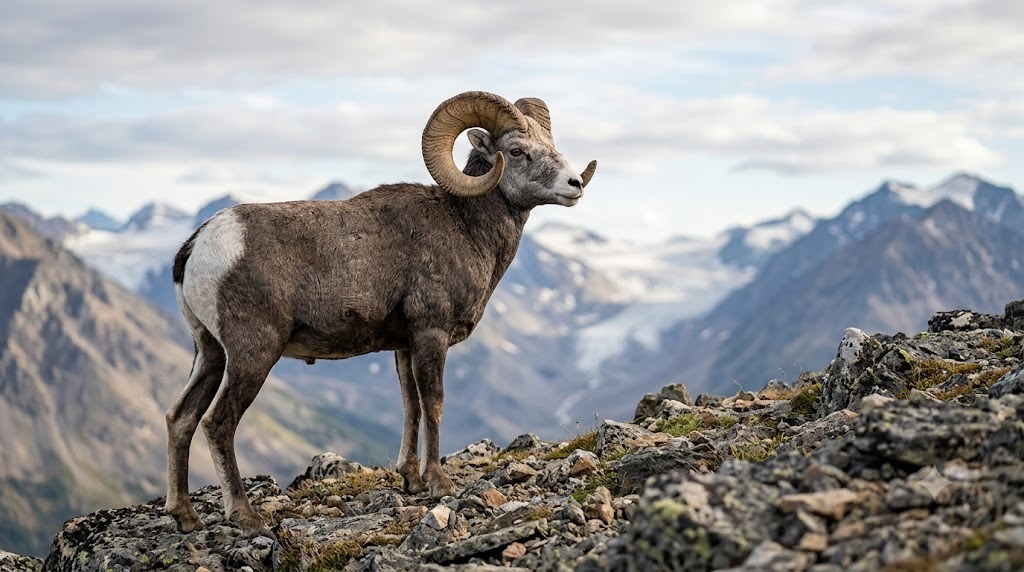
Overview
The Stone sheep is one of North America's most coveted and difficult mountain-game animals - a dark-coated wild sheep of the high northern ranges. It is a subspecies of thinhorn sheep, closely related to the white Dall sheep, and it represents the most demanding leg of the famous "Grand Slam" of North American wild sheep for many hunters.
For U.S. hunters, the most important fact comes first: Stone sheep are primarily a Canadian hunt. Their range lies almost entirely in northern British Columbia and the southern Yukon. There is no Stone sheep hunting in the United States. A Stone sheep hunt means traveling to Canada, where non-resident hunters are legally required to hunt with a licensed guide and outfitter. This guide treats the Stone sheep honestly as the remote, expensive, physically extreme, once-in-a-lifetime adventure it is - and as an animal most American hunters will admire and study rather than hunt.
Identification & Appearance
Stone sheep are thinhorn sheep, built lean and athletic for steep, broken mountains. Rams typically weigh 160-200 pounds, ewes considerably less. The coat ranges from slate gray to a dark brownish-gray, often with a noticeably darker body, a paler face, a white rump patch, and white on the belly and legs. Color varies across the range; some animals are darker and some lighter, and where Stone and Dall ranges meet, intermediate "Fannin" sheep show a blend of gray and white.
The defining feature is the ram's horns - amber-to-brownish, slender ("thin-horned," hence thinhorn), and sweeping into a wide, flaring curl. Mature rams grow a full curl that flares outward at the tips rather than tucking tight to the face. Ewes carry short, slightly curved horns. Judging a legal, mature ram by horn curl and growth rings is a core skill of the sheep hunt.
Range & Habitat (Canada)
Stone sheep occupy the rugged mountain country of northern British Columbia and the southern Yukon in Canada - there is no U.S. range. They live in steep alpine and subalpine terrain: high grassy basins, broken cliffs, rocky ridges, scree slopes, and the timberline edge. They need a combination of good alpine feed and nearby steep "escape terrain" - cliffs and bluffs they can flee into when threatened. This is genuine wilderness, often reached only by float plane, horseback, or long backpack approaches.
Behavior & Sign
Stone sheep are herd animals with sharp eyesight and a strong instinct to use terrain for safety. Rams and ewes often live apart for much of the year, joining during the late-fall rut. Sheep feed on alpine grasses, sedges, and forbs, typically grazing in the open during cooler parts of the day and bedding where they can watch their backtrail. Their eyesight is exceptional, and they are extremely difficult to approach undetected.
Sign in alpine country includes:
- Tracks - two-toed prints in mud, snow, and trail dust at high elevation.
- Droppings - pellet groups on bedding ledges and feeding basins.
- Beds - pawed-out depressions on ridgelines and cliff benches with commanding views.
- Trails - worn paths along ridges and across scree between feed and escape terrain.
- Mineral licks - disturbed ground where sheep seek minerals.
Hunting Seasons & Timing
Stone sheep seasons in British Columbia and the Yukon generally run from early August into late September or October, set by Canadian provincial and territorial authorities. Non-resident hunters book guided hunts well in advance through licensed outfitters who hold the area allocations. Early-season hunts offer better weather and access; later hunts can mean snow, harder conditions, and rutting behavior. Because seasons, licenses, and allocations are set by Canadian jurisdictions and change over time, every prospective hunter must work through a licensed outfitter and confirm all current requirements.
Hunting Methods
- Spot-and-stalk is the only practical method. Hunters glass vast alpine country for hours, identify a legal ram, then plan a long, careful stalk.
- Backcountry glassing from high vantage points, often spending whole days behind the optics.
- Horseback or backpack access into remote basins, then hunting on foot.
- The stalk itself often covers miles of brutal terrain and must defeat a sheep's extraordinary eyesight using ridgelines, terrain folds, and wind.
Where to Find Them - Reading the Terrain
Sheep country reading centers on feed beside escape terrain. Look for green alpine basins, grassy benches, and ridge systems that sit immediately adjacent to cliffs and broken rock. Rams favor high, rugged country with commanding views; they bed where they can watch below them. Glass the basins at first and last light when sheep feed in the open, and check the cliff benches and shaded faces where they bed through the day. Travel routes follow ridgelines and saddles. The hunter who finds the combination of good feed, steep escape ground, and a vantage to glass it has found sheep country.
Gear & Optics Needed
A Stone sheep hunt is gear-critical and weight-conscious. Top-tier optics are non-negotiable - quality 10x or 12x binoculars and a high-end spotting scope on a lightweight tripod, since hunters glass for days and must judge rams at long range. A flat-shooting, accurate mountain rifle in a caliber such as .270, 6.5 PRC, .280 Ackley, .300 Win Mag, or similar, with quality bullets, suits the open, sometimes-long shots. Add a rangefinder, a quality lightweight backpack, layered technical clothing for rapidly changing alpine weather, rugged broken-in mountain boots, trekking poles, and a reliable shelter. Every ounce matters on the mountain.
Shot Placement & Field-Dressing
Sheep hunts often present open-country shots, so a steady rest and an honest, practiced effective range are essential. Aim for the heart-lung area behind the shoulder on a broadside or quartering-away ram, and pass on any shot beyond your proven ability or in unsafe terrain - a wounded sheep in cliffs is a tragedy for everyone. After the harvest, field care is intensive: cape the ram carefully (the hide and full-curl horns are the trophy), then bone out and bag the meat for the long pack-out. Guides assist with field care, and the meat must be carried out of remote country - nothing is wasted.
Meat & Eating Quality
Wild sheep meat is widely considered among the finest of all big game - mild, tender, fine-grained, and clean-flavored, prized by mountain hunters above almost everything else. Stone sheep meat lives up to that reputation. Because hunts are remote, the meat is boned out and packed many miles, so careful cooling and clean handling matter. Backstraps and loins are exceptional; the rest makes superb roasts and steaks. Ethical sheep hunters pack out every usable pound - a point of pride in the sheep-hunting tradition.
Common Mistakes
- Assuming Stone sheep can be hunted in the U.S. - they cannot; the hunt is in Canada.
- Underestimating the extreme physical demand and arriving out of shape.
- Skimping on optics, which are the heart of a sheep hunt.
- Misjudging ram legality - full curl and age must be assessed correctly.
- Poor wind and skyline discipline against a sheep's incredible eyesight.
- Taking a marginal shot in cliff terrain instead of waiting for a clean opportunity.
Regulations & Conservation Note
Stone sheep are managed in Canada through a science-based system of limited allocations, guide-outfitter areas, full-curl harvest rules, and mandatory reporting that keeps harvest sustainable. Wild sheep populations are sensitive - to disease, harsh winters, and habitat pressure - so conservative management is essential. Non-resident hunters must hunt with a licensed Canadian guide and follow all provincial or territorial regulations exactly, including horn-curl legality. Hunter dollars and sheep-conservation organizations fund habitat work and herd health that benefit all wild sheep.
Best Suited For
The Stone sheep is suited for the extremely fit, well-funded, experienced mountain hunter ready to commit to a guided Canadian wilderness hunt of a lifetime. It demands months of physical conditioning, top-end gear, real money, and the mental toughness for long days in harsh terrain. It is not a beginner hunt and not a U.S. hunt. For most American hunters, the Stone sheep is best appreciated as a symbol of wild, intact northern mountains - an animal to study, respect, and dream about, and one a dedicated few will someday earn through a guided Canadian adventure.
FAQ
Can I hunt Stone sheep in the United States? No. Stone sheep range almost entirely within northern British Columbia and the southern Yukon in Canada. There is no Stone sheep hunting in the U.S.
Do I need a guide? Yes. Non-resident hunters in British Columbia and the Yukon are legally required to hunt Stone sheep with a licensed guide and outfitter.
How is a Stone sheep different from a Dall sheep? Both are thinhorn sheep. Dall sheep are white; Stone sheep are dark gray to brownish-gray. Where their ranges overlap, intermediate "Fannin" sheep show a blend.
How hard is a Stone sheep hunt? Very hard. It is a remote, physically extreme mountain hunt requiring excellent fitness, days of glassing, and long stalks through punishing terrain - one of North America's toughest hunts.
Is the meat good? Yes - wild sheep meat is considered among the finest big game of all: mild, tender, and clean-flavored. Hunters pack out every usable pound.