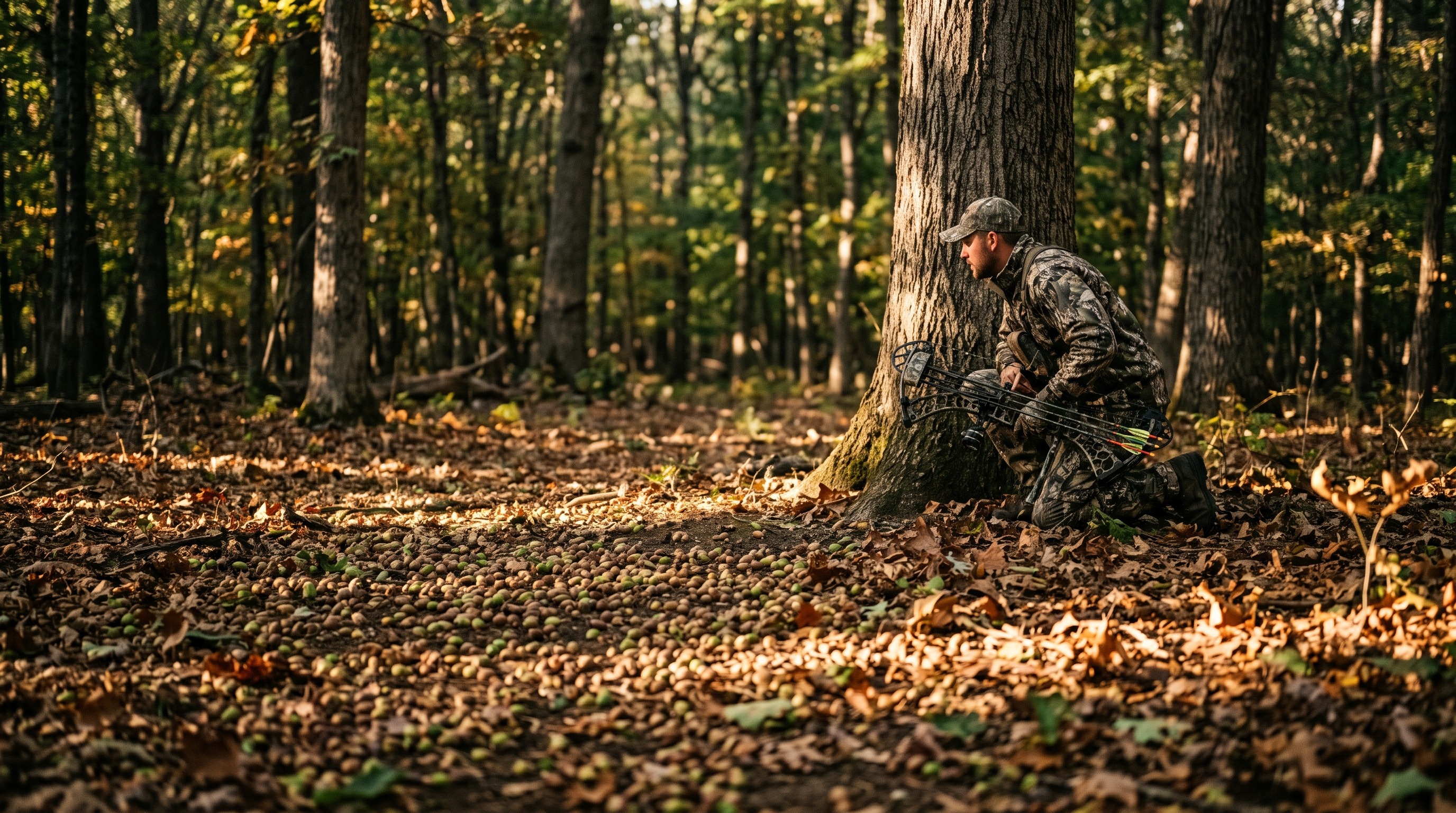
Best Rangefinders for Hunting
Knowing the exact distance to your target removes the single biggest variable in making a clean shot. For bowhunters, a few yards of guesswork can mean a miss…

The best hunting rangefinder for most people has angle compensation - it gives the true horizontal distance up or down a slope - plus enough real-world range for your weapon and a clear display. Bowhunters want fast, precise readings inside 100 yards; rifle hunters want reliable ranging well past 800.
Knowing the exact distance to your target removes the single biggest variable in making a clean shot. For bowhunters, a few yards of guesswork can mean a miss or a marginal hit. For rifle hunters stretching ranges across open country, accurate distance is the foundation of every holdover or dial - our zero and holdover calculator turns that distance into an actual aiming solution. A modern laser rangefinder takes the guesswork out of the equation, and prices have dropped enough that there’s no reason to hunt without one.
This guide explains what to look for, the difference between bow and rifle rangefinders, and how to pick the right unit for your hunting style.
How Rangefinders Work and Why Accuracy Matters
A laser rangefinder fires an invisible beam at your target and measures how long it takes to return, calculating distance to within a yard or better. The key isn’t just maximum range - it’s the ability to get a fast, reliable reading on the target you actually care about, in real field conditions: low light, rain, brush, and animals that won’t hold still.
Reflective Range vs. Real-World Range
Manufacturers love to advertise huge maximum ranges - 1,500 or even 3,000 yards. Read the fine print. Those numbers usually describe ranging a large, highly reflective object like a building. Ranging a deer-sized animal is a different story, often less than half the advertised figure.
For honest expectations, look at the “deer” or “tree” range rating, not the headline number. For most big game hunting, the ability to reliably range game out to 600-800 yards is more than enough, and many quality units do that easily.
Angle Compensation: A Must-Have for Most Hunters
If you hunt from a treestand, in the mountains, or anywhere with elevation changes, angle compensation is essential. When you shoot uphill or downhill, gravity acts over the horizontal distance, not the line-of-sight distance. A rangefinder with angle compensation (often called ARC, ID, or true-ballistic-range) gives you the corrected “shoot-to” distance.
For a bowhunter in an elevated stand, this feature alone can be the difference between a clean shot and a high miss. For flatland hunters it matters less, but most modern hunting rangefinders include it anyway.
Bow vs. Rifle Rangefinders
The core technology is the same, but priorities differ.
Bowhunting rangefinders prioritize speed, precision at shorter ranges, and angle compensation. Many feature a continuous-scan mode so you can range a moving animal smoothly. Maximum range is largely irrelevant - your shots are inside 60 yards.
Rifle rangefinders emphasize longer reliable ranging and often include ballistic solvers that, combined with your load data, give a holdover or MOA/MIL dial value directly. Some pair with apps or even environmental sensors for serious long-range work.
If you do both, a quality general-purpose unit with angle compensation handles bow and rifle hunting well.
Optical Quality and Display
A rangefinder is also a small monocular, so glass quality matters. Better units offer clearer, brighter images that make it easier to find your target and read distances in dim light. Pay attention to the display type: an LCD (black) display is crisp against snow and bright backgrounds but can disappear against dark timber; an LED (red, illuminated) display stands out against dark backgrounds and at dusk. Some premium units let you switch or adjust brightness.
Build, Size, and Battery
Look for a waterproof or weather-resistant housing - you will use this in rain and snow. Compact, pocketable units are easy to carry and quick to deploy. Most run on a single CR2 battery; carry a spare. Magnification of 6x is standard and plenty for ranging; higher magnification helps at extreme distance but is rarely necessary.
Budget Tiers and Notable Brands
Entry level: Vortex Crossfire HD, Bushnell Bone Collector, and Nikon-style budget units provide accurate ranging and angle compensation at a friendly price. They’re perfect for whitetail and general hunting.
Mid-range: The Vortex Razor HD, Leupold RX-series, Sig Sauer Kilo, and Maven RF.1 step up with better glass, faster readings, longer reliable range, and ballistic features. The Sig Kilo line in particular is known for fast acquisition and strong value.
Premium: Leica Rangemaster, Zeiss Victory, and Sig’s top Kilo models deliver exceptional optics, lightning-fast readings on tough targets, and advanced ballistic integration. For serious long-range or backcountry hunters, the reliability is worth it.
Rangefinding Binoculars: Worth Considering
A growing category combines a quality binocular with a built-in rangefinder - models like the Sig Kilo binos, Leica Geovid, and Vortex Fury. For Western hunters who glass constantly, carrying one device instead of two is a real advantage. They cost more and weigh more than a standalone rangefinder, but the convenience is hard to overstate once you’ve used one.
How to Choose
If you’re a whitetail or treestand hunter, a compact entry or mid-range unit with angle compensation is all you need.
If you hunt open Western terrain with a rifle, prioritize reliable long-range performance, good glass, and a ballistic solver.
If you bowhunt seriously, prioritize fast scan mode, precise short-range accuracy, and angle compensation.
If you glass constantly, seriously consider rangefinding binoculars to simplify your kit.
Conclusion
A rangefinder is one of the highest-value purchases a hunter can make. You don’t need the longest-range or most expensive model - you need one that reads your actual quarry quickly and reliably, with angle compensation if your terrain calls for it. Buy a unit that fits your style, learn it before the season, and you’ll shoot with far more confidence.
🛒 Recommended Gear on Amazon
- Hunting rangefinders - browse current options and reviews on Amazon.
- Angle-compensating bow rangefinder - browse current options and reviews on Amazon.
- CR2 batteries - browse current options and reviews on Amazon.
As an Amazon Associate, we earn from qualifying purchases - at no extra cost to you. This helps us keep producing free, in-depth guides.