Field Care in Warm Weather
Heat is the enemy of good game meat. Learn to cool it fast, use shade and airflow, choose quality game bags, when to bone out, spot spoilage, and transport safely.
Most hunting content stops at the shot. But filling the tag is the easy half. What you do in the next few hours, especially in warm weather, decides whether you carry home clean, mild, excellent meat or a tainted mess that no recipe can rescue. Heat is the single greatest threat to game meat, and it works fast.
Part of our Field & Kitchen series - what happens after the shot: the handling, butchering and cooking that turn a tag into good eating.
The principle is simple and never changes - get the heat out of the animal as quickly as you can, and keep it out. Everything below is in service of that one goal. None of it is hard, but in warm conditions, speed is everything.
Why Heat Is the Enemy
A freshly killed animal is a warm, moist mass - close to ideal conditions for bacteria to multiply. Bacteria grow fastest in the range roughly between 40F and 140F (4 to 60C), and the warmer it is, the faster they work. An animal’s own body heat, trapped inside a heavy carcass, keeps the deep muscle dangerously warm long after the air has cooled it on the surface.
Two practical truths follow:
- The clock starts the moment the animal is down. Every minute the meat stays warm, quality and safety degrade. In hot weather you may have only a couple of hours of grace, not a leisurely afternoon.
- Internal heat is the real problem. Hindquarters and the body cavity hold heat longest. Cooling the outside is not enough if the core stays warm. Our field care and aging reference covers the temperature targets that follow once the meat is chilled.
Your whole job in the field is to fight that heat.
Cool It Fast
Order of operations in warm weather - field dress immediately, then get the carcass cooling as fast as conditions allow.
- Gut it right away. Removing the entrails takes out a large mass of heat and the gut bacteria you most want away from the meat. This is the single most urgent step.
- Open the animal up. Spread the body cavity to let heat escape and air circulate. Prop it open with a stick if needed. A carcass left closed traps heat in the core.
- Get the hide off when it makes sense. The hide is an insulating blanket. In genuinely hot weather, skinning speeds cooling dramatically. In cool weather you may leave it on to protect the meat from dirt and flies - judge by the temperature.
- Quarter or bone out to cool faster. Large masses hold heat. Breaking the animal into quarters, or boning the meat out entirely, exposes far more surface area and cools the meat far faster than leaving it whole.
- Use cold water or ice where practical. A nearby cold creek can chill quarters. Bags of ice in a cooler do the same. Keep the meat itself dry-ish in waterproof bags so it does not sit soaking, which encourages bacteria and ruins texture.
The faster you drop the meat below that danger range, the better. This is the same cool-it-quick principle that underlies all good game cooking - see our field-to-table venison guide for how this connects to everything that happens later in the kitchen.
Shade and Airflow
If you cannot get the meat into a cooler immediately, the next best thing is shade plus moving air.
- Get it out of direct sun, always. Sun load can raise surface temperature far above the air temperature in minutes. Shade is non-negotiable.
- Hang it where air moves. Airflow over the meat evaporates surface moisture and carries heat away, forming a dry protective skin (a “pellicle”) that bacteria struggle to penetrate. A breezy, shaded spot beats a still, shaded one.
- Keep it off the ground. Ground contact traps heat and invites dirt and insects. Hang quarters or lay them on a clean surface with air underneath.
- Elevate and separate. Do not pile warm quarters in a heap; the inside of the pile stays hot. Spread them so each piece can shed heat.
In dry climates, shade and airflow alone can cool and protect meat remarkably well. In humid heat, you will need active cooling - ice and coolers - because the air cannot pull moisture and heat away as effectively.
Game Bags Matter
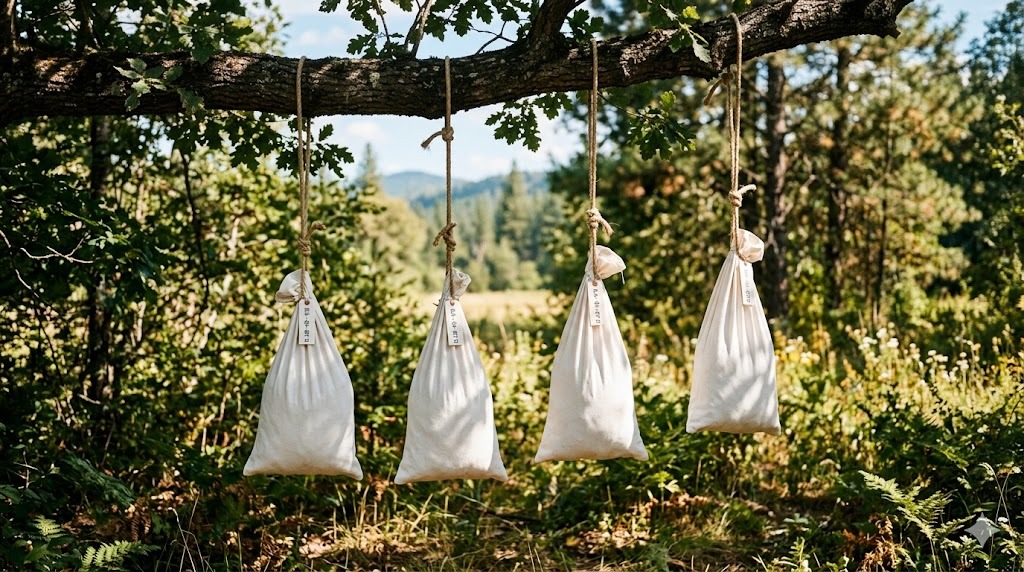
Cheap cotton or plastic bags are a false economy. Good breathable game bags are some of the best meat-care money you can spend.
- Breathable is essential. Quality game bags let air and moisture pass so the meat can cool and form a protective surface, while keeping dirt, debris, and flies off.
- Avoid sealing meat in plastic when it is warm. Non-breathable plastic traps heat and moisture against warm meat - exactly the wrong thing. Plastic is for already-cold meat headed into a cooler, not for cooling it.
- Keep flies off. In warm weather, blowflies will find exposed meat in minutes and lay eggs. Good bags are your first line of defense. Get the meat bagged promptly.
- Carry enough. Bring more bags than you think you need so you can bag quarters or boned meat individually for faster cooling and cleaner handling.
A set of reusable, washable game bags pays for itself over a season and protects the most valuable thing you carry out.
When to Bone Out in the Field
Boning out - removing all the meat from the bone right there in the field - is often the smartest move in warm weather and on long pack-outs.
Bone out when:
- It is hot. Boned meat in breathable bags cools faster than bone-in quarters because there is more exposed surface and no heat-holding bone.
- The pack-out is long or steep. Boning drops a lot of weight (bone is heavy and you cannot eat it), which matters on a backcountry haul; a meat yield calculator helps you plan how much boned meat you will actually be carrying.
- You will not reach a cooler quickly. Faster cooling buys you time.
Leave it on the bone when conditions are cold, the trip out is short, or regulations require you to keep evidence of sex or species attached - always check local rules, which sometimes mandate keeping certain parts intact for transport. Whichever you choose, keep the meat clean, keep it cool, and keep the flies off.
Spoilage Signs and Transport
Know what good meat looks like and what trouble smells like.
Warning signs the meat is going off:
- Smell. Fresh game smells clean, faintly metallic. A sour, rotten, or strongly off odor is the clearest red flag. Trust your nose.
- Slime. A sticky, slimy surface film (beyond normal surface moisture) signals bacterial growth.
- Color and texture. A greenish tinge, or meat that has gone grayish and tacky in a way that does not look right, is a bad sign. Some surface darkening from drying is normal; sliminess and off-smell are not.
- Flies and maggots. Egg clusters (they look like tiny grains of rice) or larvae mean flies got to it. Trim affected areas hard, and if it is extensive, the meat is compromised.
When in doubt, throw it out. No meal is worth a foodborne illness.
Transport:
- Cooler with ice is the goal. Get the meat into a cold cooler as soon as you can. Keep it dry-ish - drain meltwater so meat is not soaking, or keep it bagged.
- Keep it cold the whole way home. A few hours in a hot truck bed undoes all your field work. Plan the drive with the cooler in mind.
- Get it processed or chilled promptly. Once home, get the meat into a fridge, a hanging cooler, or onto the cutting board. Do not let it sit warming in the garage.
Common Mistakes to Avoid
- Leaving the animal whole and warm. Core heat is the killer. Gut it, open it, and break it down to cool fast.
- Sealing warm meat in plastic. Traps heat and moisture - exactly wrong. Use breathable bags until the meat is cold.
- Leaving meat in the sun or on the ground. Shade and elevation are non-negotiable.
- Ignoring flies. Bag the meat fast; blowflies work in minutes.
- A hot drive home. All the field care in the world cannot survive hours in a warm truck. Keep it cold to the door.
Good meat care is not glamorous, but it is the difference between proud and embarrassed at the dinner table. Fight the heat, move quickly, and treat the meat like the food it is. For what comes next once you get it home, see our guides on processing game meat and cooking wild game.