Wild Turkey: Field to Table
A wild turkey is leaner and tougher than any store bird. Learn the pluck-versus-skin trade-off, how to brine the breast, and why the legs need braising.
A wild turkey is not a smaller version of the bird you buy at Thanksgiving. It is a genuinely different animal - leaner, denser, and far more athletic, with legs built for walking miles a day. Cook it like a butterball and you will be disappointed. Treat it as the lean, hard-working game bird it is, and it can be some of the best eating you will bring home all year.
Part of our Field & Kitchen series - what happens after the shot: the handling, butchering and cooking that turn a tag into good eating.
The single most useful thing to understand up front is that the breast and the legs are two different ingredients. Almost every wild turkey disaster comes from cooking them together as one bird.
Wild Bird vs Farm Bird
A commercial turkey is bred for breast size, raised in confinement, and laced with fat. A wild turkey forages and runs all day, so:
- The meat is much leaner. Less intramuscular fat means it dries out fast if overcooked.
- The legs and thighs are tough and tendon-heavy. A wild gobbler can be several years old, and those drumsticks are full of hard, wiry tendons that never break down with roasting.
- The breast is firm and finely grained. Cooked right, it is excellent - lean, clean, and a little sweeter than store turkey.
- There is far less skin fat to baste the meat. This changes how you should think about plucking.
If you can taste the difference between a backyard chicken and a supermarket one, you already understand the gap. The wild bird is the more flavorful, less forgiving option.
Pluck or Skin? Know the Trade-Off
You have two honest paths once the bird is down, and the right one depends on how you plan to cook it.
Pluck (keep the skin) when:
- You want to roast or smoke the whole breast or a half bird and you care about presentation.
- The skin is intact and not badly shot up.
- You have the time. Plucking a turkey is more work than a duck - dry plucking takes patience, and a short dunk in scalding water (around 145 to 155F/63 to 68C, not boiling) loosens the feathers a great deal.
Skin protects lean meat from drying heat, holds seasoning, and crisps up nicely. On a lean wild bird, it earns its keep.
Skin (skip the feathers) when:
- You are short on time or the breast is shot up.
- You plan to brine and cook the breast as boneless pieces, where skin matters less.
- The meat is headed for grinding or sausage anyway.
Plenty of experienced turkey hunters simply breast the bird out and remove the leg and thigh meat, skinning as they go. It is fast and clean. You give up the roasted-skin presentation, but for brined breast and braised legs - the two best preparations - you lose almost nothing. Whichever you choose, the field-care rules are the same as for any animal: keep it cool, keep it clean, get it out of the sun. The cool-it-fast principle in our field-to-table venison guide applies just as much to a spring gobbler on a warm morning.
Brine the Breast - This Is Not Optional
Because wild turkey breast is so lean, brining is the difference between juicy and chalky. A brine seasons the meat all the way through and helps it hold moisture during cooking.
A simple, reliable wet brine:
- Roughly 1 cup of kosher salt per gallon of water (about 1 tablespoon per cup as a rule of thumb).
- Optional sugar, around half the salt by volume, to balance and aid browning.
- Aromatics if you like - bay, peppercorn, garlic, citrus, herbs.
Submerge the breast and refrigerate. A boneless breast does well in 8 to 12 hours; a whole bone-in breast can go 12 to 24. Do not overshoot badly or the meat turns spongy and too salty. Rinse, pat dry, and let the surface air-dry in the fridge for an hour or two before cooking if you want better browning. A dry brine - salting the meat and resting it uncovered in the fridge overnight - works well too and is less messy.
Cook the Breast and Legs Separately
This is the heart of it. Stop trying to roast a whole wild turkey to a single doneness.
The breast - cook hot and pull early.
- Roast, grill, smoke, or pan-roast it, but watch the temperature closely.
- Pull it at an internal temperature of about 160 to 165F (71 to 74C), then rest it. Carryover heat finishes the job. Past that, lean breast dries out quickly.
- Slice across the grain, thin. Resting for 10 minutes keeps the juices in the meat.
Poultry is generally held to a higher safe internal temperature than red game meat, so 160 to 165F (71 to 74C) is a sensible target for the breast. Treat it as a guideline alongside the real safety work, which is cooling the bird quickly in the field.
The legs and thighs - braise or confit.
Do not roast wild turkey drumsticks. The tendons stay like rope. Instead:
- Braise the leg and thigh meat in stock, with aromatics, covered, at a gentle simmer for 2 to 3 hours until it pulls apart. The wiry tendons soften and the dark meat becomes rich and shreddable - superb in soup, ragu, enchiladas, or pot pie.
- Confit them in fat at a low temperature for several hours if you want something to keep and crisp later.
- Pull out the larger tendons after cooking; they do not break down even with long heat.
Two cuts, two methods, two great results from one bird.
Putting a Meal Together
A practical plan for a typical gobbler:
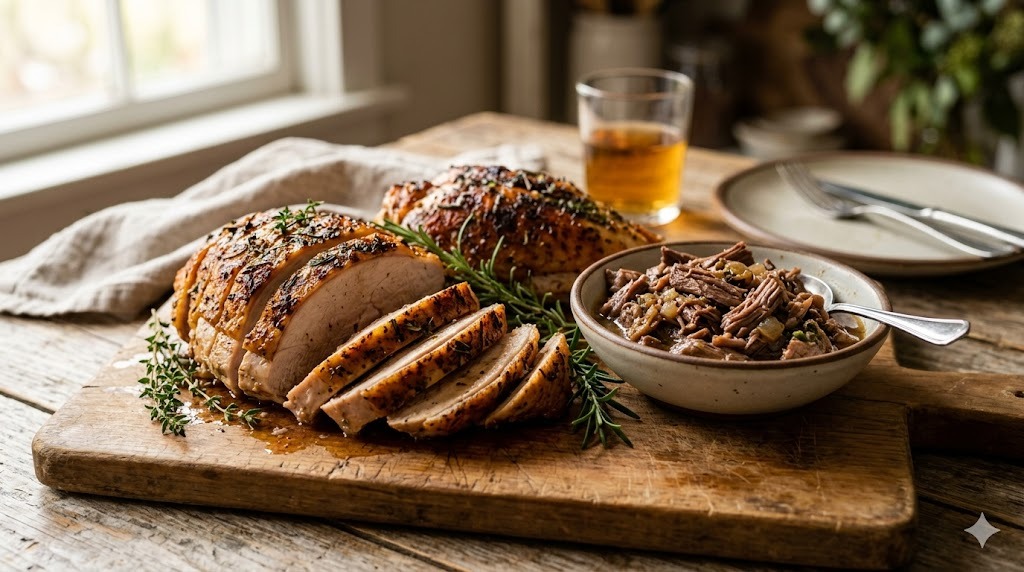
- Breast: brined, roasted or smoked to 160F, rested, sliced thin for a centerpiece, sandwiches, or schnitzel-style cutlets pounded thin and pan-fried.
- Legs and thighs: braised low and slow, the meat shredded for a second, completely different meal later in the week.
- Trim and scraps: ground for sausage or burgers, mixed with added fat the way you would handle any lean game.
Common Mistakes to Avoid
- Roasting the whole bird to one temperature. The breast overcooks before the legs are tender. Separate them.
- Skipping the brine. Lean breast needs it.
- Cooking the breast past 165F. Dry, chalky, disappointing.
- Roasting the legs. Those tendons demand a braise.
- Sloppy field care. A bird left warm in the sun tastes worse no matter how well you cook it.
Respect the wild turkey for what it is - a lean, athletic, flavorful bird - and cook each part on its own terms. For a wider look at handling everything you harvest, see our guide to cooking wild game.