Waterfowl
40 detailed profiles covering identification, habitat, seasons, methods, gear and shot placement for every waterfowl species.
Auf Deutsch lesen - 40 Porträts
40 shown
Mallard
Canada Goose
Snow Goose
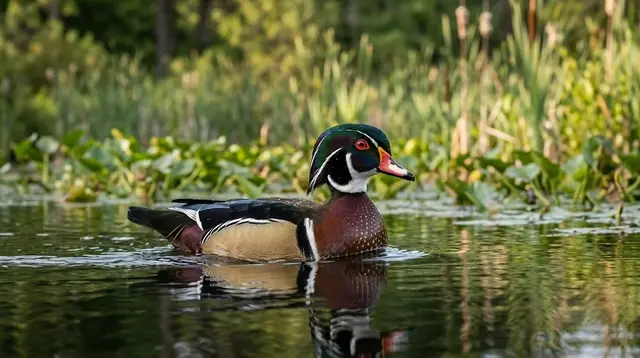
Wood Duck
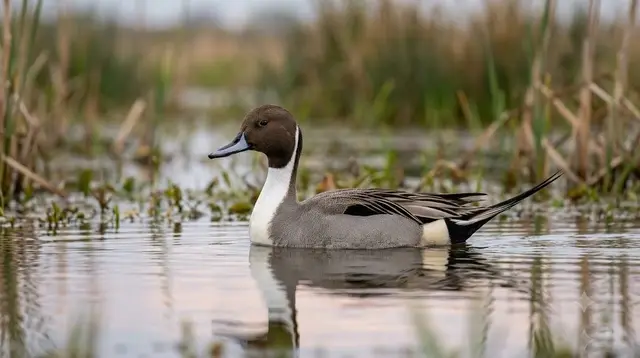
Northern Pintail
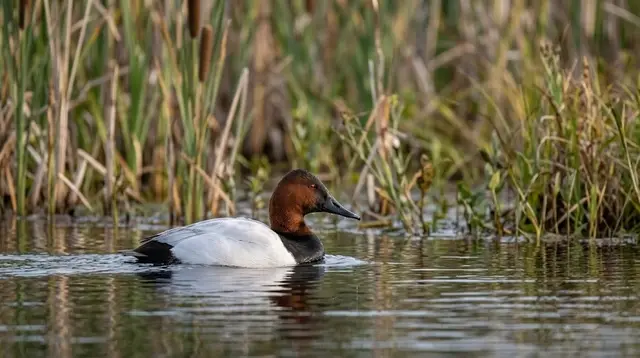
Canvasback
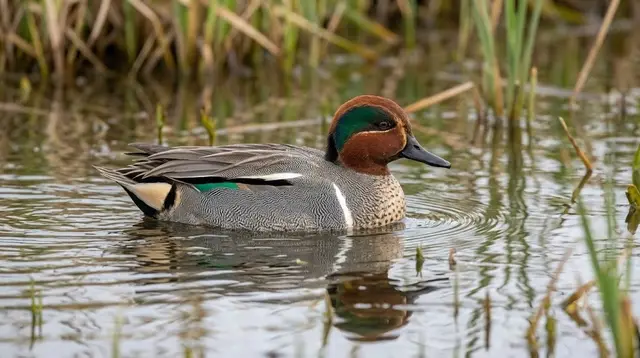
Teal
Sandhill Crane
Gadwall
American Wigeon
Blue-winged Teal
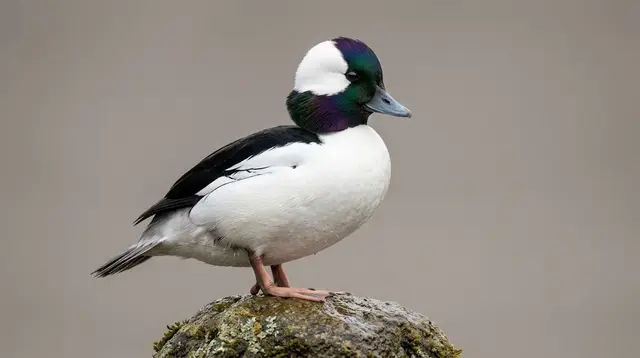
Bufflehead
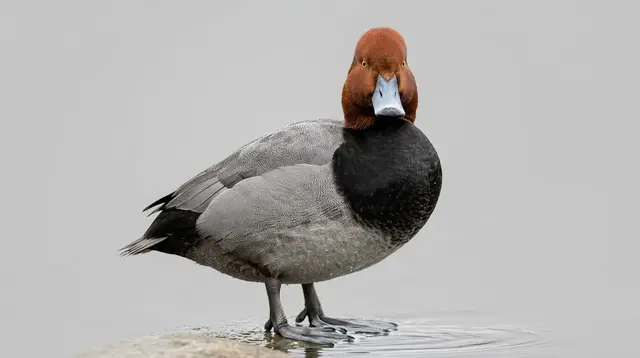
Redhead
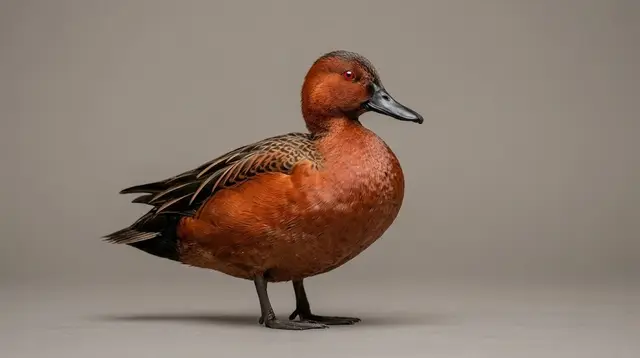
Cinnamon Teal
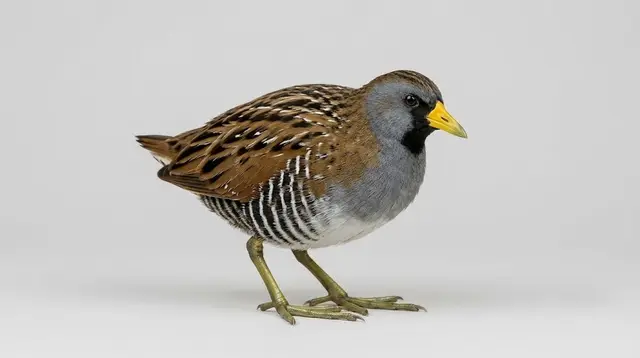
Sora
Green-winged Teal
Ring-necked Duck
Lesser Scaup
Hooded Merganser
Mottled Duck
Northern Shoveler
Common Goldeneye
American Black Duck
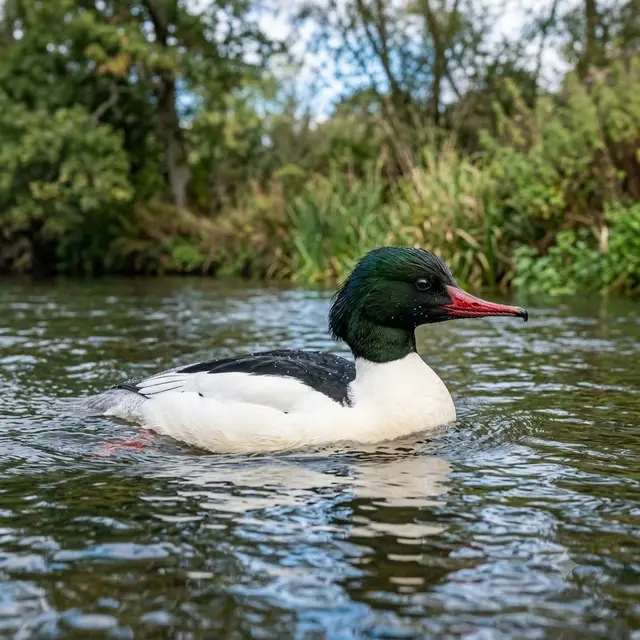
Common Merganser
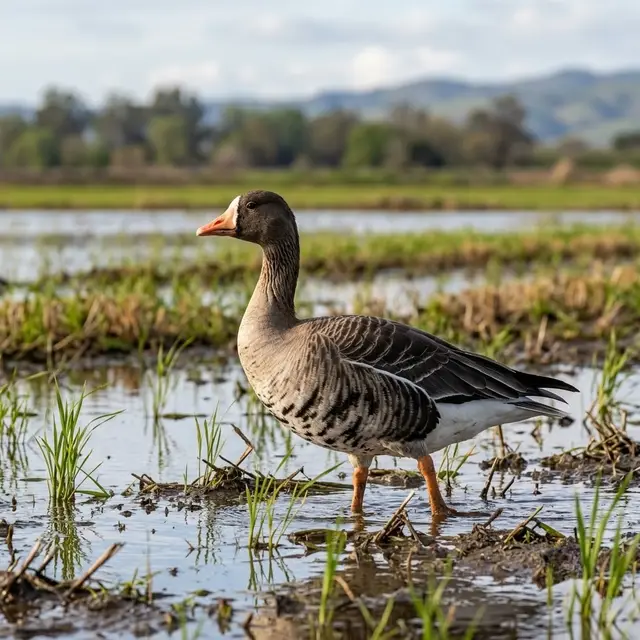
Greater White-fronted Goose
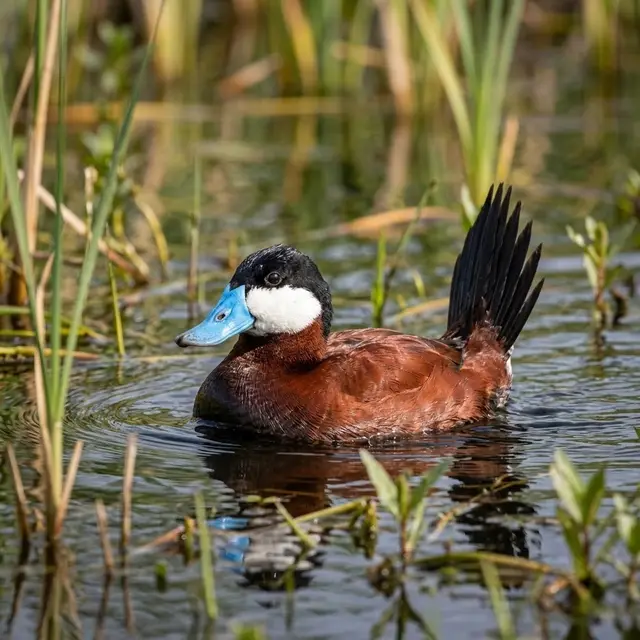
Ruddy Duck
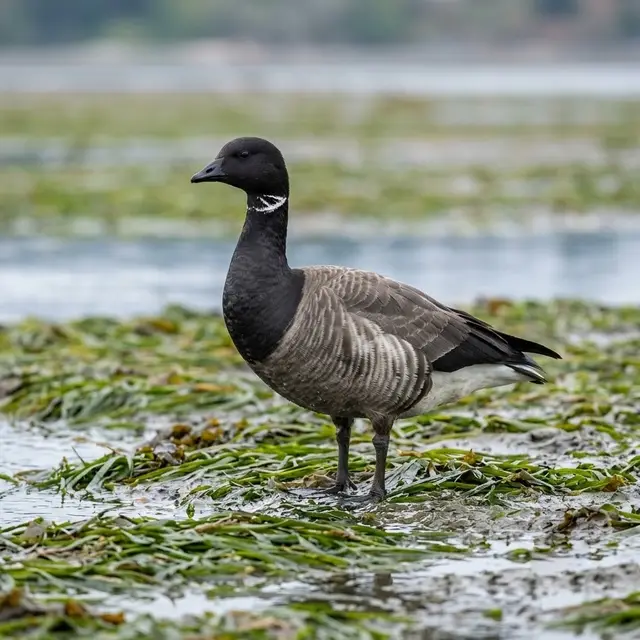
Brant
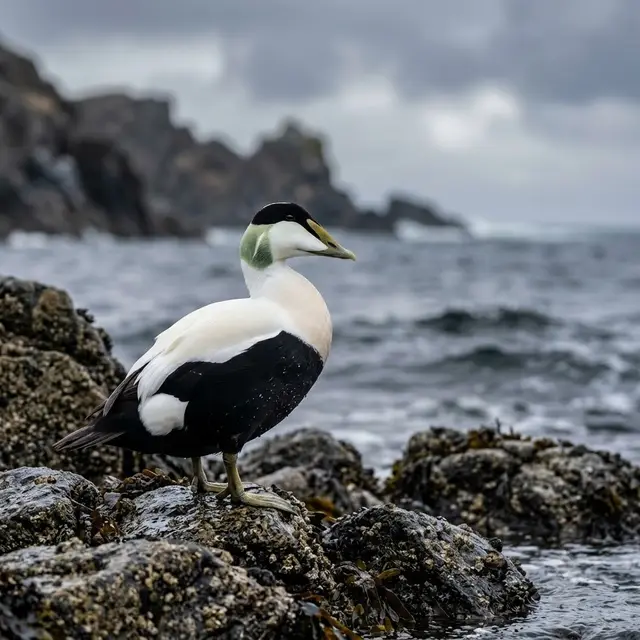
Common Eider
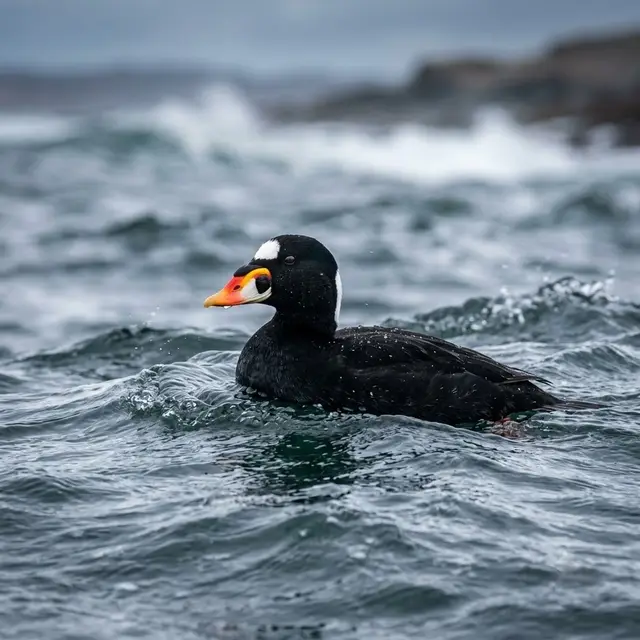
Surf Scoter
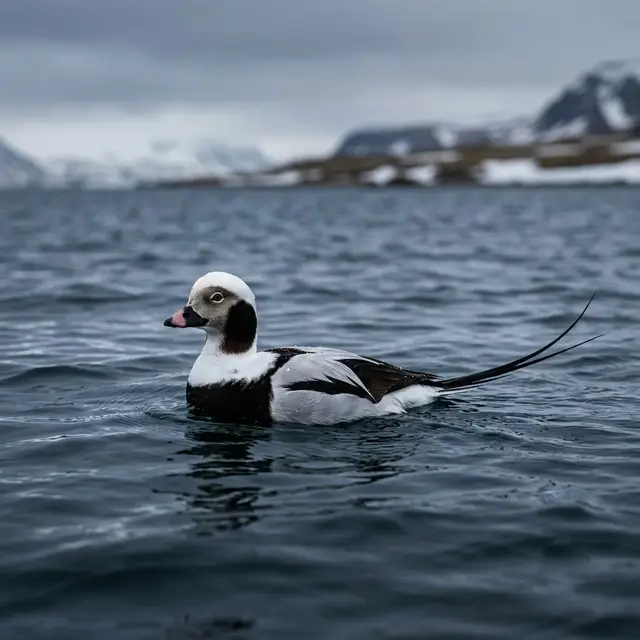
Long-tailed Duck
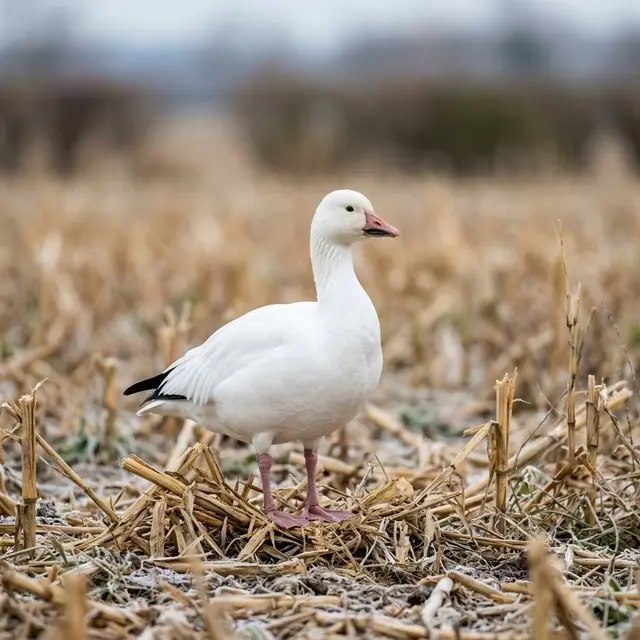
Ross's Goose
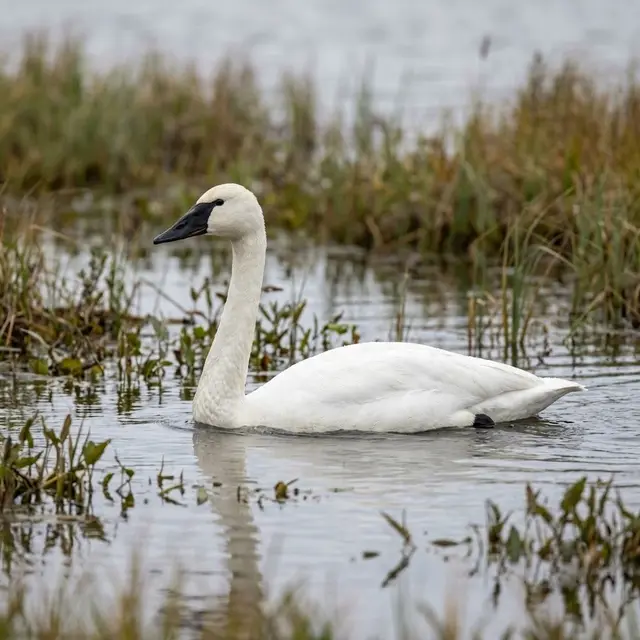
Tundra Swan
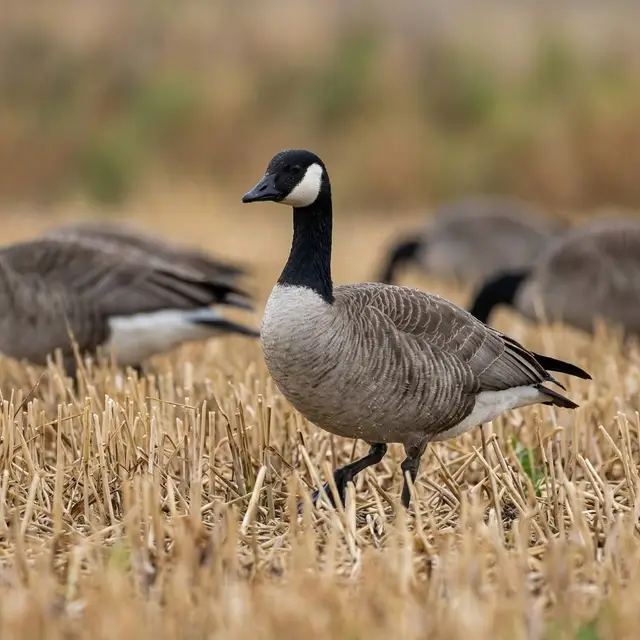
Cackling Goose
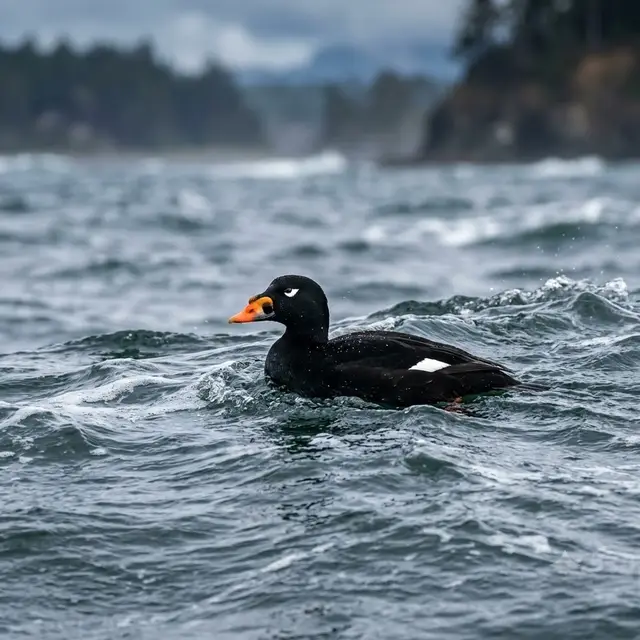
White-winged Scoter
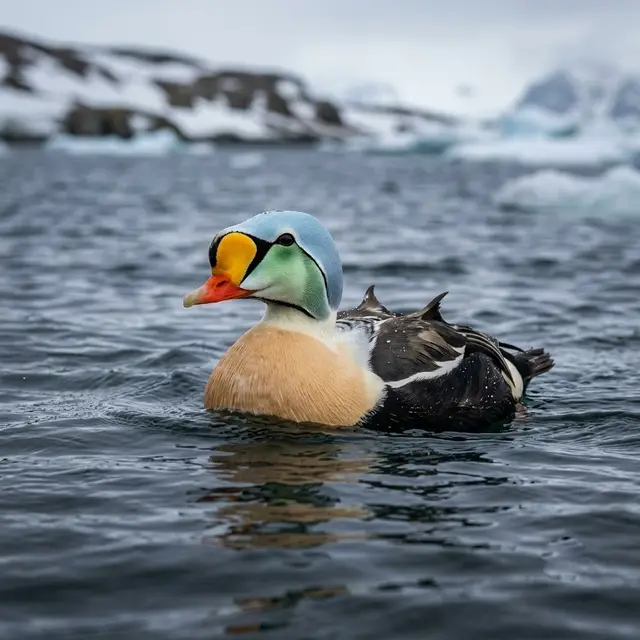
King Eider
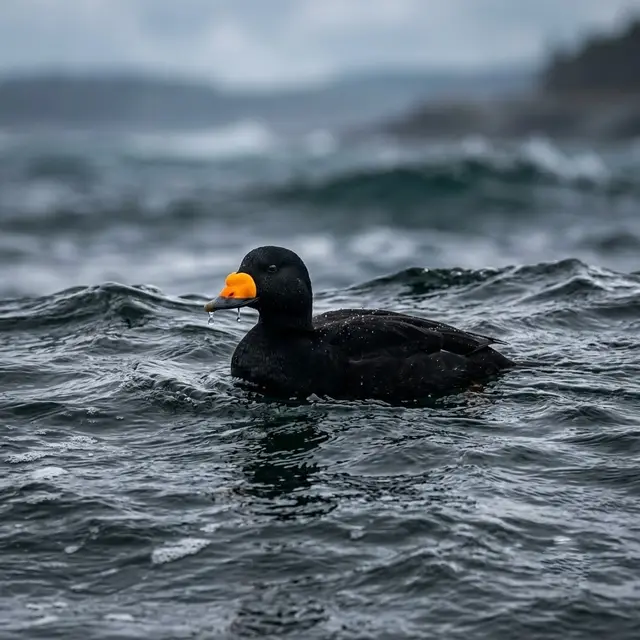
Black Scoter
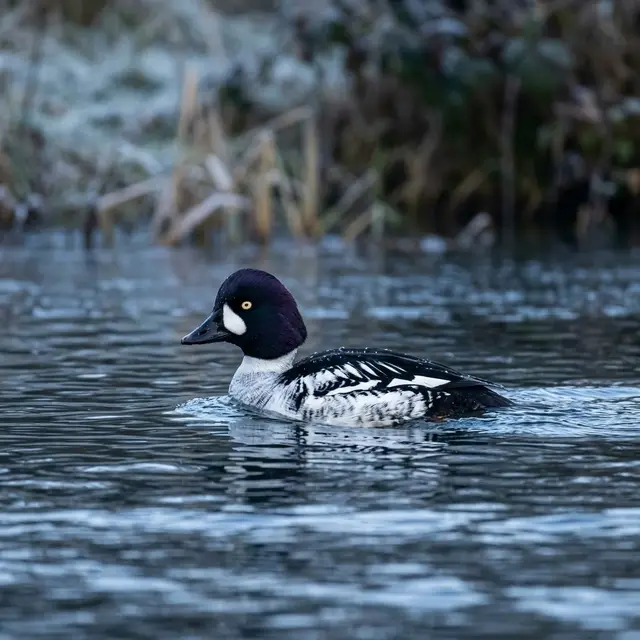
Barrow's Goldeneye
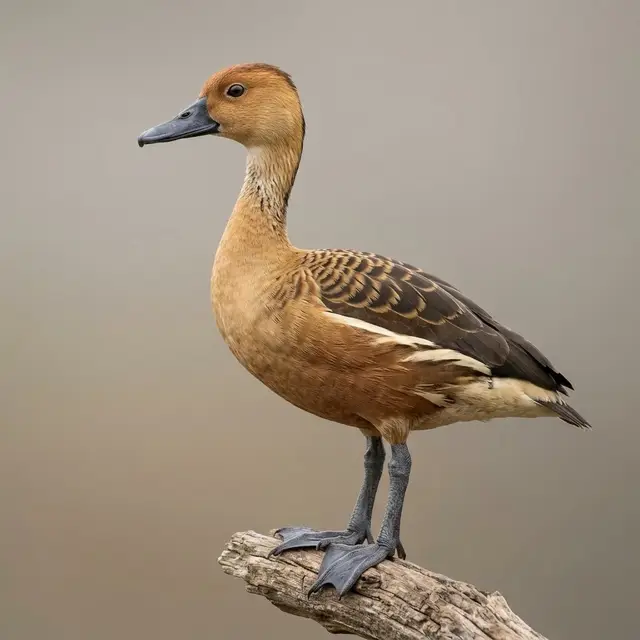
Fulvous Whistling Duck
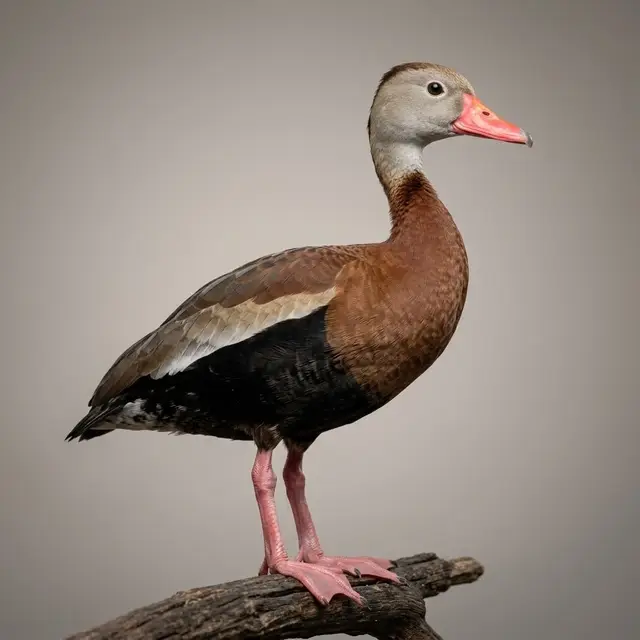
Black-Bellied Whistling Duck
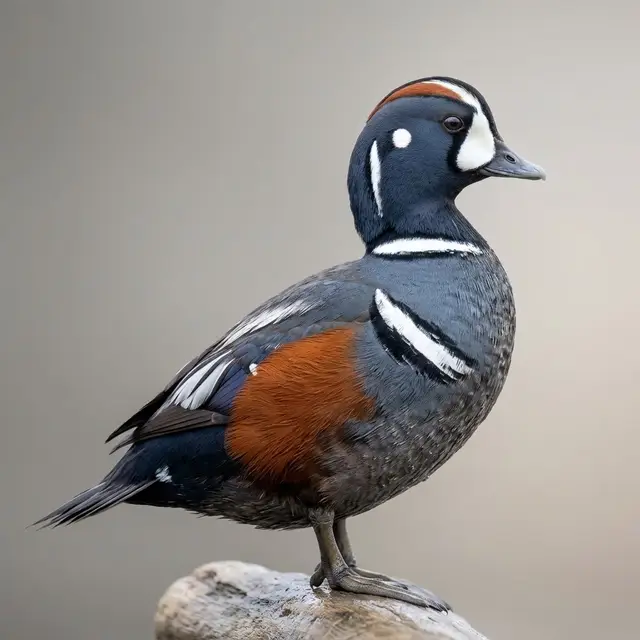
Harlequin Duck
No waterfowl match that search. Clear search
How to tell them apart
One identification cue for each species, from its profile. Open a profile for the full description - and check your state's regulations, which set separate limits for some look-alike species.
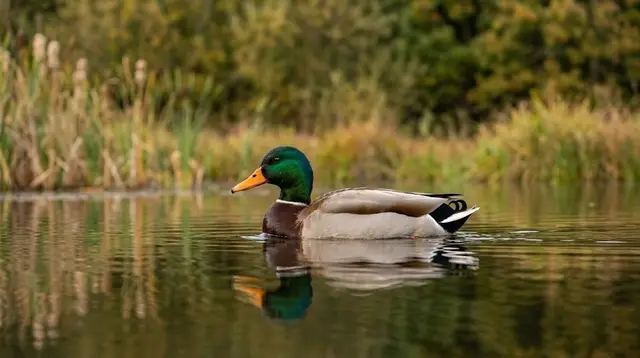
- Mallard
- The drake mallard in breeding plumage is unmistakable: a glossy emerald-green head, a thin white neck ring, a chestnut breast, gray sides, and a curled black tail with a yellow bill.
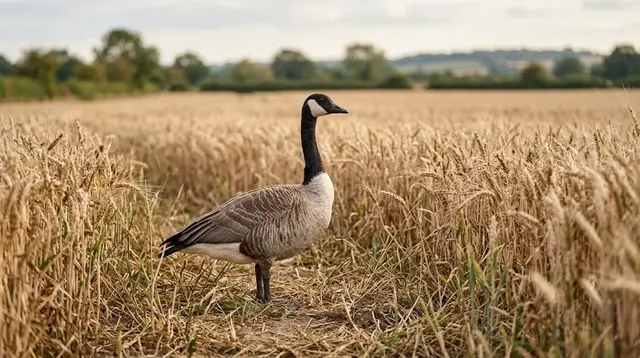
- Canada Goose
- The Canada goose is instantly recognized by its black head and neck, a bright white "chinstrap" cheek patch, a brownish-gray body, and a white rump and undertail.
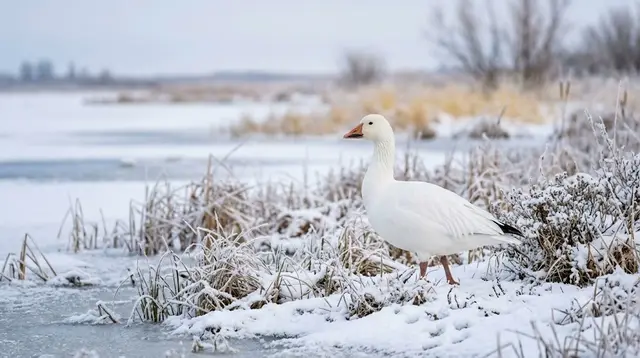
- Snow Goose
- Snow geese are frequently confused with Ross's geese, a smaller, similar-looking white goose that lacks the prominent grinning patch and has a stubbier bill.
- Wood Duck
- The drake wood duck in breeding plumage is unmistakable: an iridescent green and purple crested head marked with bold white stripes, a deep chestnut breast flecked with white, golden flanks, a red eye, and a multicolored bill.
- Northern Pintail
- The drake northern pintail in breeding plumage is unmistakable and striking: a chocolate-brown head, a clean white breast and foreneck with a thin white finger extending up the side of the neck, a gray body, and the long, slender black central tail feathers that point sharply upward.
- Canvasback
- The canvasback is often confused with the smaller redhead, but the redhead has a rounded head with a clear forehead step and a shorter blue-gray bill, and a darker gray body.
- Teal
- Hens of all three are mottled brown and can be difficult to tell apart, identified mainly by size, wing patches, and bill shape.
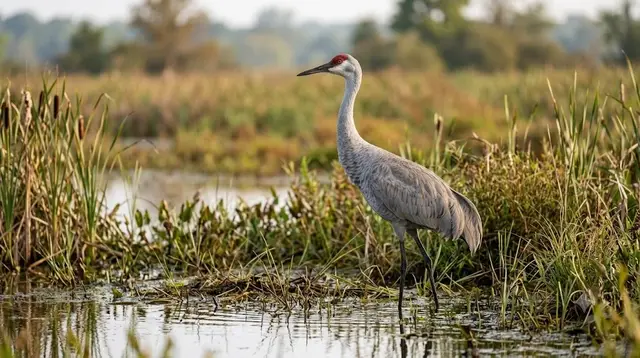
- Sandhill Crane
- Critically, hunters must be able to distinguish sandhill cranes from the endangered whooping crane, which is mostly white with black wingtips and is fully protected - positive identification before every shot is mandatory.
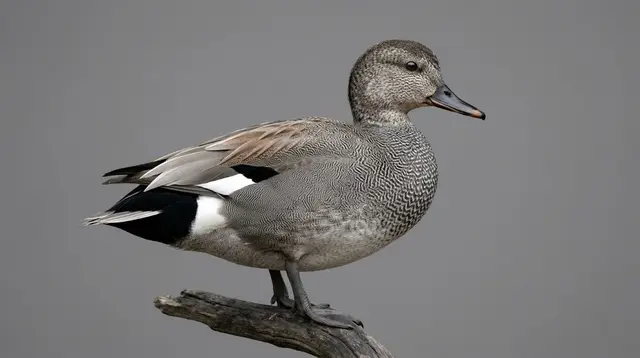
- Gadwall
- His most reliable mark is the pure white square speculum - the gadwall is the only dabbling duck with a clean white speculum, visible both in flight and at rest.
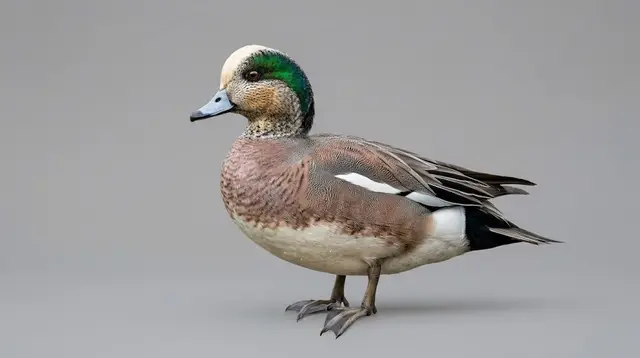
- American Wigeon
- The breeding drake wears a creamy-white forehead and crown over a grayish, finely speckled face, with a broad iridescent green stripe sweeping back from each eye.
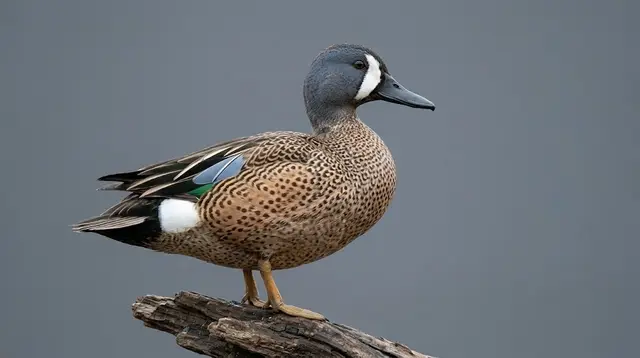
- Blue-winged Teal
- The catch for hunters is timing: in early fall many drakes are still in drab eclipse plumage and look much like hens, so birds buzzing the decoys can be hard to tell apart.
- Bufflehead
- A breeding drake bufflehead is unmistakable: a small, round, puffy-headed duck with a large white wedge wrapping around the back of an iridescent black head that shows green and purple in good light, a clean white body, and a black back.
- Redhead
- The rounded head and gray back separate it cleanly from the similar canvasback, which has a long sloping forehead and a much whiter body.
- Cinnamon Teal
- The hen is mottled brown with a pale brown head and is very similar to a blue-winged hen; Wikipedia's account gives the differences as a richer overall colour, a less distinct eye line and eye ring, and a longer, more spatulate bill.
- Sora
- The sora is a plump, chicken-like marsh bird about the size of a small dove, with a short, stubby, bright yellow bill that sets it apart from every other rail.
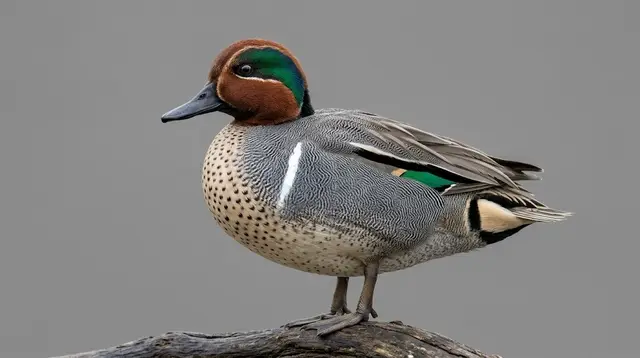
- Green-winged Teal
- In flight both sexes flash a bright green speculum on the wing - the "green wing" of the name - with no blue forewing patch, which separates them at a glance from blue-winged and cinnamon teal.
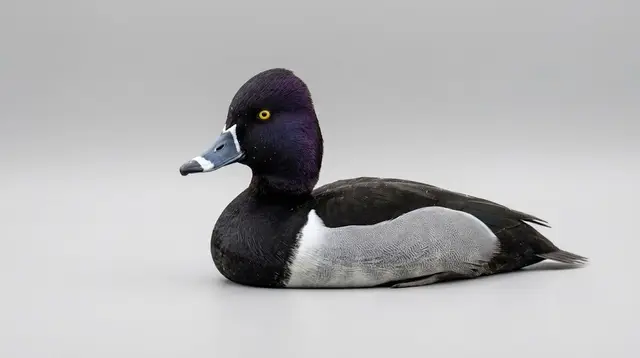
- Ring-necked Duck
- In flight, ringbills show a plain gray wing stripe rather than the bold white of scaup - a useful way to separate the two species, since the peaked head and white bill ring are easy to confirm once birds are close.
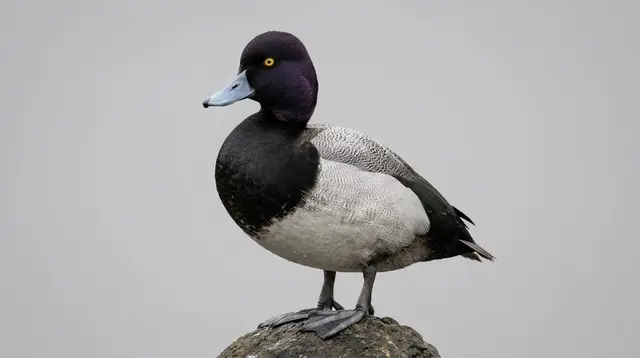
- Lesser Scaup
- A drake lesser scaup has a dark head that shows a purple sheen in good light, a black chest, clean pale gray sides and back, a black rear, and the pale bluish bill that gives the bird its nickname.
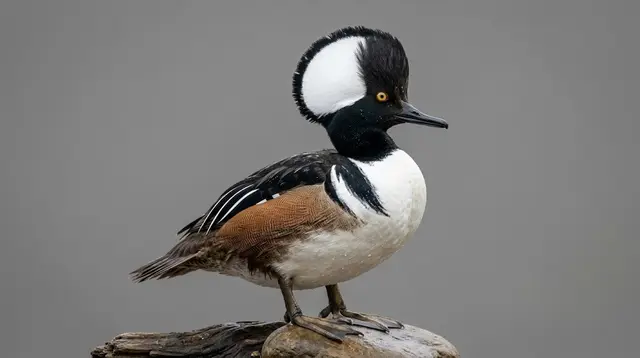
- Hooded Merganser
- The thin sawbill and the crest separate them at a glance from any dabbling duck.
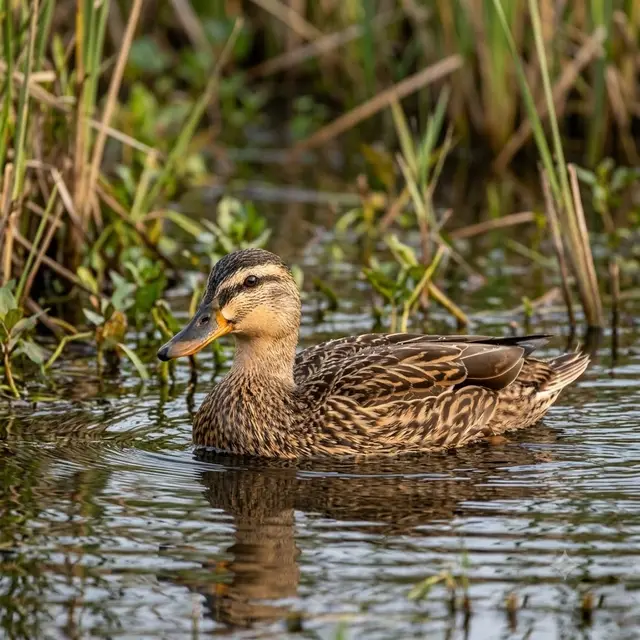
- Mottled Duck
- Key marks include a buff-tan face and throat that contrast with a darker crown and eye-line, a blue-to-purple speculum usually bordered by little or no white (unlike the mallard's bold white bars), and a yellow-olive bill on the drake, a duller orange-and-black bill on the hen.
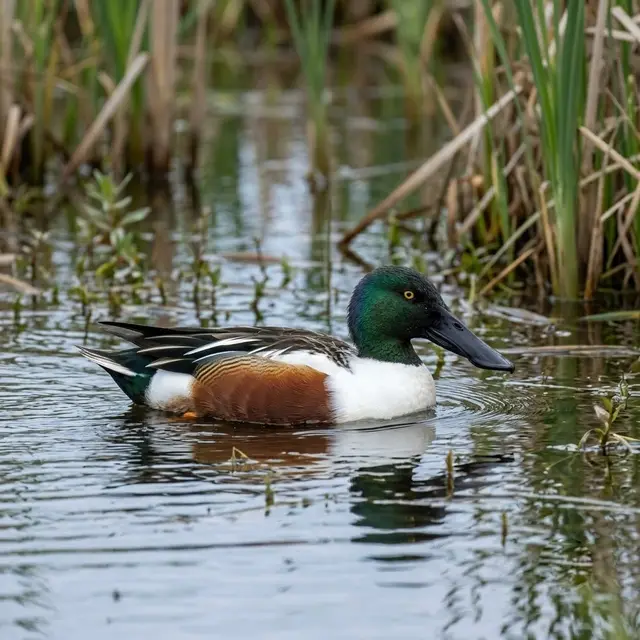
- Northern Shoveler
- The shoveler is unmistakable in the hand because of its long, broad, shovel-like bill, which it uses to filter tiny food from the water.
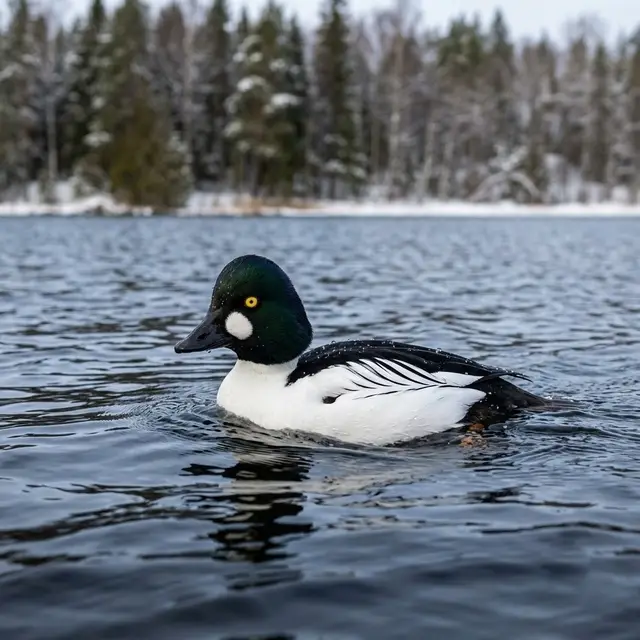
- Common Goldeneye
- The high, rounded, almost triangular head profile and the golden eye set the goldeneye apart from other divers.
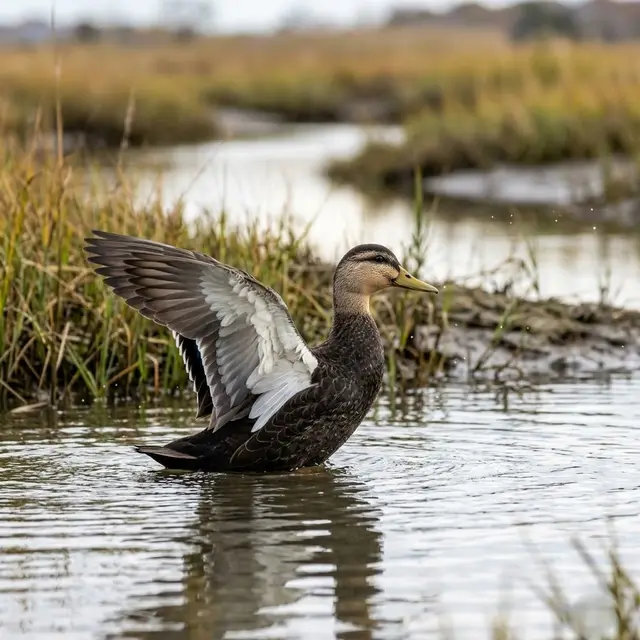
- American Black Duck
- Because black ducks and hen mallards are so similar and the two hybridize freely, hunters must identify carefully before shooting where bag limits differ between species.
- Common Merganser
- The thin sawbill separates mergansers from all the blocky-billed dabbling and diving ducks.
- Greater White-fronted Goose
- The greater white-fronted goose is a medium-sized gray-brown goose, smaller and more slender than a Canada goose.
- Ruddy Duck
- The ruddy duck is a small, compact diver, only about 14-16 inches long and roughly a pound, with a large head, short thick neck, and a long stiff tail it often holds cocked straight up.
- Brant
- Brant are compact, dark geese with a black head, neck and chest, a small white necklace, and a bright white rear that flashes in flight.
- Common Eider
- Drakes are boldly patterned in white above and black below with a green nape and a sloping wedge-shaped bill; hens are barred brown.
- Surf Scoter
- Drakes are velvety black apart from the two white head patches, with a swollen bill that looks orange at a distance and is patterned with white, red and yellow.
- Long-tailed Duck
- Winter drakes are boldly pied black and white with a pink-banded bill and two long central tail feathers; hens are duller brown and white.
- Ross's Goose
- They look like petite snow geese and are told apart by size and the cleaner bill.
- Tundra Swan
- Tundra swans are huge, pure-white birds with a black bill often marked by a small yellow spot at the base, and a long straight neck.
- Cackling Goose
- Cackling geese look like miniature Canada geese with the same black neck and white cheek patch but a much smaller body, short stubby bill and steeper forehead, and a higher-pitched call.
- White-winged Scoter
- The drake is all black except for white around the eye and the white wing patch; his bill is orange and red with a large black knob at the base.
- King Eider
- Drakes are stunning, with a pale blue-gray crown, green cheeks, an orange knob and shield over a red bill, and a black-and-white body; hens are warm barred brown.
- Black Scoter
- Drakes are entirely black; the swollen yellow-orange knob at the base of the bill is the only colour on the bird.
- Barrow's Goldeneye
- The crescent face patch separates drakes from common goldeneye.
- Fulvous Whistling Duck
- Warm tawny (fulvous) head, neck, and underparts sit above a dark brown back scalloped with buff feather edges.
- Black-Bellied Whistling Duck
- Both sexes look identical: a bright coral-pink bill, pink-red legs, a gray face with a white eye-ring, chestnut crown, neck, and breast, and a solid black belly.
- Harlequin Duck
- Hens and juveniles are plain brown with two or three round white patches on the face, easily confused with female buffleheads or scoters.
Field gear for waterfowl
Duck decoys Spread size and motion pull more birds than any call. Check price Calls & lanyard A basic single-reed plus a whistle covers most mornings. Check price Chest waders A dry hunter sits longer, and longer sits mean more birds. Check price Blind bag Shells, calls, gloves and coffee in one place. Check price
Rubber hunting boots Waterproof and scent-free for the walk in - Muck's boot range, straight from the maker. Shop at Muck Boot Links go to Amazon or a partner store (such as OpticsPlanet) and may earn us a commission at no extra cost to you. As an Amazon Associate we earn from qualifying purchases. We link gear types, not sponsors' picks: you choose the exact product.