Grinding Game & Making Sausage
Lean game needs added fat to grind well. Learn fat ratios, grinder basics, why cold and clean matter, plus simple breakfast-sausage and burger-blend recipes.
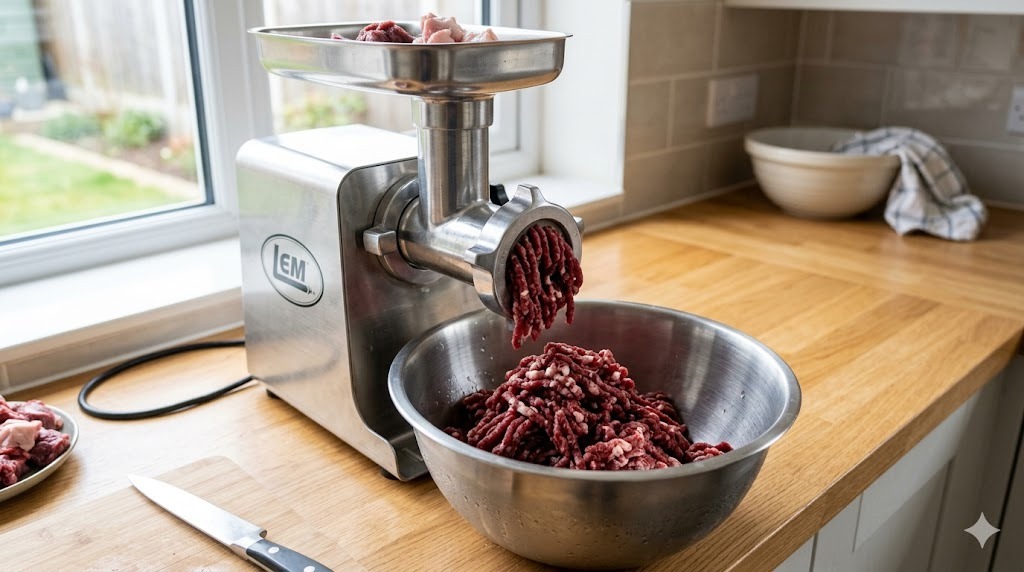
Grinding is where the odd trim, the tougher cuts, and the scraps from a deer or hog turn into some of the most useful meat in your freezer. Burgers, breakfast sausage, meatballs, chili, summer sausage - it all starts at the grinder. And it is genuinely easy to do well at home once you understand two things - lean game needs fat, and everything has to stay cold and clean.
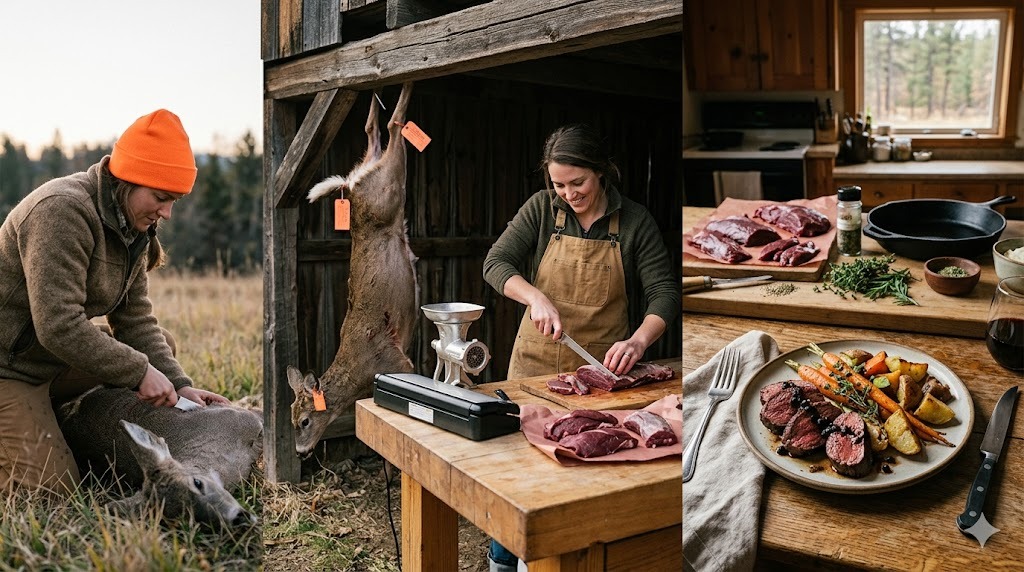
Part of our Field & Kitchen series - what happens after the shot: the handling, butchering and cooking that turn a tag into good eating.
You do not need a commercial kitchen or expensive gear. You need a decent grinder, a sharp knife, a cold work surface, and a little discipline about temperature and cleanliness.
Why Lean Game Needs Added Fat
Venison, elk, antelope, and most wild game is extremely lean. That is great for steaks, but it is a problem for ground meat. Pure ground venison cooks up dry, crumbly, and gray, and it will not hold together in a burger or bind into a proper sausage. Fat carries flavor, keeps the meat moist, and gives ground product the texture you actually want.
So you add fat. The two standard choices:
- Pork back fat (fatback). The classic sausage fat - clean, neutral, and what most game sausage recipes assume. Ask a butcher; it is cheap. Pork fat trimmings or fatty pork shoulder work too.
- Beef fat (suet) or fatty beef trim. A good option for burgers if you want an all-red-meat blend or do not eat pork. Beef fat has a higher melting point, which some people prefer for grilling.
How much fat? Aim for roughly 20 to 30 percent fat by weight. A common, reliable starting point:
- Burger blend: about 80/20 (80 percent venison, 20 percent fat). Lean but cohesive.
- Sausage: 70/30 is traditional and forgiving; the extra fat makes a juicier, more tender sausage.
If you grind a 10-pound batch of trim, that means adding roughly 2.5 to 4 pounds of fat. You can scale to taste once you learn what your family likes. Too little fat and it is dry; too much and it can feel greasy. The good news about working with lean trim like this is covered more in our guide to processing game meat, which walks through breaking down the carcass before any of this trim reaches the grinder.
Keep Everything Cold and Clean
This is not a polite suggestion - it is the rule that makes or breaks home grinding.
Cold matters for two reasons. Warm fat smears instead of cutting, gumming up the grinder plate and giving you a pasty, separated texture. And warm ground meat is a food-safety risk because grinding spreads any surface bacteria throughout the batch.
- Chill the meat and fat until very cold but not frozen solid - firm, around the freezer-edge stage, roughly 32 to 34F (0 to 1C). Partially freezing for 30 to 60 minutes before grinding is ideal.
- Chill the grinder parts too. Put the auger, plates, and knife in the freezer beforehand.
- Work in batches. Do not let a big pile of trim sit warming on the counter. Keep what you are not grinding in the fridge.
- For best texture, grind, then chill again before a second grind or before mixing seasoning.
Clean matters because ground meat is the highest-risk form of any meat. Sanitize your surfaces, knives, and grinder. Wash hands often. Keep raw and finished meat separated.
When you cook the finished product, ground game should reach an internal temperature of about 160F/71C. As always, that cooked temperature is a guideline - the real safety work is keeping the meat cold from field to freezer and grinding it clean.
Grinder Basics
Whether you have a hand-crank grinder, a stand-mixer attachment, or a dedicated electric unit, the fundamentals are the same.
- Cut to fit. Trim meat and fat into strips or chunks that drop easily into the throat. Remove silverskin, sinew, glands, and any blood-shot or hair-fouled bits - they clog the plate and taste bad.
- Plate sizes. A coarse plate (around 3/8 inch / 10mm) is a good first grind. A finer plate (around 3/16 inch / 4.5mm) gives a smoother sausage texture on a second pass. Burgers are often fine with a single coarse grind.
- Mix the fat in as you go. Alternate chunks of meat and fat into the grinder so they blend evenly rather than coming out in streaks.
- Do not force it. Let the auger pull the meat. Forcing warm meat through a clogged plate is how you get mush. If it smears, stop and re-chill everything.
- Grind twice for sausage. Coarse first, then mix in seasoning, then grind again finer for a uniform bind.
Simple Recipes to Start
These are deliberately basic. Master them, then branch out.
Breakfast sausage (per 1 lb / 450g of 70/30 ground game):
- 1 tsp salt
- 1 tsp rubbed sage
- 1/2 tsp black pepper
- 1/2 tsp dried thyme
- 1/4 tsp red pepper flakes (optional)
- 1 to 2 tsp brown sugar or maple syrup
- A splash of cold water to help it mix and stay moist
Mix the seasoning into the chilled ground meat thoroughly until it gets slightly sticky - that tackiness means the proteins have bound and your sausage will hold together. Cook a small test patty, taste, and adjust salt and sage before committing the whole batch. This single step saves more sausage than any other.
Burger blend (per 1 lb / 450g of 80/20 ground game):
- 3/4 to 1 tsp salt
- 1/2 tsp black pepper
- Nothing else - let the meat speak
Keep the mix cold, form patties gently without overworking, and make a thumb dimple in the center so they cook flat. Do not press them on the grill; you will squeeze out the fat you worked to add.
Casings vs Bulk
Once the seasoned meat is mixed, you have a choice.
- Bulk (loose) sausage is the simplest. Pack it into freezer bags or roll it into logs and wrap. Use it for patties, crumbles, meatballs, and chili. No casings, no stuffer, no fuss. Most people should start here.
- Cased (link) sausage needs natural or collagen casings and ideally a dedicated stuffer (grinders can stuff, but they tend to overwork and smear the meat). Soak natural casings, slide them onto the stuffer tube, fill gently to avoid air pockets, and twist into links. It is more work and more equipment, but you get true links and a better texture.
For your first few batches, go bulk. Get your fat ratio and seasoning dialed in. Add casings later when you know you enjoy the process.
Common Mistakes to Avoid
- Skipping the added fat. Pure lean game makes dry, crumbly ground meat that will not bind.
- Letting things get warm. Smeared fat ruins texture and warm meat is a safety risk. Cold, cold, cold.
- Not cooking a test patty. Always taste-check seasoning before you commit the whole batch.
- Dirty equipment. Ground meat is the highest-risk cut. Sanitize everything.
- Leaving silverskin and sinew in the trim. They clog the plate and chew like rubber.
- Overworking the mix for burgers. Gentle handling keeps them tender.
Grinding turns the humble parts of an animal into the meat you will reach for most. Start with bulk sausage and a clean 80/20 burger blend, respect the cold, and you will never look at store-bought ground meat the same way again. For more on cooking what you make, see our overview on cooking wild game.