Wildebeest
The wildebeest, or gnu, is one of the iconic plains animals of Africa and a staple of the plains-game safari.
🗓️ Last reviewed: July 2026
Overview
The wildebeest, or gnu, is one of the iconic plains animals of Africa and a staple of the plains-game safari. Built like a small, muscular ox with a horse-like mane and a mournful face, it roams the open savannas of southern and eastern Africa in the two forms hunters encounter - the blue and the black wildebeest. Hunted primarily on African plains-game safaris, and appearing on some exotic-game ranches in Texas, the wildebeest has a well-earned reputation for toughness. It carries a lot of muscle over its vitals and can absorb a poorly placed shot and keep going, which is why experienced hunters say to "aim small" and place the bullet with care. For the plains-game hunter, it is an accessible, rewarding, and genuinely challenging quarry.
Identification & Appearance
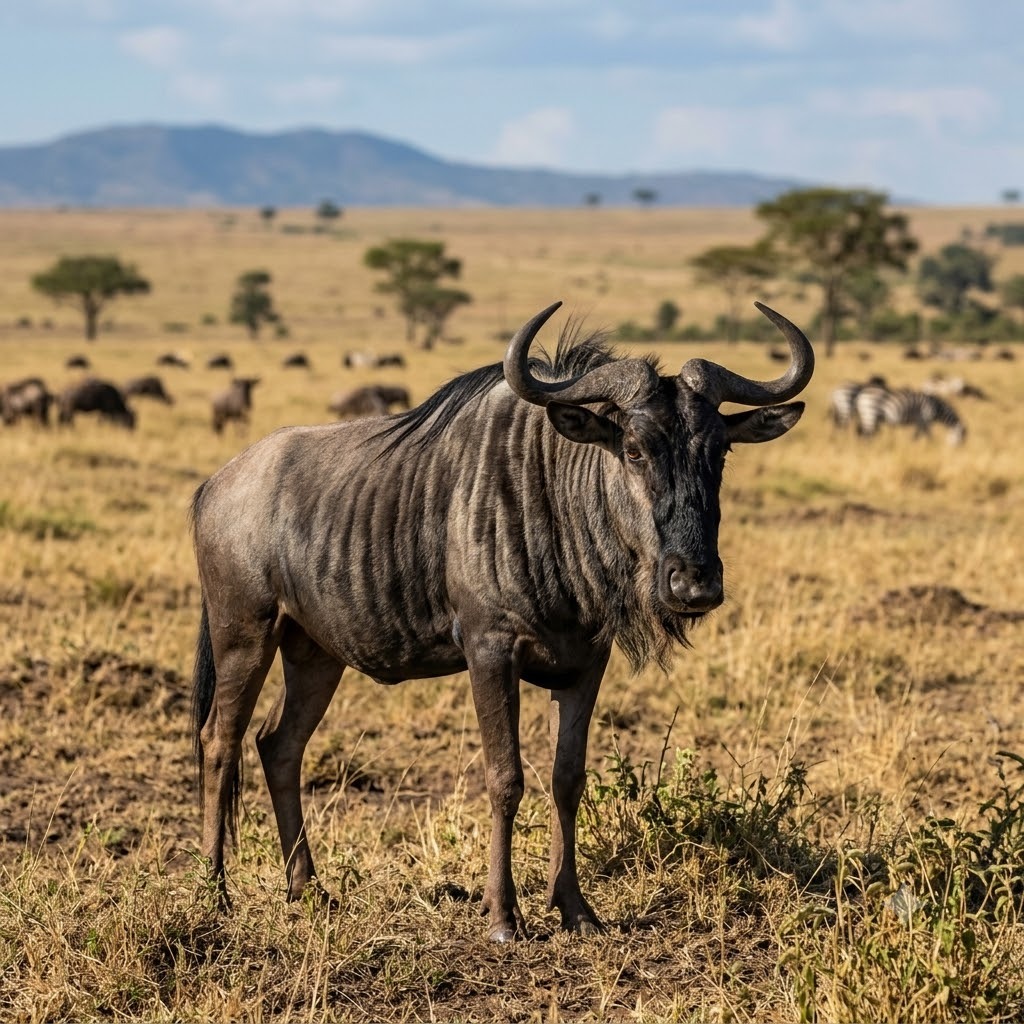
The wildebeest is a large antelope with a stocky, front-heavy build - a deep chest and shoulders tapering to slimmer hindquarters, topped by a horse-like mane and a beard. The blue wildebeest is slate-gray with darker vertical stripes on the forequarters and a black mane and tail; the black wildebeest is dark brown with a distinctive pale, horse-like tail and forward-curving horns. Both sexes carry smooth, cow-like horns that sweep out and up, heavier and broader-based on bulls. Adult bulls commonly weigh 350 to 600 pounds, with cows lighter. The long face, shaggy mane, and muscular forequarters give it an unmistakable, prehistoric look on the open plain.
Range & Habitat
The wildebeest's home is Africa - the open savannas and lightly wooded plains of southern and eastern Africa, where it is hunted on plains-game concessions and game ranches. In the United States, wildebeest are found on a limited number of exotic-game ranches, chiefly in Texas, that maintain suitable open grassland. Wildebeest graze short and medium grass and rarely stray far from water, so they concentrate on open plains within reach of drinking sources. The recurring theme is wide-open, grassy country with good visibility - habitat that shapes both the herd behavior and the spot-and-stalk hunting it demands.
Behavior & Sign
Wildebeest are highly social, gregarious grazers, often seen in herds on the open plain, sometimes in the company of zebra and other plains game. Their many eyes and open habitat make them alert and difficult to approach undetected. They graze through the cooler hours and rest or move to water during the heat, and they can be restless and nomadic, shifting with grazing and rainfall. Sign includes heavily grazed grass, well-used trails to water, tracks and droppings on the open ground, and dust or wallow areas. Because they herd up in the open, spotting one usually means spotting many.
Hunting Seasons & Timing
On African plains-game safaris, wildebeest are typically hunted during the local hunting season, often in the drier months when animals concentrate near water and the grass is shorter for better visibility; the outfitter and jurisdiction set the exact dates and rules. On US exotic ranches, wildebeest generally can be hunted year-round because exotics fall outside the state game-season framework, with timing guided by ranch policy and animal condition. Day to day, the best hunting follows the animals' habits: cooler morning and evening hours when herds graze in the open and move to water. Always confirm the season, permits, and rules for your specific safari or ranch well in advance.
Hunting Methods
Spot-and-stalk is the classic wildebeest method: glass the open plains to locate a herd and the bull worth taking, then use the terrain, cover, and wind to close within a clean shooting distance - often no small task given the animals' alertness. Ambush from a blind over a water source or well-used trail is another productive approach, especially in dry conditions when animals must drink. Because wildebeest herd in the open, a patient, unhurried stalk that avoids alarming the group is essential, and a steady rest is important given the animal's toughness. Matching the method to the terrain and the herd's behavior is the skill.
Where to Find Them - Reading the Terrain
Read the plains as grazing ground tied to water. Wildebeest feed on open short and medium grass and must drink regularly, so they concentrate on grassland within reach of water sources and along the trails between. Glass the open country in the cool hours, look for heavily grazed areas, dust and wallow spots, and the well-worn paths to water, and expect to find herds rather than singles. Use every fold, rise, and patch of cover in the largely open terrain to approach, and keep the wind in your favor and your profile off the skyline. Locating a herd, picking your bull, and planning a patient downwind stalk is the heart of the hunt.
Gear & Optics Needed
Quality optics are essential on the open plains: a 10x42 binocular for scanning and a spotting scope for judging bulls at distance. A rangefinder matters where open country deceives. A rifle and cartridge with enough authority for a tough, heavy-muscled animal, paired with a steady rest such as shooting sticks, is important - the wildebeest's hardiness means a solid hit is non-negotiable. Muted clothing for warm conditions, sturdy boots, sun and dust protection, and plenty of water round out the kit. Add a sharp knife, a capable pack, and a mapping tool. As always, wind discipline outweighs any single piece of gear.
Shot Placement & Field-Dressing
Ethical, fair-chase hunting demands a clean, quick harvest, and with the wildebeest's toughness, precise placement is everything - hence the guide's advice to "aim small." The broadside shot to the heart-lung area, tucked in low and just behind the front shoulder, offers the best result on this heavily muscled animal; avoid shots too far back or quartering hard into the shoulder mass. Wait for a calm, unobstructed, well-ranged bull standing clear of the herd, and pass anything marginal. After the shot, be prepared to follow up carefully, as wildebeest are known to travel. Field-dress promptly to cool the carcass in the heat, and follow all local carcass-handling regulations.
Meat & Eating Quality
Wildebeest provides a good quantity of lean, mild venison - "wild beef" is a fair description - commonly used for steaks, roasts, biltong, and ground meat on safari. As with all wild game, eating quality depends far more on field care than on the animal: rapid cooling in a hot climate is critical, along with clean handling and proper aging where facilities allow. The heavily muscled quarters yield plentiful roasting and grinding cuts, while the better cuts take well to careful cooking. For hunters on safari, wildebeest is both a rewarding pursuit and a practical source of camp meat.
Common Mistakes
The most common error is underestimating the wildebeest's toughness and taking a marginal or poorly placed shot - this animal punishes a soft hit and can travel far. Others include ignoring the wind and the herd's collective alertness, rushing the stalk across open ground, skylining on a rise, and misjudging distance in deceptive terrain. Shooting from an unsteady position at a hardy animal is a frequent, costly mistake, as is firing at a bull with other animals crowded behind it. Patience, a solid rest, careful shot selection, and disciplined wind management consistently outperform hurried, aggressive tactics on the open plain.
Regulations & Conservation Note
Well-managed hunting is a cornerstone of plains-game conservation in much of Africa, where regulated safari hunting funds habitat, anti-poaching, and community programs that keep wildlife on the land. On African safaris, hunt through licensed outfitters, secure the proper permits, and follow the jurisdiction's seasons, quotas, and export rules. On US exotic ranches, wildebeest fall outside the state game framework, so follow the ranch's rules and local carcass laws. Wherever you hunt, take only clean, ethical shots and respect the resource. Hunting legally and responsibly keeps the broader conservation model working.
Best Suited For
The wildebeest suits the hunter after an accessible yet genuinely challenging plains-game animal - a classic first African species that still demands real skill. It rewards patient glassing, steady marksmanship from a solid rest, and disciplined shot placement on a tough, heavy-muscled target. Those drawn to the open-country spot-and-stalk of an African safari, or to an exotic plains animal on a Texas ranch, and hunters who value abundant lean meat with a distinctive trophy, will find it a memorable pursuit.
FAQ
Where are wildebeest hunted? Primarily on African plains-game safaris across southern and eastern Africa, and on a limited number of exotic-game ranches in the United States, chiefly in Texas.
Why do hunters say wildebeest are so tough? They carry heavy muscle over the vitals and are known to absorb a poor shot and keep going. That is why guides stress careful, precise placement and taking only a clean, well-rested shot.
What is the difference between blue and black wildebeest? The blue wildebeest is slate-gray with faint forequarter stripes and a black mane and tail; the black wildebeest is dark brown with a pale, horse-like tail and forward-curving horns. Both are stocky, front-heavy grazers.
Is wildebeest good to eat? Yes - it is lean and mild, often likened to wild beef, and is used for steaks, roasts, biltong, and ground meat. Quality depends on cooling the carcass quickly in the heat and clean field care.
What should I focus on for a clean wildebeest shot? A steady rest and precise placement in the heart-lung area, low and just behind the front shoulder, on a broadside, unobstructed bull. Given the animal's toughness, aim small and pass anything marginal.