Band-tailed Pigeon
The band-tailed pigeon is the largest native pigeon in North America and one of the West's most overlooked game birds.
🗓️ Last reviewed: June 2026
Overview
The band-tailed pigeon is the largest native pigeon in North America and one of the West's most overlooked game birds. Where most people picture pigeons as city birds, this is a wild, shy forest pigeon of Pacific Coast and Southwest mountain country - a strong, fast flier that lives in conifer and oak woods and moves in restless flocks. It is a true migratory bird managed under the federal framework, with short, tightly regulated seasons and a small bag limit, so a hunt for band-tails is as much about scouting and timing as it is about shooting. For a Western hunter who wants challenging wingshooting over feeding trees, mineral springs, and high ridgelines, the band-tailed pigeon offers fast, demanding gunning and a genuinely good bird on the table.
Identification & Appearance
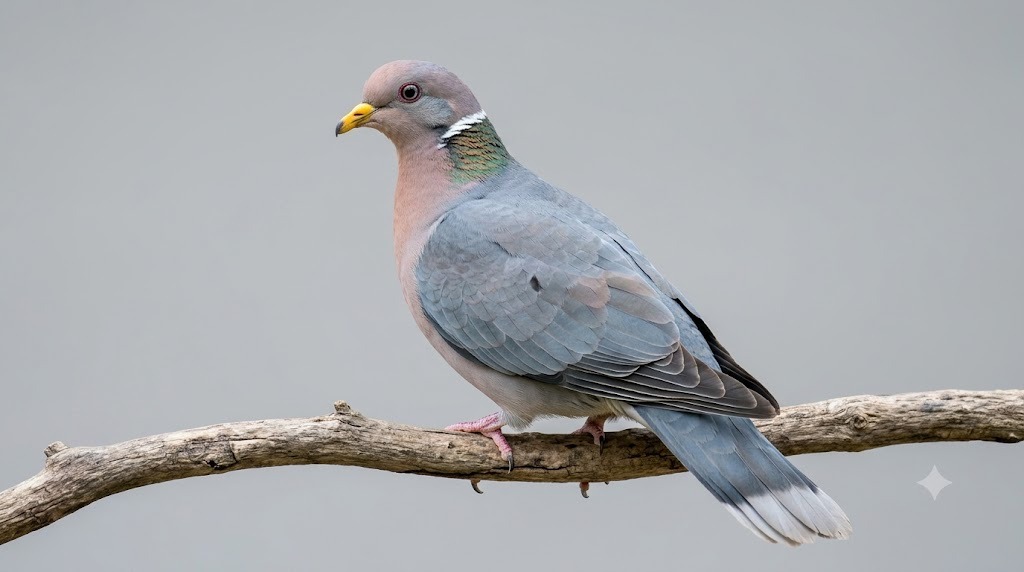
The band-tailed pigeon is a large, heavy-bodied gray pigeon, noticeably bigger than a rock pigeon or mourning dove. The body is soft blue-gray, darker above and paler below, with a warm pinkish wash on the head and breast. The best field marks are a thin white crescent across the back of the neck above an iridescent bronze-green patch, a yellow bill with a black tip, and yellow legs and feet. The tail is the giveaway: a broad pale gray band across the tip - the "band tail" - set off from a darker gray base, very visible as birds bank and fly away. In flight they look big, long-tailed, and powerful, flying high and fast in loose flocks. Young birds are duller and lack the bold neck markings, so flocks can be a mix of crisp adults and plainer juveniles.
Range & Habitat (US)
Band-tailed pigeons occur in two main US populations. The Pacific Coast birds range from Washington and Oregon down through California, living in coniferous and mixed conifer-oak forests, oak woodlands, and forest edges, often near farmland and berry-rich foothills. The Interior, or Four Corners, birds occupy the mountains of the Southwest - Arizona, New Mexico, Colorado, and Utah - in pine, pine-oak, and oak forests at higher elevation. In both regions the birds favor forested mountains and foothills with good mast and berry crops rather than open prairie or marsh. They are strongly tied to food: acorns, pine seeds, and wild berries draw them, and they will travel and concentrate wherever a heavy mast or berry crop is on. They also key on mineral springs and natural mineral sites. As migratory birds, they shift south and to lower country as fall advances and winter sets in.
Behavior & Sign
Band-tailed pigeons are wary, gregarious birds that move in flocks and fly fast and high, often above the treetops, covering ground quickly between roosting, watering, and feeding areas. They feed heavily on acorns, pine nuts, and wild berries such as elderberry, cascara, madrone, and dogwood, and they will pack into a productive feeding tree in numbers. They visit mineral springs and mineral-rich seeps regularly, especially in late summer and early fall, and they water at predictable spots. Sign includes flocks trading along ridgelines at first and last light, birds piling into a single heavy-bearing tree, droppings and feathers under favored roost and feeding trees, and concentrations near a working mineral spring. Because the birds follow the food, scouting is everything - last week's hot tree may be empty once the crop is stripped, so you locate current feeding trees, water, and travel lines before the hunt.
Hunting Seasons & Timing
Band-tailed pigeons are migratory game birds, and their seasons are short and tightly regulated under the federal migratory bird framework, with annually set dates and a small daily bag limit. Some states also require a free band-tailed pigeon permit or harvest reporting on top of the normal licenses, so the paperwork matters. Seasons are typically brief windows in fall, set to fit the birds' migration timing, and dates differ between the Pacific Coast and Interior populations. Within a season, the best gunning is early and late in the day, when flocks trade to and from feeding trees, water, and mineral springs along predictable routes. Always confirm your state's exact season dates, shooting hours, bag and possession limits, and any special band-tailed pigeon permit or reporting requirement before you go - this is one bird where the regulations are genuinely restrictive and change year to year.
Hunting Methods
The classic way to hunt band-tailed pigeons is pass-shooting birds as they move along their daily travel lines. Hunters scout to find a current feeding tree, a watering spot, or a working mineral spring, then set up nearby - on a ridgeline, a saddle, a gap in the timber, or the approach to water - and intercept birds as they trade past. The birds fly fast and often high, so positioning yourself under or beside a known flight route is the heart of the method. Staying still and well concealed against tree cover matters, because these pigeons are sharp-eyed and flare from movement. Some hunters use a few decoys set in a snag or open-topped tree to draw passing flocks, but reading the flight lines and getting under them is what fills a tag. Because the legal bag is small, a few well-chosen setups in the right spot beat a lot of running around.
Where to Find Them - Reading the Terrain
Find the food and water and you find band-tails. Look for forested foothills and mountains with a heavy mast or berry crop on - oak stands dropping acorns, pines bearing seed, and berry-laden elderberry, madrone, cascara, or dogwood. A single heavily fruiting tree can hold a flock. Then find the water and mineral sites: springs, seeps, and mineral-rich spots the birds visit on a schedule. Connect those points and you have the travel lines - ridgetops, saddles, and timber gaps where flocks trade between roost, water, and food at first and last light. Set up on those flight lines and at the approaches to feeding trees and water, not randomly in the timber. Because the birds chase the crop, glass and scout right up to the hunt - the right ridge this week may be the wrong one next week.
Gear & Optics Needed
Band-tailed pigeon hunting rewards mobility and good glass over a heavy kit. A 12 or 20 gauge shotgun choked modified or improved-modified suits the fast, often longer shots at high-flying birds; many hunters lean toward a slightly tighter choke and a shot size such as 6 or 7-1/2 to reach birds with authority. Check your state's shot rules, as some areas require non-toxic shot. Good binoculars genuinely earn their place here - you use them to locate feeding trees, spot flocks trading along distant ridges, and confirm birds before they arrive. Dress in muted, forest-toned clothing for concealment against timber, wear boots suited to steep mountain ground, and carry water for hot early-season days. A bird vest, a few decoys if you choose to use them, and a way to keep birds cool round out a simple, mobile setup.
Shot Placement & Field-Dressing / Cleaning
Band-tailed pigeons are taken on the wing with a shotgun, so "placement" really means a good gun mount, a smooth swing, and shots kept inside your patterned effective range - which you confirm at the patterning board. These birds are fast and frequently high, so lead and a steady swing matter more than firepower, and it is better to pass a marginal high bird than to risk a poor shot. After recovery, most hunters breast out the birds - remove the two breast fillets - though band-tails are large enough to pluck and cook whole if you prefer. Cool the meat promptly, especially in warm early-season weather, and keep it clean. As migratory game birds, they are also subject to feather and wing-retention rules in some places for identification, so check your state's requirements.
Meat & Eating Quality
The band-tailed pigeon is a genuinely good table bird, better than its city-pigeon cousins suggest. The breast meat is dark, lean, and rich, with a flavor shaped by the acorns, pine seeds, and wild berries the birds feed on - clean and gamey in the best sense rather than strong or fishy. Because the meat is lean and dark, it cooks fast and is easy to overcook, so quick, hot cooking to a rosy medium-rare suits the breasts well, and they take nicely to simple seasoning or a marinade. Given the small legal bag, a band-tail dinner is a modest, prized meal rather than a freezer-filler, which fits the careful, scout-and-intercept character of the hunt.
Common Mistakes
The most common mistake is hunting yesterday's information - sitting under a feeding tree that has already been stripped while the flock has moved to a fresh crop a ridge over. Failing to scout current food and water leaves you watching empty sky. On the shooting side, beginners flock-shoot at a passing bunch instead of picking one bird, and they misjudge the speed and height of these strong fliers, shooting behind. Poor concealment flares sharp-eyed birds before they are in range. And because the seasons are short and the bag is small, the biggest regulatory error is skipping the homework: not confirming the exact season dates, the bag limit, or a required special band-tailed pigeon permit or harvest report. Overstaying your limit on a tightly managed bird is both an ethical and a legal failure.
Regulations & Conservation Note
Band-tailed pigeons are managed under the federal migratory bird framework, and because they are a slow-reproducing species that historically declined, their seasons are deliberately short and their bag limits small. Hunters need a state hunting license and the required migratory bird credentials, and many states add a free band-tailed pigeon permit or harvest survey to track the take. Some areas require non-toxic shot, so confirm local rules. The conservative seasons and harvest reporting exist to keep this native pigeon's numbers stable, and honoring the limits is part of keeping the hunt available. Identify your target carefully, follow all bag and possession limits, and complete any required permit or reporting - this is a bird where careful, lawful hunting directly supports the resource.
Best Suited For
Band-tailed pigeon hunting suits the Western hunter who enjoys scouting, mountain country, and demanding wingshooting at fast, high birds. It rewards patience and woodsmanship - finding current feeding trees, water, and mineral springs, then reading flight lines to intercept trading flocks - more than volume shooting. With short seasons and a small bag, it is a hunt for someone who values quality over quantity, likes being deep in conifer and oak forest, and appreciates a fine, lean game bird on the table. For pigeon-shooters used to abundant non-native birds, the native band-tail offers a wilder, more regulated, and more satisfying challenge.
FAQ
Is a band-tailed pigeon the same as a city pigeon? No. The band-tailed pigeon is a large native wild pigeon of Western mountain forests, not the introduced rock pigeon you see in cities. It is bigger, lives in conifer and oak country, migrates, and is managed as a tightly regulated migratory game bird.
Why are the seasons so short and the bag limit so small? Band-tails are slow-reproducing birds that declined historically, so they are managed conservatively. The short seasons, small daily bag, and harvest reporting in some states are designed to keep populations stable, which is why confirming current regulations is essential.
Do I need a special permit beyond my hunting license? Often, yes. Several states require a free band-tailed pigeon permit or harvest survey on top of the normal hunting license and migratory bird credentials. Always check your state's specific requirements before hunting.
What is the best way to find them? Scout for current food and water. Look for heavily fruiting feeding trees - oaks dropping acorns, seeding pines, and berry crops - plus mineral springs and watering spots, then set up on the ridgelines and travel lines birds use between them at first and last light.
What shot and choke should I use? A 12 or 20 gauge choked modified or tighter handles fast, often high birds well, with a shot size such as 6 or 7-1/2. Check whether non-toxic shot is required where you hunt, and confirm your effective range at the patterning board.