California Quail
The California quail, also called the valley quail, is one of the West's most beloved upland gamebirds and a fine introduction to walking up wild birds with a dog.
🗓️ Last reviewed: June 2026
Overview
The California quail, also called the valley quail, is one of the West's most beloved upland gamebirds and a fine introduction to walking up wild birds with a dog. It is a small, plump, ground-loving bird that lives in large social groups called coveys, scratching through the brushy edges of chaparral, oak foothills, and farm country across much of the western United States. For a new upland hunter, the appeal is straightforward: California quail favor walkable cover, hold reasonably for a pointing dog when conditions are right, and put up a fast, rattling covey flush that will test your reflexes without demanding cold-weather hardship or heavy gear. They are also superb on the table. The catch is that these birds love to run rather than fly, so they reward boots on the ground and a willingness to keep after a moving covey.
Identification & Appearance
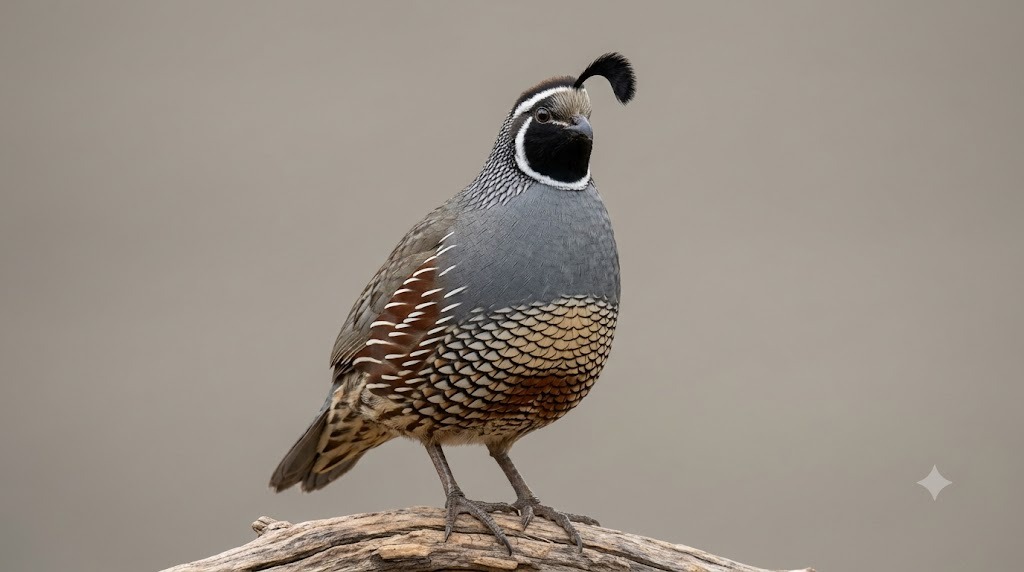
The California quail is a small, round, gray-and-brown bird, and its most famous feature is the forward-curving black topknot plume on the crown - a single comma-shaped feather that curls forward over the bill, larger and showier on the male. A drake (cock) has a black face bordered by bold white lines, a slate-gray breast, a warm brown back and crown, and a richly scaled belly that looks like overlapping scallops of cream, chestnut, and black. The hen is a softer, plainer gray-brown with a smaller, duller topknot and a less marked face, but she still shows the scaled belly. Both sexes are compact and short-tailed, built for running and scratching on the ground. In flight they are a blur of short, rounded wings and rapid beats, usually low and not far. The curling head plume and scaled belly together make this one of the easier western quail to identify.
Range & Habitat (US)
The California quail is a bird of the West. Its core range runs through California and extends up the Pacific Coast into Oregon and Washington, eastward into parts of Nevada, Idaho, Utah, and beyond, with established populations in other western states as well. It thrives in a broad band of brushy, semi-open country: chaparral, coastal scrub, oak and pinyon-juniper foothills, sagebrush edges, riparian thickets along creeks, and the brushy margins of farmland, orchards, and rangeland. What it needs is a mix - low woody cover for hiding and roosting, open ground for feeding and dust-bathing, and water within reach, especially in dry country. It does well around the edges of human activity and is a common sight in foothill ranch land. It generally avoids dense unbroken forest and wide-open ground with no cover to dash into.
Behavior & Sign
California quail are intensely social and spend most of the year in coveys that can number from a dozen to many dozens of birds, sometimes banding into very large groups in fall and winter. Their first instinct when pressed is to run, not fly - the whole covey will scuttle off through the brush on foot, flushing only when cornered or surprised, then exploding upward in a rattling, scattering burst before pitching back into cover not far away. They feed on the ground, scratching for seeds, leaves, and green shoots, with insects important to chicks, and they gather at predictable spots to dust-bathe and water. A posted sentinel bird often watches from a fence post or low branch and calls a sharp warning. Sign includes the classic three-note "chi-ca-go" assembly call ringing from the brush, well-worn dusting bowls in soft dry soil, small scratchings under cover, and droppings and tracks concentrated near water and feeding edges. Hearing a covey call up at dawn or dusk is the surest way to locate birds.
Hunting Seasons & Timing
California quail are hunted in the fall and winter under each state's small-game framework, with season dates and daily bag limits set annually by the state wildlife agency. Early season birds are often in younger, less wary coveys and can hold better, while late-season birds that have been pushed grow warier and run sooner. The best hunting hours are usually the first hours after sunrise and the last hours before sunset, when coveys are out of heavy roosting cover and moving to feed, water, and dust - and when their calling makes them easy to pinpoint. Midday birds tend to loaf tight in shade and brush. Cooler weather concentrates birds near reliable food and water and makes for more comfortable walking. Always confirm your state's exact season dates, shooting hours, bag and possession limits, and any zone-specific rules before you head out.
Hunting Methods
The classic way to hunt California quail is to walk them up, ideally behind a good bird dog. Hunters work likely cover on foot - brushy draws, creek bottoms, weedy field edges, the brushy lips of canyons - covering ground until they locate a covey by sight, sound, or the dog's nose. Because these quail love to run, a dog that can track and pin running birds, or simply pressure them into flushing, is a real advantage; pointing breeds and flushing breeds both work, and a dog also finds downed birds in thick cover. Once a covey flushes and scatters, the singles often hold tighter than the covey did, so working up the scattered birds can be the most productive part of the hunt. Without a dog, you can still do well by walking edges and brushy pockets, pausing often to unsettle birds into flushing, and by moving toward calling coveys. The shooting is fast and close, so it pays to stay ready as you push through cover.
Where to Find Them - Reading the Terrain
Look for the edges. California quail live where brush meets open ground, so the best cover is transitional: a weedy field bordering a brushy hillside, a chaparral-choked draw, a creek lined with willows and blackberry, the brushy margin of an orchard or pasture. In dry country, water is a magnet - springs, stock tanks, creeks, and seeps draw coveys morning and evening, so cover within a short walk of water is prime. Hunt the low woody cover the birds dash into and the open feeding edges right beside it, rather than the bare middle of a field or the depths of unbroken thicket. South-facing brushy slopes warm early and hold birds on cold mornings. Dusting bowls, well-used trails, and the sound of an assembly call all point you to where a covey is working. Find the brush-and-edge mosaic with water nearby and you have found valley quail country.
Gear & Optics Needed
California quail hunting rewards light, mobile gear over expensive optics. A light, fast-handling upland shotgun is ideal - a 20 or 28 gauge, or a light 12, carries well over miles of walking and points quickly on a snap-flushing covey. Choke open: improved cylinder, or skeet, suits the close, fast shots, and small shot such as size 7.5 or 8 patterns densely for these small birds. Beyond the gun, the priorities are good boots for covering rough brushy ground, brush-resistant pants or chaps to push through thorny cover, a blaze-orange hat or vest for visibility, and plenty of water for you and your dog in dry, warm country. A game vest with a water bottle and a back pouch for birds keeps you mobile. Optics are largely optional - this is a walking, listening, close-cover hunt - though a small pair of binoculars can help you spot a distant covey crossing open ground or a sentinel bird perched up.
Shot Placement & Field-Dressing / Cleaning
California quail are taken on the wing with a shotgun, so "placement" really means a quick, clean gun mount and a smooth swing onto a single bird as the covey breaks. The covey flush is fast and scattered, so the discipline is to pick one bird rather than flock-shooting the whole rising bunch, and to keep your shots inside the effective range you have confirmed at the patterning board. After the shot, a dog makes recovery in thick cover much easier. These are small birds, and most hunters either breast them out - removing the two breast fillets - or pluck and dress them whole, since the legs and thighs are worth keeping on a bird this prized at the table. Keep the meat clean and cool it promptly, which matters in warm early-season weather, and field-dress according to your state's regulations, including any requirements to leave evidence of species or sex attached where applicable.
Meat & Eating Quality
The California quail is widely considered excellent eating, and the table is a big part of its appeal. The meat is light, tender, and mild, with the delicate flavor prized in wild quail, and it lacks any strong or gamey taste. Because the birds are small and the breast meat is lean, it cooks fast and is easy to overcook - quick, hot methods such as grilling, pan-searing, or roasting whole suit them well, and a brine or a wrap of bacon helps keep the lean breast moist. A handful of quail makes a memorable meal, and many upland hunters rate them among the finest small gamebirds on the plate. Their reputation in the kitchen is reason enough to put in the miles.
Common Mistakes
The most common mistake on California quail is flock-shooting the covey instead of picking one bird out of the fast, scattering rise, which leads to clean misses. Another is being caught flat-footed - because the covey often runs first and flushes all at once, hunters who relax in thick cover get surprised and miss the snap shot. Many hunters also give up on a covey too soon: these birds run hard, and following a moving covey, or working the scattered singles after a flush, often produces the best shooting. Hunting the wrong cover is a frequent error too - walking the bare middle of a field or the depths of unbroken brush instead of the productive edges and the cover near water. In dry country, ignoring water sources means missing the very places coveys concentrate. And carrying too tight a choke turns easy close flushes into difficult shots.
Regulations & Conservation Note
California quail are managed as small game by state wildlife agencies, which set season dates, shooting hours, and daily bag and possession limits each year, sometimes by zone. Hunters need a valid state hunting license and must follow all local rules, including any restrictions on methods, blaze-orange requirements, and access permissions on private land. California quail populations are tied closely to habitat and to weather - rainfall and the resulting spring and summer food supply drive how many young birds make it into fall - so numbers can swing from year to year. Hunting at sustainable levels has little effect on healthy populations, and the license dollars and habitat work that support upland birds help keep brushy edge country productive. Respect bag limits, get permission before hunting private ground, identify your target, and leave the cover and water sources in good shape for the next covey.
Best Suited For
California quail hunting is ideal for new and developing upland hunters who want to walk wild birds in pleasant western country without the cold and heavy gear of waterfowling. The walkable brush-and-edge cover, the fast and forgiving close-range shooting, and the social coveys that announce themselves with their calling make it an accessible and rewarding pursuit. It especially suits hunters who enjoy covering ground on foot, working a bird dog, and an outstanding small gamebird on the table - and who do not mind chasing a covey that would rather run than fly.
FAQ
Why do California quail run instead of flying? Running is their primary escape strategy in the brushy cover they live in. A pressed covey will scuttle off on foot through the brush and flush only when cornered or surprised. The fix is to keep after a moving covey, use a dog to pin or pressure them, and stay ready for a sudden flush.
Do I need a dog to hunt California quail? No, but a good bird dog is a real advantage. A dog helps locate coveys, pins or pushes running birds into flushing, and finds downed quail in thick cover. Without one you can still do well by working edges and brushy pockets on foot, pausing often, and moving toward calling coveys.
What shotgun, choke, and shot should I use? A light, fast-handling upland gun - a 20 or 28 gauge, or a light 12 - is ideal for miles of walking and quick flushes. Choke open with improved cylinder or skeet, and use small shot such as size 7.5 or 8, which patterns densely for these small, close birds.
How do I find a covey? Listen and look at the edges. The three-note "chi-ca-go" assembly call carries well at dawn and dusk and pinpoints birds. Hunt brushy draws, creek bottoms, and weedy field edges next to cover, especially within a short walk of water in dry country, and watch for dusting bowls and well-used trails.
Are California quail good to eat? Yes - they are widely rated among the finest small gamebirds on the table. The meat is light, tender, and mild. Because the breast is small and lean, cook it quickly and avoid overcooking; a brine or a wrap of bacon helps keep it moist.