Dusky Grouse
The dusky grouse is one of the largest grouse in North America and a classic prize of high western mountains.
🗓️ Last reviewed: July 2026
Overview
The dusky grouse is one of the largest grouse in North America and a classic prize of high western mountains. Often lumped with the sooty grouse under the old name "blue grouse," the dusky is a bird of conifer ridges, aspen pockets, and open mountain slopes. For hunters who love to walk beautiful high country in early fall, the dusky offers a wonderful mix of scenery, solitude, and honest wingshooting. It is a walk-up bird more than a covey bird, and it rewards the hunter who is willing to climb.
Identification & Appearance
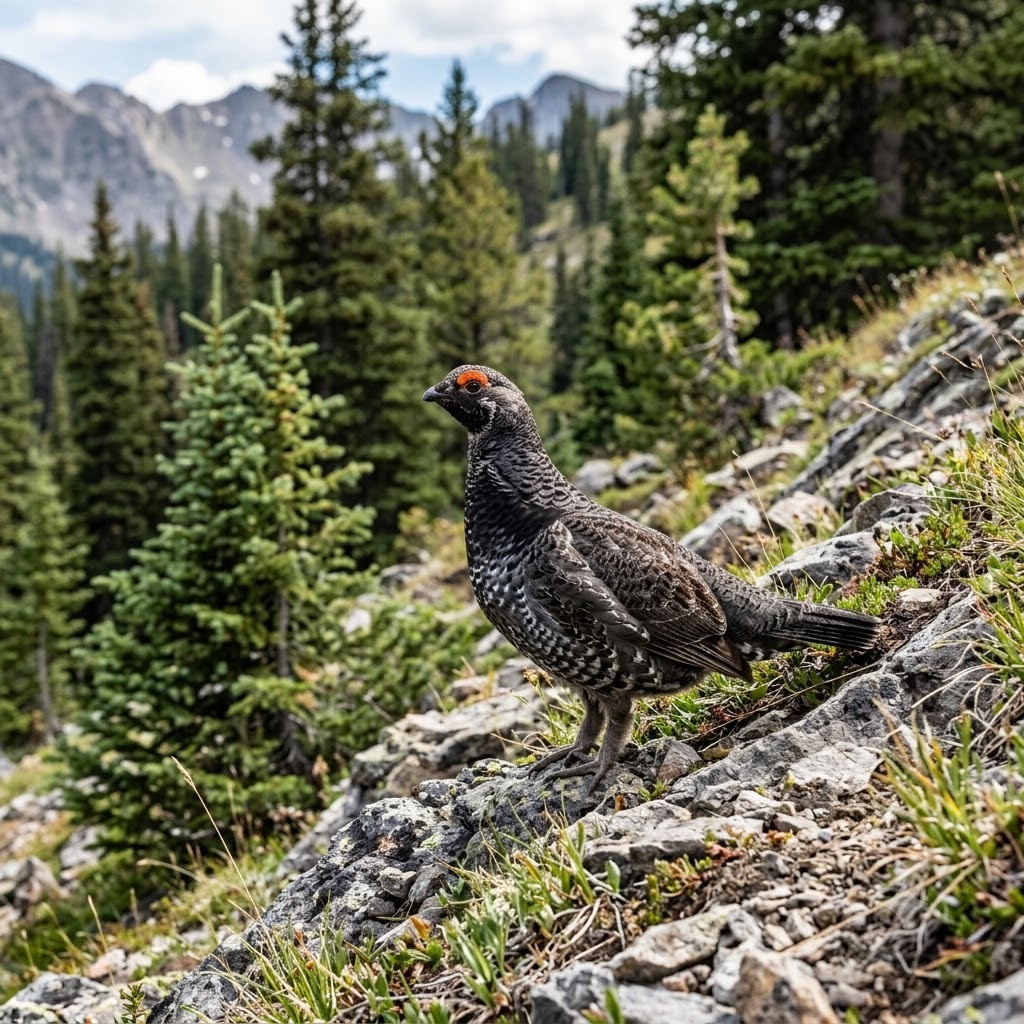
The dusky grouse is a stout, dark grey-brown bird weighing roughly two to three pounds, noticeably larger than a ruffed grouse. Males are slate-grey with a dark tail, often tipped with a paler grey band, and can inflate reddish-purple air sacs on the neck during display. Females are mottled brown and grey for camouflage on the forest floor. In flight the bird looks heavy and dark, flushing with a loud roar of wings. The subtle grey tail band and the mountain-conifer setting help separate it from the closely related sooty grouse of the coastal ranges.
Range & Habitat (US)
Dusky grouse live in the interior mountain West, from the northern Rockies down through Colorado, Utah, and into parts of the Southwest and Great Basin ranges. They favor a mosaic of conifer forest, aspen groves, mountain shrub, and open grassy or sagebrush slopes. In summer and early fall they are often found lower down among aspens, berry patches, and grassy meadows. As snow arrives, they do something unusual for a game bird - they move uphill into dense conifers to feed on needles through the winter, rather than dropping to lower ground.
Behavior & Sign
Dusky grouse are ground feeders in the warm months, eating leaves, berries, insects, and flowers, then switch almost entirely to conifer needles in winter. They are famous for holding tight and then flushing explosively, sometimes sailing downhill for a long distance. Males give a series of deep hooting notes in spring from display sites. Useful sign includes droppings under roost trees, dusting bowls in bare dirt, scattered feathers, and tracks in soft ground or early snow. Birds are often found along the edges where aspen or shrub meets open slope.
Hunting Seasons & Timing
Dusky grouse seasons typically open in early fall, often in late August or September, and can run into winter where regulations allow. Early season finds birds spread through aspen and berry cover at mid elevations, which makes for pleasant, comfortable hunting. Later, as birds shift uphill into the conifers, hunting becomes a colder, steeper affair. Bag limits are generally modest. Always confirm your state's exact dates, elevation-specific rules, and limits before you go, as mountain seasons vary widely.
Hunting Methods
The dominant method is a simple walk-up hunt in good habitat. Hunters climb through aspen stands, berry patches, and the grassy edges of conifer stands, ready for a bird to flush at close range. A flushing dog can be a real asset, both for finding scattered birds and for marking downed birds in thick cover, though many hunters take dusky grouse without a dog at all. Move slowly, pause often, and watch the edges. Because the birds hold tight, a steady, deliberate pace flushes more birds than a fast march.
Where to Find Them - Reading the Terrain
Focus on transition zones: where aspen meets conifer, where a grassy slope breaks into timber, or where a berry-rich bench sits below a ridge. In early season, work mid-elevation aspen pockets and mountain shrub with fruit and insects. Springs, seeps, and green stringers hold birds in dry country. As the weather cools, climb higher and hunt the edges of dense conifer stands, since dusky grouse counterintuitively head uphill for winter. South-facing slopes warm early and can concentrate birds on cold mornings.
Gear & Optics Needed
This is a boots-and-legs hunt, so sturdy mountain boots and layered clothing matter more than fancy optics. A light, fast-handling shotgun is ideal for close, quick flushes in timber. Carry plenty of water, since you will be climbing at altitude, and pack a way to keep harvested birds cool on warm early-season days. A blaze orange hat or vest improves safety in the timber. Compact binoculars help you scan open slopes and pick apart distant edges, and a good map or GPS keeps you oriented in big country.
Shot Placement & Field-Dressing / Cleaning
Dusky grouse are wingshooting birds, taken on the flush with a shotgun. Keep shots within a sensible range and swing through the bird as it powers away, often downhill. After recovery, most hunters breast the bird out by removing the two large breast fillets, though a whole plucked bird makes a fine roast. Save the legs where they are worth keeping. Cool the meat quickly, keep it clean and dry, and get it into a game bag out of the sun on warmer days.
Meat & Eating Quality
Dusky grouse are considered mild and pleasant table birds, with pale, tender breast meat when the bird has been feeding on berries and greens in early fall. The flavor is generally clean and delicate rather than strong. Later in the season, when birds shift to a diet of conifer needles, some hunters notice a faint resinous edge to the meat, which is one more reason many favor the early season. Simple, careful cooking that avoids drying out the lean breast produces excellent results.
Common Mistakes
The most common mistake is hunting too low and too fast. Dusky grouse are mountain birds, and covering ground slowly through the right edges beats charging through poor cover. Hunters also underestimate how tightly the birds hold, then get caught flat-footed by a loud, sudden flush. Shooting beyond a comfortable range in thick timber leads to lost birds. Finally, forgetting the dusky's odd uphill winter movement causes late-season hunters to search low ground where the birds are no longer feeding.
Regulations & Conservation Note
Dusky grouse populations are generally healthy across their remote mountain range, and hunting pressure is light in most areas. Still, always carry required licenses, follow bag limits, and confirm any elevation or season-specific rules. Practice fair chase, respect private and tribal land boundaries, and pack out everything you bring in. Supporting habitat conservation for western forests and aspen stands helps keep these high-country birds thriving. Wear blaze orange in timber where other hunters may be present.
Best Suited For
Dusky grouse hunting suits hunters who love wild, scenic high country and are fit enough to climb at altitude. It rewards patience, good boots, and an eye for reading mountain terrain more than long-range shooting skill. It is an excellent pursuit for the wanderer who enjoys solitude and a mixed-bag mountain day, and it pairs beautifully with other early-fall western hunts.
FAQ
Do I need a dog to hunt dusky grouse? No. Many hunters take dusky grouse on foot without a dog, since the birds hold tight and flush at close range. That said, a flushing or pointing dog helps locate birds and recover them in thick cover.
Why do dusky grouse move uphill in winter? It is one of the quirks of the species. Instead of dropping to lower ground, they climb into dense conifers and feed on needles through the cold months. Late-season hunters should look higher, not lower.
How is a dusky different from a sooty grouse? They were once both called "blue grouse." The dusky lives in the interior mountains and tends to show a paler grey tail band, while the sooty inhabits the coastal ranges. Habitat and range are the easiest clues.
Is dusky grouse good to eat? Yes, especially early in the season when birds have been eating berries and greens. The breast meat is mild and tender. Later-season birds on a needle diet can taste faintly resinous.
How hard is the hunt physically? It can be demanding. Expect to climb through timber and open slopes at altitude, sometimes gaining significant elevation. Good boots and fitness make the day far more enjoyable.