Greater Prairie-Chicken
The greater prairie-chicken is a grassland grouse of the American tallgrass and mixed-grass prairie, famous for the spectacular springtime "booming" displays of males on communal dancing grounds called leks.
🗓️ Last reviewed: July 2026
Overview
The greater prairie-chicken is a grassland grouse of the American tallgrass and mixed-grass prairie, famous for the spectacular springtime "booming" displays of males on communal dancing grounds called leks. Once abundant across the prairies, it has declined sharply with the loss of native grassland, and today its range is limited and fragmented. As a result, hunting seasons are restricted or closed in many states, and where legal they are tightly managed. For the hunter fortunate enough to pursue one where seasons are open, the greater prairie-chicken offers a demanding walk-up and pass-shooting hunt across vast, wind-swept native prairie - and a strong reason to care about grassland conservation.
Identification & Appearance
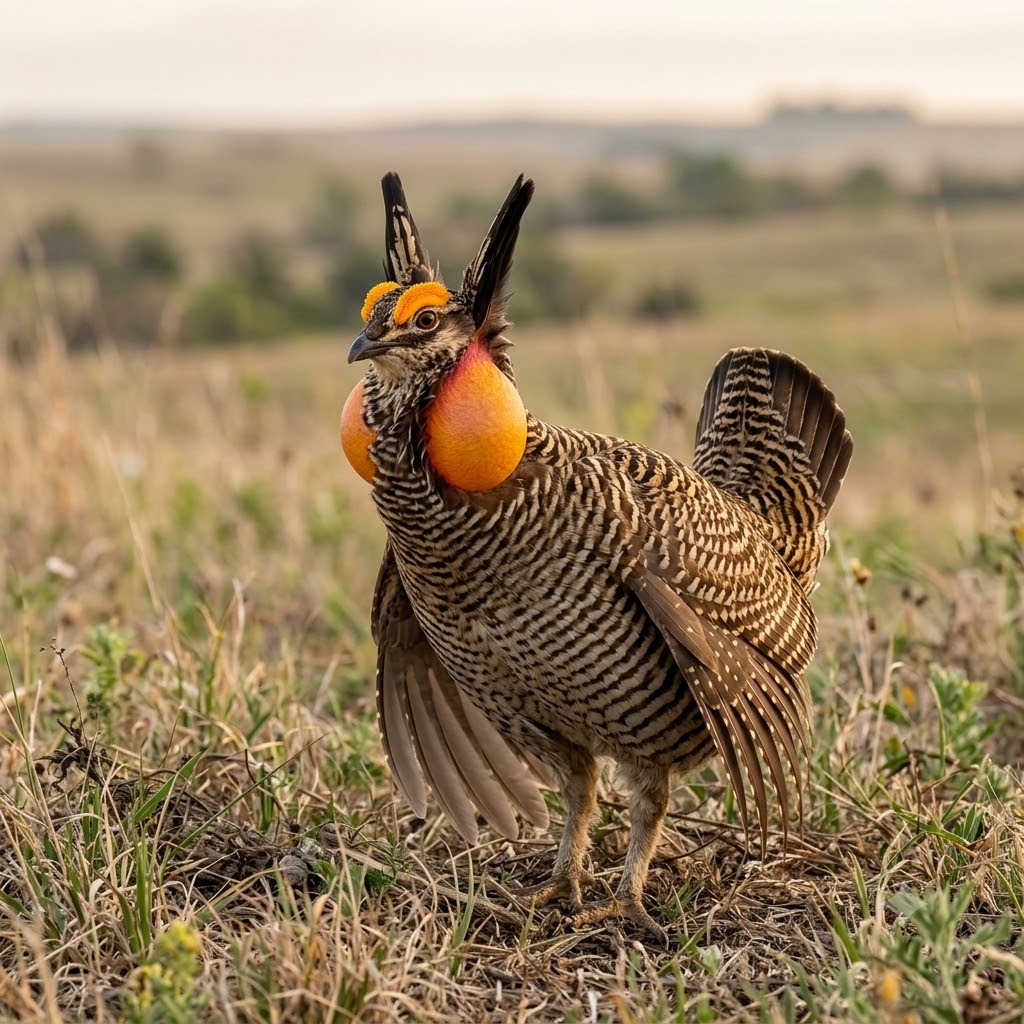
The greater prairie-chicken is a stocky, chicken-sized grouse, roughly 17 inches long, with heavily barred brown-and-buff plumage that blends beautifully into prairie grass. Both sexes are barred, but the male is distinguished on the lek by bright orange air sacs on the neck, raised elongated neck feathers called pinnae, and a fanned, rounded tail during display. Females are similar but plainer, lacking the inflated orange sacs and dramatic display. In flight the birds show a short, rounded, dark tail and a strong, direct flight alternating quick wingbeats with glides. Their overall barred, earth-toned pattern is superb camouflage in native grassland.
Range & Habitat (US)
Once widespread across the central US prairies, the greater prairie-chicken now occupies a much reduced and fragmented range, centered on remaining tracts of native tallgrass and mixed-grass prairie in the central Plains - areas such as the Kansas Flint Hills, the Nebraska Sandhills, and scattered grasslands in the Dakotas and a few other states. It depends on large, unbroken expanses of native prairie grassland with a mix of grasses for nesting and cover, open display grounds for lekking, and nearby food. Because it needs big blocks of intact grassland, habitat loss to cropland has driven its decline and confined it to prairie strongholds.
Behavior & Sign
The greater prairie-chicken's most famous behavior is the spring lek: males gather on traditional open display grounds to "boom" - inflating orange neck sacs to produce a deep, carrying hooting sound - while stamping, fanning tails, and fighting to attract females. Outside breeding season the birds form flocks and range across the prairie feeding on seeds, grain, insects, and green vegetation. They roost and loaf in grass and often use crop edges near grassland. Sign includes tracks and droppings in grass and around feeding areas, worn lek grounds, and flushing flocks. Knowing where birds feed and loaf is key to finding them in season.
Hunting Seasons & Timing
This is the most important point about the greater prairie-chicken: because it is declining and lives in a limited, fragmented range, seasons are restricted or entirely closed in many states, and even where open they are conservatively managed with short seasons and low bag limits. Hunting, where permitted, takes place in the fall, well away from the sensitive spring lekking period. Never assume the season is open - regulations vary greatly by state and change with population trends. Always confirm that a season exists in your state, along with exact dates, bag limits, and any permit or unit restrictions, before you hunt.
Hunting Methods
Where legal, the greater prairie-chicken is hunted primarily by walking up birds across native prairie and by pass-shooting flocks as they trade between roosting, feeding, and loafing areas, especially around dawn. Hunters walk large blocks of grassland, sometimes with pointing dogs early in the season when birds hold better, flushing birds from the grass. Later in the season the birds grow wild and flush far, so pass-shooting from a hidden position along a flight line to a feeding field can be more productive. This is physically demanding hunting over big country, and the sensitive lekking grounds are never hunted.
Where to Find Them - Reading the Terrain
Look for large, unbroken tracts of native tallgrass and mixed-grass prairie, especially where grassland meets grain fields or weedy feeding areas. Birds nest and loaf in grass and feed on seeds, waste grain, insects, and greens, so the edges between prairie and food often concentrate them. Early and late in the day they trade along predictable flight lines between roosting grass and feeding areas - ideal for pass-shooting from a hidden spot. Ridges and rises let you glass big country to locate flocks. Avoid and never disturb known lek grounds; focus on feeding and loafing areas.
Gear & Optics Needed
Prairie-chicken hunting is a walking game across open country, so comfortable, broken-in boots and the ability to cover miles matter most. A light, well-fitting upland shotgun and an upland vest with plenty of water are standard. Good binoculars (8x32 or 10x42) are genuinely useful for glassing distant flocks across the vast prairie and locating flight lines. Blaze orange is required or strongly advised for safety in open upland hunting. A well-conditioned pointing dog helps early in the season, and sun protection, wind gear, and plenty of water are important on the exposed, wind-swept plains.
Shot Placement & Field-Dressing / Cleaning
Take flushing or passing birds with an upland shotgun, keeping shots within your effective pattern range and leading these strong, fast fliers smoothly. Wait for a clear, safe shot and be sure of your target and background on open ground where other hunters may be present. After the shot, most hunters either pluck the bird for roasting whole or breast it out, removing the two breast fillets and the legs. Cool the meat promptly on the warm early-fall prairie, keep it clean, and get it on ice to protect the eating quality of this dark, flavorful upland bird.
Meat & Eating Quality
The greater prairie-chicken offers dark, flavorful meat with a genuine wild, prairie character - richer and stronger than the mild white meat of some upland birds. The breast is dark and best cooked to medium-rare and rested, as overcooking dries it out. Birds feeding on grain and seeds tend to eat milder, while those heavy on greens and insects carry more of a wild edge. The legs and thighs suit slow, moist cooking. Handled and cooked with care, a prairie-chicken is a memorable table bird and a fitting reward for a hard-earned hunt.
Common Mistakes
The most serious mistake is hunting where there is no open season, or disturbing lekking grounds - always confirm the season is legally open and leave leks alone. Beginners also underestimate the miles of walking and the wildness of late-season birds, which flush far out of range; pushing long, hopeful shots only wounds birds. Failing to glass big country wastes effort. Not wearing blaze orange in open upland hunting is a safety error. And, as with any wild bird, careless handling on a warm early-fall day quickly ruins the fine dark meat.
Regulations & Conservation Note
Conservation is central to this species. The greater prairie-chicken has declined dramatically with the loss of native prairie, and its range is limited and fragmented, so seasons are restricted or closed across much of its former range and tightly managed where open. A valid state small-game or upland license, and any required permits, tags, or unit restrictions, are mandatory - and you must verify a season even exists before hunting. Support grassland conservation and native-prairie habitat work, never disturb leks, honor low bag limits, and treat this iconic prairie grouse as the sensitive resource it is.
Best Suited For
Greater prairie-chicken hunting suits the fit, conservation-minded upland hunter who loves covering big, wild prairie country on foot and values a rare, tradition-rich pursuit over easy limits. It rewards walking, glassing, reading flight lines, and patience, and it demands real respect for the bird's fragile status. Hunters willing to travel to a prairie stronghold where seasons are open, put in the miles, and hunt ethically will find it one of the most authentic and meaningful upland experiences in North America.
FAQ
Can I hunt greater prairie-chickens anywhere on the plains? No. The species is declining and lives in a limited, fragmented range, so seasons are restricted or closed in many states. Always confirm a legal season exists in your state before you hunt.
What is a lek, and can I hunt there? A lek is a traditional spring display ground where males gather to "boom" and attract females. Leks are sensitive and are never hunted - hunting occurs in fall, away from these grounds.
What's the best way to hunt them where it's legal? Walk large blocks of native prairie to flush birds, sometimes with a pointing dog early season, and pass-shoot flocks trading between roosting and feeding areas at dawn and dusk.
Are they good to eat? Yes. They offer dark, flavorful meat with a wild prairie character. Cook the breast to medium-rare and rest it; slow-cook the legs. Grain-fed birds eat milder.
Why is conservation such a big deal for this bird? Loss of native prairie has caused sharp declines and fragmented its range. Supporting grassland habitat work, never disturbing leks, and honoring low bag limits help keep the species viable.