Scaled Quail
The scaled quail is the running ghost of the arid Southwest, a pale desert gamebird that rewards hunters willing to cover ground and keep their boots moving.
🗓️ Last reviewed: June 2026
Overview
The scaled quail is the running ghost of the arid Southwest, a pale desert gamebird that rewards hunters willing to cover ground and keep their boots moving. Nicknamed the "blue quail" or "cottontop," it lives in the open grasslands and desert scrub that other quail avoid, and it hunts very differently from the bobwhite a beginner might know. A scaled quail hunt is built on hustle and footwork: these birds would far rather run than fly, sprinting through the brush ahead of a hunter for hundreds of yards before finally bursting into the air. For a new hunter, chasing scaled quail across big, open country is a fast, physical, and uniquely Western introduction to upland bird hunting.
Identification & Appearance
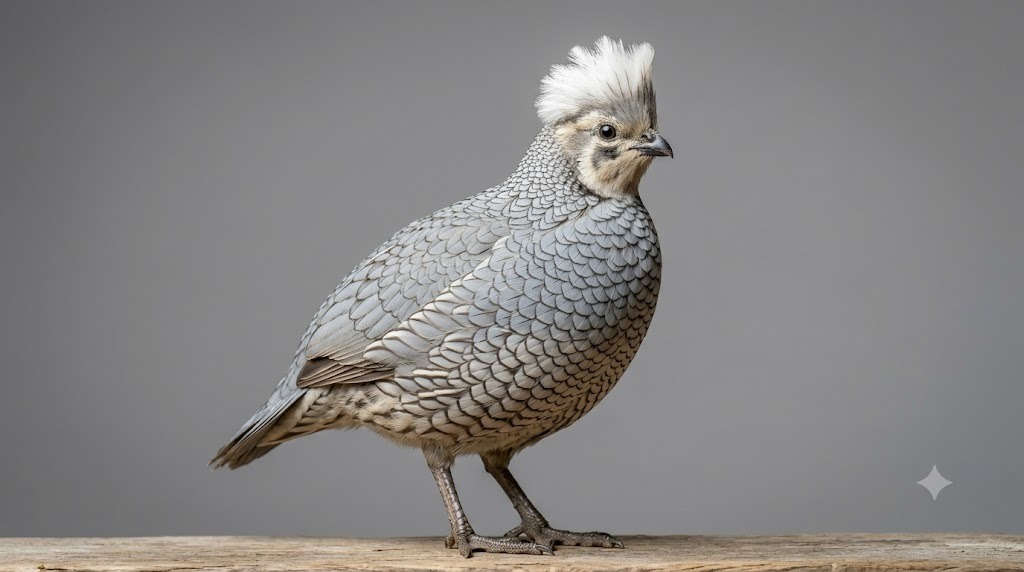
Both sexes of scaled quail are a pale, soft bluish-gray, plainer and grayer than other North American quail and lacking the bold facial markings of bobwhite or Gambel's quail. The defining feature is the scaly or scalloped pattern on the breast, neck, and back, where each dark-edged feather creates the look of overlapping fish scales that gives the bird its name. Topping it off is a distinctive bushy, whitish crest or topknot tipped with a tuft of pale feathers, the "cottontop" that makes the species unmistakable. The male and female look very similar, though a mature male is often a touch brighter and cleaner in his markings. There is no need to sex birds before the shot, but learning the pale color and the white crest helps separate scaled quail from other species sharing the same range.
Range & Habitat (US)
Scaled quail are birds of the high deserts and southern plains. Their US range centers on New Mexico and west Texas, including the Texas Panhandle, and extends into southeastern Arizona, southeastern Colorado, the Oklahoma Panhandle, and western Kansas, continuing south into northern Mexico. They favor more open, sparse country than Gambel's quail, thriving in arid grasslands, desert scrub, mesquite and cholla flats, rangeland, and brushy draws. Ideal habitat blends scattered low cover for escape and shade with open ground for feeding and running, and reliable scaled quail numbers track closely with rainfall and range conditions in this dry landscape.
Behavior & Sign
Scaled quail are notorious runners, and understanding that single trait is the key to hunting them. Rather than holding tight and flushing, a covey will break into a sprint through the brush, often outdistancing both hunters and dogs and flushing wild, frequently all at once as a large covey, only when finally pressured against cover or pushed too hard to keep running. Coveys can be big, and the birds spend much of the day on the move between feeding, watering, and loafing cover. They eat seeds, green vegetation, mast, and insects, and their populations swing with rainfall and habitat conditions from one year to the next. Useful sign includes tracks and droppings around dusting bowls, watering spots, and the edges of brushy cover, plus the birds themselves scuttling away on foot ahead of you.
Hunting Seasons & Timing
Scaled quail hunting generally runs from fall into winter, with seasons opening roughly in late October or November and continuing into February depending on the state. Early-season birds may be in larger, less-pressured coveys, while later in the season birds can be wilder and the cover thinner. Cooler weather later in the year makes the long walks more comfortable and can concentrate birds near remaining food and cover. As always, confirm your state's exact dates, shooting hours, and bag limits before you head out, since these vary across the bird's multi-state range.
Hunting Methods
Hunting scaled quail is a fast, ground-covering walking pursuit, and the running habit shapes everything. Because birds prefer to run rather than fly, hunters must hustle to keep coveys from outdistancing them, sometimes circling to pin running birds against cover or working to get ahead of them so the covey is forced into the air. Flushing dogs that push hard, or pointing dogs that will relocate on running birds, can help, but the relentless running frustrates classic pointing work. Expect long walks across open terrain, with the payoff being an explosive covey rise once the birds finally commit to flight. Staying close to cover edges and reading where a running covey is headed often matters more than any single piece of equipment.
Where to Find Them - Reading the Terrain
Look for scaled quail where open feeding ground meets enough low cover to hide a running bird. Brushy draws, mesquite and cholla flats, weedy fencelines, rangeland edges, and the margins of two-track roads all hold birds. Water sources and seed-rich weed patches draw coveys, especially in dry country, so the brush around stock tanks and washes is worth working. Because the birds run, focus on lanes and edges that funnel a sprinting covey, and watch for that telltale flicker of pale gray birds slipping away on foot ahead of you. In the most open ground, a covey may try to outrun you across the flat, so cutting them off near the next patch of cover is often the play.
Gear & Optics Needed
Scaled quail hunting rewards mobility over heavy gear. A light upland shotgun in 12 or 20 gauge with an improved-cylinder choke and size 7.5 or 8 shot covers the typical fast covey rise well. Brush pants or chaps protect your legs from mesquite, cholla, and thorny cover, and sturdy boots are essential for long walks over rough desert ground. Carry plenty of water for both you and any dogs, since this is dry, open country, and an upland vest keeps shells, water, and birds organized. Wear blaze orange for safety, and stay alert for rattlesnakes early in the season when temperatures are still warm.
Shot Placement & Field-Dressing / Cleaning
Scaled quail are wing-shot with a shotgun on the covey rise or on singles after the flush, so the goal is a clean, centered pattern on a flying bird inside your effective range rather than any single aiming point. Swing through the bird and keep shots within the range your improved-cylinder choke patterns reliably. After the hunt, most hunters simply breast out the birds, removing the two breast fillets, though the small birds can also be plucked whole for the table. Cool the meat quickly in this warm climate and keep it clean, especially on early-season hunts.
Meat & Eating Quality
Scaled quail are excellent eating, with mild, tender white meat typical of quail. The small breasts cook quickly and are easily overcooked, so fast, hot methods like a quick pan-sear or grill suit them well, and the whole birds are delicious roasted or browned. Their clean, delicate flavor makes them a favorite on the table and a fine reward for the miles walked to get them. Few wild birds eat as well for the effort.
Common Mistakes
The biggest mistake new scaled quail hunters make is treating them like bobwhite and expecting birds to hold for a point - scaled quail run, and hunters who walk too slowly simply watch coveys sprint out of range. Failing to keep up, or not working to get ahead of and pin a running covey against cover, leaves birds flushing wild and far away. Other common errors include carrying too little water for the dry country, ignoring rattlesnake risk in warm early-season conditions, and shooting beyond the effective pattern of an open choke. Finally, hunters who never scout for the food, water, and cover edges that hold birds spend a lot of time walking empty ground.
Regulations & Conservation Note
Scaled quail are managed as upland game under each state's small-game regulations, so a standard state upland or small-game license and the published bag and possession limits apply across their range. Populations rise and fall with rainfall and range conditions, so following season limits and supporting grassland and rangeland habitat work helps keep coveys strong through dry years. Always carry your required license, respect private land and access rules, and wear or carry blaze orange when hunting near others. Practicing fair chase and good land stewardship protects both the birds and the wide-open country they depend on.
Best Suited For
Scaled quail hunting is ideal for hunters who enjoy covering lots of ground on foot and don't mind a fast, physical chase across big, open country. It rewards fitness, hustle, and the ability to read where running birds are headed more than precision long-range shooting, making the explosive covey rises a memorable payoff. It suits active beginners and anyone drawn to wide Western landscapes, though those expecting classic pointing-dog work should be ready for the bird's stubborn running habit.
FAQ
Why are scaled quail so hard to hunt? They prefer to run rather than fly. A covey will sprint long distances through the brush ahead of you, flushing wild and often all at once only when finally pinned against cover, so hunters must move fast and work to cut the birds off.
Do I need a dog to hunt scaled quail? No, but a dog can help. Flushing dogs that push hard, or pointing dogs willing to relocate on running birds, are useful, though the running habit frustrates classic pointing. Many hunters successfully walk them up on foot.
What gun and load should a beginner use? A light upland shotgun in 12 or 20 gauge with an improved-cylinder choke and size 7.5 or 8 shot is a great all-around setup for the fast covey rises typical of scaled quail.
Where do scaled quail live? They inhabit the arid Southwest, including New Mexico, west Texas and the Texas Panhandle, southeastern Arizona, southeastern Colorado, the Oklahoma Panhandle, and western Kansas, plus northern Mexico, favoring open grasslands and desert scrub.
Are scaled quail good to eat? Yes. They have mild, tender white meat like other quail and are excellent on the table, best cooked quickly so the small breasts don't dry out.