Wilson's Snipe
The Wilson's snipe is one of the most challenging and rewarding wingshooting targets in North America, a real and respected migratory game bird despite the old "snipe hunting" tall tales that gave it a reputation for not existing.
🗓️ Last reviewed: June 2026
Overview
The Wilson's snipe is one of the most challenging and rewarding wingshooting targets in North America, a real and respected migratory game bird despite the old "snipe hunting" tall tales that gave it a reputation for not existing. This stocky little shorebird tests a hunter's legs and reflexes more than almost any other small-game pursuit: you walk soft, wet ground until a bird bursts up underfoot, twisting and zigzagging away on fast wings. For the upland hunter looking for a low-cost, walk-up pursuit with no need for elaborate setups, snipe offer a humbling and addictive challenge that has quietly drawn devoted followers for generations.
Identification & Appearance
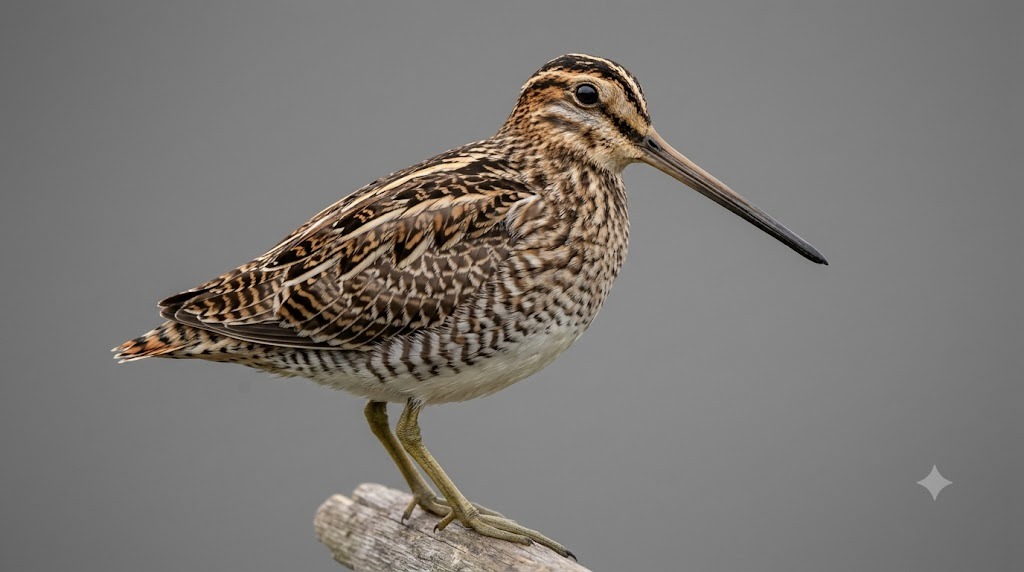
The Wilson's snipe is a chunky, medium-small shorebird with a very long, straight bill that it uses to probe soft mud for worms and invertebrates. Its body is compact with short legs, and its cryptic plumage is a bold patchwork of brown, buff, and black stripes, with pale buffy stripes running down the head and back, a striped crown, and heavily barred flanks. This pattern camouflages the bird almost perfectly against marsh vegetation and muddy ground, making sitting birds extremely hard to spot. The sexes look alike. In flight the long bill, pointed wings, and short orange-brown tail are good marks, and the distinctive erratic, twisting flush is itself a reliable field clue.
Range & Habitat (US)
Wilson's snipe breed across the northern United States, Canada, and Alaska, and winter across the southern US, the Gulf and Pacific coasts, the Southwest, and south into Mexico and Central and South America. They migrate through all four flyways and turn up almost anywhere soft, wet ground and mild weather coincide. Prime habitat includes wet meadows, marsh edges, flooded fields, bogs, muddy shorelines, seeps, irrigated pastures, and soft boggy ground with short cover. The key is probeable mud rich in worms and larvae, paired with enough low vegetation for the birds to hide. A muddy field edge, a seep below a stock pond, or the soft margin of a flooded pasture is the classic snipe landscape.
Behavior & Sign
Snipe are solitary and secretive, feeding by rhythmically probing soft mud with their long bills for earthworms, insect larvae, and other invertebrates. They rely on camouflage, sitting tight until a hunter is nearly on top of them, then exploding into the air with a rasping call and a fast, erratic, zigzagging flight. On the breeding grounds males perform an aerial "winnowing" display, a hollow, tremulous winnowing sound produced by air rushing over the spread outer tail feathers during steep display dives. Key sign includes small probe holes drilled into soft mud, three-toed tracks along muddy edges, and white droppings near feeding spots. Concentrations of fresh probe holes are the surest indicator that birds are using an area.
Hunting Seasons & Timing
Wilson's snipe are hunted under the federal migratory bird framework, so seasons generally run fall through winter, often opening in September and extending into December or later depending on the state. Because snipe follow soft ground and mild weather, the best hunting comes when birds concentrate in muddy, unfrozen spots, and a hard freeze can push birds out of an area overnight. Mild, damp days after rain often produce the most birds and the most action. Always confirm your state's exact dates, daily bag limit, and shooting hours before heading out, since these are set annually under the migratory framework.
Hunting Methods
Snipe hunting is a walking, jump-shooting pursuit. Hunters work soft wet ground and boggy edges on foot, walking the birds up until they flush underfoot and twist away, making them one of the hardest wingshooting targets to hit. A zigzag or grid pattern across a muddy field covers ground efficiently, and walking into the wind can sometimes hold birds a beat longer before they flush. A flushing dog or a good retriever helps locate birds in thick, wet cover and recover downed birds that disappear into the muck. The shot is usually quick and close, so the skill is in mounting fast, staying calm through the bird's erratic burst, and swinging through rather than trying to track every jink.
Where to Find Them - Reading the Terrain
Read the ground for moisture and food. Look for soft, probeable mud rather than open water or dry pasture: the muddy margins of flooded fields, seeps, ditches, marsh edges, and irrigated or recently rained-on pastures. Short cover that lets a bird hide while still allowing it to probe is ideal, so avoid both bare dirt and tall dense growth. Fresh probe holes and tracks confirm that birds are present and feeding. After a freeze, hunt the warmest, last-to-freeze spots such as spring seeps and moving water. In dry years, irrigated ground and any remaining mud will concentrate birds tightly.
Gear & Optics Needed
Snipe hunting rewards a light, fast-handling shotgun over expensive optics. A 12, 20, or 28 gauge all work well, and open chokes such as skeet or improved cylinder are best for the close, fast shots. Carry small shot, size 8 or 9, for dense, forgiving patterns at short range, and use required non-toxic shot where it is mandated. Waterproof boots or waders are essential for the mucky ground you will be crossing, and an upland or marsh vest with a game bag keeps shells handy and birds organized. Binoculars are rarely needed for the hunt itself, but a few extra boxes of light shells are wise given how many shots a good snipe field can produce.
Shot Placement & Field-Dressing / Cleaning
Snipe are taken on the wing with a shotgun, and because the bird is small and the shots are close and fast, success comes from a quick, instinctive swing rather than careful aiming. Keep shots inside the effective range of your open choke, where small shot makes the most of a forgiving pattern. After recovery, snipe are usually breasted out by removing the two breast fillets, though many hunters pluck the whole bird to roast it given its small size and excellent flavor. Cool the birds quickly, keep them clean, and protect the delicate meat from being crushed in the game bag.
Meat & Eating Quality
Wilson's snipe are considered superb table birds, with dark, rich, fine-grained meat that has long been prized by hunters and cooks. The small breasts cook very quickly and are easily overcooked, so a hot, fast sear or a quick roast suits them best. Many traditional preparations roast the bird whole to keep the meat moist and concentrate the flavor. Because each bird yields only a small amount of meat, snipe are a delicacy rather than a freezer-filler, but few wild birds reward the effort more on the plate.
Common Mistakes
The most common mistake is rushing the shot and shooting behind a bird as it jinks, instead of staying composed and swinging smoothly through the erratic flush. New snipe hunters often pick fields that are too dry or too deeply flooded, missing the soft probeable mud the birds actually want. Choosing too tight a choke turns easy close shots into hard ones, and skimping on waterproof footwear cuts a hunt short. Finally, failing to learn the local non-toxic shot rules and current migratory bird regulations can put an otherwise good hunt on the wrong side of the law.
Regulations & Conservation Note
Wilson's snipe are managed as a migratory game bird under federal frameworks, with annual seasons and daily bag limits set to keep populations healthy. Hunters need a state hunting license, must register through the Harvest Information Program (HIP), and must follow all migratory bird regulations; a federal duck stamp is generally not required for snipe, but confirm your local rules. Use non-toxic shot where it is mandated, especially on managed wetlands and waterfowl areas. Respect private land, follow posted access rules on public marshes, and report harvest where required so wildlife agencies can keep snipe populations and the wetlands they depend on strong.
Best Suited For
Snipe hunting is ideal for hunters who enjoy a low-cost, walk-up wingshooting challenge and do not mind crossing muddy, boggy ground for fast, demanding shots. It demands quick reflexes and good legs more than expensive gear, making it accessible to almost anyone while offering a lifetime of humbling practice. It is an excellent way to sharpen wingshooting skills, fill quiet days outside of waterfowl or upland seasons, and discover one of North America's most underrated game birds.
FAQ
Is snipe hunting actually real, or is it a joke? It is very real. The "snipe hunt" prank gave the bird a mythical reputation, but Wilson's snipe is a legitimate and challenging migratory game bird hunted legally across much of the US.
Do I need a dog to hunt snipe? No. Snipe are most often hunted by walking them up on foot, jump-shooting birds that flush underfoot. A flushing dog or retriever helps find birds in thick cover and recover downed birds, but it is not required.
Why are snipe so hard to hit? They flush suddenly and fly in a fast, erratic, zigzagging pattern. The key is to stay calm, mount the gun quickly, and swing smoothly through the bird rather than chasing every jink.
What gun and load should a beginner use? A light 12, 20, or 28 gauge with an open choke (skeet or improved cylinder) and small shot, size 8 or 9, is ideal for the close, fast shots. Use non-toxic shot where required.
Where do I find snipe? Look for soft, probeable mud with short cover: flooded field edges, marsh margins, seeps, ditches, and wet pastures. Fresh probe holes and tracks in the mud are the surest sign that birds are using an area.