American Black Duck
The American black duck is often called the wariest dabbling duck in North America, and hunters who consistently fool them earn a reputation to match.
🗓️ Last reviewed: July 2026
Overview
The American black duck is often called the wariest dabbling duck in North America, and hunters who consistently fool them earn a reputation to match. A close cousin of the mallard, the black duck is a bird of eastern salt marshes, flooded timber, and quiet backwaters, prized as much for the challenge as for the table. Decades of habitat loss and hybridization with mallards squeezed its numbers, and today it is managed conservatively with modest bag limits. For the hunter, that scarcity and caution make a single black duck in the bag a genuine achievement built on stealth, small spreads, and restrained calling.
Identification & Appearance
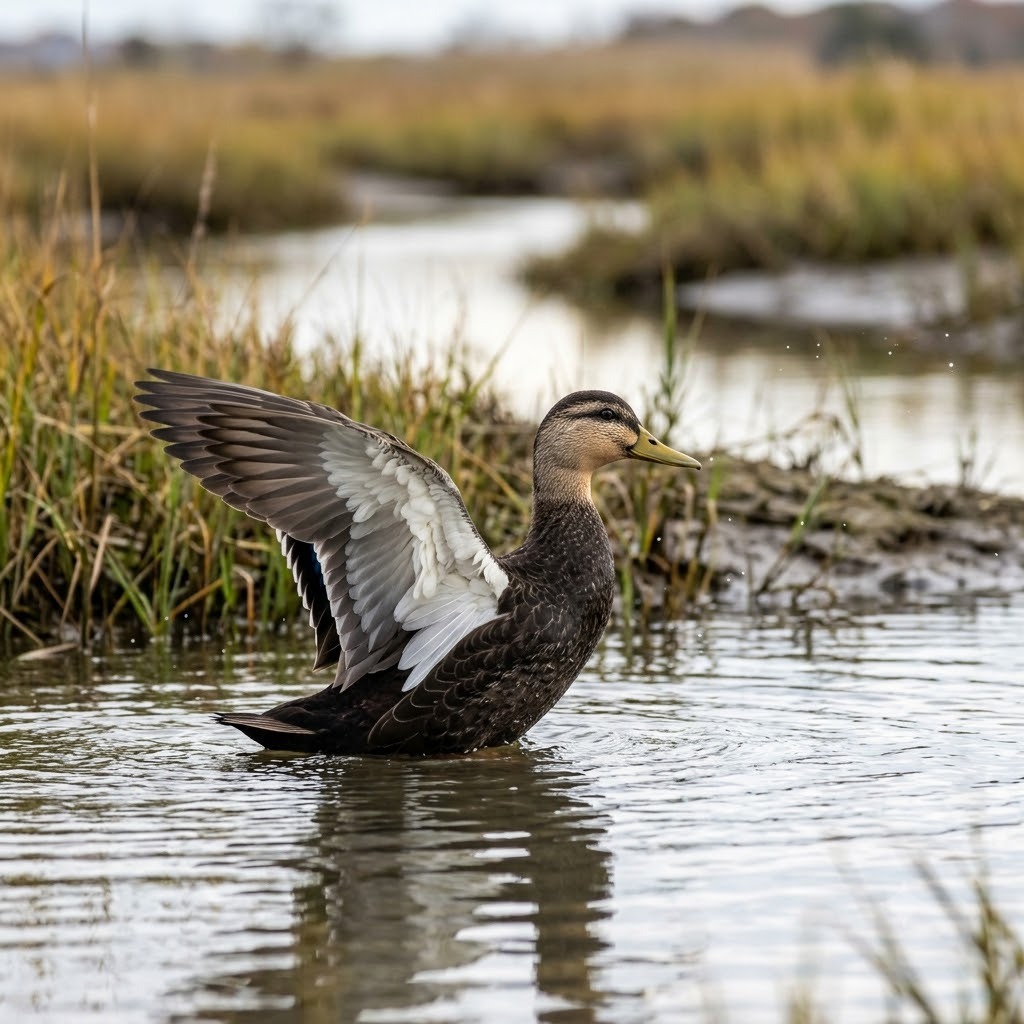
The black duck looks like a very dark hen mallard. Both sexes have a dusky chocolate-brown body that appears nearly black at a distance, a paler tan head and neck, and a striking flash of iridescent violet-blue on the wing (the speculum) bordered without the bold white bars a mallard shows. The best in-flight clue is the bright silvery-white underwing, which flashes against the dark body. Drakes have a dull yellow-olive bill; hens show a duller, mottled greenish bill. Because black ducks and hen mallards are so similar and the two hybridize freely, hunters must identify carefully before shooting where bag limits differ between species.
Range & Habitat (US)
The American black duck is an eastern bird, breeding across eastern Canada and the northeastern United States and wintering down the Atlantic Flyway from New England to the Gulf Coast. It favors coastal salt marshes, tidal estuaries, brackish bays, beaver ponds, flooded hardwood bottoms, and quiet freshwater marshes. In winter, tidal salt marshes and sheltered coastal creeks concentrate birds. Black ducks tolerate cold and rough coastal conditions better than most puddle ducks, often riding out weather in open saltwater that other species avoid.
Behavior & Sign
Black ducks are famously wary and quick to flare at anything unnatural - a shiny face, a moving dog, an out-of-place decoy, or overcalling. They feed by tipping up in shallow water for aquatic plants, seeds, and invertebrates, and they often work in small groups rather than big flocks. In coastal areas they follow the tides, feeding on falling and rising water and loafing at high tide. Sign includes muddy tip-up feeding beds in shallow marsh, feathers and droppings on loafing bars, and small groups trading low over the marsh at dawn and dusk.
Hunting Seasons & Timing
Black duck hunting follows the federal migratory bird framework, with state seasons generally running through the fall and into winter within federal date limits. Because populations are managed cautiously, the black duck daily bag is typically small, often one or two birds, and can differ from the general duck limit. The best hunting comes on cold, windy days late in the season when northern birds have pushed south. Early morning and the last light of legal shooting hours are prime, and moving weather fronts often put more birds on the move. Always confirm current federal and state season dates and species-specific bag limits.
Hunting Methods
Success on black ducks is a study in restraint. Hunters use small, realistic decoy spreads - a half-dozen black duck or mixed puddle-duck blocks often outperform a huge rig, since black ducks distrust crowds. Calling should be sparse and soft: a few quiet quacks and feeding chuckles, never the aggressive hail calling used for high mallards. Total concealment matters more than for almost any other duck, so hunters brush blinds heavily and keep faces and hands hidden. Jump-shooting small marsh potholes and tidal creeks also works. A steady, well-hidden dog is an asset for retrieving downed birds in cold coastal water.
Where to Find Them - Reading the Terrain
Read the water and the weather. In coastal country, find the sheltered salt-marsh creeks and mudflats where birds feed on a falling tide, and the protected bays where they raft at high water. Inland, look to beaver ponds, flooded timber, and quiet backwaters away from disturbance. Black ducks favor edges and pockets rather than wide-open water, so tucked-away corners, points, and small openings in the marsh hold birds. On windy days, hunt the lee shorelines where ducks seek calm water. Fresh feeding sign on a mudflat is a strong invitation to set up nearby the next morning.
Gear & Optics Needed
Black duck hunting is gear-driven in the sense that concealment and cold-water readiness win the day. Chest waders and warm, waterproof layers handle tidal marsh and flooded timber. A small spread of realistic decoys, a low-key duck call, and plenty of natural brush or marsh grass for the blind are the core kit. Non-toxic shot is legally required for all waterfowl. A face mask and gloves defeat the black duck's sharp eyes. Compact binoculars help confirm species and read distant birds. A reliable retrieving dog, or a long-handled retrieval tool, recovers birds from soft mud and open water.
Shot Placement & Field-Dressing / Cleaning
Black ducks are taken with a shotgun using non-toxic loads. Take clean, in-range shots as birds cup and commit over the decoys, and avoid skybusting distant flocks, which wounds birds and educates the rest. After retrieval, most hunters either pluck the whole bird for roasting - black duck skin and fat carry good flavor - or breast it out for quicker cleaning. Remove the breast fillets and legs, cool the meat promptly, and rinse away marsh mud. Keeping birds cool and clean in the field protects the excellent eating quality.
Meat & Eating Quality
The American black duck is regarded as one of the finer-eating puddle ducks, with rich, dark, flavorful breast meat. Birds feeding on aquatic plants and grain taste clean and full, while heavily coastal, shellfish-heavy diets can add a stronger flavor some hunters temper by removing skin or soaking the meat. Cooked to a rosy medium-rare, the breasts are excellent; the legs reward slow braising. As with all wild ducks, careful, quick cooling and clean handling make the biggest difference at the table.
Common Mistakes
The classic black duck mistakes all trace back to their wariness. Overcalling flares them fast - go quiet and sparing. Oversized decoy spreads look wrong to a bird that travels in small groups. Poor concealment, especially an exposed face or a moving dog, ends a hunt before it starts. Skybusting at high, distant birds wounds ducks and ruins the setup for everyone. Finally, failing to correctly separate a black duck from a hen mallard before shooting can put a hunter over a species-specific limit, so confirm the bird first.
Regulations & Conservation Note
All waterfowl hunters must use non-toxic shot, carry a signed federal duck stamp, and follow the federal migratory bird regulations that set season frameworks and daily bag limits. The black duck's history of decline from habitat loss and mallard hybridization is why its limits are conservative, so hunt within the small species bag and report harvests where required. Support wetland conservation, respect refuge boundaries and private marsh, and practice fair chase. Careful, legal harvest keeps this challenging eastern duck part of the flyway.
Best Suited For
Black duck hunting suits patient, detail-oriented hunters who love a hard-won bird and cold, wet marsh country. It rewards stealth, sharp identification, and disciplined calling over volume of shooting, making a single black duck a point of pride. It is best for hunters comfortable with tidal conditions and total concealment rather than those seeking fast, high-volume shooting.
FAQ
How do I tell a black duck from a hen mallard? The black duck is much darker overall with a paler head, a flashing silvery-white underwing, and a violet-blue speculum lacking bold white borders. Hen mallards are lighter brown with white bars framing a blue speculum. Confirm before shooting.
Why do black ducks flare off my decoys? Usually overcalling, too many decoys, or exposed movement and shine. Downsize your spread, call softly and rarely, and hide completely, including your face and hands.
How many black ducks can I keep? The black duck bag is typically small and may differ from the general duck limit. Always check current federal and state regulations before the hunt.
Do I need a dog to hunt black ducks? No, but a steady retrieving dog is a major asset in cold tidal water and soft mud. A hidden, well-trained dog also protects your concealment.
When is the best time to hunt them? Cold, windy late-season days after northern birds move south are prime, especially at first and last legal light and on moving weather fronts.