American Wigeon
The American wigeon is one of the most distinctive and rewarding dabbling ducks a waterfowler can pursue, prized as much for its handsome drake plumage as for its excellent table quality.
🗓️ Last reviewed: June 2026
Overview
The American wigeon is one of the most distinctive and rewarding dabbling ducks a waterfowler can pursue, prized as much for its handsome drake plumage as for its excellent table quality. Formerly called the "baldpate" for the drake's creamy-white crown, the wigeon is a grazer at heart, feeding on aquatic plants and often coming ashore to crop pastures, winter wheat, and golf-course grass more readily than most ducks. It is famous as a "robber duck," lingering near diving ducks and coots to snatch vegetation they bring to the surface. For new hunters, wigeon offer fast-flying, decoy-friendly action across all four flyways and a uniquely whistled call that sets them apart from the quacking crowd.
Identification & Appearance
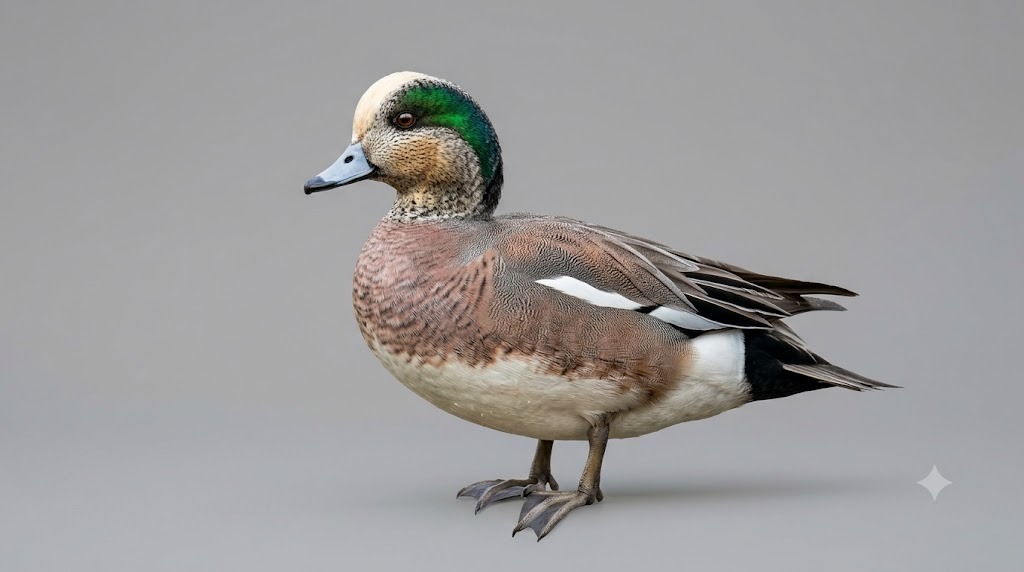
The breeding drake wears a creamy-white forehead and crown over a grayish, finely speckled face, with a broad iridescent green stripe sweeping back from each eye. The breast and flanks are a warm pinkish-brown, the belly is white, and the undertail is black; in flight a bold white patch on the forewing flashes as a white shoulder. The bill is small and short - almost goose-like - pale blue-gray with a neat black tip. Hens are a warm gray-brown overall with a grayish head, the same small blue-gray bill, and a dark smudge around the eye. Both sexes show the compact, round-headed shape and short bill that make wigeon easy to pick out even at a distance.
Range & Habitat (US)
American wigeon breed across western Canada, Alaska, and the northern Great Plains and intermountain West, favoring shallow wetlands, prairie potholes, and marshy lake edges. In winter they spread across the Pacific Coast, the South, the Gulf Coast, the mid-Atlantic, and into Mexico, and they are common in all four flyways - especially abundant in the Pacific Flyway. Wigeon favor shallow, vegetated freshwater marshes, flooded fields, estuaries, and coastal bays, but they will also loaf in large rafts on open lakes and reservoirs. Their grazing habit draws them to flooded pastures, winter wheat, and even manicured turf near water.
Behavior & Sign
Wigeon are sociable, often gathering in large rafts on open water and feeding in adjacent shallows or grazing on land, a behavior that distinguishes them from most dabblers. They feed by tipping up in shallows and by cropping vegetation while walking on shore, and they routinely associate with coots and diving ducks to pirate plants pulled up from deeper water. The drake's call is a clean, squeaky three-note whistle, often written as "whew-whew-whew," rather than the quack of a mallard or gadwall - a sound that carries well and is a reliable clue to nearby birds. On the water and in the air they move in tight, fast-wheeling flocks. Key field sign includes grazed, cropped grass at water's edge and concentrations of birds loafing on open water near feeding shallows.
Hunting Seasons & Timing
Wigeon are hunted during the regular fall and winter duck seasons set within the federal migratory bird framework, with exact dates and limits established by each state inside its flyway's framework. Hunting generally runs from early fall into late January depending on the zone, with migration through much of the country peaking from October into December as birds push south ahead of cold weather. The first and last hours of daylight are typically most productive, though wigeon will feed and move throughout the day, especially in cold or windy conditions. Always confirm your state's exact season dates, zones, shooting hours, and daily bag limits before you hunt.
Hunting Methods
The classic approach is decoying over water: set a spread in shallow feeding areas or along the edge of a loafing raft and let the birds wheel in. Wigeon respond best to the whistle rather than a standard mallard quack, so a wigeon whistle is the call of choice, often used to turn passing flocks. They decoy well to wigeon decoys and are strongly drawn to confidence decoys such as coots and gadwall, which signal safety and food. Many hunters also pass-shoot wigeon as flocks trade between roost water and feeding fields, or jump-shoot small waters where birds are grazing. Good concealment in a blind or natural cover is essential, as wigeon flare quickly from anything out of place.
Where to Find Them - Reading the Terrain
Start with shallow, vegetated water - flooded marsh, the weedy margins of lakes and reservoirs, estuaries, and tidal bays where aquatic plants grow. Look for large rafts loafing on open water and scout the adjacent shallows and shorelines where the same birds feed. Because wigeon graze, flooded pastures, winter wheat, and grassy edges near water are prime, and birds will often trade between a big roost and these feeding areas on a daily schedule. Where diving ducks and coots are working deeper water, expect wigeon nearby waiting to rob a meal. In coastal country, tidal flats and protected bays concentrate birds, especially on a falling tide that exposes feed.
Gear & Optics Needed
Wigeon hunting uses standard waterfowl gear. A 12-gauge shotgun loaded with non-toxic (steel) shot is the workhorse, paired with chest waders for setting decoys and retrieving birds. A spread of wigeon decoys, supplemented with coot and gadwall confidence decoys, draws birds in, and a wigeon whistle is far more effective than a mallard call for this species. Good concealment matters - a layout or marsh blind, or natural vegetation, plus drab clothing and a face cover. Compact binoculars (8x32) help you identify ducks at a distance and pick wigeon out of mixed rafts, and a headlamp helps with the predawn setup.
Shot Placement & Field-Dressing / Cleaning
Wigeon are taken on the wing with a shotgun, so the goal is clean killing shots inside the effective range of your gun and load, typically holding fire until birds are committed and well within the spread. Pattern your shotgun beforehand and learn your comfortable range so you avoid crippling birds at distance. After recovery, most hunters either pluck the whole bird for roasting or breast it out by removing the two breast fillets; the legs and thighs can also be saved. Cool the meat promptly, keep it clean, and field-dress as soon as practical to preserve quality.
Meat & Eating Quality
American wigeon are among the better-eating ducks because of their largely vegetarian diet, yielding mild, clean-tasting meat without the strong flavor sometimes found in fish-eating divers. The breast is the prime cut and is best cooked quickly to medium-rare, as it is lean and easily overcooked. Legs and thighs reward slow cooking, braising, or grinding. Birds taken from freshwater feeding on plants and grain are especially good on the table, making wigeon a favorite of hunters who value the kitchen as much as the hunt.
Common Mistakes
A frequent error is calling wigeon with a mallard quack - they respond to the whistle, and the wrong call can turn birds away. Hunters also overlook confidence decoys; adding coots or gadwall to the spread can be the difference on wary birds. Poor concealment causes flocks to flare, since wigeon often wheel and study a spread before committing. Setting up on open water away from the shallow feed and grazing edges that wigeon actually use is another common miss. Finally, shooting beyond patterned range or before birds are committed leads to crippled ducks and missed opportunities.
Regulations & Conservation Note
Waterfowl hunting in the US is governed by the federal migratory bird framework, with daily bag limits for wigeon set within the overall duck limit established each year by your state inside its flyway framework. Every waterfowler must carry a state hunting license, a signed federal duck stamp, and complete HIP (Harvest Information Program) registration, and must use non-toxic shot. Wetland conservation funded by duck stamps and hunter dollars has been central to maintaining healthy wigeon populations and the marshes they depend on. Hunt only legal birds and hours, identify your target before shooting, and support the habitat work that keeps continental duck numbers strong.
Best Suited For
Wigeon hunting suits hunters who enjoy classic decoy work over marshes and shallow water and who appreciate a duck that decoys readily and rewards the table. It is accessible to beginners - the birds respond well to a simple whistle and a modest spread - while offering depth in scouting feeding patterns and refining confidence-decoy setups. It is an excellent introduction to waterfowling, particularly in the Pacific Flyway where wigeon are abundant.
FAQ
Why won't wigeon respond to my duck call? Wigeon are whistlers, not quackers. The drake gives a squeaky three-note whistle, so a wigeon whistle works far better than a standard mallard quack for turning and finishing them.
What decoys work best for wigeon? A spread of wigeon decoys is the foundation, but adding confidence decoys like coots and gadwall is highly effective because wigeon associate those species with safe water and available food.
Are American wigeon good to eat? Yes - they are among the better-eating ducks thanks to a largely vegetarian diet. Cook the lean breast quickly to medium-rare and slow-cook the legs.
Where are wigeon most common? They occur in all four flyways but are especially abundant in the Pacific Flyway, wintering along the Pacific Coast, the South, the Gulf Coast, and the mid-Atlantic.
Why are wigeon called "robber ducks"? They often loaf near diving ducks and coots and snatch aquatic plants those birds bring up from deeper water, earning nicknames like "poacher" or "robber duck."