Bufflehead
The bufflehead is the smallest diving duck in North America, and its bold black-and-white drake makes it one of the most recognizable birds on the water.
🗓️ Last reviewed: June 2026
Overview
The bufflehead is the smallest diving duck in North America, and its bold black-and-white drake makes it one of the most recognizable birds on the water. For waterfowlers, the "butterball" offers fast, sporty diver hunting without the big-water commitment that bigger diving ducks often demand. Buffleheads are restless, energetic little birds that dive constantly, fly low and fast, and decoy with surprising willingness to a modest spread. They are not the prize table duck that a teal or a mallard is, but they are abundant, widely distributed, and a genuine pleasure to hunt - a great way for a new diver hunter to learn the rhythm of decoying ducks on open water. The shooting is quick, the birds are striking, and a small flock buzzing the blocks at first light is hard to beat.
Identification & Appearance
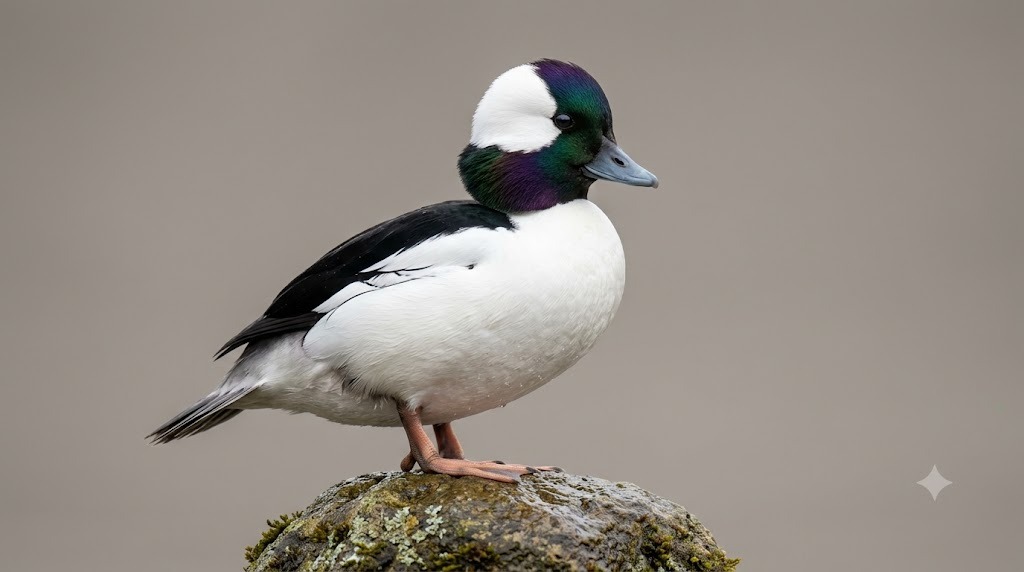
A breeding drake bufflehead is unmistakable: a small, round, puffy-headed duck with a large white wedge wrapping around the back of an iridescent black head that shows green and purple in good light, a clean white body, and a black back. The big head and the bold white patch are the field marks that name the bird. The hen is much plainer - dark gray-brown overall with a small, neat white oval patch on the cheek. In flight both sexes are small and fast, beating their wings rapidly low over the water, and the drake flashes white in the wing and body. Size is the giveaway: at barely a pound, a bufflehead is noticeably smaller than goldeneyes or scaup it often shares water with. The round, oversized head gives the bird its name, from the old term "buffalo head."
Range & Habitat (US)
The bufflehead breeds across the boreal forest of Canada and Alaska, nesting in tree cavities - usually old flicker holes - near small ponds and lakes, a habit that ties its breeding range to wooded country. During migration and winter it spreads across nearly the entire United States, using a wide variety of water. Buffleheads winter on coastal bays, estuaries, and protected saltwater along both the Atlantic and Pacific coasts, and inland they use lakes, large rivers, reservoirs, and ponds throughout the country. They tolerate cold well and often stay as far north as open water allows. This broad, flexible winter distribution means most waterfowlers across the US have buffleheads somewhere within reach, from coastal salt marsh to an inland reservoir.
Behavior & Sign
Buffleheads are active, busy little divers that spend much of their time diving for food, popping under and bobbing back up almost constantly. They feed by diving for aquatic invertebrates, small crustaceans, mollusks, and some plant material, working water from a few feet to moderate depth. They fly low and fast in small groups, and they are unusual among ducks in that a flock will often dive nearly in unison, leaving the surface briefly empty. On the water they ride high and buoyant, and they are quick to flush. Sign for hunters is mostly about reading rafts of birds: small, bright black-and-white ducks bobbing and diving on a bay or reservoir, often in loose bunches, and small flocks trading low along the shoreline or between feeding areas at first and last light.
Hunting Seasons & Timing
Buffleheads are hunted during the regular duck season, which is set within the federal migratory bird framework and varies by state and flyway. Because they migrate later and tolerate cold, buffleheads are often a mid- to late-season bird, showing up in good numbers as colder weather pushes them down and concentrates them on the open water that stays ice-free. On many waters the bufflehead is one of the more reliable ducks late in the year, when dabbler numbers have thinned. As with all waterfowl, the prime windows are the first hours after legal light and again toward evening, when birds trade and feed. Always confirm your state's regular duck-season dates, shooting hours, and daily bag limits before you hunt, since these are set annually.
Hunting Methods
Bufflehead hunting is classic diver hunting on a small scale. The standard approach is to set a spread of diving-duck decoys - bufflehead or general diver blocks - on open water where the birds want to be, often in a loose line or J-hook that gives incoming birds a clear landing pocket. Buffleheads decoy readily and come in low and fast, frequently buzzing the spread before committing, so you stay hidden in a layout blind, a boat blind, or shoreline cover and shoot when they swing into range. Calling matters little for these birds; a good spread and good concealment do the work. Many hunters take buffleheads as a bonus while targeting other divers, but a dedicated small-water bufflehead hunt over a tight diver spread is a fun, fast way to spend a cold morning.
Where to Find Them - Reading the Terrain
Look for open water that stays ice-free and holds the small invertebrates buffleheads eat. On the coast, that means protected bays, estuaries, tidal creeks, and salt ponds; inland, it means lakes, reservoirs, large rivers, and deeper ponds. Buffleheads favor water with some depth they can dive in, not the inches-deep shallows a teal would use, so set up where the birds are actively diving rather than on a mudflat. Watch for rafts of bright little black-and-white ducks working a particular stretch of bay or shoreline, and note the travel lanes they use between feeding areas. Points, channel edges, and the lee of a shoreline out of the wind all concentrate birds and make good places to set a spread.
Gear & Optics Needed
Bufflehead hunting is straightforward diver gear. A 12 or 20 gauge shotgun choked improved cylinder or modified handles fast, decoying birds well; load non-toxic shot - steel is standard - in a size such as 4 or 6, which patterns well on these small, tough little ducks. A spread of a couple dozen diver decoys, a layout or boat blind or good shoreline concealment, and waders cover the basics. Because buffleheads are a cold-weather bird, dress for it: insulated waders, warm layers, and dry gloves matter on a frigid bay. A small boat helps reach open-water setups and recover downed birds. Compact binoculars help you spot and read distant rafts of birds before you commit to a spot.
Shot Placement & Field-Dressing / Cleaning
Buffleheads are taken on the wing with a shotgun, so "placement" means a good gun mount, a smooth swing, and shots kept inside the effective range you confirm at the patterning board. These birds are small, fast, and low, so a steady swing and picking one bird beats firing into a bunched flock. Like other divers, buffleheads can dive at the shot, so be ready and mark downed birds carefully on the water. After recovery, most hunters breast out the birds - remove the two breast fillets - since the carcass is small and divers are not easy to pluck cleanly. Cool and clean the meat promptly. A diver like the bufflehead benefits from careful handling and trimming, which makes a real difference on the table.
Meat & Eating Quality
Honesty matters here: the bufflehead is a diving duck, and like most divers its meat is darker and stronger-flavored than a prime dabbler such as teal or mallard. Because buffleheads eat a lot of aquatic invertebrates and crustaceans, the breast can carry a fishier, more pronounced taste, and eating quality varies with what the birds have been feeding on. That said, a bufflehead is far from inedible. Trimmed carefully, soaked if you like, and cooked simply - often ground, used in sausage, or cooked hot and fast and not overdone - it makes perfectly good table fare. Set expectations accordingly: hunt the bufflehead for the sporty shooting and the striking bird, and treat good eating as a reward for careful handling rather than a given.
Common Mistakes
The most common bufflehead mistake is flock-shooting a fast, bunched group instead of picking one bird, which leads to clean misses. Hunters also set up on water that is too shallow or in the wrong place, away from where birds are actually diving and trading. Poor concealment flares these wary little ducks, which often circle and inspect a spread before committing. Underestimating how fast and low they fly leads to shooting behind them. On the table side, a common error is treating a diver like a dabbler and being disappointed - buffleheads need careful trimming and simple, honest cooking, not the same handling you would give a teal. And as always, failing to confirm your target and the regulations before shooting is both an ethical and a legal error.
Regulations & Conservation Note
Buffleheads are managed under the federal migratory bird framework, with seasons and bag limits set annually by each state within that framework. Hunters must hold a state hunting license, a federal duck stamp, and HIP registration, and must use non-toxic shot for all waterfowl. The bufflehead's reliance on tree cavities for nesting ties its future to healthy northern forests and to the wetlands it uses year-round, and the dollars from duck stamps fund the wetland conservation that benefits all waterfowl. Identify your target carefully, respect daily bag and possession limits, and follow your state's regulations to keep populations strong. Buffleheads are currently abundant, and responsible harvest keeps them that way.
Best Suited For
Bufflehead hunting suits hunters who want fast, sporty diver action and a striking, easily identified bird, without the big-water demands of larger divers. The late-season timing, willing decoying, and modest spread make it an approachable way to learn diver hunting, while the quick, low flight keeps the shooting honest. It is a good fit for hunters comfortable on cold open water who value the experience and the bird over top-tier table quality, and who enjoy a fast morning over a tight diver spread.
FAQ
Are buffleheads good to eat? They are decent but not a top table duck. As a diving duck that eats invertebrates and crustaceans, the bufflehead has darker, stronger-flavored meat than a teal or mallard. Trimmed well and cooked simply - often ground or hot and fast - it is perfectly good, but set your expectations like a diver, not a dabbler.
Do buffleheads decoy well? Yes. For a diver, buffleheads decoy readily, coming in low and fast to a spread of diving-duck decoys on open water. Good concealment and a spread with a clear landing pocket do most of the work, since calling matters little for these birds.
What makes a bufflehead easy to identify? The drake is unmistakable - a small, round, puffy-headed duck with a big white wedge wrapping the back of a dark iridescent head and a clean white body. The hen is plain gray-brown with a small white cheek patch. Both are noticeably smaller than goldeneyes or scaup.
When is the best time to hunt buffleheads? They are usually a mid- to late-season bird. Buffleheads migrate later and tolerate cold, so they concentrate on ice-free open water as the season goes on, often when dabbler numbers have thinned. The first and last hours of legal light are prime.
What shot and choke should I use? A 12 or 20 gauge with an improved-cylinder or modified choke handles fast, decoying birds well. Use non-toxic shot - steel is standard - in a size such as 4 or 6, which patterns well on these small but tough little divers.