Cinnamon Teal
The cinnamon teal is a small dabbling duck of the American West, and for hunters in the Pacific and western Central flyways it is one of the most striking birds to ever swing over a decoy spread.
🗓️ Last reviewed: June 2026
Overview
The cinnamon teal is a small dabbling duck of the American West, and for hunters in the Pacific and western Central flyways it is one of the most striking birds to ever swing over a decoy spread. A drake in full color is unmistakable - deep cinnamon-red from head to belly - yet in flight it flashes the same chalky powder-blue forewing as its close cousin the blue-winged teal. Like the blue-wing, it is an early migrant, so it shows up in many western teal seasons and over early-opening marshes when the weather is still warm and the gear is light. These little ducks decoy well, come in fast and low, and reward a hunter who knows shallow western wetlands. For a beginner working a quiet marsh, a cinnamon teal hunt is short on hardship and long on color and action.
Identification & Appearance
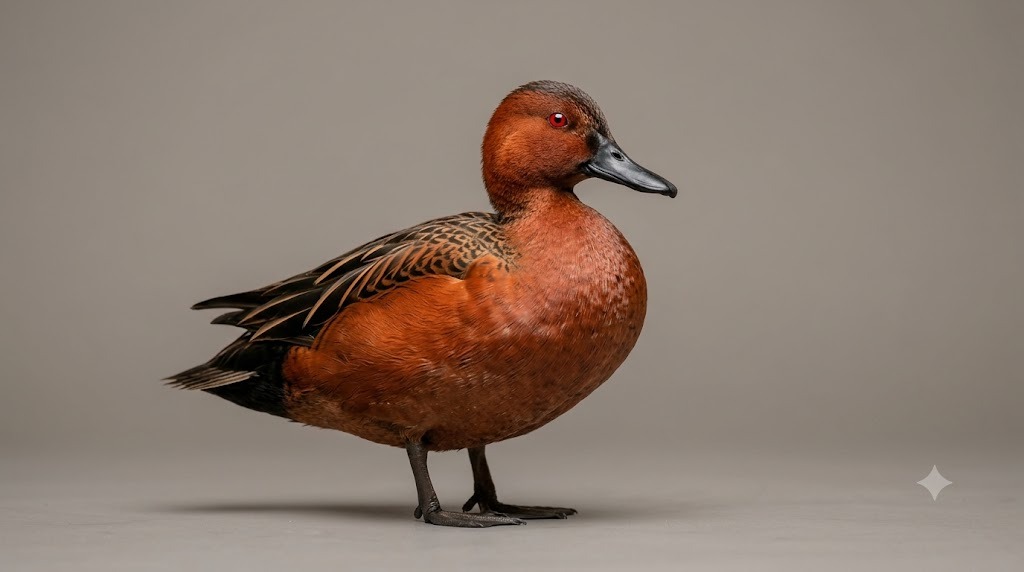
A breeding drake cinnamon teal is one of the most distinctive ducks in North America: a rich, glowing cinnamon-red covers the head, neck, breast, and belly, set off by a dark rear, and the eye is a striking red. The hen is a plain, warm mottled brown with a softer face than a mallard hen and a slightly larger, more spatulate bill. In flight both sexes flash a large chalky powder-blue patch on the forewing, usually paired with a green speculum - the same blue wing the blue-winged teal carries. That shared wing patch is the catch for hunters: cinnamon and blue-winged hens look almost identical, and in early fall many cinnamon drakes are still in drab, hen-like eclipse plumage, so birds buzzing the decoys can be very hard to tell apart. Correct identification matters because western teal seasons can be teal-only.
Range & Habitat (US)
The cinnamon teal is primarily a western bird, breeding across the intermountain West and the Great Basin - think the marshes, alkaline lakes, and irrigation wetlands of states like California, Oregon, Nevada, Utah, Idaho, Colorado, and the western Great Plains. Unlike the blue-winged teal, which is a prairie-pothole bird of the continent's midsection, the cinnamon is centered well to the west. It favors shallow, vegetated freshwater and alkaline wetlands - marshes, sloughs, reservoir edges, flooded pastures, and irrigation impoundments - rather than deep open water. During migration cinnamon teal move down the Pacific and western Central flyways, and as a fairly early, short-to-medium-distance migrant for the West, many winter across the southwestern states and into Mexico. Their western focus is why most waterfowlers east of the Rockies rarely encounter one.
Behavior & Sign
Cinnamon teal are small, fast, agile fliers that buzz low over the marsh in tight bunches and drop quickly into shallow, weedy water, often appearing and gone before you can mount the gun. They feed by dabbling and tipping in very shallow water, taking seeds, aquatic plants, and invertebrates, and they loaf on mudflats and along sheltered, reedy edges. They tend to be less gregarious than some teal, often moving in pairs and small groups rather than huge flocks. As early migrants they head south ahead of most ducks, a useful seasonal signal. Sign on the water includes small ducks loafing along weedy shallow edges, muddy tip-up feeding marks in inches-deep water, and birds trading low across a marsh at first and last light. Scouting western wetlands the evening before for trading birds tells you where to set up.
Hunting Seasons & Timing
Because cinnamon teal migrate early, they are a prime target of the special early teal seasons and early waterfowl openers held in many western states, each with its own annually set dates and bag limits under the federal migratory bird framework. These early frameworks exist precisely because so many teal would otherwise be gone before the regular opener. Early teal hunting is a morning game: the first hour or two after legal light is prime, when birds trade low across the marsh between roosting and feeding water. Some cinnamon teal are also taken during the regular season in the southwestern states where they linger or winter. Always confirm your state's exact teal-season dates, shooting hours, and bag limits, since western frameworks and any teal-only rules vary by state.
Hunting Methods
Hunting cinnamon teal is classic warm-weather western waterfowling over shallow water. The standard approach is a small decoy spread - teal decoys or general puddle-duck decoys - set on a shallow marsh, mudflat, flooded pasture, or irrigation impoundment where birds want to be. Cinnamon teal decoy readily and come in fast and low, so you set up tight, stay hidden in marsh vegetation, and shoot quickly when they swing. Light calling helps: soft, high quacks and peeps rather than loud highball hen calls. Because the weather is often warm, the kit is minimal and mobility is easy. A retriever earns its keep in soft marsh muck and helps recover downed birds in the reeds and flooded grass.
Where to Find Them - Reading the Terrain
Find shallow western water and you find cinnamon teal. Look for shallow, weedy freshwater and alkaline wetlands, the muddy edges of marshes, flooded pastures, reservoir shallows, and irrigation impoundments where small ducks loaf and tip up to feed in inches of water. Birds trade between roosting water and feeding water at first light, so set up along that travel route rather than on deep open water they will not use. Sheltered, reed-lined ponds and the shallow ends of impoundments concentrate birds. Watch the evening before for small groups dropping into a particular flat or weedy edge, and plan your spread there in the morning.
Gear & Optics Needed
Cinnamon teal hunting rewards simplicity over expensive optics, especially in early-season warmth. A 12 or 20 gauge shotgun choked improved cylinder handles fast, close work well; load non-toxic shot - steel is standard - in a smaller size such as 6 for these small birds. A few dozen decoys, lightweight waders, and good marsh concealment cover the basics. Dress for warm weather and bring serious bug protection, because early western marshes can be buggy. A simple teal whistle or call helps. Many hunters skip heavy optics entirely, though compact binoculars help you read distant trading birds before they arrive.
Shot Placement & Field-Dressing / Cleaning
Cinnamon teal are taken on the wing with a shotgun, so "placement" means good gun mount, a smooth swing, and shots inside your effective range as you confirm at the patterning board. Their speed and low, twisting flight make a steady, unhurried swing more important than firepower. After recovery, most hunters breast out the birds - remove the two breast fillets - though these small ducks can also be plucked whole for the table. In warm early-season weather, cool the meat quickly and keep it clean, which matters more in early-season heat than in cold late-season hunts.
Meat & Eating Quality
The cinnamon teal is widely considered excellent eating, in the same top rank as the blue-winged and green-winged teal. The breast meat is tender and mild, lacking the strong flavor some divers carry, and many western hunters rate teal among the best table ducks they take. Because the birds are small and the meat is lean, the breasts cook fast and are easy to overcook - quick, hot cooking to a rosy medium suits them well. A few teal make a memorable meal, and their reputation at the table is a real part of the early-season appeal.
Common Mistakes
The most common early-teal mistake is shooting at the flock instead of picking one bird out of a fast, twisting bunch. Mounting too slowly, or standing up too early as birds buzz the spread, flares them off. Setting decoys on water that is too deep, or where teal simply do not want to be, leaves you watching birds work elsewhere. Overcalling with loud hen calls instead of soft peeps can turn birds away. And in a teal-only early season, failing to confirm that a low, fast duck is actually a teal before shooting is both an ethical and a legal error - especially since cinnamon and blue-winged hens look nearly identical and cinnamon drakes are often still in hen-like eclipse plumage early in the fall.
Regulations & Conservation Note
Cinnamon teal are managed under the federal migratory bird framework, and the special early teal seasons and early western openers carry their own annually set dates and bag limits. Hunters must have a state hunting license, a federal duck stamp, and HIP registration, and must use non-toxic shot. The dollars from duck stamps and the federal framework fund the wetland conservation that keeps western marshes, alkaline lakes, and irrigation wetlands productive for waterfowl. Identify your target carefully, since some western seasons are teal-only and cinnamon hens are easily confused with blue-winged hens, and follow all bag and possession limits to keep populations strong.
Best Suited For
Cinnamon teal hunting is ideal for western waterfowlers who want fast action and one of the most beautiful ducks on the continent without the cold and heavy gear of late-season hunting. The early timing, minimal kit, and birds that decoy readily make it an accessible entry point, while the fast, humbling shooting offers plenty of challenge. It suits hunters who enjoy shallow western marshes, quick morning hunts, and an excellent duck on the table.
FAQ
What makes a cinnamon teal so easy to recognize? A breeding drake is glowing cinnamon-red over the head, neck, breast, and belly with a red eye - there is nothing else like it on western water. The catch is that hens and early-fall eclipse drakes are plain brown and look almost exactly like blue-winged teal, so identification is only easy on a colored drake.
Where in the US do cinnamon teal live? They are mainly a western bird, breeding across the Great Basin and intermountain West - states like California, Oregon, Nevada, Utah, Idaho, and Colorado - and migrating down the Pacific and western Central flyways. Hunters east of the Rockies rarely see one.
Do I need a dog to hunt cinnamon teal? No, but a retriever is genuinely helpful. Downed teal can be hard to find in soft marsh muck, reeds, and flooded grass, and a good dog makes recovery faster and cleaner.
How do I tell a cinnamon teal from a blue-winged teal? On a colored drake it is obvious - cinnamon is solid red, blue-wing has a gray head and white facial crescent. In flight both flash the same powder-blue forewing, and the hens are nearly identical, so on brown birds you often cannot tell them apart with certainty. When in doubt in a teal-only season, treat it as a teal but know your local rules.
What shot and choke should I use? A 12 or 20 gauge with an improved-cylinder choke handles fast, close shots well. Use non-toxic shot - steel is standard - in a smaller size such as 6, which patterns densely for these small birds.