Common Goldeneye
The common goldeneye is a hardy diving duck of big, cold water, prized by late-season hunters who don't mind ice in the decoy lines and wind off open lakes and rivers.
🗓️ Last reviewed: July 2026
Overview
The common goldeneye is a hardy diving duck of big, cold water, prized by late-season hunters who don't mind ice in the decoy lines and wind off open lakes and rivers. Hunters call it the "whistler" for the loud, musical whistling of its wings in flight - often you hear a flock before you see it. A true late-season bird, the goldeneye keeps working open water long after the marshes have frozen, giving cold-weather waterfowlers action when other hunting has shut down. It is a diver's diver: fast, tough, and best hunted over open water with a rig set for big lakes and rivers.
Identification & Appearance
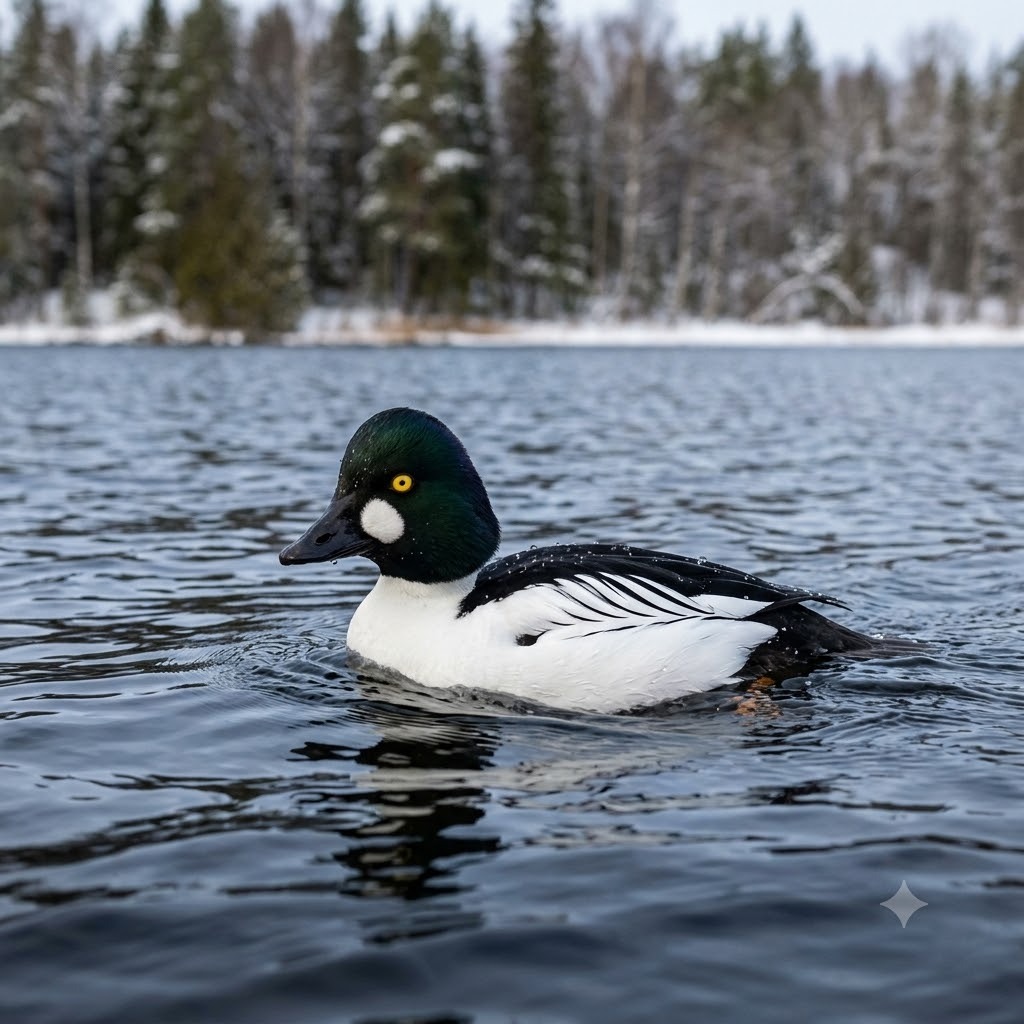
The goldeneye is a compact, stocky diving duck of about 18-20 inches with a striking bright golden-yellow eye. Breeding drakes are boldly patterned: a glossy dark green-black head that looks black at a distance, a large round white cheek spot in front of the eye, a black back, and a clean white breast and sides. Hens are gray-bodied with a chocolate-brown head and a pale collar. In flight both sexes show large white wing patches, and the drake's fast, whistling wingbeats are diagnostic. The high, rounded, almost triangular head profile and the golden eye set the goldeneye apart from other divers.
Range & Habitat (US)
Common goldeneyes breed in the boreal forest of Canada and the far northern US, nesting in tree cavities near water, and winter across much of the US on large lakes, reservoirs, big rivers, and coastal bays and estuaries. In winter they seek out deep, cold, open water that stays ice-free - the main basins of big lakes, tailwaters below dams, and moving stretches of large rivers. They are birds of open, deep, cold water rather than shallow marsh, and they often push into an area only when hard freezes have locked up smaller waters, making them a signature late-season target.
Behavior & Sign
Goldeneyes are diving ducks, plunging underwater to feed on aquatic invertebrates, crustaceans, mollusks, and small fish, especially in cold, deep water. They typically fly and raft in small, tight groups rather than huge flocks, and their fast, direct flight is accompanied by the loud wing-whistle that gives them their nickname. On the water they dive frequently and ride low. Sign is mostly a matter of locating rafts of birds on open water and watching their trading routes between roosting and feeding areas. In late season they concentrate wherever open, food-rich cold water remains.
Hunting Seasons & Timing
Goldeneyes are hunted within the general migratory duck season, and they shine in the late season - the coldest, iciest stretch when many marshes have frozen and other ducks have moved on. They may fall under regular duck bag limits or, in some places and years, under specific sea-duck or diving-duck frameworks, so the rules can vary. This is genuinely cold, sometimes harsh hunting on big open water. Always confirm current season dates, shooting hours, bag limits, and any diving-duck or sea-duck provisions for your state and flyway before you head out.
Hunting Methods
Goldeneyes are hunted over open water on big lakes and rivers, using a diving-duck decoy rig - often long lines of divers set off a point, in a big-water pocket, or along a river's edge where birds trade. Because they raft and fly in tight groups, a visible, well-placed open-water spread matters more than calling, and goldeneyes are not very responsive to calls. Layout boats, brushed big-water blinds, and river points are common setups. Steel or other approved non-toxic shot is required. These are fast, tough birds, so keep shots in close, effective range and pattern your gun for open-water divers.
Where to Find Them - Reading the Terrain
Focus on deep, cold, open water that resists freezing: the main basins of large lakes and reservoirs, tailwaters below dams, moving stretches of big rivers, and coastal bays and estuaries. In late season, wherever hard freezes have locked up smaller water, goldeneyes concentrate on whatever open, food-rich water remains. Look for rafts of birds on open lakes and their trading routes to feeding areas. Points, river bends, and dam tailwaters that stay ice-free are classic spots. The colder and icier it gets, the more predictable these open-water concentrations become.
Gear & Optics Needed
Cold-water diver hunting demands serious cold-weather gear: heavy waders or a drysuit, insulated layers, and a seaworthy, stable boat for big water. Carry a diving-duck decoy rig with long lines and heavier weights for current and depth. Non-toxic shot - steel or an approved alternative - is mandatory, and a well-patterned gun matters against these tough birds. Compact binoculars (8x32) help you spot rafts and confirm the golden eye and white cheek spot at distance. A reliable, cold-tolerant retriever, plus safety gear - life jackets and a way to warm up - are essential on frigid open water.
Shot Placement & Field-Dressing / Cleaning
Goldeneyes are fast and hardy, so keep shots inside a clean, effective range for your non-toxic pattern, generally inside 35-40 yards, and lead these quick divers well. Take them as they work the open-water spread or on a clean pass. After retrieval, most hunters breast the bird out, removing the two breast fillets. As a diving duck with a diet heavy in aquatic animal life, the goldeneye benefits from careful trimming of fat and skin. Cool the meat quickly, keep it clean, and consider soaking the breasts to improve flavor before cooking.
Meat & Eating Quality
As a diving duck feeding heavily on invertebrates, mollusks, crustaceans, and small fish, the goldeneye has a stronger, more pronounced flavor than clean-water dabblers, and it is generally considered a lesser table bird. That said, careful handling makes a real difference: trim all fat and skin, soak the breast fillets, and cook them medium-rare in dishes with bold seasoning, or grind them for sausage and other prepared dishes. Prompt cooling and thorough cleaning go a long way. It is honest, edible meat that rewards a cook who works with its stronger character rather than against it.
Common Mistakes
A common error is treating goldeneyes like puddle ducks - they hunt over open water, not shallow marsh, and calling does little. Underestimating the cold and the water is dangerous: big-water diver hunting demands a seaworthy boat, safety gear, and respect for ice and wind. Hunters also under-lead these fast birds and shoot behind them. Using lead shot is illegal for waterfowl. Finally, expecting mallard-quality table fare and then handling the bird carelessly guarantees disappointment - trim, soak, cool, and cook goldeneyes with their stronger flavor in mind.
Regulations & Conservation Note
Common goldeneye populations are generally stable, but all migratory waterfowl are federally managed. A federal duck stamp, a state hunting license, and HIP registration are required, and steel or other non-toxic shot is mandatory - lead is prohibited for waterfowl. Season dates, shooting hours, and bag limits, including any diving-duck or sea-duck provisions, are set by flyway and can vary year to year. Because goldeneyes nest in tree cavities, they depend on healthy northern forests and available cavities or nest boxes. Support wetland and forest conservation, and hunt safely and ethically on cold open water.
Best Suited For
Goldeneye hunting is for the dedicated cold-weather waterfowler who welcomes late-season, open-water diver hunting when everything else has frozen up. It rewards a good big-water boat, a proper diver rig, toughness in harsh conditions, and respect for the water. Hunters who love the whistle of wings over an icy lake, don't mind a stronger table bird, and take cold-water safety seriously will find the hardy "whistler" a memorable and reliable late-season quarry.
FAQ
Why is the goldeneye called the "whistler"? Its wings produce a loud, musical whistling sound in flight - often you hear an approaching flock before you ever see it. That distinctive wing-whistle is where the nickname comes from.
When is the best time to hunt goldeneyes? Late season, in the coldest, iciest stretch. Goldeneyes keep working open lakes and rivers after marshes freeze, giving cold-weather hunters action when other hunting has shut down.
Do goldeneyes respond to calling? Not much. They are open-water divers taken over a visible decoy spread, so decoy placement and location matter far more than calling.
Are they good to eat? They have a stronger flavor than clean-water dabblers. Trim fat and skin, soak the breasts, and cook them medium-rare with bold seasoning or grind them for prepared dishes.
What gear do I really need? A seaworthy, stable boat for big water, serious cold-weather clothing, a diving-duck decoy rig, non-toxic shot, and safety gear - life jackets and a way to warm up on frigid open water.