Common Merganser
The common merganser is a large, fish-eating diving duck often called a "sawbill" for its serrated, hook-tipped bill built to grip slippery prey.
🗓️ Last reviewed: July 2026
Overview
The common merganser is a large, fish-eating diving duck often called a "sawbill" for its serrated, hook-tipped bill built to grip slippery prey. It is a bird of clear rivers and big lakes, powerful in flight and striking to look at, and it shows up in the bag most often late in the season when other ducks have moved on. Hunters should know up front that the merganser's table reputation is poor - its fish diet gives the meat a strong, fishy flavor that most people do not enjoy. That honesty matters: many hunters pursue mergansers for the challenge, the late-season action, and taxidermy-quality drakes rather than for the dinner table.
Identification & Appearance
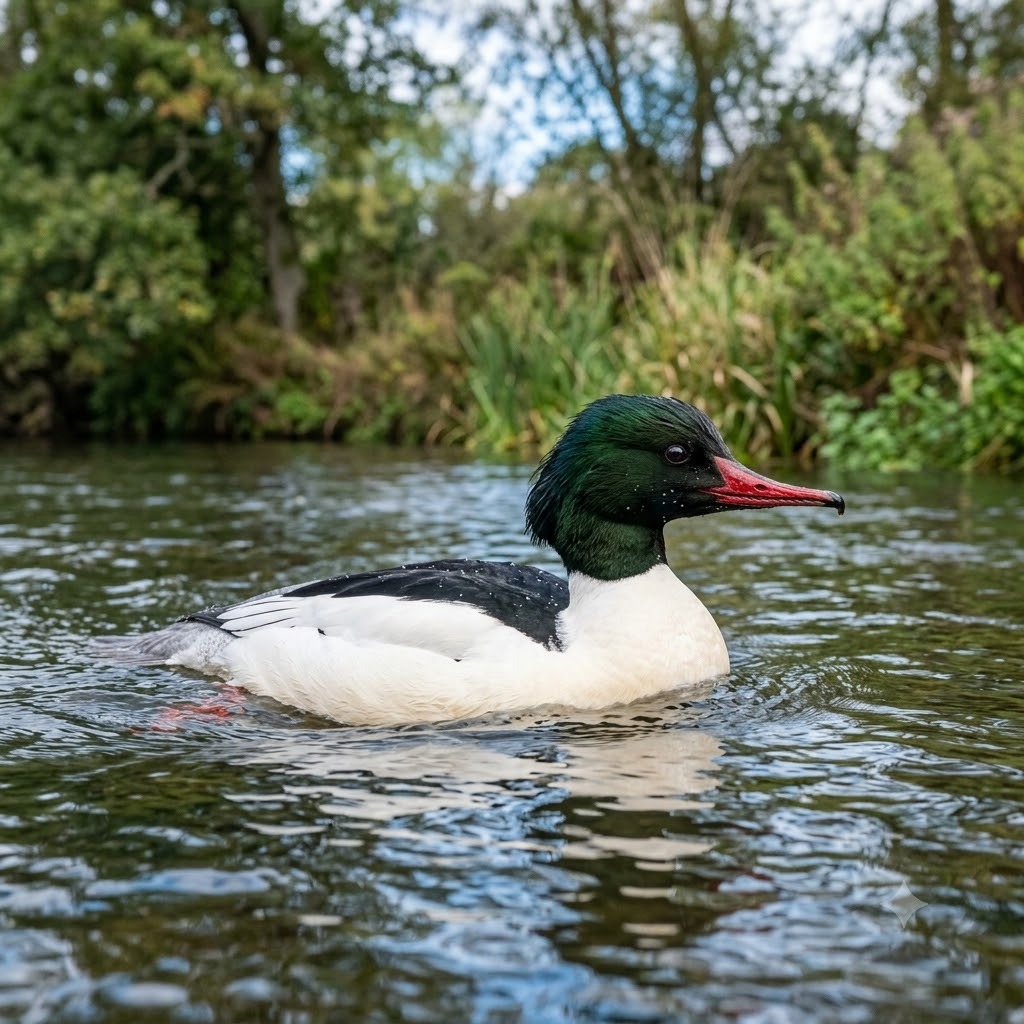
The common merganser is one of the largest ducks, with a long, low, torpedo-shaped body and a thin, serrated red-orange bill. Drakes are handsome and unmistakable: a glossy dark-green head, a crisp white body often washed with a faint salmon tint, and a black back. Hens and immatures have a rusty cinnamon head with a shaggy crest, a sharp white chin, and a gray body. In flight the bird is fast, direct, and low over the water, showing long lines and a large white wing patch. The thin sawbill separates mergansers from all the blocky-billed dabbling and diving ducks.
Range & Habitat (US)
Common mergansers breed across northern forests and mountain regions of the northern United States and Canada, nesting in tree cavities near clean water. In fall and winter they spread across much of the country wherever open, fish-rich water remains, favoring clear rivers, large lakes, reservoirs, and tailwaters below dams. They need clear water to hunt fish by sight, so they concentrate on unfrozen stretches of moving water and deep lakes late into winter. As freeze-up pushes other waterfowl out, mergansers often linger on the last open water.
Behavior & Sign
Mergansers are diving specialists that swim underwater to chase small fish, sometimes hunting in coordinated groups that herd bait. They ride low in the water, dive frequently, and fly fast and low along river courses. They are strong, wary birds that respond poorly to calling and are less inclined to decoy than dabblers. Sign includes rafts of birds working a river bend, repeated diving in a productive stretch, and birds trading up and down a river corridor at first and last light. Loafing birds gather on rocks, gravel bars, and log jams along the water.
Hunting Seasons & Timing
Merganser hunting falls under the federal migratory bird framework, with state seasons set within federal limits and specific bag allowances for mergansers that can differ from the general duck limit. The best action is usually late in the season, during and after freeze-up, when mergansers concentrate on the remaining open rivers and tailwaters. Cold snaps that lock up smaller waters push birds onto predictable moving-water stretches. Early morning and late afternoon see the most flight activity along river corridors. Always confirm current federal and state season dates and the merganser-specific bag limit before hunting.
Hunting Methods
Because mergansers decoy less readily than dabblers, hunters most often take them by pass-shooting along river corridors and by jump-shooting stretches of open water. Setting up on a point, bend, or narrows where birds trade low and fast can produce good pass-shooting. A small spread of diver or merganser decoys on open water occasionally pulls birds in, but calling adds little - mergansers are not vocal responders like mallards. Float-hunting a clear river, drifting quietly around bends to surprise loafing and diving birds, is a classic and effective approach. Total concealment and non-toxic shot are still essential.
Where to Find Them - Reading the Terrain
Follow the open, clear water. Late in the season, focus on unfrozen rivers, tailwaters below dams, spring-fed stretches, and deep lakes that resist freeze-up. Mergansers key on fish, so productive riffles, deep pools, and river bends that hold bait draw diving birds. Narrows, points, and channel constrictions funnel low-flying birds into pass-shooting range. Gravel bars, rocks, and log jams serve as loafing spots between feeding bouts. When surrounding waters lock up with ice, the last open moving water becomes a reliable magnet for these hardy divers.
Gear & Optics Needed
Late-season merganser hunting is cold, moving-water hunting, so warm, waterproof gear leads the list. Chest waders or a small, stable boat for float-hunting, layered insulation, and a reliable way to recover birds from current are the core needs. Non-toxic shot is legally required. A modest spread of diver or merganser decoys can help on open water, though pass-shooting often needs none. Compact binoculars help you read distant rafts and confirm species. A steady retrieving dog conditioned for cold water, or a boat-based retrieval plan, is important because downed birds can drift quickly in current.
Shot Placement & Field-Dressing / Cleaning
Mergansers are taken with a shotgun using non-toxic loads, ideally as birds pass in clean range or when jumped at close quarters. Because they fly fast and low, lead them well and keep shots within effective range to avoid crippling. After retrieval, hunters who intend to eat the bird should breast it out promptly and cool the meat quickly. Many hunters instead keep prime drakes for taxidermy or the wings and feathers for tying and craft use. Whatever the goal, recover every downed bird, handle it cleanly, and respect it as game.
Meat & Eating Quality
Here honesty serves the hunter best: the common merganser is generally considered poor eating. Its all-fish diet gives the breast a strong, oily, fishy taste that most people find unpleasant. Determined cooks sometimes improve it by skinning the breasts, trimming all fat, soaking the meat, grinding it heavily spiced, or using it in slow, strongly seasoned dishes - but even then it rarely rivals a dabbling duck. Many hunters pursue mergansers for the challenge and the late-season flight rather than the plate, and there is no shame in valuing the drake for its striking plumage instead.
Common Mistakes
A common misstep is expecting mergansers to decoy and call like mallards - they do not, so relying on aggressive calling wastes effort. Skybusting fast, low birds at long range cripples them; take clean, in-range shots instead. Underestimating cold, moving water leads to lost birds and real danger, so plan retrieval and safety carefully. Assuming every duck on the river is legal without checking the merganser-specific bag limit is another error. And harvesting a merganser expecting table fare, then being disappointed, simply reflects not knowing the bird's honest eating reputation ahead of time.
Regulations & Conservation Note
All waterfowl hunters must use non-toxic shot, carry a signed federal duck stamp, and follow the federal migratory bird regulations that govern seasons and daily bag limits, including the specific merganser allowance that can differ from other ducks. Mergansers are healthy and widespread, but responsible hunters still take only clean shots, recover all birds, and avoid waste by using the meat, feathers, or mount when possible. Respect access rules on rivers and reservoirs, mind ice safety, and practice fair chase to keep late-season waterfowling sustainable and welcome.
Best Suited For
Merganser hunting suits hardy, late-season hunters who enjoy fast pass-shooting and float-hunting clear rivers in cold weather. It rewards good shooting on quick, low birds and comfort around moving water more than calling or decoy craft. It is best for hunters who value the challenge, the flight, and a striking drake for the wall, rather than those seeking a fine table bird.
FAQ
Are common mergansers good to eat? Honestly, no - their fish diet makes the meat strong and fishy. Some cooks skin, soak, and heavily season the breast, but most hunters pursue mergansers for the challenge and the plumage rather than the plate.
Will mergansers come to decoys and calling? Much less than dabbling ducks. A small diver spread can help on open water, but calling adds little. Pass-shooting and float-hunting are usually more productive.
When is the best time to hunt them? Late in the season, during and after freeze-up, when birds concentrate on the last open rivers, tailwaters, and deep lakes. Cold snaps improve the action.
How do I identify a common merganser? Look for a large, low, torpedo body and a thin serrated red bill. Drakes have a green head and white body; hens have a rusty crested head and gray body with a white chin.
Do mergansers have their own bag limit? Often yes - the merganser allowance can differ from the general duck limit under federal and state rules. Always check current regulations before you hunt.