Gadwall
The gadwall is one of the most underrated ducks in North America and a quietly rewarding bird for the beginning waterfowler.
🗓️ Last reviewed: June 2026
Overview
The gadwall is one of the most underrated ducks in North America and a quietly rewarding bird for the beginning waterfowler. Often overlooked in favor of the flashier mallard, the gadwall is a medium-sized dabbling duck that decoys readily, holds in marshes other ducks pass over, and finishes well to soft, conservative calling. Nicknamed the "gray duck" or "gray mallard," it is abundant, widely distributed, and present in all four flyways, which makes it an accessible target for hunters learning to run decoy spreads and read shallow water. For new hunters, gadwall offer steady action, forgiving setups, and excellent meat thanks to a largely vegetarian diet.
Identification & Appearance
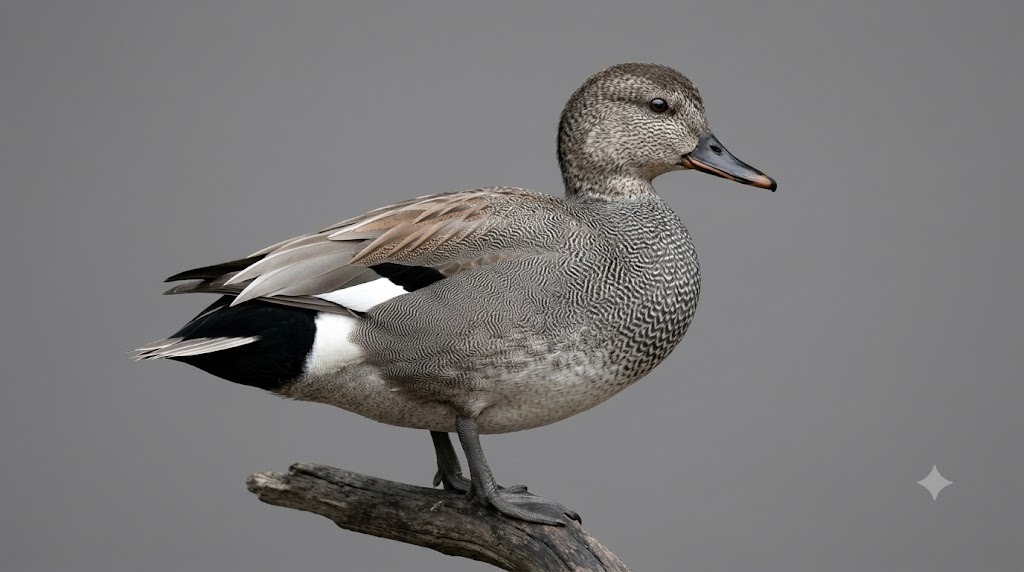
The drake gadwall is a study in subtle elegance: at a glance he looks plain gray, but up close his body is finely vermiculated in gray and brown, capped by a black rear and black undertail coverts (the "stern") and a chestnut-and-black patch in the wing. His bill is dark gray. His most reliable mark is the pure white square speculum - the gadwall is the only dabbling duck with a clean white speculum, visible both in flight and at rest. The hen is mottled brown and closely resembles a hen mallard but is smaller, with an orange-edged bill and that same telltale white speculum. Correctly identifying ducks before the shot is both an ethical and legal requirement.
Range & Habitat (US)
The gadwall breeds heavily in the Prairie Pothole Region of the northern Great Plains and prairie Canada, the continent's most productive duck factory. It winters broadly across the southern United States, the Gulf Coast, California, and into Mexico, and migrates through all four flyways. Preferred habitat is shallow, vegetated freshwater: marshes, ponds, sloughs, reservoir edges, and shallow flooded fields and impoundments. Gadwall favor water with abundant submerged and emergent aquatic plants, which supply the bulk of their diet, and they readily use small, quiet wetlands that larger flocks of mallards may ignore.
Behavior & Sign
Gadwall are dabblers that feed by tipping up in shallow water to reach aquatic vegetation, on which they rely more heavily than most other puddle ducks. They are sociable and often mix with American wigeon and coots, and they are well known for stealing plant material that diving birds and coots bring to the surface. They travel in small flocks rather than the massive rafts of some species. Sign for the marsh hunter includes ducks loafing and feeding along weedy edges, rafts of wigeon and coots that gadwall associate with, and consistent use of sheltered, plant-rich pockets of water. Scouting the evening or morning before to locate where birds are working pays off heavily.
Hunting Seasons & Timing
Gadwall are hunted during the regular waterfowl seasons, which fall within the federal migratory bird framework and typically run from fall into winter depending on the flyway and zone. The best hunting often comes as migration pushes birds south and on cold, windy days that keep ducks moving between feed and rest. Early morning right at legal shooting light is prime, and overcast or breezy weather generally produces better decoying than bluebird calm. Always confirm your state's exact season dates, zones, daily bag limits, and shooting hours before heading out.
Hunting Methods
Gadwall decoy readily, which makes a classic decoy-and-call setup the bread-and-butter method. Hunt them from a marsh blind or layout concealment over a spread of duck decoys; mallard or mixed puddle-duck decoys work well, and a small gadwall or confidence spread can be especially effective. Calling should be soft and conservative - gadwall respond to low quacks and a raspier, lower call than the classic mallard hen, so resist the urge to overcall. Set decoys in shallow, vegetated water with an open landing pocket, hide well, and let small flocks commit. Jump-shooting quiet potholes and sloughs is also productive where legal and safe.
Where to Find Them - Reading the Terrain
Look for gadwall on shallow, weedy water rather than deep open lakes. The richest spots are marshes, sheltered pond corners, flooded timber edges, and shallow flooded fields thick with aquatic plants. Find the food and the loafing cover and you find the birds: submerged vegetation draws feeding gadwall, while protected pockets out of the wind hold loafing flocks. Mixed flocks of wigeon and coots are a strong indicator - gadwall frequently keep their company. Set up where birds want to land naturally, near the edge between feeding water and a calm, weedy resting pocket.
Gear & Optics Needed
Gadwall hunting uses standard waterfowl gear. A 12-gauge shotgun loaded with non-toxic shot (steel is the common choice) is the workhorse, paired with chest waders for setting and retrieving in shallow marsh. Bring a spread of decoys, a duck call you can run softly, and solid concealment - a marsh or layout blind, natural vegetation, or a well-brushed setup against the duck's sharp eyesight. Full camouflage including a face cover and gloves helps. Compact binoculars aid in identifying species and spotting working flocks at distance, and a headlamp helps with the dark walk in and decoy setup before legal light.
Shot Placement & Field-Dressing / Cleaning
Gadwall are taken on the wing with a shotgun. Take ethical shots inside your pattern's effective range, leading the bird and swinging through; pass on flocks that are out of range or not committed. After recovery, most hunters breast out the bird: remove the two breast fillets, and save the legs and thighs if you want them. Where you plan to roast a whole bird, plucking is worthwhile. Keep the meat clean, cool it quickly, and get it on ice. Always retain evidence of species and sex as required by regulation until the birds reach your home.
Meat & Eating Quality
Gadwall are widely regarded as one of the best table ducks among the puddle ducks, a direct result of their largely vegetarian diet of aquatic plants, which gives the meat clean, mild flavor. The breast is lean, dark, and rich, and like other wild duck it is easily overcooked - searing to medium-rare and resting the meat preserves tenderness and flavor. Legs and thighs reward slow cooking, braising, or confit. Few common ducks are as rewarding to bring from a shallow marsh straight to the kitchen.
Common Mistakes
The most common gadwall mistake is overcalling - hard, loud mallard-style calling can flare these birds, where a few soft, raspy quacks would have finished them. Hunting deep open water instead of shallow vegetated marsh leaves you where gadwall do not want to be. Poor concealment against a duck's keen eyesight, and setting decoys with no clear landing pocket, both cause birds to slide off. Skipping species identification before the shot is unethical and illegal. Finally, hunting calm bluebird days and expecting the steady action that wind and weather provide leads to disappointment.
Regulations & Conservation Note
Gadwall are managed under the federal migratory bird framework, with daily bag limits set within the overall duck limit and adjusted by flyway. To hunt them legally you need a state hunting license, a federal duck stamp, and HIP registration, and you must hunt only with non-toxic shot during legal hours. Wetland conservation funded by duck stamp dollars and the work of organizations like Ducks Unlimited has been central to maintaining the Prairie Pothole breeding grounds these birds depend on. Practice fair chase, respect access rules and bag limits, and support the habitat work that keeps populations strong.
Best Suited For
Gadwall hunting is ideal for new and intermediate waterfowlers learning to run decoy spreads, hide well, and call with restraint. It does not demand long-range shooting or elaborate gear, and the birds' willingness to decoy on small, quiet wetlands makes for accessible, repeatable hunts. Anyone who enjoys marsh hunting, values an excellent wild-duck dinner, and wants steady action without chasing the crowds will find the gadwall a perfect quarry.
FAQ
Why is the gadwall called the "gray duck" or "gray mallard"? Because the drake looks plain gray at a distance and the hen closely resembles a hen mallard. Up close the drake's body is finely vermiculated gray with a black stern, and both sexes show the gadwall's signature white speculum.
What is the easiest way to identify a gadwall in flight? Look for the white square speculum - the gadwall is the only dabbling duck with a pure white speculum, and it shows clearly in flight and at rest, helping separate it from mallards and wigeon.
Do gadwall decoy well for beginners? Yes. Gadwall decoy readily to mallard, mixed puddle-duck, or gadwall spreads, and they finish to soft calling, which makes them a forgiving and rewarding bird for hunters learning to run decoys.
How should I call gadwall? Keep it soft and conservative. Gadwall respond to low quacks and a raspier, lower-pitched call than the classic mallard hen. Overcalling with loud, aggressive mallard sounds often flares them.
Are gadwall good to eat? Very. Because they feed largely on aquatic vegetation, gadwall have a clean, mild flavor and are considered one of the best table ducks. Cook the lean breast to medium-rare and slow-cook the legs.