Greater White-fronted Goose
The greater white-fronted goose, known to hunters as the "specklebelly" or simply "speck," is one of the most prized geese in North America - both for the challenge of hunting it and for its outstanding table quality.
🗓️ Last reviewed: July 2026
Overview
The greater white-fronted goose, known to hunters as the "specklebelly" or simply "speck," is one of the most prized geese in North America - both for the challenge of hunting it and for its outstanding table quality. Named for the white feathering at the base of the bill and the dark bars that speckle its belly, the specklebelly is a bird of the Central and Pacific Flyways, wintering in rice country, prairies, and river valleys. Its distinctive high-pitched, yodeling call sets it apart from other geese, and calling one in over the decoys is a highlight of a goose hunter's season. Many consider it the finest-eating goose on the continent.
Identification & Appearance
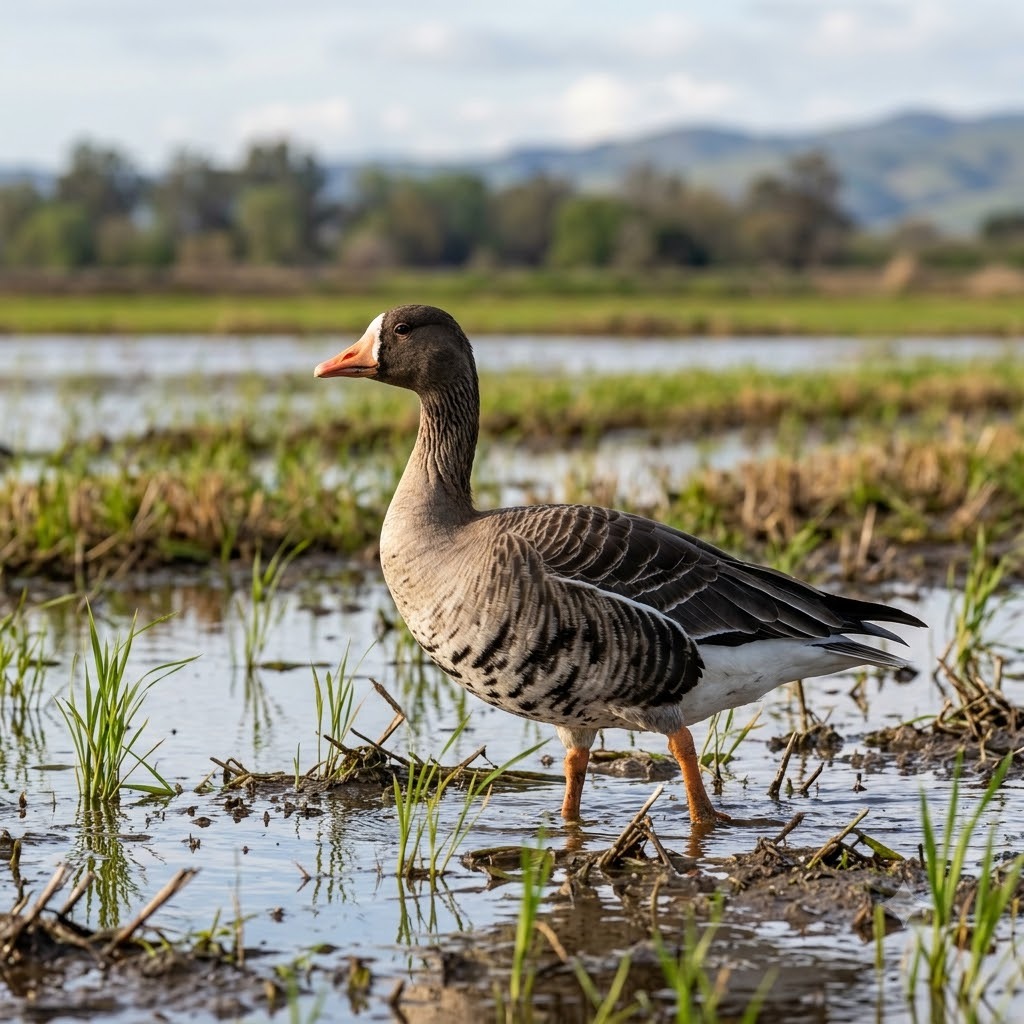
The greater white-fronted goose is a medium-sized gray-brown goose, smaller and more slender than a Canada goose. Adults show the namesake white "front" - a band of white feathers around the base of a pink-to-orange bill - and irregular black barring across the pale belly, giving the "speckled belly" look. The legs and feet are orange, and the tail shows a white band. Juveniles lack the bold white face and belly bars, appearing plainer. In flight the birds look uniformly gray-brown with orange feet, and their fast, high-pitched, laughing call is often the first clue to identity before the barring is even visible.
Range & Habitat (US)
Greater white-fronted geese breed on the far northern tundra and migrate down the Central and Pacific Flyways to wintering grounds in the southern United States. Key wintering areas include the rice prairies of the Gulf Coast, the Central Valley of California, and river valleys and reservoirs through the middle of the country. They favor agricultural landscapes with waste grain, flooded rice fields, prairie wetlands, and shallow water for roosting. Specks often mix with other geese but tend to feed and travel in tighter family groups, keying on grain fields by day and open water roosts by night.
Behavior & Sign
Specklebellies are highly vocal and social, traveling in families and small flocks with a constant high-pitched, yodeling chatter. They feed in grain and rice fields on waste grain, green shoots, and roots, then return to open-water or flooded-field roosts. They are sharp-eyed and become call-shy and decoy-wary as the season wears on and pressure mounts. Sign includes fresh feeding activity and droppings in grain fields, distinctive tracks in soft field mud, and flocks trading between roost and feed at dawn and dusk. Watching the evening flight to locate the next day's feed field is a key scouting tactic.
Hunting Seasons & Timing
White-fronted goose hunting follows the federal migratory bird framework, with state seasons and bag limits set within federal limits and often specific to white-fronts. The best hunting comes when migrating flocks arrive on the wintering grounds and settle into a feeding pattern between roost and field. Cold fronts and fresh migration push new, less-pressured birds into the area. Early morning as birds leave the roost to feed is prime, with a second flight in the afternoon. Because specks can grow wary under pressure, scouting the exact feed field the evening before pays off. Always confirm current federal and state dates and the white-front bag limit.
Hunting Methods
The classic approach is field hunting over decoys. Hunters set spreads in the feed field the birds are using - full-body or shell speck decoys, sometimes mixed with other geese - and hide in layout blinds brushed into the field or in natural cover. Calling is central: the specklebelly's unique high-pitched, two- and three-note yodel is imitated with a specific speck call, and good calling can turn distant flocks. Water hunting over floaters on a roost or loafing pond also works. Reading the flock's mood and adjusting call volume and decoy numbers is the difference between flocks that finish and flocks that flare.
Where to Find Them - Reading the Terrain
Scout the food and the roost, then connect them. Find the grain and rice fields holding fresh feeding sign and the open-water roosts where birds spend the night, and hunt the fields on the flight line between them. Specks favor freshly worked or flooded fields with abundant waste grain and shallow loafing water nearby. In rice country, flooded fields draw both feeding and loafing birds. Set up where the morning flight naturally wants to go rather than trying to pull birds far off their line. Terrain features and green fields that concentrate feeding activity are the daily appointments worth hunting.
Gear & Optics Needed
Field goose hunting rewards good concealment and a convincing spread. Layout blinds brushed with local vegetation, or natural cover, hide hunters from sharp-eyed geese. A spread of specklebelly decoys, full-body or shell, forms the core, and a dedicated speck call is essential for imitating the bird's distinctive yodel. Non-toxic shot is legally required for all waterfowl. Warm, field-appropriate camo, quality binoculars for scouting flights and reading incoming flocks, and a reliable retrieving dog round out the kit. A spotting scope helps confirm feed fields and roosts from a distance during scouting.
Shot Placement & Field-Dressing / Cleaning
Specklebellies are taken with a shotgun using non-toxic loads, ideally as flocks lock up and commit into the decoys within clean range. Wait for birds to finish rather than shooting at high, distant flocks. After retrieval, hunters either pluck the birds whole for roasting - speck skin and fat are flavorful - or breast them out for quick handling. Remove the breast fillets and legs, cool the meat promptly, and keep it clean of field dirt. Because the specklebelly is such a fine table bird, careful field care to preserve the meat is well worth the effort.
Meat & Eating Quality
The greater white-fronted goose is widely regarded as the best-eating goose in North America. Its grain- and rice-fed diet produces dark, rich, tender breast meat with a clean, beefy flavor that avoids the strong taste some other geese carry. Cooked to a rosy medium-rare, the breasts are excellent seared or grilled; the legs braise well. Many hunters who release or pass other geese will happily fill a speck limit for the table. Simple preparations that respect the natural flavor tend to shine, making this goose a genuine reward for the effort of hunting it.
Common Mistakes
Poor concealment tops the list - specks have keen eyes, so blinds must be brushed in and hunters must stay still. Bad calling is another pitfall: the specklebelly yodel is distinctive, and generic or overly loud goose calling flares birds, so practice the correct cadence. Setting up off the birds' flight line, rather than in the field they want, leaves flocks passing out of range. Skybusting distant flocks wounds birds and educates the rest. Finally, ignoring the white-front-specific bag limit, or misidentifying specks mixed with other geese, can put a hunter over the legal limit.
Regulations & Conservation Note
All waterfowl hunters must use non-toxic shot, carry a signed federal duck stamp, and follow the federal migratory bird regulations that set season frameworks and daily bag limits, including any white-front-specific allowance. Greater white-fronted goose populations are generally healthy, but responsible hunters still stay within limits, recover all downed birds, and identify carefully where geese mix. Respect private-land access in agricultural country, avoid over-pressuring roosts, and practice fair chase. Supporting wetland and refuge conservation across the flyways helps keep these prized geese abundant on their wintering grounds.
Best Suited For
Specklebelly hunting suits goose hunters who enjoy scouting, decoy work, and above all skilled calling. It rewards finding the feed field, hiding well, and reproducing the bird's distinctive yodel, and it pays off with arguably the finest goose on the table. It suits hunters who like an involved, calling-driven field hunt and value excellent eating quality as much as the shooting.
FAQ
Why is the greater white-fronted goose called a specklebelly? Adults have irregular black barring across the pale belly - the "speckled belly" - along with the white feathering at the base of the bill that gives the species its "white-fronted" name.
Are specklebellies good to eat? They are widely considered the best-eating goose in North America. Their grain and rice diet gives the breast rich, tender, clean flavor that is excellent cooked to medium-rare.
What makes their call different? Specks give a high-pitched, laughing, yodeling call in two and three notes, quite unlike the deep honk of a Canada goose. A dedicated speck call is used to imitate it.
What is the best way to hunt them? Field hunting over speck decoys with layout blinds and skilled calling, set on the birds' flight line between roost and feed. Scout the feed field the evening before.
Do white-fronts have their own bag limit? Often yes - the white-front allowance can differ from other geese under federal and state rules. Always check current regulations before hunting.