Green-winged Teal
The green-winged teal is the smallest dabbling duck in North America, and it gives waterfowlers a fast, decoy-friendly bird that sticks around far longer than its blue-winged cousin.
🗓️ Last reviewed: June 2026
Overview
The green-winged teal is the smallest dabbling duck in North America, and it gives waterfowlers a fast, decoy-friendly bird that sticks around far longer than its blue-winged cousin. Where the blue-wing pushes south early and is mostly gone by the regular opener, the green-wing lingers well into the regular duck season and even into winter, so it shows up in bags across the country through the cold months. These tiny ducks come in low and fast in tight, twisting bunches, drop into shallow water and mudflats readily, and reward a small spread and good concealment. For a hunter who wants action over little water without a mountain of gear, the green-winged teal is hard to beat - and it is widely rated one of the best ducks on the table.
Identification & Appearance
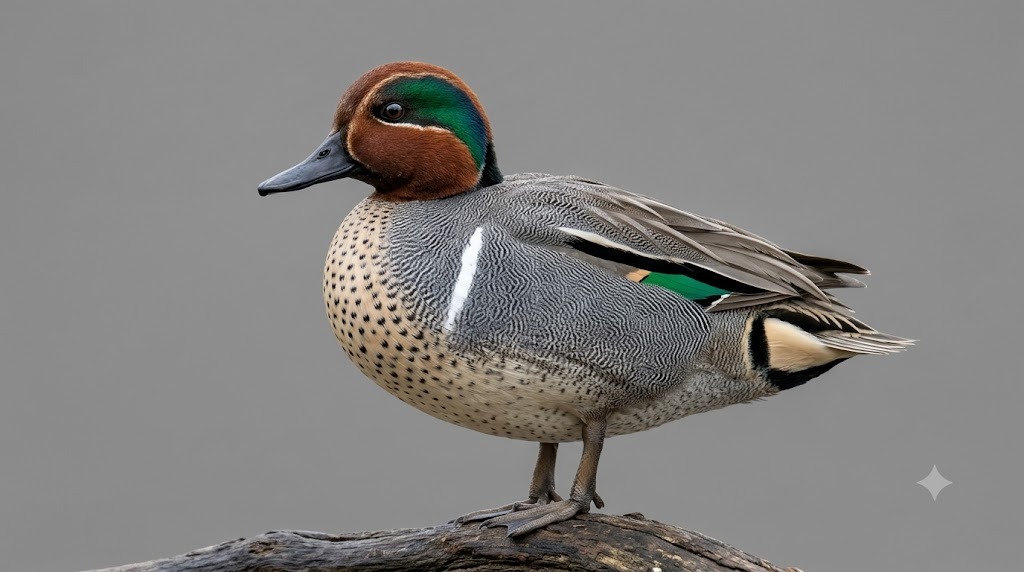
A breeding drake green-winged teal has a rich chestnut head crossed by a glossy green stripe that sweeps back from the eye, a finely vermiculated gray body, a creamy chest spotted with black, and a small vertical white bar on the side in front of the wing. The hen is a small, plain mottled brown duck with a dark eye line. In flight both sexes flash a bright green speculum on the wing - the "green wing" of the name - with no blue forewing patch, which separates them at a glance from blue-winged and cinnamon teal. The giveaway in any light is size: green-wings are noticeably smaller than other ducks, fly low and fast in compact flocks, and twist and turn as a unit. Correct identification still matters for sex and species counts under your state's bag rules.
Range & Habitat (US)
The green-winged teal breeds across the northern United States, the Prairie Pothole Region, the boreal forest of Canada, and up into Alaska, favoring small wetlands, beaver ponds, and the marshy edges of lakes and rivers. It is a shallow-water specialist that wants potholes, marshes, sloughs, flooded fields, mudflats, and the muddy margins of bigger water rather than deep open lakes. During migration green-wings move through all four flyways and concentrate on shallow marshes and exposed mud. Unlike the blue-wing, the green-winged teal does not need to reach the tropics: it winters across much of the United States, including the Gulf Coast, the Pacific and Atlantic coasts, and inland wherever shallow water stays open, which is why hunters see it through the regular season and into winter.
Behavior & Sign
Green-winged teal are small, quick, erratic fliers that buzz low over the marsh in tight twisting flocks and pitch into shallow water fast, often there and gone before the gun is up. They feed by dabbling and tipping in very shallow water and by walking exposed mudflats, taking seeds, waste grain, aquatic plants, and invertebrates, and they loaf in big rafts on shallow flats. They are active feeders on mud and shoreline, so a flat that looks alive with small ducks walking the edge is a green-wing flat. Sign on the water includes rafts of small ducks loafing on shallow edges, muddy tip-up marks and small webbed tracks on exposed flats, and flocks trading low across a marsh at first and last light. Scouting shallow water and mudflats the evening before for trading and feeding birds tells you where to set up.
Hunting Seasons & Timing
Because the green-winged teal lingers into and through the regular season, most hunters take them during the regular duck season rather than in any special early framework, and green-wings often make up a good share of late-season puddle-duck bags. They are a strong cold-weather option: as shallow water freezes up north, birds concentrate on whatever stays open, and they keep working small water into winter in the southern half of the country. Like all teal, they are a morning game at their best, with the first hour or two after legal light prime as birds trade between roosting and feeding water, though they will also work midday on cold, fronts-driven days. Always confirm your state's exact season dates, shooting hours, and bag and possession limits, which are set under the federal migratory bird framework.
Hunting Methods
Green-winged teal hunting is small-water work over a modest decoy spread. The standard approach is to set teal decoys or general puddle-duck decoys on a shallow marsh, mudflat, beaver pond, or flooded field where birds want to be, then tuck tight into cover and stay hidden. Green-wings decoy readily and arrive fast and low, so set up so swinging birds cross in range and be ready to shoot quick when they commit. A small spread works fine - these birds are not call-shy and respond to soft, high peeps and the rolling trill of a green-wing drake rather than loud hen calls. A teal whistle is a useful tool. A retriever earns its keep on soft mud and in marsh vegetation, where small downed birds are easy to lose.
Where to Find Them - Reading the Terrain
Find shallow water and exposed mud and you find green-wings. Look for shallow marshes, potholes, beaver ponds, flooded fields, sloughs, and the muddy edges and mudflats of larger water where small ducks loaf and feed in inches of water. In cold weather, focus on whatever shallow water stays open as everything else freezes, since birds pile onto it. Green-wings trade low between roosting and feeding water at first light, so set up right on that travel line rather than off on deep open water they will not use. Watch the evening before for flocks dropping onto a particular flat or pond, and put your spread there in the morning.
Gear & Optics Needed
Green-winged teal hunting rewards simplicity, though late-season cold means dressing for it. A 12 or 20 gauge shotgun choked improved cylinder handles fast, close work well; load non-toxic shot - steel is standard - in a smaller size such as 6 for these small birds. A couple dozen decoys, waders suited to the season, and good marsh concealment cover the basics. For late-season hunts, warm layers, gloves, and a way to break ice on the spread matter more than they do for early teal. A teal whistle helps call birds in. Heavy optics are optional, but compact binoculars help you read distant trading flocks and pick teal out before they arrive.
Shot Placement & Field-Dressing / Cleaning
Green-wings are taken on the wing with a shotgun, so "placement" means a clean gun mount, a smooth swing, and shots inside the effective range you confirm at the patterning board. Their speed and low, twisting flight make a steady, unhurried swing matter more than firepower, and picking one bird out of a bunched flock is the whole game. After recovery, most hunters breast out the birds - remove the two breast fillets - though these small ducks pluck whole nicely for the table. In cold late-season weather, keeping birds clean and cooled is straightforward, but it is still worth handling them promptly and keeping mud out of the meat.
Meat & Eating Quality
The green-winged teal is widely rated one of the finest-eating wild ducks in North America. The breast meat is tender, mild, and lean, without the strong flavor some diving ducks carry, and many waterfowlers put green-wings at the very top of the table-duck list. Because the birds are small and the meat is lean, the breasts cook fast and overcook easily - quick, hot cooking to a rosy medium suits them best. A few teal make a memorable meal, and their reputation in the kitchen is a big part of why hunters target them.
Common Mistakes
The most common green-wing mistake is flock-shooting a fast, twisting bunch instead of picking one bird, which leads to clean misses. Mounting too slowly, or standing up too soon as birds buzz the spread, flares them off. Setting decoys on water that is too deep, or away from the shallow flats and mud teal actually want, leaves you watching birds work elsewhere. Overcalling with loud hen highballs instead of soft peeps and the green-wing trill turns birds away. And underestimating how small and fast these birds are - shooting behind them or out of range - is a constant theme until you adjust your lead and discipline your shots.
Regulations & Conservation Note
Green-winged teal are managed under the federal migratory bird framework, with season dates and bag and possession limits set annually. Hunters must hold a state hunting license, a federal duck stamp, and HIP registration, and must use non-toxic shot. The dollars from duck stamps and the federal framework fund the wetland conservation that keeps shallow-water habitat productive for teal and every other duck. Identify your target carefully, mind your daily and possession limits, and follow all shooting-hour and bag rules to keep populations strong.
Best Suited For
Green-winged teal hunting is ideal for hunters who want fast, decoy-friendly action on small water without a mountain of gear, and who do not mind cold-weather work since green-wings ride well into the regular season and winter. The small spread, modest kit, and birds that come in low and ready make it accessible, while the tiny, twisting targets keep the shooting honest. It suits hunters who like shallow marshes and mudflats, quick morning hunts, and one of the best ducks there is on the table.
FAQ
How is the green-winged teal different from the blue-winged teal for hunters? The big practical difference is timing. Blue-wings push south early and are mostly gone by the regular opener, so many states hold a special early September season for them. Green-wings linger into and through the regular season and into winter, so you take them on regular-season hunts, often in the cold.
Do I need a dog to hunt green-winged teal? No, but a retriever is genuinely useful. These small ducks are easy to lose in soft marsh mud and thick vegetation, and a good dog makes recovery faster and cleaner.
Why are green-wings so hard to hit? They are the smallest dabbler, very fast, and fly low in tight, twisting flocks that appear and vanish quickly. The fix is to pick one bird out of the bunch, keep a smooth swing, and shoot inside your patterned range rather than firing into the flock.
How do I tell a green-winged teal from other ducks? Start with size - they are noticeably smaller than other ducks. In flight look for the bright green speculum with no blue forewing patch, low and fast bunched flight, and on a drake the chestnut head with a green eye-stripe.
What shot and choke should I use? A 12 or 20 gauge with an improved-cylinder choke handles fast, close shots well. Use non-toxic shot - steel is standard - in a smaller size such as 6, which patterns densely for these small birds.