Hooded Merganser
The hooded merganser is a small fish-eating diving duck and one of the most striking birds a waterfowler can bring to hand.
🗓️ Last reviewed: June 2026
Overview
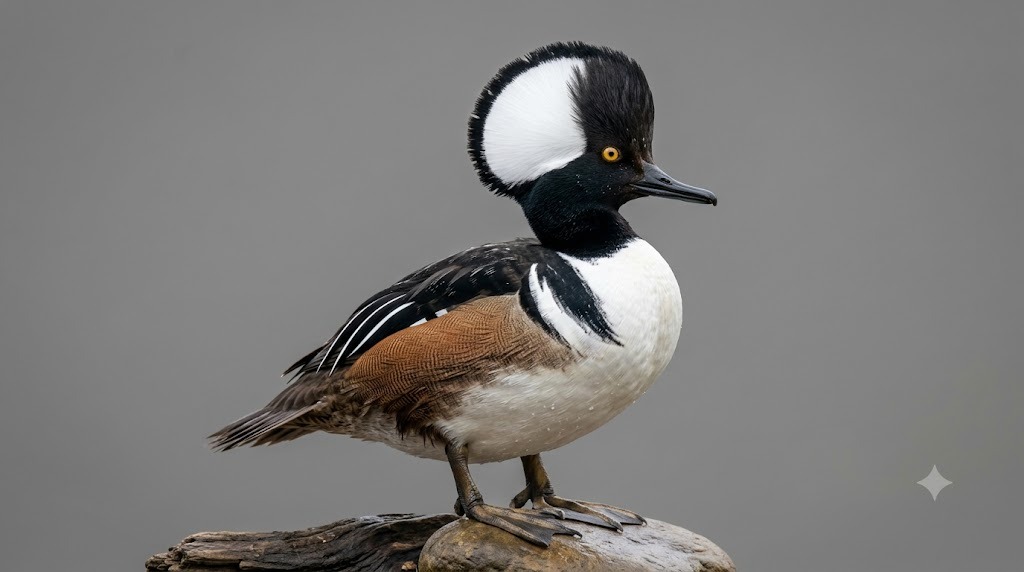
The hooded merganser is a small fish-eating diving duck and one of the most striking birds a waterfowler can bring to hand. The drake's signature is a tall, fan-shaped black-and-white crest he can raise into a bold sunburst or fold down flat against his head, a display unlike anything else on the water. Hoodies live on small, intimate water - wooded rivers, beaver ponds, sloughs, and quiet backwaters - rather than big open marshes, so hunting them often feels more like a hunt for the spaces in between than for the main duck flats. They decoy to small spreads and frequently surprise jump-shooters working a creek, flushing fast and low through the timber. Honesty matters with this bird, though: because it eats fish, it is mediocre-to-poor table fare, and most hunters take it for the drake's beauty as a trophy or mount rather than for the plate.
Identification & Appearance
A breeding drake hooded merganser is unmistakable: a black head with a huge fan-shaped white crest bordered in black that he raises and lowers, golden-yellow eyes, a thin black bill, a black back with white chest stripes, and warm cinnamon flanks. The hen is grayish-brown with a loose, shaggy reddish-brown crest and a yellowish lower bill, plainer but still distinctive. Both sexes have the slim, narrow, serrated "sawbill" of a fish-eater rather than the broad bill of a dabbler. In flight hoodies are small, slim, and fast, with quick wingbeats and a low, direct line, and the drake shows a white wing patch. On the water they ride low and dive readily. The thin sawbill and the crest separate them at a glance from any dabbling duck.
Range & Habitat (US)
The hooded merganser is found across much of the United States, breeding in forested wetlands of the East, the Great Lakes states, and the Pacific Northwest, and wintering across the southern and coastal US wherever water stays open. It is a cavity nester, raising broods in tree holes and nest boxes near water, which ties it to wooded habitat. Hoodies favor small, clear, sheltered water: wooded rivers and creeks, beaver ponds, swamps, sloughs, oxbows, backwaters, and quiet ponds, where they hunt small fish, crayfish, and aquatic insects by sight. In winter they spread to shallow coastal bays, brackish creeks, and freshwater impoundments, but even then they tend to use the smaller, more protected pockets rather than wide open water. This preference for tight, timbered water shapes where and how you hunt them.
Behavior & Sign
Hooded mergansers are agile, sight-hunting divers that work small water in pairs and small groups, diving repeatedly to chase fish, crayfish, and insects, and surfacing many yards from where they went under. They are fast, low, twitchy fliers that thread through standing timber and along creek channels, and they flush hard when jumped, often before you see them. Unlike noisy dabblers, hoodies are fairly quiet, and the drake's main "voice" is a low, rolling, frog-like display call given to hens. Sign is subtle: a pair or trio of small ducks riding low and diving on a beaver pond, birds trading fast and low along a wooded river at first and last light, and active nest boxes or natural tree cavities near the water in breeding season. Because they use small, hidden water, scouting means walking creeks and checking ponds rather than glassing big marshes.
Hunting Seasons & Timing
The hooded merganser is hunted under the regular duck season in most states, though mergansers often carry their own bag-limit rules within the daily duck limit, so you must check your state's regulations and any merganser-specific limits before you go. Timing follows the freeze line: hoodies concentrate on water that stays open, so a hard cold snap that locks up small ponds pushes birds onto rivers, spring-fed creeks, and the few open holes, which can stack them up. Early in the season birds are scattered across abundant open water; later, as marshes and ponds ice over, the remaining open water on wooded rivers and beaver ponds becomes a magnet. Morning and the last light of evening are prime, when birds trade and feed most actively. Always confirm your state's exact season dates, shooting hours, and merganser bag limits, which are set under the federal migratory bird framework.
Hunting Methods
There are two classic ways to hunt hoodies, and both suit small water. The first is jump-shooting: easing quietly down a wooded creek or along a beaver pond on foot or by canoe, staying tight to the bank and cover, and being ready for fast, low birds that flush hard around every bend. The second is a small decoy spread set on a quiet pond, slough, or river backwater where birds want to be - a half-dozen decoys is plenty, and hoodies will commit to a small, natural-looking set. Confederate diver or merganser decoys help, but hoodies will also work a few puddle-duck blocks on the right water. Calling is minimal; these are not call-shy dabblers responding to loud hen talk, and concealment matters far more than calling. A retriever is a real asset for marking and recovering birds that fall in timber or that a winged diver can carry under.
Where to Find Them - Reading the Terrain
Forget the big open flats and think small and sheltered. Look for beaver ponds, wooded creeks and rivers, swamp edges, oxbows, sloughs, and quiet backwaters - clear, protected water with fish and cover where a sight-hunting diver can work. In freezing weather, find the open water: spring-fed creeks, river bends with current, and the last unfrozen holes on a pond will hold the birds when everything else locks up. Birds trade fast and low along creek channels and through standing timber between feeding and resting water, so set up on those travel lines and on the open pockets. Walk small water the day before, note where pairs are diving and where birds flush, and plan your jump route or your decoy set accordingly.
Gear & Optics Needed
Hooded merganser hunting is gear-light and rewards mobility on small water. A 12 or 20 gauge shotgun choked improved cylinder or modified handles fast, close-to-medium work; load non-toxic shot - steel is standard - in a size such as 4 or 6, since these birds fly fast and a winged diver is tough to recover. A canoe or small kayak opens up creeks and beaver ponds for jump-shooting and decoy sets in places you cannot wade. A half-dozen decoys, waders or chest waders, drab clothing, and solid bank-side concealment cover the basics. Heavy optics are rarely needed on tight water, though compact binoculars help you confirm birds and read a pond before you commit. A retriever, or at least a long-handled net or wading plan for recovery, is worth more than any optic with diving ducks.
Shot Placement & Field-Dressing / Cleaning
Hoodies are taken on the wing with a shotgun, so "placement" means a clean gun mount, a smooth swing on a fast, low bird, and shots inside the range you have confirmed at the patterning board. Their speed and habit of flushing through timber make a quick, unhurried swing more important than firepower, and a winged diver will dive and swim, so put your first shot on the mark and be ready to follow up promptly. Recovery is the real work: mark the bird down, send a dog if you have one, and do not assume a diver on the water is finished. For the table, hoodies are best skinned out rather than plucked - remove the skin and all fat, take the two breast fillets, and trim hard, since the fat and skin carry much of the fishy taint. Cool and clean the meat promptly as with any waterfowl.
Meat & Eating Quality
Here is the honest part: the hooded merganser is not a good eating duck, and you should go in knowing it. Because it lives on fish, crayfish, and aquatic insects, its meat tends to be dark, strong, and fishy - a world away from a corn-fed mallard or a teal. This is a bird most hunters take for the drake's spectacular looks as a trophy or mount, not for the plate. If you do want to eat one, treat it accordingly: skin it out, trim every bit of fat, soak the breasts in cold saltwater or buttermilk, and lean on strong, assertive preparations - heavy marinades, sausage or grind blended with other meat and plenty of seasoning, gumbo, or a long braise with bold spices. Quick-grilling a hoodie breast like a teal will only highlight what makes it unpleasant. Manage your expectations: even done well, it is rescue cooking, not fine dining, and the bird's real value is on the wall.
Common Mistakes
The most common mistake with hoodies is expecting them to behave like dabblers - hunting big open water, leaning on loud calling, and setting huge spreads - when these are small-water, low-call, sight-hunting divers. Another is underestimating recovery: a winged merganser will dive and swim a long way, and hunting them without a dog or a recovery plan loses birds. On the table side, the big mistake is treating a hoodie like a teal or mallard and cooking it fast and simple, then being disappointed; skin it, trim it, and use strong recipes, or take it purely as a mount. Standing up too early and flaring fast birds, setting up off the creek-channel travel line, and ignoring merganser-specific bag limits round out the list. And as always, know your target before you shoot.
Regulations & Conservation Note
Hooded mergansers are managed under the federal migratory bird framework, and many states set merganser bag limits separately within the daily duck limit, so you must check your specific regulations before hunting. Hunters need a state hunting license, a federal duck stamp, and HIP registration, and must use non-toxic shot. Duck-stamp dollars and the federal framework fund the wetland and forested-wetland conservation that hoodies depend on, and the species also benefits directly from nest-box programs that provide the tree cavities they need to breed. Identify your target carefully, respect merganser-specific and overall bag and possession limits, and follow all shooting hours to keep populations healthy.
Best Suited For
Hooded merganser hunting is ideal for hunters who love working small, intimate water - creeks, beaver ponds, and backwaters - on foot or by canoe, and who enjoy fast, close shooting in tight cover. It suits the jump-shooter and the small-spread hunter more than the big-marsh crowd. Above all it suits the hunter who values a striking trophy drake for the wall and goes in with honest expectations about the table, because the hoodie's beauty, not its eating, is the real prize.
FAQ
Are hooded mergansers good to eat? Honestly, no - they are mediocre-to-poor table fare because they eat fish, so the meat is dark, strong, and fishy. Most hunters take a hoodie for the drake's spectacular crest as a trophy or mount. If you do eat one, skin it out, trim all fat, soak the breasts, and use strong, heavily seasoned recipes like gumbo, braises, or sausage.
Where do I find hooded mergansers? Look on small, sheltered water rather than big open marshes - beaver ponds, wooded creeks and rivers, swamps, sloughs, oxbows, and quiet backwaters with fish and cover. In freezing weather, hunt the last open water on spring-fed creeks and river bends, which concentrates the birds.
Will hooded mergansers decoy? Yes. They will commit to a small, natural-looking spread of a half-dozen decoys on quiet water, and they also surprise jump-shooters working creeks and beaver ponds. Concealment matters far more than calling, since these are not call-driven dabblers.
Do I need a dog to hunt hoodies? It is strongly recommended. A winged merganser will dive and swim a long way, and birds often fall in timber or thick cover, so a good retriever - or at least a solid recovery plan - prevents lost birds.
Is there a separate bag limit for mergansers? Often, yes. Many states set merganser bag limits separately within the daily duck limit, and the rules vary by state and season. Always check your specific state regulations and any merganser-specific limits before you hunt.