Lesser Scaup
The lesser scaup is one of the most abundant diving ducks in North America, and for many waterfowlers it is the bird that defines big-water duck hunting.
🗓️ Last reviewed: June 2026
Overview
The lesser scaup is one of the most abundant diving ducks in North America, and for many waterfowlers it is the bird that defines big-water duck hunting. Known almost everywhere as the "bluebill" for its pale blue-gray bill, the lesser scaup rafts by the thousands on large open lakes, reservoirs, and coastal bays, far out where the dabblers never go. Hunting them means trading the cozy marsh for wide, windy water, long lines of decoys, and birds that arrive fast and low in tight, hard-charging bunches. It is a different game from puddle-duck hunting - more gear, more weather, and more open horizon - but when a wad of bluebills locks up and barrels into a long-line spread, few hunts feel more like the real thing. For a hunter ready to step up to big water, scaup offer steady action and an honest challenge.
Identification & Appearance
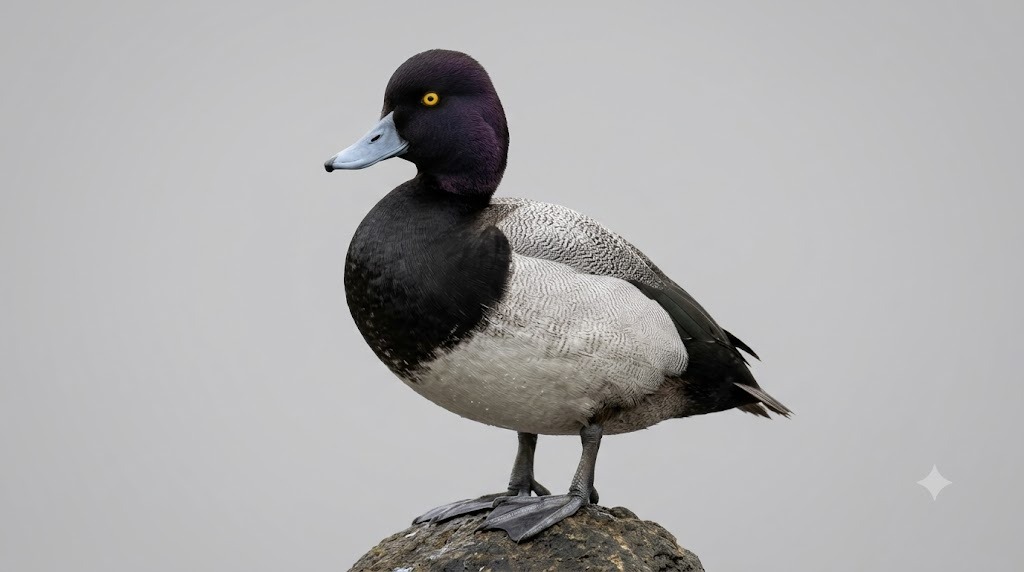
A drake lesser scaup has a dark head that shows a purple sheen in good light, a black chest, clean pale gray sides and back, a black rear, and the pale bluish bill that gives the bird its nickname. At a distance the bird reads as a crisp black-and-white duck on the water. The hen is dark brown with a bold white patch right at the base of the bill. The hard part for hunters is telling lesser scaup from the nearly identical greater scaup - the two overlap on big water and look much alike. Lesser scaup tend to show a slight peak toward the back of the crown and that purple head sheen, while greater scaup are a touch larger with a more rounded, greenish-glossed head and broader white wing stripe. In fast flight, a tight bunch of bluebills shows the classic black-front, white-middle, dark-rear pattern. Correct identification matters where bag rules treat scaup separately from other ducks.
Range & Habitat (US)
The lesser scaup breeds across the boreal forest and parkland of Canada and Alaska and into the northern Great Plains, then migrates through all four flyways to winter widely across the United States. Unlike the dabblers, scaup are birds of big, deep, open water. In migration and winter they concentrate on large lakes, reservoirs, big rivers, and coastal estuaries and bays, where they dive for food in water far too deep for puddle ducks. Major wintering concentrations build on the Gulf Coast, along the Atlantic and Pacific coasts, and on large inland reservoirs and river systems. They favor open water with room to land, raft, and feed, and they shift readily in response to weather, freeze-up, and food. Wherever you find broad open water holding rafts of small dark-and-white ducks, scaup are likely in the mix.
Behavior & Sign
Lesser scaup are strong, fast fliers that travel low over open water in tight, compact bunches, beating hard and turning together as a unit. They are diving ducks: they dive and swim underwater to feed, taking aquatic invertebrates, small mollusks like fingernail clams, and aquatic plants and seeds, often working the same productive flats day after day. Out of the water they raft up in big loose flocks on open lakes and bays, sometimes numbering in the thousands. The most useful sign is the rafts themselves - large concentrations of small ducks sitting far out on open water, with strings of birds trading low between rafting and feeding areas. Watching where those rafts feed and which way birds trade in the wind tells you where to set up. Scaup commit hard once they decide to come, so a flock that swings on your spread often means business.
Hunting Seasons & Timing
Scaup are hunted during the regular duck season, which runs in fall and winter under the federal migratory bird framework, with dates and bag limits set annually by each state. In many states scaup carry a separate, often more conservative daily bag limit than other ducks, and some states use a special scaup-season framework with its own dates - so the rules deserve a careful read every year. The best scaup hunting usually comes once cold weather and freeze-up to the north push big numbers of birds onto the open lakes, reservoirs, and bays of the wintering grounds. Wind and weather drive the action: birds move and decoy better on gray, breezy, rough days than on calm bluebird mornings. Always confirm your state's exact season dates, shooting hours, and the specific scaup bag limit before you hunt.
Hunting Methods
Scaup hunting is big-water hunting, and the signature method is a long-line diver spread. Hunters rig large numbers of decoys - often two, three, or more dozen - on long lines or gang rigs that can be set and pulled quickly on open water, frequently arranged in a long tail or fishhook that funnels low-flying birds into a landing pocket close to the gun. You set on a point, sandbar, or open flat where birds want to be, and you hide either in a layout boat lying flat on the open water, in a boat blind brushed to disappear, or in a low blind on a point or shoreline. Because bluebills fly fast and low, the shooting is quick and the spread does most of the calling - scaup are not call-shy the way some ducks are, though a low growl can help. Big water also means a serious, seaworthy boat, attention to wind and waves, and a retriever or boat to recover birds. This is gear-heavy, weather-exposed hunting, and safe boat handling on cold open water is part of the job.
Where to Find Them - Reading the Terrain
To find scaup, think big and open. Look for large lakes, reservoirs, wide rivers, and coastal bays - the broad open water that dabblers ignore. Within that water, scaup key on productive feeding flats and shoals where they can dive for invertebrates, and they raft in open areas with room to land and loaf. Points, sandbars, and the down-wind edges of open flats are prime setups, because birds trade low into the wind and skirt these features. Watch for big rafts of small ducks sitting far out, then learn the travel lines between those rafts and the feeding shoals. Wind is your friend: it concentrates birds, gets them moving, and brings them in lower and more committed. Set where the open water, the food, and the wind line all come together.
Gear & Optics Needed
Big-water scaup hunting is gear-intensive and weather-serious. Start with a seaworthy boat suited to open water and a way to hide it - a layout boat, a brushed boat blind, or a shore blind on a point. Carry plenty of decoys rigged on long lines or gang rigs for fast deployment and pickup, since big spreads do the work on open water. A 12 gauge is the standard scaup gun; choke modified for the longer, faster shots typical on big water, and load non-toxic shot - steel is standard - in a size such as 2 or 3 that carries enough energy to anchor a tough, fast diver cleanly. Dress for cold, wind, and spray with serious layers and waterproof outerwear, and treat a life jacket and safe boat handling as essential, not optional. Binoculars genuinely help here: glassing distant rafts and reading which way birds are trading lets you set up in the right place before the shooting starts.
Shot Placement & Field-Dressing / Cleaning
Scaup are taken on the wing with a shotgun, so good shooting means a smooth gun mount, a steady swing on fast, low-flying birds, and shots inside the effective range you confirm at the patterning board. Bluebills are tough, fast divers, so adequate non-toxic shot and clean, well-placed shots matter for quick, humane kills. Lead the bird, swing through, and keep shots within range rather than reaching for the back of a passing bunch. After recovery, most hunters breast out scaup - remove the two breast fillets - which is quick and gives you the best of the meat, though the birds can be plucked whole as well. As with any waterfowl, cool and clean the meat reasonably soon, and trim away fat and skin if you prefer a milder result, since a diver's flavor concentrates there.
Meat & Eating Quality
The lesser scaup is honest, fair table fare - a decent diver, not a prized dabbler. As a diving duck that feeds heavily on aquatic invertebrates and mollusks, scaup carry more flavor than a mild puddle duck like teal or mallard, and some birds can taste fairly strong depending on what they have been eating. Handled well, though, bluebill breast is perfectly good eating: skin and trim the fat, soak or marinate if you like, and cook the lean breast quickly and hot to a rosy medium rather than overcooking it gray. Many hunters favor scaup in dishes that lean into a bolder flavor - sliced for the grill, in gumbo, or ground into sausage. It will not win a taste test against a teal, but a well-prepared bluebill is a satisfying meal and a fair return on a hard day on big water.
Common Mistakes
The classic scaup mistake is flock-shooting - firing into a tight, fast bunch instead of singling out one bird, which leads to misses and cripples. Many newcomers also under-gun the birds, using too light a load or shooting beyond range, then failing to anchor a tough, fast diver cleanly. On the water side, hiding badly on open water flares birds fast, since there is nowhere for poor concealment to hide; a layout boat or well-brushed blind matters. Setting too small a spread, or setting it where birds simply do not want to be rather than on the feeding and travel lines, leaves you watching rafts work elsewhere. And the most serious mistakes are about safety and identification: big cold water demands a seaworthy boat, a life jacket, and respect for wind and waves, and where scaup carry a separate bag limit, mistaking them for other ducks - or confusing lesser and greater scaup - is both a legal and an ethical error.
Regulations & Conservation Note
Scaup are managed under the federal migratory bird framework, and in many states they carry a separate, often more conservative bag limit than other ducks - sometimes with their own special season dates - so read the regulations carefully every year. Hunters need a state hunting license, a federal duck stamp, and HIP registration, and must use non-toxic shot. Continental scaup numbers, lesser and greater combined, have drawn conservation attention over the years, which is part of why bag limits for scaup are often set tighter than for other ducks. The dollars from duck stamps and the federal framework fund the wetland and habitat conservation these birds depend on. Identify your target carefully, respect the specific scaup limit, and follow all bag and possession rules to help keep the flocks healthy.
Best Suited For
Lesser scaup hunting suits the waterfowler ready to step up from the marsh to big open water - someone who likes long-line diver spreads, layout or boat-blind hunting, and the fast, committed shooting that bluebills bring. It rewards hunters who can handle a seaworthy boat in cold wind and waves, who enjoy gear-heavy setups and wide horizons, and who take the extra care that open water demands. It is less about a fine meal and more about the experience of big-water hunting done right, with a fair diving duck for the table at the end.
FAQ
Why are scaup called "bluebills"? The nickname comes from the pale blue-gray bill that both drakes and hens show. On the water a drake reads as a crisp black-and-white duck with that distinctive bluish bill, which is how the name "bluebill" stuck across most of the country.
How do I tell a lesser scaup from a greater scaup? They look very similar and overlap on big water. Lesser scaup tend to show a slight peak toward the back of the crown and a purple sheen on the head, while greater scaup are a bit larger with a rounder, greenish-glossed head and a broader white wing stripe. Where bag rules treat scaup separately, take the time to confirm before you shoot.
Do I really need a boat to hunt scaup? For most scaup hunting, yes. These are big-water diving ducks that raft and feed far out on open lakes, reservoirs, and bays, so a seaworthy boat - for layout hunting, a boat blind, and recovering birds - is usually part of the setup, along with a life jacket and respect for wind and waves.
What shot and choke should I use? A 12 gauge with a modified choke handles the longer, faster shots typical on big water. Use non-toxic shot - steel is standard - in a size such as 2 or 3, which carries enough energy to anchor a tough, fast diver cleanly inside your patterned range.
Are scaup good to eat? They are fair table fare - a decent diver rather than a prized dabbler. As invertebrate feeders they can taste stronger than mild puddle ducks, but skinned, trimmed of fat, and cooked quickly and hot to a rosy medium, or used in bolder dishes like gumbo or sausage, a bluebill makes a perfectly good meal.