Mottled Duck
The mottled duck is a distinctly Southern bird, a resident dabbler of the Gulf Coast marshes and peninsular Florida that rarely wanders far from where it hatched.
🗓️ Last reviewed: July 2026
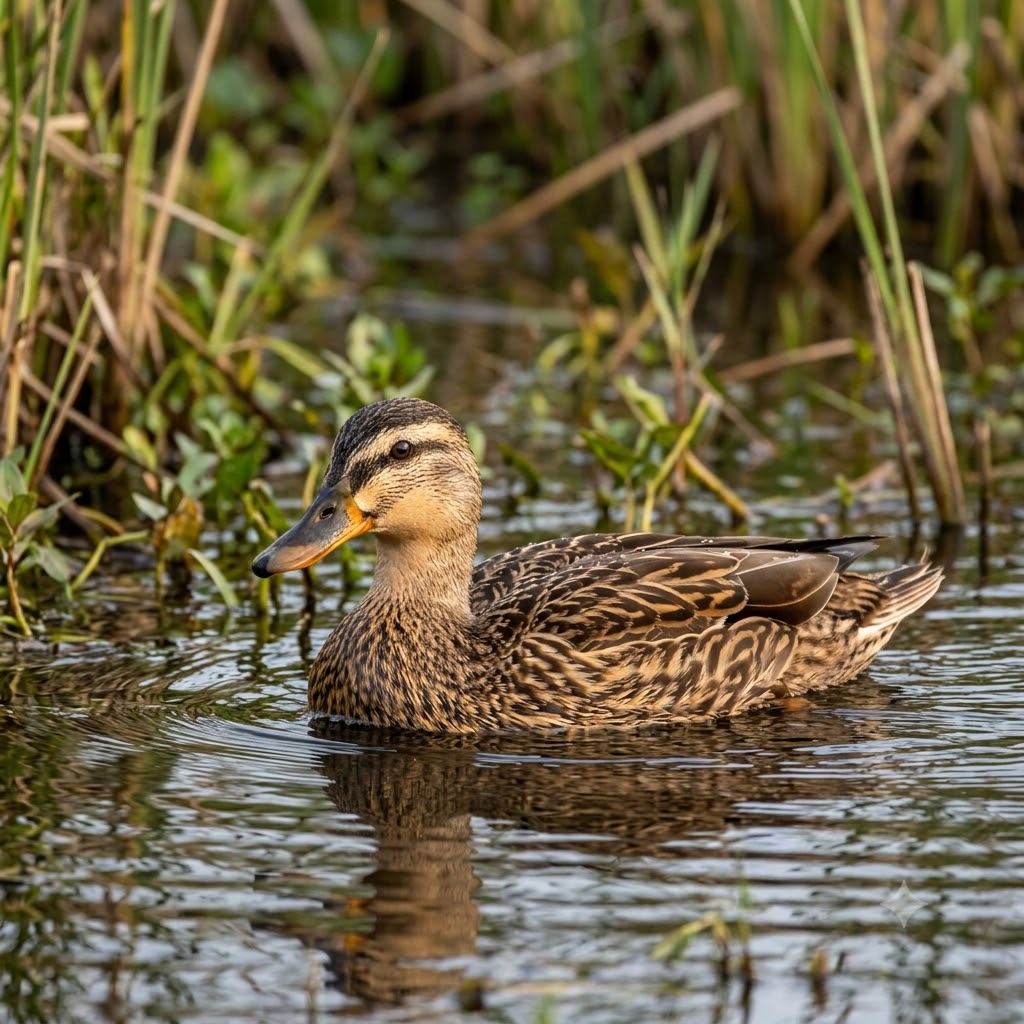
Overview
The mottled duck is a distinctly Southern bird, a resident dabbler of the Gulf Coast marshes and peninsular Florida that rarely wanders far from where it hatched. Old-timers along the coast call it the "summer black duck" because it looks much like a dark hen mallard and, unlike most puddle ducks, it stays put year-round rather than migrating. That resident nature makes it a prized but sensitive quarry: local populations can be hunted down quickly, so bag limits are tight and seasons are managed carefully. For a hunter who loves working a small spread of decoys over shallow, grassy water, few birds are as rewarding - or as demanding of restraint and correct identification.
Identification & Appearance
The mottled duck is a medium-large dabbler, roughly 20-22 inches long, with warm brown, heavily streaked body plumage that closely resembles a hen mallard. Both sexes look similar - there is no bright green-headed drake here. Key marks include a buff-tan face and throat that contrast with a darker crown and eye-line, a blue-to-purple speculum usually bordered by little or no white (unlike the mallard's bold white bars), and a yellow-olive bill on the drake, a duller orange-and-black bill on the hen. Legs are orange. Because it can hybridize with mallards and looks like a hen mallard or black duck, careful identification before the shot is both an ethical and legal necessity.
Range & Habitat (US)
There are two main populations: one along the western Gulf Coast of Louisiana and Texas, and a separate resident population in peninsular Florida. Mottled ducks are birds of coastal freshwater and brackish marsh, rice country, shallow ponds, wet prairies, and managed impoundments. They favor grassy, shallow water with abundant emergent vegetation for both feeding and nesting. Unlike migratory ducks that pour down from the north, mottled ducks live out their lives within these coastal wetlands, which is exactly why habitat loss and drainage hit them so hard.
Behavior & Sign
Mottled ducks are non-migratory and strongly tied to local marshes, often traveling only short distances between roosting and feeding water. They are dabblers, tipping up to feed on seeds, aquatic plants, insects, snails, and small invertebrates in shallow water rather than diving. Pairs form early and birds are often seen in twos or small loose groups rather than the big rafts of migratory ducks. Sign includes feeding "muck holes" in soft marsh bottoms, feathers and dabbling trails along grassy edges, and birds flushing in ones and twos. They can be wary where pressured, flaring from anything that looks off.
Hunting Seasons & Timing
Mottled duck seasons fall within the general duck framework but are managed conservatively because the birds are resident and cannot be replenished by northern migrants. Daily bag limits are typically very restrictive - often just one mottled duck per day in the states where it is legal - and states adjust or restrict harvest to protect local numbers. Early-season heat and mild coastal weather mean hunting is often a warm-weather affair. Always confirm current dates, species-specific bag limits, and any special mottled-duck restrictions before you hunt, as these can change year to year.
Hunting Methods
The classic approach is a small decoy spread over shallow, grassy marsh water, worked from a well-hidden blind or a brushed-up boat. Because mottled ducks are resident and often paired, hunters use modest spreads - a handful of mallard or mottled-style decoys - rather than the huge rigs used for migrating flocks. Soft, sparing mallard-hen calling (quacks and feed chuckles) works well; over-calling flares wary local birds. Jump-shooting small potholes and marsh edges by wading or poling a shallow-draft boat is also effective. Steel or other approved non-toxic shot is required, and shots should be kept close and clean.
Where to Find Them - Reading the Terrain
Look for shallow, grassy freshwater and brackish marsh: rice fields, wet prairies, managed impoundments, coastal ponds, and the vegetated edges of larger marshes. Mottled ducks favor water shallow enough to tip up in, with plenty of emergent grass for cover and food. Grassy potholes tucked into big marsh systems often hold resident pairs. Scout for feeding sign, trails through the grass, and birds trading at first and last light. Because they don't migrate, the birds you scout in the days before a hunt are very likely the birds you'll see on the water.
Gear & Optics Needed
A shallow-draft boat, waders, and good marsh camouflage are the backbone of a Gulf Coast hunt. Carry a small decoy spread and a mallard-hen call used sparingly. Non-toxic shot - steel or an approved alternative - is mandatory for all waterfowl. Compact binoculars (8x32) help you identify birds at a distance, which matters greatly given how much a mottled duck resembles protected look-alikes. A push pole, marsh boots, insect repellent, and a way to keep the sun off round out a warm-weather kit. A good marsh dog earns its keep retrieving birds from thick grass and mud.
Shot Placement & Field-Dressing / Cleaning
Take dabblers on the flush or as they cup into the decoys, keeping shots within the effective range of your non-toxic pattern - generally inside 35-40 yards. Wait until you have positively identified the bird as a legal mottled duck before mounting the gun. After retrieval, most hunters breast the bird out, removing the two breast fillets, though mottled ducks pluck cleanly if you want to roast one whole. Cool the meat promptly in the coastal heat, keep it clean, and get it on ice quickly to preserve quality.
Meat & Eating Quality
As a marsh dabbler feeding heavily on seeds, plants, and aquatic invertebrates, the mottled duck generally offers good table quality - cleaner and milder than many diving ducks. The breast meat is dark and rich, best cooked to medium-rare and rested, as overcooking makes it dry and livery. A bird taken from freshwater rice country and marsh usually eats better than one heavy on animal matter. Breast fillets seared hot, or the whole bird roasted, both reward the cook who doesn't overcook the lean, dark meat.
Common Mistakes
The gravest mistake is shooting before identifying the bird - mottled ducks resemble hen mallards, black ducks, and hybrids, and a careless shot can violate species limits. Over-calling and oversized decoy spreads flare wary resident birds. Hunters also err by ignoring the tight, species-specific bag limit and shooting a second mottled duck where only one is allowed. Using lead shot is illegal and unethical for waterfowl. Finally, failing to cool meat quickly in coastal heat, or taking long shots that wound birds in thick grass, both cost you.
Regulations & Conservation Note
The mottled duck deserves special care. Because it is non-migratory, its populations cannot be refilled by northern birds, and habitat loss plus hybridization with feral mallards threaten it in parts of its range. Bag limits are deliberately tight - often one per day - and steel or other non-toxic shot is required for all waterfowl. A federal duck stamp, state license, and applicable HIP registration are mandatory, and migratory-bird regulations govern methods and hours. Support coastal marsh conservation, honor the low bag limit, and never shoot a bird you cannot positively identify.
Best Suited For
Mottled duck hunting suits the marsh-loving waterfowler who values a quiet, small-spread hunt over quantity and who takes identification seriously. It rewards local scouting, patience, and restraint far more than big-water gunning. Hunters who enjoy poling shallow Gulf Coast marshes, working a modest decoy rig, and appreciating a truly resident Southern duck will find it deeply satisfying - provided they respect the conservative limits that keep the population healthy.
FAQ
Why can I usually only shoot one mottled duck a day? Because the mottled duck is non-migratory, local populations can't be replenished by northern migrants. Tight bag limits protect resident birds from being over-harvested. Always check your state's current limit.
How do I tell a mottled duck from a hen mallard? Look for the buff face against a darker crown, a speculum with little or no white bordering (mallards show bold white bars), and an unmarked yellow-olive bill on the drake. When in doubt, don't shoot.
Do mottled ducks migrate south for winter? No. They are resident year-round in the Gulf Coast marshes and Florida, moving only short distances between feeding and roosting water.
What shot do I need? Non-toxic shot - steel or an approved alternative - is legally required for all waterfowl. Lead is prohibited. Keep shots within your pattern's effective range.
Are they good to eat? Yes. As a marsh dabbler they generally eat well, with rich dark breast meat that's best cooked to medium-rare and not overdone.