Northern Shoveler
The northern shoveler is one of the most recognizable ducks on any marsh, thanks to the enormous spatula-shaped bill that gives it the nickname "spoonie." A widespread migratory dabbler, it is abundant, decoys readily, and is one of the more forgiving ducks for a beginning waterfowler to hunt.
🗓️ Last reviewed: July 2026
Overview
The northern shoveler is one of the most recognizable ducks on any marsh, thanks to the enormous spatula-shaped bill that gives it the nickname "spoonie." A widespread migratory dabbler, it is abundant, decoys readily, and is one of the more forgiving ducks for a beginning waterfowler to hunt. It carries an old, somewhat unfair reputation as a poor table bird, but a shoveler taken from clean water and handled well eats far better than its reputation suggests. For the new hunter learning to read a spread, call softly, and drop a bird cleanly, the eager, confiding spoonie is an excellent teacher.
Identification & Appearance
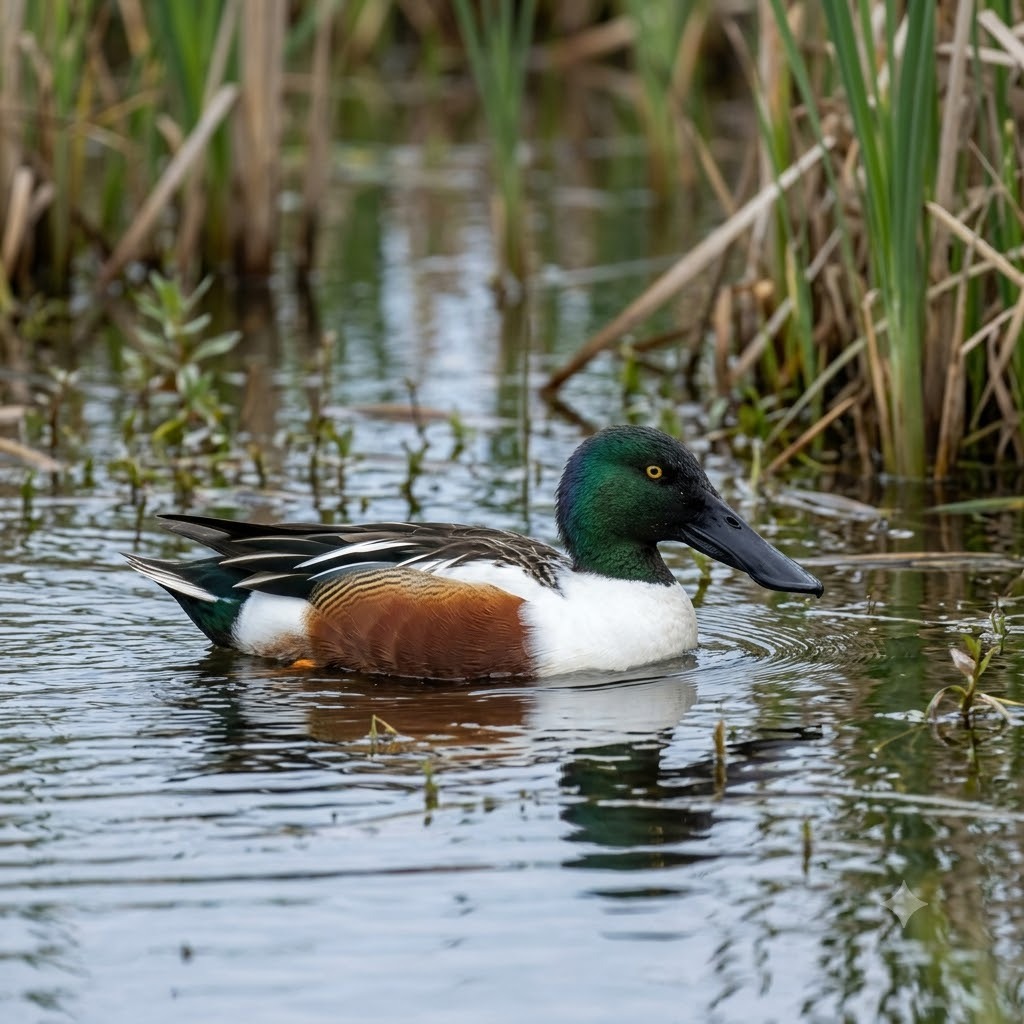
The shoveler is unmistakable in the hand because of its long, broad, shovel-like bill, which it uses to filter tiny food from the water. Breeding drakes are striking: a dark green head, bright white breast, chestnut flanks and belly, and pale blue upperwing patches visible in flight. Hens are mottled brown like many dabblers but still carry the oversized bill and show the same powder-blue wing patches. At roughly 19 inches, shovelers are a bit smaller than mallards. In flight they look front-heavy because of the big bill, and their low, buzzy flight and blue wing patches help identify them from a distance.
Range & Habitat (US)
Northern shovelers breed across the northern prairies and wetlands of the US and Canada and winter across the southern US, both coasts, and into Mexico. They favor shallow, marshy, nutrient-rich water - open marshes, flooded fields, sewage and treatment ponds, shallow impoundments, and the muddy edges of lakes - where their filter-feeding bill can strain plankton, seeds, and tiny invertebrates. They are birds of soft, shallow, fertile water rather than deep open lakes, and they migrate along all four flyways, making them a common sight for hunters nearly nationwide during the season.
Behavior & Sign
Shovelers are dabblers and specialized filter-feeders, swimming with the bill dipped, straining tiny organisms and seeds from the water and mud. They often swim in tight little groups, sometimes circling to stir up food, and are less wary than many ducks, which is why they decoy so readily. Their flight is low, quick, and buzzy. Sign includes muddy feeding lanes and stirred, murky shallow water where flocks have been straining food, plus feathers along soft edges. Because they favor rich, mucky shallows, finding the food-rich water usually means finding the birds.
Hunting Seasons & Timing
Shovelers are hunted within the general migratory duck season under the standard flyway frameworks, and they typically count as part of the regular daily duck bag rather than carrying a tight species-specific restriction like some ducks. They arrive with the fall migration and are often among the earlier ducks to decoy well. Because they are abundant and eager, they can fill a limit quickly, so knowing your total daily bag and any species sublimits matters. Always confirm current season dates, shooting hours, and bag limits for your state and flyway before hunting.
Hunting Methods
Decoying over shallow, marshy water is the go-to method. Shovelers respond well to a standard puddle-duck spread and often commit with little convincing, dropping into small openings among the decoys. Modest mallard-hen calling and light feed chuckles are plenty; spoonies rarely need aggressive calling. Jump-shooting shallow marsh ponds and flooded fields also works well, as does hunting muddy, food-rich shallows where flocks concentrate. As with all waterfowl, steel or another approved non-toxic shot is required. Keep shots inside a clean range and be ready for their quick, low, twisting flight over the decoys.
Where to Find Them - Reading the Terrain
Target shallow, fertile, mucky water: open marshes, flooded agricultural fields, shallow impoundments, treatment and settling ponds, and the soft muddy margins of lakes. Shovelers seek out plankton-rich, nutrient-loaded shallows where their filter-feeding bill excels, so the murkiest, food-rich shallow water often holds them. Look for stirred, cloudy water and small circling groups. They tend to avoid deep, clear open lakes. Scout the shallow, weedy, muddy edges and the flooded fields, and you'll usually find spoonies trading in and out at first and last light.
Gear & Optics Needed
A standard puddle-duck kit serves well: a modest decoy spread, waders, marsh camo, and a mallard-hen call used lightly. Non-toxic shot - steel or an approved alternative - is legally required for all waterfowl. Compact binoculars (8x32) help you pick out the big bill and blue wing patches to confirm the species at a distance. A shallow-draft boat or float tube helps reach soft, mucky marsh, and a retrieving dog is a real asset in thick cover and mud. Add a blind or natural brush, and dress for cold, wet fall conditions.
Shot Placement & Field-Dressing / Cleaning
Take shovelers as they cup into the decoys or on a clean flush, keeping shots within the effective range of your non-toxic pattern, generally inside 35-40 yards. Their low, buzzy, twisting flight can fool you, so lead them smoothly and don't rush. After retrieval, most hunters breast the bird out, removing the two breast fillets, though shovelers pluck fine for roasting whole. Trim away any excess fat, cool the meat quickly, keep it clean, and get it on ice - prompt, clean handling does more for a spoonie's table quality than almost anything.
Meat & Eating Quality
The shoveler's poor table reputation is largely undeserved and mostly comes from birds taken off foul water and handled carelessly. A shoveler from clean, fresh marsh, promptly cleaned and cooled, offers rich, dark breast meat comparable to other dabblers. Trim fat, cook the breast to medium-rare, and rest it. Because diet strongly affects flavor, birds from clean freshwater eat far better than those from stagnant or heavily animal-based water. Cared for properly, the humble spoonie is a perfectly good bird for the table.
Common Mistakes
Writing the shoveler off as inedible is the first mistake - clean water and careful handling change everything. On the water, hunters often over-call eager birds that would have decoyed on their own, or misjudge the spoonie's low, twisting flight and shoot behind it. Using lead shot is illegal for waterfowl. Others let birds pile up without tracking the daily bag and any sublimits. And, as always, taking long, hopeful shots that wound rather than kill wastes birds - keep shots inside your patterned, effective range.
Regulations & Conservation Note
Northern shovelers are abundant across all four flyways, and their populations are generally healthy, but all migratory waterfowl are managed under federal law. A federal duck stamp, a state hunting license, and HIP registration are required, and steel or other non-toxic shot is mandatory - lead is prohibited for waterfowl. Follow flyway-specific daily bag limits, shooting hours, and season dates, which are set to keep populations sustainable. Support wetland conservation through your license and stamp dollars, and practice fair chase and clean, ethical shooting.
Best Suited For
The northern shoveler is an excellent duck for beginning and intermediate waterfowlers. It is abundant, decoys eagerly, and forgives the small mistakes that wary ducks punish, making it a fine bird to learn spreads, calling, and clean shooting on. Hunters who enjoy shallow-marsh decoy hunting and want reliable action, without needing trophy plumage or a tricky quarry, will appreciate the confiding spoonie - and, handled well, a decent meal to follow.
FAQ
Are shovelers really bad to eat? No - that reputation is mostly unfair. A shoveler from clean freshwater, cleaned and cooled promptly, has rich dark breast meat much like other dabblers. Trim the fat and cook it medium-rare.
Why do shovelers decoy so easily? They are less wary than many ducks and are drawn to shallow, food-rich water. A standard puddle-duck spread and light calling usually bring them right in.
How do I identify a shoveler in flight? Look for the oversized bill that makes them look front-heavy, the low buzzy flight, and the powder-blue wing patches. Drakes also show a green head and white breast.
Do they count against a special bag limit? Usually they're part of the regular daily duck bag rather than a tight species sublimit, but rules vary by flyway and year. Always check your current regulations.
What shot is required? Non-toxic shot - steel or an approved alternative - is legally required for all waterfowl. Lead is prohibited. Keep shots within your pattern's effective range.