Redhead
The redhead is a hardy, fast-flying diving duck that pulls waterfowlers off the shallow marsh and onto big water.
🗓️ Last reviewed: June 2026
Overview
The redhead is a hardy, fast-flying diving duck that pulls waterfowlers off the shallow marsh and onto big water. Where dabblers like teal and mallards work small ponds and flooded fields, redheads gather in large rafts on open lakes, reservoirs, and coastal bays, and they decoy best over long lines of diver decoys set on that bigger, often rougher water. The shooting is different too - redheads come in low, fast, and committed, frequently in tight bunches that buzz the spread and swing back for another look. For a hunter ready to graduate from the shallow marsh, diver hunting over a redhead spread is a rugged, exciting step up, and it rewards the work of running bigger water in colder weather.
Identification & Appearance
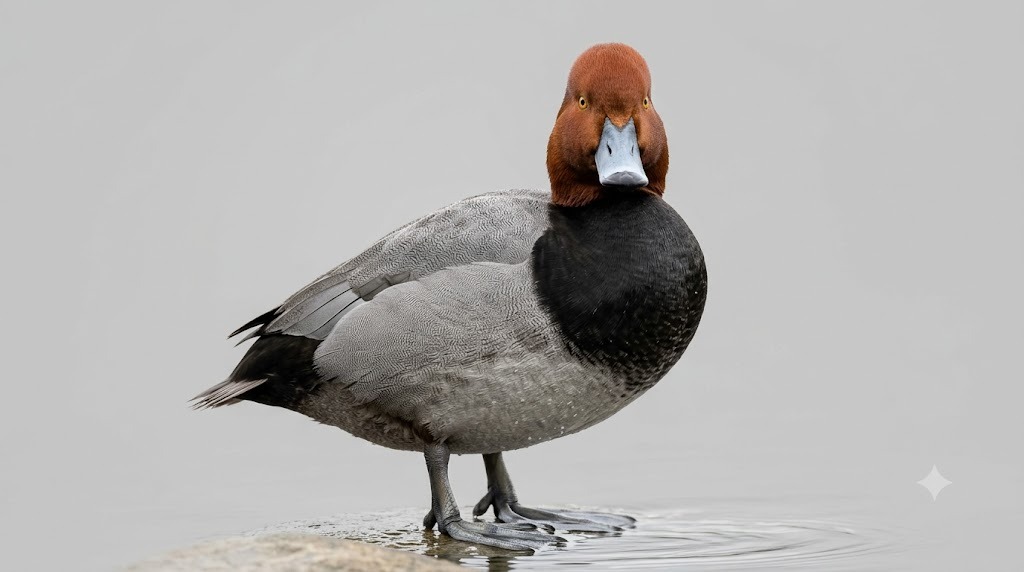
A drake redhead is a striking bird: a rounded, coppery-red head, a clean black chest, a pale blue-gray bill tipped in black, a smoothly gray body, and a black rear. The rounded head and gray back separate it cleanly from the similar canvasback, which has a long sloping forehead and a much whiter body. The hen is a warm, plain brown with a paler face and the same blue-gray bill, lacking the bold markings of the drake. In flight redheads show a gray wing stripe rather than the white one a canvasback flashes, and they fly fast in compact flocks. Knowing the redhead-versus-canvasback difference matters, because the two often share the same water and many states set different bag limits for each.
Range & Habitat (US)
Redheads breed across the Prairie Pothole Region of the northern Great Plains and the Intermountain West, favoring deeper, more permanent marshes and prairie lakes than the shallow seasonal potholes dabblers prefer. During migration they stage on large lakes, reservoirs, and rivers across the flyways, gathering in big rafts on open water. In winter redheads concentrate heavily on coastal waters, and a very large share of the continent's population winters on the Laguna Madre of south Texas and northern Mexico, where they feed on shoalgrass beds in the shallow hypersaline bay. Other important wintering waters include Gulf Coast bays, Chesapeake-area waters, and large inland reservoirs. This pull toward big open and coastal water shapes how and where they are hunted.
Behavior & Sign
Redheads are social, open-water ducks that raft up in large numbers on lakes and bays, loafing in dense bunches well offshore and trading to feeding water in fast, low flights. As diving ducks they feed by diving and swimming underwater, taking aquatic plants - shoalgrass and pondweeds are favorites - along with some invertebrates. They fly fast and tend to commit hard to a spread, often barreling in low and swinging back for repeated looks rather than circling cautiously like a wary mallard. Sign for the hunter is mostly about reading the water: large rafts of ducks loafing offshore, lines of birds trading low between the raft and feeding flats at first and last light, and concentrations over submerged grass beds. Scouting with binoculars to locate the rafts and the trading lines tells you where to set up.
Hunting Seasons & Timing
Redheads are hunted during the regular duck season, with dates and bag limits set annually under the federal migratory bird framework, and many states manage redheads under a separate diving-duck or species-specific bag allowance. Because redheads push south on cold fronts and concentrate on big water and coastal bays, the better hunting often comes mid to late season as northern waters freeze and birds stack up on the wintering grounds. A hard freeze that locks up smaller water pushes birds onto the remaining open lakes, reservoirs, and bays, concentrating them for the hunter. Always confirm your state's exact season dates, shooting hours, and the specific redhead or diver bag limit, which can differ from the overall duck limit.
Hunting Methods
Redhead hunting is big-water diver hunting. The classic method is a large spread of diver decoys set in long lines, often in a J-hook or fishhook pattern, with the open mouth pointed into the wind so birds finish along the line and into the gun. Layout boats, big-water blinds, and shoreline points all work, with the spread set where birds want to be - off a feeding flat or along a trading line between the raft and food. Redheads decoy well to numbers and motion, so bigger spreads and spinning-wing or jerk-rig motion help on calm days. Hunters typically run larger, more seaworthy boats than marsh hunters, set up to handle wind and chop, and use a dog or boat to recover birds that can sail a long way on open water.
Where to Find Them - Reading the Terrain
Find big open water and submerged food, and you find redheads. Look for large lakes, reservoirs, and coastal bays with extensive shallow flats and beds of submerged aquatic vegetation such as shoalgrass or pondweed. Birds raft offshore and trade to those feeding flats at first and last light, so set up along the travel line between the loafing raft and the food rather than on top of the raft itself. Points, the lee of islands, and the edges of grass flats concentrate birds and offer a place to set a spread out of the worst of the wind. On the coast, the shallow seagrass bays - the Laguna Madre being the prime example - hold enormous numbers. Watch where the rafts sit and where the trading lines run, and plan your spread accordingly.
Gear & Optics Needed
Redhead hunting demands more boat and more decoys than marsh work, and the gear reflects the bigger, colder water. A 12 gauge is the standard choke modified for the longer, faster shots common over open water; load non-toxic shot - steel is standard - in a larger size such as 2 or 3 to carry energy to these fast, sturdy divers. You want a seaworthy boat rigged for big water, several dozen diver decoys on long lines, layout or shoreline concealment, and serious cold-weather and waterproof clothing. Binoculars genuinely earn their place here for locating offshore rafts and trading lines before you commit to a setup. A capable retriever or a boat to chase cripples is important, because birds sail far on open water.
Shot Placement & Field-Dressing / Cleaning
Redheads are taken on the wing with a shotgun, so "placement" means a smooth gun mount, a swing that stays ahead of fast birds, and shots kept inside the effective range you confirm at the patterning board. Their speed and the open-water setting make a deliberate lead and a solid pattern more important than a hurried second barrel. After recovery, most hunters breast out divers - remove the two breast fillets - though redheads can be plucked whole for the table. Cool and clean the meat promptly; on the water a cooler or keeping birds out of the bilge helps. Recover cripples quickly with the dog or boat, since a wounded diver can swim and dive a long way.
Meat & Eating Quality
The redhead is generally considered one of the better-eating diving ducks, clearly above the strong-flavored divers but a notch below the top dabblers like teal. Because divers eat more aquatic vegetation and some animal matter, their meat can carry a slightly stronger, sometimes faintly fishy flavor than a corn-fed mallard, and that varies with what the birds have been feeding on. Birds off clean grass beds tend to eat very well. The lean breast meat is best cooked hot and fast to a rosy medium and not overcooked, and many hunters soak or trim it and treat it like a good red-meat duck. A redhead off the right water makes a fine meal.
Common Mistakes
The most common redhead mistake is flock-shooting a fast, bunched group instead of picking one bird, which leads to clean misses on birds that look easy. Underleading these quick divers is another - they cover ground faster than they appear to, so the swing has to stay well ahead. Setting too small or poorly shaped a spread, or pointing the hook the wrong way to the wind, leaves birds finishing out of range. Hunting big water in an undersized or poorly rigged boat is a real safety mistake, not just a hunting one. And failing to tell a redhead from a canvasback before shooting is both an identification error and a potential limit violation, since the two often share water under different bag rules.
Regulations & Conservation Note
Redheads are managed under the federal migratory bird framework, and many states set a specific redhead or diving-duck bag limit separate from the general duck limit, so check the regulations carefully. Hunters must have a state hunting license, a federal duck stamp, and HIP registration, and must use non-toxic shot. The dollars from duck stamps fund the wetland and coastal conservation that protects redhead breeding marshes and the seagrass wintering bays, especially the Laguna Madre, that the population depends on. Identify your target to avoid confusing redheads with canvasbacks, follow the specific bag and possession limits, and support the habitat work that keeps these flocks strong.
Best Suited For
Redhead hunting suits waterfowlers ready to step up from the shallow marsh to big-water diver hunting - hunters who own or can run a seaworthy boat, who enjoy setting large decoy spreads, and who do not mind cold, wind, and chop for fast, committed shooting. The rafts, the long decoy lines, and the hard-charging birds make it a rugged, rewarding style of duck hunting. It fits those drawn to open lakes, reservoirs, and coastal bays, and who appreciate a solid diving duck on the table.
FAQ
How do I tell a redhead from a canvasback? Look at the head and back. A redhead has a rounded, coppery head and a gray body; a canvasback has a long, sloping forehead and a much whiter, paler body. In flight the canvasback flashes a white wing stripe while the redhead shows gray. It matters because many states set different bag limits for the two.
Do I need a big boat to hunt redheads? Often yes. Redheads concentrate on big lakes, reservoirs, and coastal bays, and a seaworthy boat rigged for wind and chop is both how you reach them and a real safety requirement. Some birds can be taken from shoreline points, but most diver hunting is a big-water game.
What shot and choke should I use? A 12 gauge with a modified choke suits the longer, faster shots over open water. Use non-toxic shot - steel is standard - in a larger size such as 2 or 3 to carry energy to these fast, sturdy divers.
Are redheads good to eat? Yes, they are one of the better-eating divers, though a notch below top dabblers like teal and sometimes a touch stronger in flavor depending on diet. Birds off clean grass beds eat well; cook the lean breast hot and fast to medium and do not overcook it.
Why do redheads decoy to such big spreads? They are social, open-water ducks that raft in large numbers, so they are drawn to numbers and motion on the water. Long lines of diver decoys in a hook pattern, with the open mouth into the wind, imitate a raft and pull fast-flying birds in to finish along the line.