Ring-necked Duck
The ring-necked duck is a small diving duck that hunts more like a puddle duck than the big-water diver it technically is.
🗓️ Last reviewed: June 2026
Overview
The ring-necked duck is a small diving duck that hunts more like a puddle duck than the big-water diver it technically is. While most divers - canvasbacks, redheads, scaup - draw hunters out onto large open lakes and bays, the ringbill is happiest on small wooded lakes, beaver ponds, flooded timber, and shallow weedy marshes, the same kind of intimate water a beginner already hunts for mallards and teal. Ringbills decoy readily to small spreads, often buzzing in low and bunched, and they will work water far too small and sheltered for true open-water divers. That combination - diver toughness with puddle-duck habits on friendly water - makes the ring-necked duck one of the most accessible divers for a new waterfowler, and a bird that often shows up when you are hunting for something else.
Identification & Appearance
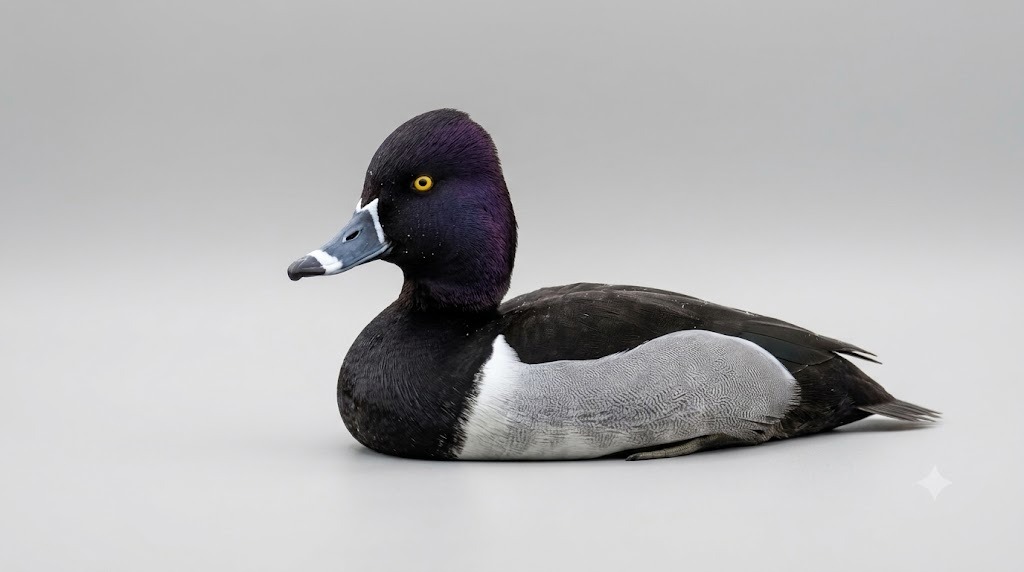
A breeding drake ring-necked duck has a tall, distinctly peaked black head that can flash purple in good light, a black chest and back, and clean gray sides separated from the chest by a bold white vertical wedge or spur in front of the wing. The bill is the giveaway: blue-gray with a crisp white ring near a black tip, the field mark that makes the bird far easier to name than the faint, hard-to-see neck ring it is unfortunately named for. The hen is brown with a paler face, a white eye-ring and thin eye-line, and the same ringed bill pattern in muted form. In flight, ringbills show a plain gray wing stripe rather than the bold white of scaup - a useful way to separate the two species, since the peaked head and white bill ring are easy to confirm once birds are close.
Range & Habitat (US)
The ring-necked duck breeds across the boreal forest and northern wetlands of Canada and the northern United States, favoring shallow, marshy, freshwater ponds, bogs, and beaver impoundments rather than big open lakes. This preference for small, sheltered freshwater holds true on migration and wintering grounds, which is exactly why ringbills turn up on water other divers ignore. During migration they move through all four flyways and concentrate on shallow freshwater - wooded lakes, marshes, flooded timber, farm ponds, and slow river backwaters. They winter widely across the southern United States, the Gulf Coast, Florida, and into Mexico and the Caribbean, again leaning toward fresh and brackish shallow wetlands rather than coastal saltwater. Hunters who learn to read small freshwater find ringbills almost everywhere ducks gather.
Behavior & Sign
Ring-necked ducks are fast, agile fliers that often arrive low and bunched, dropping into small water quickly and decoying with less hesitation than most divers. As diving ducks they feed by diving and dabbling in shallow to moderately deep freshwater, taking seeds, tubers, and aquatic plants along with some invertebrates - a heavily plant-based diet that contributes to their fair-to-good table reputation among divers. They raft up on open water during the day and trade to feeding areas, and they will tip and dive among the same pads and weeds where puddle ducks feed. Sign on the water includes tight rafts of dark, peak-headed ducks loafing on a pond, birds diving repeatedly on a weedy flat, and small bunches trading low across wooded water at first and last light. Scouting small lakes and beaver ponds the evening before, watching for rafts and feeding birds, points you to the morning setup.
Hunting Seasons & Timing
Ring-necked ducks are hunted during the regular duck season under each state's framework, with their own annually set dates and bag limits within the federal migratory bird rules. Because they migrate on a more typical schedule than early teal, ringbills are a core regular-season diver across much of the country, and in many southern states they are one of the most abundant ducks in the bag. Timing follows standard waterfowl rhythm: the first hour or two after legal light is often best as birds trade between roosting and feeding water, with a second push of movement late in the day. Cold fronts that push new birds south can stack ringbills onto good freshwater. Always confirm your state's exact season dates, shooting hours, and bag limits, which are set under the federal migratory bird framework.
Hunting Methods
Hunting ringbills is small-water diver hunting that borrows heavily from puddle-duck tactics. The standard approach is a small to medium decoy spread on a sheltered lake, beaver pond, or marsh where birds want to be - and because ringbills decoy readily, you do not need the huge diver rigs that open-water scaup demand. Many hunters run a mixed spread, adding a few diver decoys to a puddle-duck setup, since ringbills will swing a mallard spread on small freshwater. Set up tight, hide well in shoreline cover or a layout in the marsh, and be ready for fast, low, bunched birds that commit quickly. Calling matters less than for dabblers; a few divers respond to a soft purr or growl, but concealment and good water selection do most of the work. A retriever is valuable, because a diver can dive when wounded and be hard to recover in weedy water.
Where to Find Them - Reading the Terrain
Find small, sheltered freshwater and you find ringbills. Look for wooded lakes, beaver ponds, flooded timber, weedy marshes, farm ponds, and slow river backwaters - the kind of water true open-water divers pass over. Birds raft on the more open part of a pond by day and trade to weedy feeding water, so set up between roost and food or right on the feed at first light. Beds of submerged aquatic plants and pads concentrate feeding birds. Watch the evening before for rafts forming and for bunches dropping into a particular cove or flat, then plan your spread there in the morning. On bigger lakes, the sheltered weedy bays and back ends hold ringbills more reliably than the open main lake.
Gear & Optics Needed
Ringbill hunting rewards the same kit you already use for small-water ducks rather than specialized big-water diver gear. A 12 or 20 gauge shotgun choked improved cylinder to modified handles fast, close-to-moderate work well; load non-toxic shot - steel is standard - in a size such as 4 to 6, since divers can carry a bit more shot than the smallest dabblers. A modest decoy spread, with a few diver blocks mixed in, covers most small water. Waders, solid shoreline or marsh concealment, and a good retriever round out the basics. Compact binoculars help you read rafts and confirm peaked heads and white bill rings before birds commit, but you do not need the heavy optics or large layout rigs that open-water diver hunting calls for.
Shot Placement & Field-Dressing / Cleaning
Ringbills are taken on the wing with a shotgun, so "placement" means a clean gun mount, a smooth swing on fast birds, and shots inside your effective range as you confirm at the patterning board. Their quick, bunched approach makes picking a single bird more important than firepower. Because a wounded diver can dive and swim off, mark downed birds carefully and let a dog work the weedy water. After recovery, most hunters breast out ringbills - remove the two breast fillets - though they can be plucked whole for the table. Keep the meat clean and cool it promptly. As with all wild waterfowl, cook to a safe internal temperature.
Meat & Eating Quality
The ring-necked duck is rated fair-to-good on the table, noticeably better than the fish-eating sea ducks and toward the better end for a diver, thanks to its largely plant-based freshwater diet. The breast meat is lean and a little stronger in flavor than a prime dabbler like teal or mallard, but far milder than divers that feed heavily on animal matter. Quick, hot cooking to a rosy medium suits the lean breasts, and many hunters are happy to take ringbills home for the pan - a real advantage over divers reputed to be poor eating. Trimming fat and silver skin and not overcooking go a long way toward a good meal.
Common Mistakes
The most common ringbill mistake is treating them like big-water divers and setting up on open water they do not favor, instead of the small sheltered freshwater they actually use. Another is flock-shooting the fast, bunched birds rather than picking one out of the bunch, which leads to misses. Poor concealment flares these sharp-eyed ducks just like any other waterfowl, and standing up too early as birds swing turns them off. Over-investing in a huge diver spread for small water is unnecessary when a modest mixed spread works. And misidentifying ringbills as scaup - or vice versa - is common; check for the peaked head, white bill ring, and gray wing stripe, and confirm your target before you shoot.
Regulations & Conservation Note
Ring-necked ducks are managed under the federal migratory bird framework, with annually set season dates and bag limits within each state's regulations. Hunters must have a state hunting license, a federal duck stamp, and HIP registration, and must use non-toxic shot. The dollars from duck stamps and the federal framework fund the wetland and waterfowl conservation that keeps freshwater habitat productive across the flyways. Identify your target carefully - ringbills mix with scaup and other ducks - and follow all bag and possession limits to keep populations strong.
Best Suited For
Ring-necked duck hunting is ideal for waterfowlers who hunt small, sheltered freshwater and want a diver that plays by puddle-duck rules. The friendly water, modest spread, and readily decoying birds make it an accessible introduction to diver hunting, while the fast, bunched shooting keeps it challenging. It suits hunters who enjoy beaver ponds, wooded lakes, and weedy marshes, and who appreciate a diver that is genuinely worth taking to the table.
FAQ
Is the ring-necked duck a diver or a puddle duck? It is a diving duck, but it behaves a lot like a dabbler. Ringbills favor small, sheltered freshwater - beaver ponds, wooded lakes, marshes - and decoy readily to modest spreads, rather than demanding the big open water that scaup and canvasbacks use.
How do I tell a ringbill from a scaup? Look for the tall, peaked black head, the bold white wedge in front of the wing, and especially the blue-gray bill with a crisp white ring near a black tip. In flight, ringbills show a plain gray wing stripe, while scaup flash a bold white wing stripe.
Why is it called a "ring-necked" duck if I can't see a ring on the neck? Because the faint chestnut neck ring is very hard to see in the field. Hunters almost always name the bird by the obvious white ring on the bill instead, which is why many people call it the "ringbill."
Do ring-necked ducks eat well? Yes, fair-to-good for a diver. Their largely plant-based freshwater diet keeps the breast meat milder than fish-eating ducks. Cook the lean breasts hot and fast to a rosy medium and avoid overcooking.
What shot and choke should I use? A 12 or 20 gauge with an improved-cylinder to modified choke handles fast, close-to-moderate shots well. Use non-toxic shot - steel is standard - in a size such as 4 to 6, which carries enough for a diver while still patterning densely.