Ruddy Duck
The ruddy duck is one of North America's most distinctive little waterfowl - a tiny, energetic diving duck with a stiff cocked tail and, in the breeding drake, an almost cartoonishly bright sky-blue bill.
🗓️ Last reviewed: July 2026
Overview
The ruddy duck is one of North America's most distinctive little waterfowl - a tiny, energetic diving duck with a stiff cocked tail and, in the breeding drake, an almost cartoonishly bright sky-blue bill. It is not a bird most hunters target on purpose; its table reputation is modest, and it lacks the size and prestige of a mallard or canvasback. But for the diver hunter working open water, ruddies are a fast, fun bonus, buzzing decoy spreads in tight bunches and testing a shooter's timing on a small, quick target. Hunting them is pure waterfowling: big-water setups, non-toxic shot, and full respect for the migratory-bird framework that governs every duck season.
Identification & Appearance
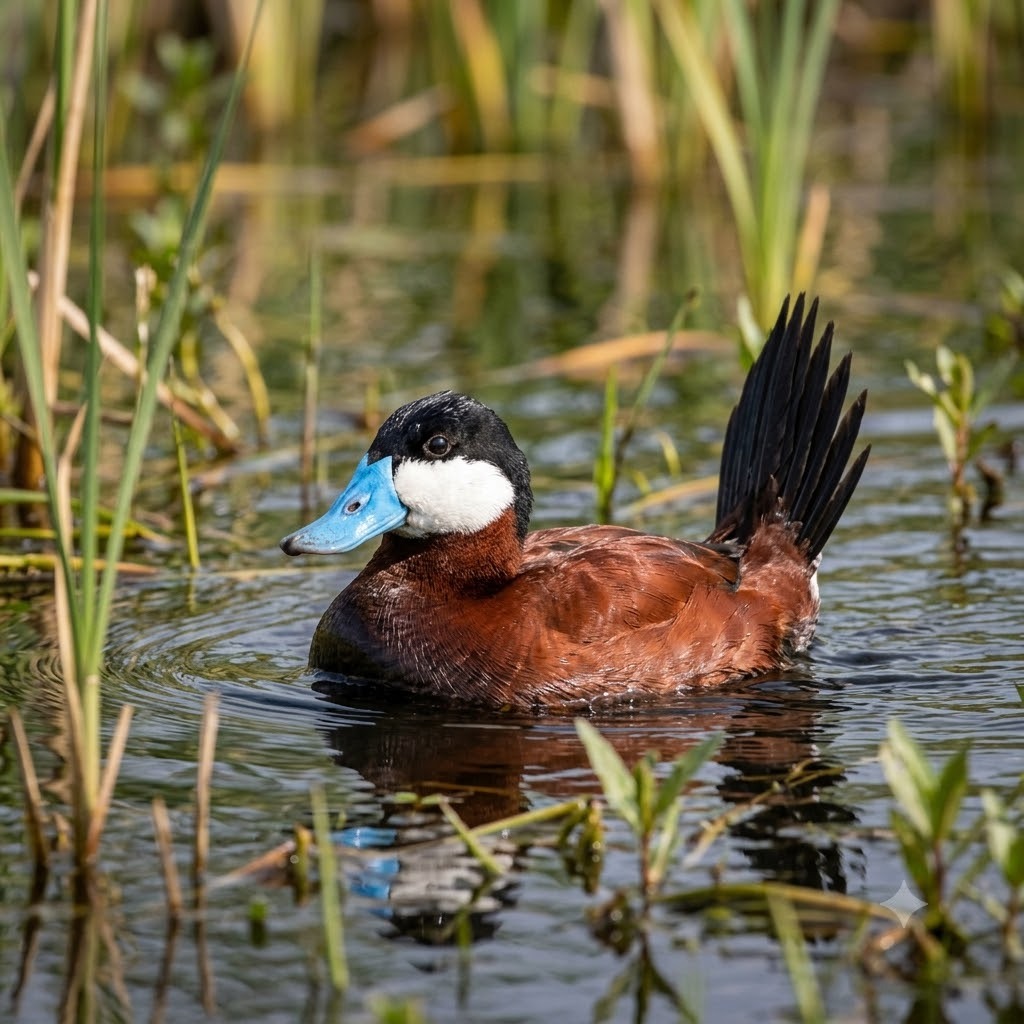
The ruddy duck is a small, compact diver, only about 14-16 inches long and roughly a pound, with a large head, short thick neck, and a long stiff tail it often holds cocked straight up. The breeding drake is unmistakable: rich chestnut-red body, black cap and white cheeks, and a brilliant sky-blue bill. Out of breeding and in flight, drakes are far duller - grayish brown with the white cheek still showing. Hens are drab brown year-round with a single dark line across a pale cheek. The small size, big-headed profile, and stiff tail make ruddies distinctive on the water, though correct species identification before shooting is a legal requirement.
Range & Habitat (US)
Ruddy ducks breed across the prairie pothole region and the marshes of the northern and western United States and Canada, favoring reedy freshwater wetlands with dense cover for nesting. In migration and winter they spread across much of the country, concentrating on larger open waters: reservoirs, bays, estuaries, coastal lagoons, and big marshes. They are strong divers that feed underwater on aquatic insects, crustaceans, and the seeds and roots of water plants, so they favor open water deep enough to dive in. The classic setting for encountering them is a broad expanse of water where diving ducks raft up and trade back and forth.
Behavior & Sign
Ruddy ducks are true divers, spending much of their time underwater foraging rather than tipping up like puddle ducks. They are reluctant, labored fliers that patter across the surface to get airborne, then bore along low and fast in tight flocks. On the water they ride low, often with the stiff tail cocked, and they dive rather than flush when alarmed. In the non-breeding season they raft in large groups with other divers. For the hunter, the key observations are rafts of small dark divers on big water and the fast, low, bunched flight lines they trade along between feeding and resting areas.
Hunting Seasons & Timing
Ruddy ducks are migratory waterfowl, hunted within the federally framed duck seasons each state sets under those limits - generally running through the fall and winter, with exact dates, shooting hours, and bag limits set annually. Ruddies count within the overall daily duck bag, and species or group limits may apply. The best hunting tracks the migration and the cold, when divers concentrate on open water and move readily, and early morning is prime. Because waterfowl rules change yearly and are strictly enforced, always confirm the season dates, shooting hours, bag limits, and stamp requirements before you hunt.
Hunting Methods
Ruddies are taken with the standard open-water diver approach: a spread of decoys, often a long line or raft of diver blocks, set on big water, with the hunter concealed in a layout boat or shore blind along the birds' trading routes. Because divers fly low and fast in tight bunches, decoying and pass-shooting them is a game of timing and lead, and ruddies in particular are small and quick, buzzing the spread in compact groups. Non-toxic shot is required by federal law for all waterfowl, so a well-patterned load in an appropriate size is essential. Retrieving downed divers on open water often calls for a good dog or a boat.
Where to Find Them - Reading the Terrain
Think open water. Ruddy ducks and other divers concentrate on the larger waters - reservoirs, big marshes, bays, estuaries, and coastal lagoons - where they can raft and dive for food. Scout for rafts of small dark divers and note the flight lines they trade along between feeding shoals and resting areas; those corridors are where a decoy spread and blind belong. Points, open shorelines, and the mouths of coves where birds funnel are prime setups. Wind matters: birds land into the wind, so position decoys and blind to give incoming ducks a natural approach.
Gear & Optics Needed
Diver hunting on big water is gear-intensive. A seaworthy boat or well-built shore or boat blind is central, along with a spread of diver decoys often set in long lines to mimic rafting divers. A reliable shotgun choked and patterned for non-toxic shot, plus plenty of appropriate loads, are required by law for waterfowl. Warm, waterproof clothing and waders handle the cold, and a well-trained retriever or a boat for pickups is important. Binoculars help you spot and identify distant rafts. Don't forget the required licenses, the federal duck stamp, and any state stamps.
Shot Placement & Field-Dressing / Cleaning
Ruddies are small and fast, so success comes from clean pass-shooting and decoying inside a well-patterned range, centering the bird in the pattern for a quick, humane kill. Confirm your non-toxic load's effective range on paper beforehand and keep shots within it. After the retrieve, ruddies are usually breasted out, though they can be plucked whole for roasting. Being small and often strong-flavored, they reward careful cleaning: pull the skin or feathers, trim away fat, and cool the meat quickly. Identify each bird in hand to confirm it is legal and within your bag.
Meat & Eating Quality
Honesty first: the ruddy duck has a modest table reputation and is not a bird chased for its meat. As a diving duck feeding heavily on aquatic invertebrates, it can carry a stronger, sometimes fishy flavor compared to grain-fed puddle ducks, and it is small, yielding little meat per bird. That said, a ruddy taken from clean water and handled well - breasted promptly, trimmed of fat, and prepared with a marinade or in a mixed-game dish - can be perfectly good eating. Quick, clean handling and a method suited to rich, lean meat make all the difference.
Common Mistakes
The most serious mistake in any waterfowl hunting is failing to identify the bird before shooting; correct identification, non-toxic shot, and staying within legal bag limits are not optional. Beginners also underestimate ruddies as targets: small, low, and fast in tight bunches, they punish poor timing and short leads. Setting decoys and a blind without regard to wind gives birds an unnatural approach, and skimping on retrieving means lost, wounded birds. Finally, hunting big water without a seaworthy boat, proper clothing, and safety gear is genuinely dangerous - cold open water demands respect.
Regulations & Conservation Note
Ruddy ducks are migratory birds protected and managed under the federal migratory-bird framework, and all waterfowl hunting carries firm legal requirements. You must have a valid hunting license and the federal duck stamp, plus any required state stamps, and you must use non-toxic shot - lead is prohibited for waterfowl nationwide. Season dates, shooting hours, and daily bag limits are set annually and vary by state and flyway, so confirm the current rules every year, and note that ruddies count within the overall daily duck bag. Identify every bird before shooting, respect the limits, and support the wetland conservation - much of it funded by duck-stamp dollars - that keeps waterfowl populations healthy.
Best Suited For
Ruddy duck hunting, as part of a broader open-water diver hunt, suits the waterfowler who loves big water, decoy spreads, and fast, challenging pass-shooting rather than the intimate calling of puddle ducks in a small marsh. It is a good fit for hunters comfortable running boats, setting long decoy lines, and handling the demands and safety of open water. Those who enjoy a mixed diver bag and a fast, tight-flying target on cold winter water will appreciate the ruddy as a spirited bonus bird.
FAQ
Do I need special shot to hunt ruddy ducks? Yes. Non-toxic shot - steel or another approved type - is required by federal law for all waterfowl. Lead shot is prohibited for ducks nationwide, so pattern an appropriate load before you hunt.
What licenses and stamps do I need? A valid state hunting license, the federal migratory-bird hunting stamp (the duck stamp), and often a state waterfowl stamp. Requirements vary, so confirm exactly what your state and flyway require each season.
Are ruddy ducks good to eat? They have a modest reputation. As divers they can taste stronger or fishy depending on diet, and they are small. Taken from clean water, breasted promptly, and cooked with a marinade or in a mixed-game dish, they can still be good eating.
Why are ruddy ducks hard to hit? They are small, fly low, and move fast in tight compact bunches, buzzing a decoy spread quickly. That combination demands good timing and proper lead, which is exactly what makes them a fun, challenging target.
How do I hunt them? As part of an open-water diver setup: a spread of diver decoys on big water, a layout boat or shore blind along the birds' trading routes, non-toxic shot, and good retrieving, all positioned to give incoming ducks a natural, into-the-wind approach.