Raising Beef Cattle: How to Finish a Steer or Two for a Year of Beef on a Homestead
Buy one or two weaned steers in spring, graze them through the season, and finish them for a freezer full of the most self-sufficient meat you can raise.
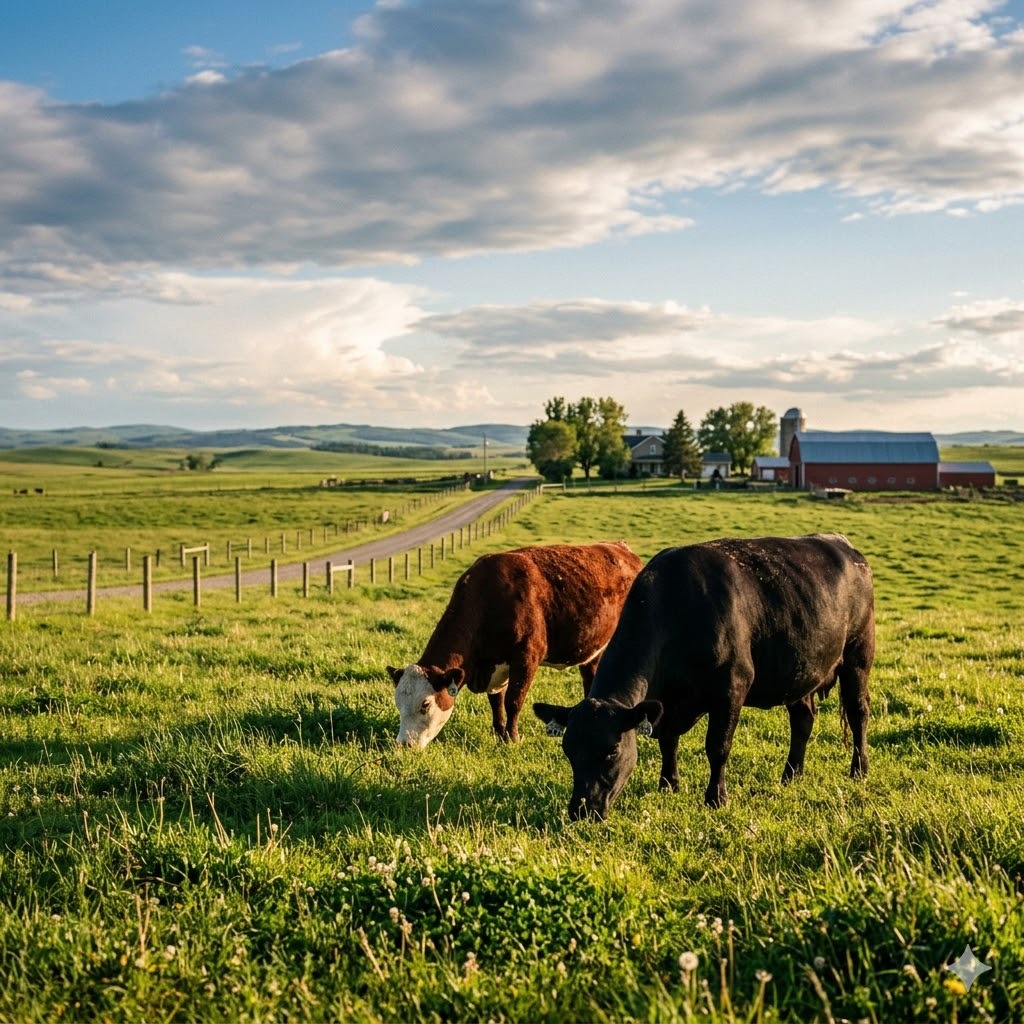
Beef cattle are the biggest commitment on this whole list, and that is worth saying up front. A steer or two needs real pasture, real fencing, real water, and a way to safely handle an animal that will outweigh you several times over. Do it right, though, and you raise close to a year's worth of beef for a family - the most self-sufficient red meat there is, grown almost entirely off your own grass.
Is it right for you?
This is the advanced option, and not the place to start if you have never kept livestock. Cattle are not a small-lot animal. You need acreage, dependable water, stout perimeter fencing, a winter hay plan, and some way to safely restrain a large animal when the vet comes or it needs treatment. There is a serious upfront infrastructure investment before the first steer ever steps off the trailer.
The good news is that the simplest homestead path keeps things manageable. Instead of running a breeding herd with cows, calving, and a bull to deal with, you buy one or two weaned steers in spring, graze them through the grass season, and finish and process them in fall or the following year. No breeding, no calving in the cold, no bull. Just grass going in one end and beef coming out the other.
Raise two if you can rather than one. Cattle are herd animals and a single steer gets lonely, stressed, and harder to handle. A buddy keeps both calmer, and the second one fills a neighbor's or family member's freezer to help offset your costs.
Before you commit, check local zoning and any agricultural or minimum-acreage rules in your area. Cattle are regulated more tightly than chickens or rabbits in a lot of places, and you want to know that before you build a fence.
Best breeds
For finishing a steer or two, breed matters less than temperament and what is available locally - but a few are classic homestead choices.
- Angus - the standard beef breed for good reason. They finish well on grass, marble nicely, and are widely available. A safe, proven choice.
- Hereford - the other classic beef animal. Hardy, generally docile, and good foragers; the red-with-white-face cattle you have seen your whole life.
- Dexter - small, hardy, and probably the most homestead-friendly breed there is. Dual-purpose (milk or beef), they eat less and are easier on your pasture and your fences, though you get a smaller carcass.
- Highland - the shaggy, horned Scottish cattle. Extremely hardy, thrive on rough or marginal ground, and handle hard winters well; slower to finish but tough and self-reliant.
- Dairy-cross steers - a Holstein or dairy-cross steer (often a bargain as a calf) will raise a lot of lean beef, though they finish leaner and slower than a beef breed and eat more to get there. A practical budget option if the price is right.
Land, fencing and shelter
Cattle need real pasture, full stop. The rough rule of thumb is roughly an acre or more per animal, but that swings widely with land quality - lush, well-managed grass supports more; dry, rocky, or marginal ground needs more acres per head. Talk to a neighbor or your local extension office about what your specific ground will carry. Rotating the animals between a few smaller paddocks rather than one big field keeps the grass healthier and stretches it further.
Fencing is where you do not cut corners. A determined steer leans on, reaches over, and tests every weak spot in a fence, and a loose 1,000-pound animal on the road is a genuine danger. Good perimeter fencing - well-built woven wire, or a properly installed multi-strand electric fence with a strong charger - is essential. Walk it regularly and fix problems the day you see them.
Water has to be reliable and clean. A grown steer drinks a lot, especially in summer heat, and they will not thrive on a half-empty trough. An automatic waterer, a stock tank you keep filled, or year-round access to a clean pond or stream all work - just plan for keeping it open in winter when things freeze.
Shelter for cattle is simpler than for most stock. They do not need a barn; what they need is a windbreak and shade - a stand of trees, a three-sided run-in shed, or even a good hill that blocks the wind. They handle cold far better than wet wind or relentless sun. Dry footing where they loaf helps prevent foot problems.
The piece people forget is handling facilities. You need some way to safely contain and restrain a large animal - at minimum a small sturdy catch pen, and ideally a simple chute or head gate. The day a steer needs a vet, a treatment, or loading onto a trailer, you will be very glad you built this beforehand instead of trying to wrestle the situation. Good facilities are a safety issue for you, not a luxury for the animal.
Feeding
The whole appeal of beef cattle is that grass does most of the work. In the growing season, good pasture is the base of the diet, and a healthy steer on decent grass needs little else. That is the cheap, self-sufficient part - and the reason you want enough acreage to actually feed them off the land.
When the grass stops growing, you feed stored hay, and this is the part of the plan people underestimate. A grown steer eats a lot of hay over a winter - figure on a meaningful pile of round or square bales per animal across the cold months, and buy more than you think you need rather than running short in March. Exactly how much depends on your winter length, the animal's size, and hay quality, so ask local cattle folks what is normal for your area and your winter. Lining up good hay in summer, when it is cheaper and available, beats scrambling for it in a hard winter.
Beyond grass and hay, cattle need year-round access to a good loose mineral or mineral block formulated for cattle, and constant clean water. Some people add a bit of grain in the final weeks to finish a grass-raised steer with more fat and marbling, but it is optional - plenty of homesteaders finish entirely on grass and hay and are happy with the result.
Daily care and routine
Here is the upside of cattle compared to, say, a dairy cow or a flock of poultry: the daily labor is genuinely low. Once they are on good pasture with working fences and full water, a check is mostly a look - are they all there, are they content, is anyone limping or off by themselves, is the water flowing and the fence holding. Five or ten minutes, twice a day. In winter, add hauling hay and breaking ice.
What replaces daily labor is the need for respect and calm around a very large, strong animal. Even a friendly steer can hurt you without meaning to - a swing of the head, a sudden bolt, getting pinned against a fence or gate. Move slowly and predictably, never corner yourself where you cannot get out, and stay aware of where the animal's body is. This is exactly where good handling facilities earn their keep: do your sorting, loading, and treating in a proper pen or chute rather than out in the open. Quiet, low-stress handling makes the animals easier to work with and keeps you safe.
A practical note - the calmer and more routine you keep them, the better they handle on the day they go to the processor, which matters for both safety and meat quality.
Common health issues
Cattle are hardy, but a few problems come up often enough that you should know the names: internal and external parasites (worms, lice, flies), bloat (a dangerous buildup of gas, often from certain rich pastures), pinkeye (a contagious, fly-spread eye infection, common in summer), and foot problems (lameness from wet ground, injury, or infection). You will also want to watch general thrift - a steer that is hanging back, off its feed, or losing condition is telling you something.
The single most important health point with cattle: build a relationship with a large-animal or livestock vet before you need one. A vet relationship is essential with cattle, not optional. These are big animals, problems can turn serious fast, and you want someone you can call who already knows you and your setup. Lean on that vet for diagnosis, treatment, and a sensible parasite and vaccination plan for your area - do not guess at medicines or doses on an animal this size. Ask them, too, about the proper withdrawal times for any treatment so nothing carries through to the meat.
What you get (and processing)
This is the payoff. A finished steer yields roughly a year's worth of beef for a family - your freezer fills with steaks, roasts, and ground beef, all of it grown on your own grass. Even a smaller breed like a Dexter fills a freezer; a full-size beef steer can be more than one family eats in a year, which is another good reason to raise two and split one.
You will use a licensed processor for the actual harvest and butchering - this is not a job to do in the yard, and in most places selling or even sharing the meat brings rules about how it must be processed and inspected. Here is the part everyone learns the hard way: book your processor's appointment months in advance, sometimes the better part of a year ahead. Good processors are booked out, and a finished steer with nowhere to go is a real headache. Reserve the date early, then raise the animal to meet it. When you book, you tell them how you want it cut and wrapped.
Check your local rules on whether the meat is for your own use only or can be sold or shared, since that changes what kind of processor and inspection you need. Treat the day itself with respect - it is the natural end of raising your own food, and a calm, quiet animal and a good processor make it as it should be.
Getting started
Start small and start in spring. Find a local source - a nearby cattle farmer, a livestock auction, or a breeder - and buy one or two healthy, weaned steers. Look for a calf that is bright, alert, well-grown for its age, and not coughing or scouring, and ask what it has already had for vaccinations and worming. Buying local also means the animal is suited to your climate and you have someone to ask questions of.
Before they arrive, have the infrastructure done: fences walked and tight, water set up, a windbreak or shed, a loose mineral feeder, and at least a basic catch pen. Have your hay lined up for winter, or know exactly where it is coming from. Introduce yourself to a large-animal vet. Then graze through the season, keep them healthy and calm, and aim them at the processing date you already booked. One or two steers, one good grass season, and you have learned the whole cycle without taking on a breeding herd.
Rough costs
Be honest with yourself: cattle carry the highest costs on this list, both upfront and ongoing.
- Infrastructure (upfront, the big one) - fencing, water, a shelter or windbreak, and handling facilities can run from several hundred to a few thousand dollars or more depending on what you already have and how much you build yourself. This is mostly a one-time investment that serves you for years.
- The animals - a weaned steer calf typically runs a few hundred to several hundred dollars each, with dairy-cross calves often cheaper and quality beef breeds more.
- Winter hay - plan for a real seasonal expense per animal; it adds up over a long winter, so budget generously.
- Minerals, vet care, and incidentals - ongoing but modest compared to feed: loose minerals, routine vet visits, parasite control, and the odd repair.
- Processing - paid at the end, generally a few hundred dollars or more per animal for kill, cut, and wrap, depending on the carcass and how it is processed.
Pencil it all out before you commit. Done with reasonable infrastructure already in place, homestead beef can be very worthwhile - but it asks for real land, real money up front, and real respect for the animal. If you have the acreage and the commitment, nothing else on this list puts a year of self-sufficient meat in the freezer the way a steer does.