Farming Black Soldier Fly Larvae: Feed from Food Waste
A guide to black soldier fly larvae - a larvae-farming powerhouse whose grubs devour food waste fast and self-harvest by crawling out, giving high-protein poultry and fish feed while composting scraps.
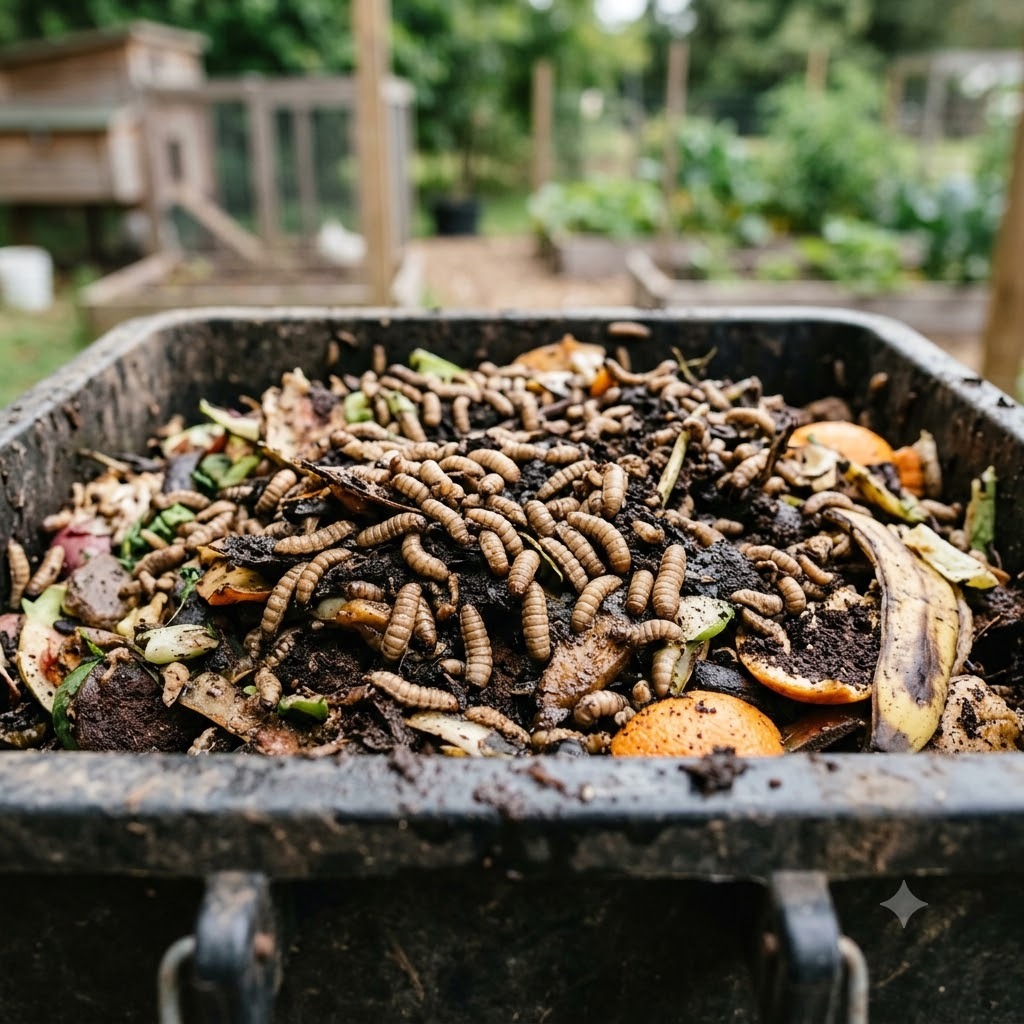
Black soldier fly larvae are the closest thing to magic in the homestead: grubs that devour food waste at astonishing speed, turn it into high-protein feed, and then self-harvest by crawling out of a sloped bin into a collection cup on their own. They compost your kitchen and garden scraps and hand you a bucket of poultry and fish feed in return, with almost no labor.
Is it right for you?
Black soldier fly larvae suit anyone with food waste and poultry or fish who wants both composting and free protein feed, in a warm climate or season. They are astonishingly efficient and nearly self-harvesting.
Space & Housing
A single bioreactor bin with a sloped ramp to a collection cup is the classic setup; it fits a corner of a yard or shed. They work best in warm weather, slowing or stopping when cold.
Feeding & Daily Care
Feed them food scraps, spoiled produce and other waste, which they consume rapidly; daily care is adding scraps and emptying the self-harvest cup. They largely run themselves.
Getting Started
Start with a bioreactor bin and either buy larvae or attract wild black soldier flies to lay eggs; add food waste and let the larvae do the rest, collecting the self-harvesters.
Health & Common Problems
Hardy and problem-free in warm weather; they even out-compete house flies and reduce odor in a compost bin. The main limit is cold, which stops them, so they are seasonal in cool climates.
What You Get
Fast composting of food waste plus a steady, self-harvesting supply of high-protein larvae to feed chickens and fish, and a nutrient-rich residue for the garden.
Costs & Effort
Very low - a bin and food waste you already have, with the larvae self-harvesting. Among the highest-return systems on the homestead.
Common Mistakes
Expecting them to work in cold weather (they stall), letting the bin go anaerobic and smelly, and not providing a self-harvest ramp are the usual mistakes.
FAQ
Do they self-harvest? Yes - mature larvae crawl out into a collection cup on their own.
Cold climate? They are seasonal - they slow or stop in cold weather and thrive in warmth.