Raising Cornish Cross: Fast Meat for the Freezer
A guide to Cornish Cross broilers - the commercial meat hybrid that grows to a full broiler in six to eight weeks, giving unmatched meat efficiency but needing careful feeding to stay healthy.
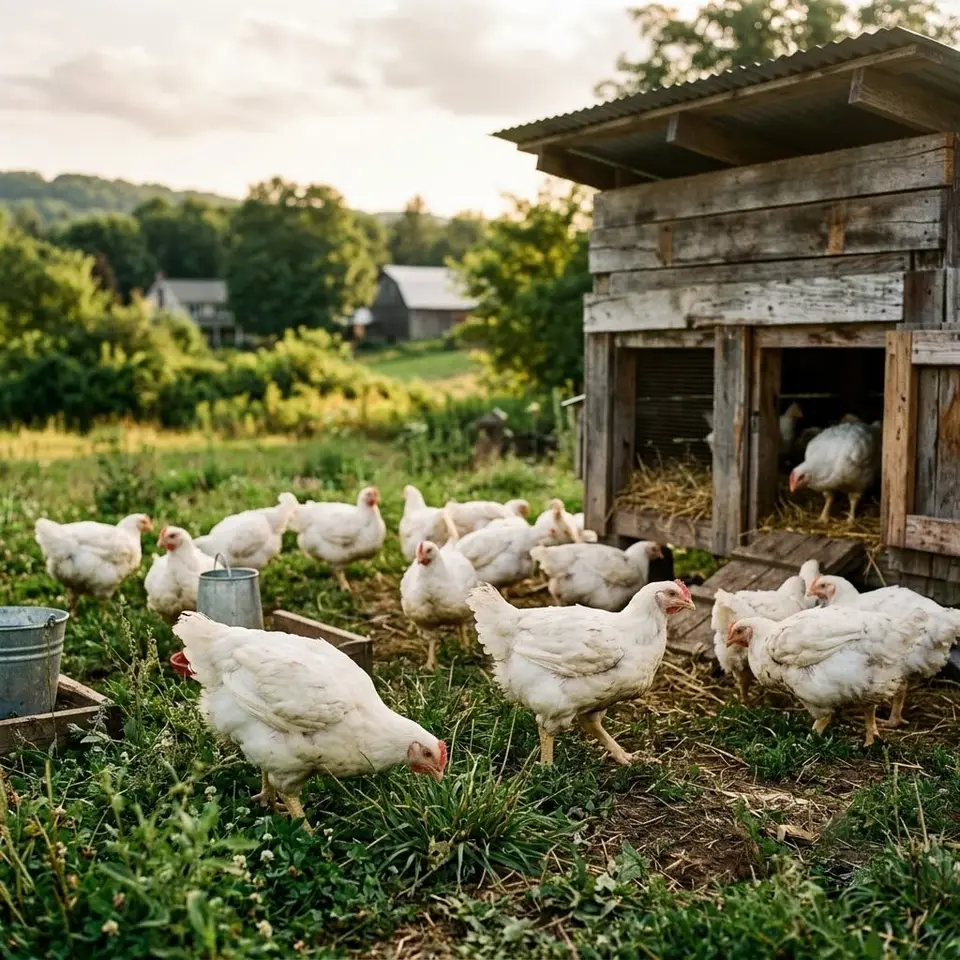
Cornish Cross are the meat bird - the fast-growing hybrid behind virtually all commercial chicken, reaching a full, tender broiler in just six to eight weeks. No bird converts feed to meat faster. That speed is also their weakness: they grow so fast they can outpace their own hearts and legs, so raising them well means managing their feeding carefully over a short, intensive cycle.
Is it right for you?
Cornish Cross suit anyone who wants to fill the freezer with homegrown meat fast and efficiently over a short cycle. They are a six-to-eight-week meat project needing attentive feeding, unsuited to laying or keeping long-term.
Space & Housing
A clean brooder to start, then a coop or movable pasture pen with room to move suits them; keeping them active on pasture helps their legs and health. They foul bedding fast, so keep it clean.
Feeding & Daily Care
Feed a high-protein broiler ration, but restrict it to about twelve hours a day rather than free-feeding, to slow growth enough to protect their hearts and legs. Provide constant water. Keep them clean and cool.
Getting Started
Order broiler chicks, brood them warm, move them to a clean pen or pasture, and manage feed on a restricted schedule; process at six to eight weeks before health problems set in.
Health & Common Problems
Their fast growth causes leg weakness, heart failure and heat stress if free-fed and inactive; restricted feeding, exercise, cleanliness and cool conditions are the key preventives. Process on time.
What You Get
Full, tender broilers with plump breast meat in just six to eight weeks - the fastest, most efficient homegrown meat there is.
Costs & Effort
Moderate over a short, intensive cycle - high feed intake but fast turnaround. The efficiency is unmatched, but the birds need attentive management.
Where New Keepers Go Wrong
Free-feeding (leg and heart failure), dirty or hot conditions, and processing too late are the classic, often fatal, mistakes.
What to Buy
Each product is described from the maker's own product page, checked on 26 October 2026; we have not tested them, and there are no prices here: the Amazon link searches for the exact product, and we may earn a commission if you buy through it.
- RentACoop chicken feeder with large ports: ports sized for chickens 12 weeks and older and adult bantams, with rain covers and an anti-roost lid to keep feed dry and clean. Maker's page · See on Amazon
- RentACoop 5-gallon waterer with auto-fill cups: cups that stay about three-quarters full plus horizontal nipples, an anti-roost cone and an adjustable stand. Maker's page · See on Amazon
- RentACoop 40 lb treadle feeder: opens only when a bird steps on the treadle, to keep rats, mice and wild birds out; the maker says it feeds about 12 adult hens for up to 10 days. Maker's page · See on Amazon
FAQ
Why do Cornish Cross get heart and leg problems? Because broilers have been selected for very fast growth, which leaves their energy-supplying organs mismatched with the energy-consuming ones. Sudden death syndrome from acute heart failure kills up to 3% of broilers in Europe and ascites, a slower heart failure, affects another 5% worldwide; heavy breast muscle also stresses hips and legs, and skeletal problems are common (Wikipedia).
How fast? Six to eight weeks from chick to freezer.
Why restrict feed? To slow their growth enough to keep their hearts and legs healthy until processing.
Kit for keeping poultry
Links go to Amazon or a partner store (such as OpticsPlanet) and may earn us a commission at no extra cost to you. As an Amazon Associate we earn from qualifying purchases. We link gear types, not sponsors' picks: you choose the exact product.