Raising Dairy Goats: How to Keep a Milking Doe or Two for Fresh Milk, Cheese, and Soap
Keep a couple of milking does for a daily supply of rich, fresh milk you can drink, make into cheese and soap, and raise on far less land than a cow - as long as you can commit to the twice-a-day rhythm and truly goat-proof fencing.
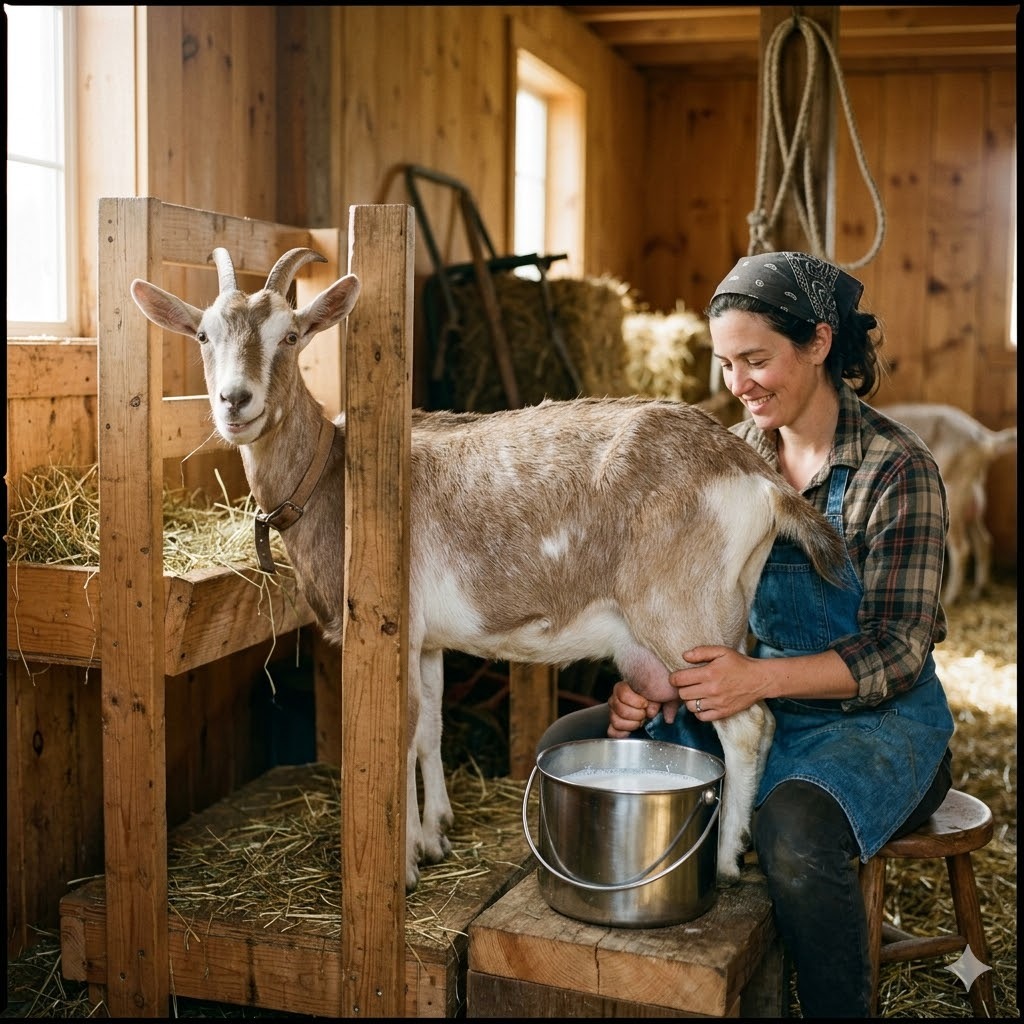
Dairy goats are the classic small-homestead milk animal, and for good reason - a couple of does give you a daily supply of rich, fresh milk on a fraction of the land, feed, and fencing a cow needs. That milk drinks well and turns beautifully into cheese, yogurt, and soap. The trade-off is real, though: goats are milked twice a day every day once they are in milk, they are famous escape artists, and to keep them milking you have to breed them each year. Go in clear-eyed about that daily rhythm and you get one of the most rewarding animals on a homestead.
Is it right for you?
Dairy goats fit the smallholder who wants their own milk and is willing to commit to a routine. The defining fact is the milking: a doe in milk must be milked, on a fairly steady schedule, twice a day, every day, for months on end. That is a genuine tie to home - you cannot skip it, and someone competent has to cover it if you travel. If that daily commitment sounds impossible, a milk animal of any kind is the wrong choice.
The second thing to accept before you buy is that keeping does milking means breeding them. A doe only gives milk after she has kidded, and to keep the milk coming you rebreed her about once a year - which means finding a buck, keeping a buck, or arranging artificial insemination, and then managing pregnancy, kidding, and the resulting kids. This is the part beginners overlook: dairy goats come with a breeding plan attached, not just a milk pail.
Keep at least two goats. They are intensely social herd animals, and a lone goat is a miserable, noisy, stressed animal. Two does, or a doe and a wether for company, is the minimum. On the plus side, goats are small, cheerful, easy to handle, and light on land, which makes them far more manageable for a beginner than a cow - as long as you respect the milking and the fencing. Check local zoning and any livestock or nuisance rules first, since goats and especially bucks can run into local restrictions.
Best breeds
Dairy goat breeds differ mainly in how much milk they give, how rich it is, and their size and temperament.
- Nubian - large, long-eared, and known for milk that is lower in volume but high in butterfat, which makes wonderful cheese and soap. Friendly and characterful, though they can be vocal.
- Alpine - a hardy, productive breed giving good volumes of milk. Sturdy, adaptable, and a solid all-round homestead dairy goat.
- Saanen - large white goats that are among the heaviest milkers, though their milk is lower in butterfat. A strong choice if volume is your goal.
- LaMancha - the tiny-eared American breed, calm and reliable milkers with good, steady production and famously easygoing temperaments.
- Nigerian Dwarf - a small breed giving a modest amount of very rich, high-butterfat milk. Their small size, low feed needs, and gentle nature make them a favorite for small homesteads and families.
Choose for the milk you want - volume versus richness - and for temperament and healthy udders. A calm doe from a clean, well-run herd with a good milking history is worth more than any pedigree on paper.
Land, fencing and shelter
Goats are light on land compared with cattle, and a small paddock of decent pasture or browse will support a couple of does. They are browsers by nature, happiest working through brush, weeds, and woody growth, and they will clear scrub that other stock ignore - a genuine bonus if you have overgrown ground. Rotate them where you can and ask a local keeper what your ground will carry.
Fencing is where goats humble people. They are relentless, clever escape artists that climb, squeeze, push, and test every weak point, and the old joke that "if a fence can't hold water it can't hold a goat" is only half a joke. You need tall, tight, well-built fencing - good woven-wire stock fence, or a well-charged multi-strand electric fence - with no gaps at the bottom and nothing next to it they can climb on to get over. Do not cut corners here, because a loose goat in the garden or on the road is a constant headache. Bucks especially need stout, separate fencing.
Shelter can be simple but must be dry. Goats hate rain and wet far more than cold, and a wet, drafty goat gets sick. A dry, draft-free three-sided shed or barn bay with clean bedding, plus shade in summer, is enough. They like to climb, so a sturdy platform or two keeps them happy and their feet worn. Clean water always available, kept from freezing in winter, rounds it out.
Feeding
Milking does have higher feed needs than a lazy fiber animal, because making milk takes energy. The base of the diet is good forage - browse and pasture in season, and good-quality grass or mixed hay when grass is short. Goats waste hay they have trampled, so a proper feeder that keeps it clean and off the ground saves money and prevents them refusing soiled feed.
A doe in milk usually also gets a measured ration of grain or dairy goat concentrate, typically fed on the milking stand while you milk, to support production and keep her condition up. Feed grain to appetite and stage - more for a heavy milker, less or none for a dry doe or a wether - and do not overdo it, since too much grain causes digestive upset and other trouble. Any feed changes should be made gradually.
Goats need constant access to a loose mineral formulated for goats, since their needs differ from sheep and other stock and copper in particular matters to goats - a sheep mineral, which is low in copper, is the wrong choice. Clean water always on hand is essential, especially for a milking animal, since a doe that will not drink will not milk well. Ask a local goat keeper about the mineral and any regional deficiencies to watch for.
Daily care and routine
The heart of dairy goat keeping is the milking routine, and it sets the rhythm of your day. A doe in milk is milked about twice a day on a steady schedule - most people settle into a morning and evening pattern. Milking a goat by hand is quick to learn and quietly satisfying: she stands on a milking stand with a little grain, you clean the udder, milk her out, and strain and chill the milk promptly for the best flavor and keeping quality. Cleanliness at every step is what separates good, sweet milk from milk that goes off or tastes strong.
Around the milking, the daily check is a look for the usual things - all present and bright, no one limping, off feed, or with a hot or lopsided udder, water clean and full, hay and mineral topped up. Goats are curious and interactive, so problems often show up as a change in their normal lively behavior.
Beyond the daily rhythm, hooves need regular trimming - every month or two - or they overgrow and cause lameness, and this is a routine skill worth learning early. Worming and parasite control on a vet-guided plan, seasonal breeding and kidding management, and drying a doe off before her next kidding all form part of the yearly cycle. It is more hands-on than most animals on this list, but the labor is light in effort even if it is steady in schedule.
Common health issues
Goats are lively but not bulletproof, and a few problems recur: internal parasites - especially the barber pole worm, which is the single biggest killer of goats in many regions and demands a real management plan - along with coccidiosis in kids, mastitis (udder infection in milkers, watched for at every milking), hoof rot and overgrown hooves (lameness from wet ground or skipped trimming), and bloat or digestive upset from too much rich feed or a sudden diet change. Kidding brings its own risks and needs attention.
Because parasites in particular can kill quickly and quietly, the most important health habit is a proactive, vet-guided parasite plan rather than reacting after an animal is already sick - many keepers learn to check the color of the inner eyelid as a quick anemia sign. Find a goat-savvy vet before you need one, keep the barn dry and clean, and never guess at wormers or doses, since resistance is a serious problem and misuse makes it worse. Watch the udder of every milker closely, since mastitis both harms the doe and spoils the milk.
What you get (and processing)
The payoff is fresh milk, and plenty of it for a household. A good doe in full milk gives enough for a family to drink, with extra to spare. Goat milk is naturally rich and sweet when handled cleanly, and it is the raw material for a whole pantry of things you can make yourself: soft and hard cheeses, yogurt, kefir, butter (with effort), caramel, and wonderful goat-milk soap that is a genuinely useful and giftable product. For many homesteaders the cheese and soap are half the reason they keep goats at all.
There is a byproduct to plan for: kids. To keep a doe milking you breed her, and she gives birth to kids each year. You will need a plan for them - keeping the best doelings as future milkers, selling surplus kids, or raising the wethers or extra kids for meat and using a licensed processor as you would for any meat animal. Being clear about what happens to the kids before you breed is part of keeping dairy goats honestly and humanely.
The manure is a quiet bonus - goat droppings are dry, mild, and excellent for the garden with little fuss. Between milk, cheese, soap, and compost, a small dairy herd feeds a homestead in several ways at once.
Getting started
Start with two healthy does in milk, or a doe and a companion, from a clean, well-run herd - ideally one that lets you see the animals milked and tells you honestly about their production, udder health, and temperament. Look for bright, alert goats with sound feet, good udders, and no history of chronic disease, and ask about their vaccination, worming, and breeding records. A friendly, well-mannered doe that already stands to be milked will save you a great deal of frustration.
Before they come home, have the setup done: tall, tight, goat-proof fencing, a dry draft-free shelter, a milking stand, clean water, a goat mineral, and good hay lined up. Decide your breeding plan up front - whether you will keep or borrow a buck or use artificial insemination - and line up a goat-savvy vet. Learn to trim hooves and to milk cleanly, settle into the twice-a-day rhythm, and you will have a steady, rewarding supply of milk from one of the friendliest animals a homestead can keep.
Rough costs
Dairy goat costs are moderate, with steady feed and the labor of milking being the real ongoing investment.
- The animals - a healthy dairy doe commonly runs from around a hundred to several hundred dollars depending on breed, milking record, and quality, with registered or proven milkers costing more.
- Fencing and shelter (upfront) - tall, tight goat-proof fencing is the biggest setup cost and worth doing right; with a dry shelter and a milking stand, budget from modest to a couple of thousand depending on what you build and already have.
- Feed - a real, steady expense: winter hay plus a daily grain ration for milkers and a goat mineral, more than a fiber animal eats but far less than a cow.
- Breeding - keeping or accessing a buck, or paying for artificial insemination, plus the cost of kidding and raising or selling kids.
- Vet, hoof care, and incidentals - routine parasite control, occasional vet visits, hoof trimming supplies, and milking and dairy gear you keep clean.
Penciled out, a couple of dairy goats are an affordable and richly productive addition to a small homestead. The money side is modest; the real cost is the twice-a-day commitment and the yearly breeding cycle. Meet those honestly and few animals give back as much - fresh milk in the pail every morning, and a pantry full of cheese and soap you made yourself.