Raising Easter Egger Chickens
Not a breed but a beloved blue-gene mix - each hen lays her own single color from blue through green, olive, pink or cream, so a flock fills the basket like an Easter hunt.
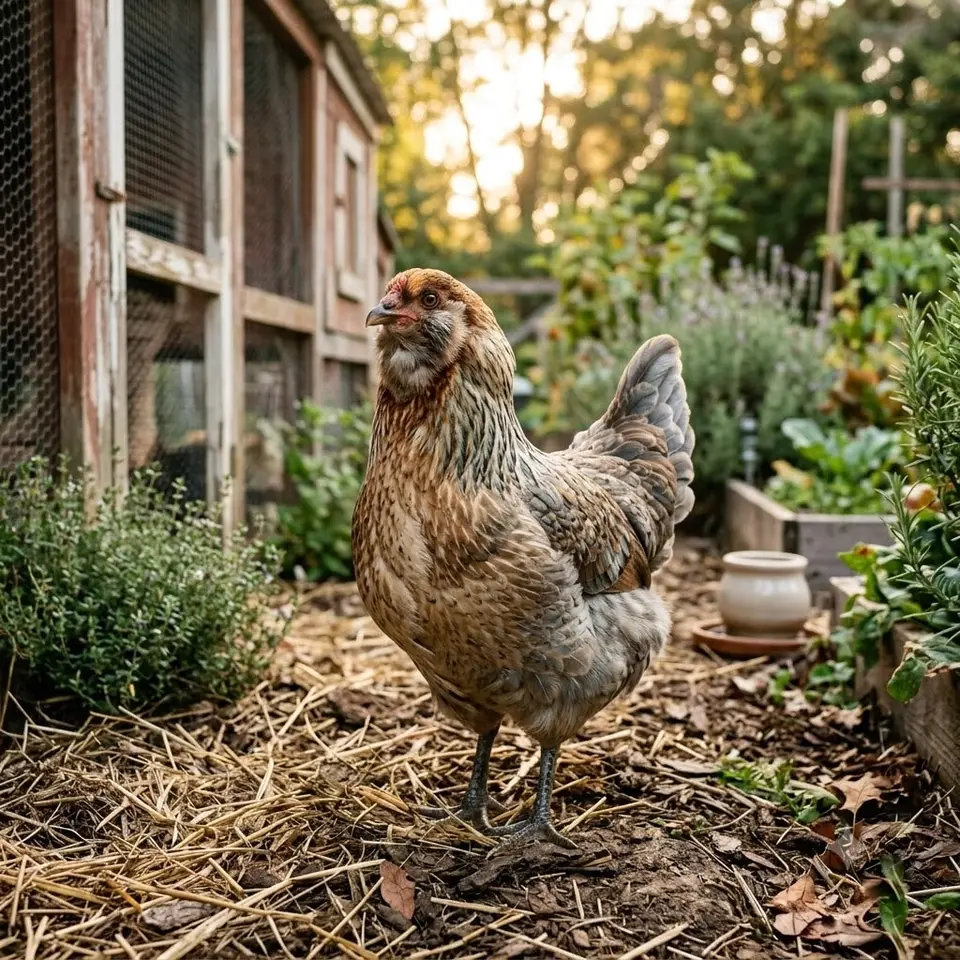
Easter Eggers are the friendly lottery of the chicken world: crossbreds carrying the blue-egg gene, each hen laying her own personal shade - sea-green, olive, robin-blue, pinkish cream - for life. They're cheap, hardy, sweet-natured, widely available at every hatchery, and the single most fun way to build a rainbow egg basket with beginner-proof birds.
Is it right for you?
Perfect for families and first flocks: gentle, hardy, inexpensive, colorful. Only egg-color purists (who need guaranteed blue) and show-ring aspirants (no standard exists) should look elsewhere.
Space & Housing
Completely standard: 0.4 m² coop per bird, secure run, roosts, nest boxes. Most carry pea-comb frost resistance from their blue-gene ancestry.
Feeding & Daily Care
Standard layer care; nothing special. Many are eager foragers that trim your bug population.
Getting Started
Any hatchery sells them cheaply as 'Easter Eggers' or 'Americanas'. Buy 3-4+ chicks for color variety - each hen's shade is fixed for life and revealed at first lay, around 5-6 months.
Health & Common Problems
Hybrid vigor makes them among the healthiest backyard birds; standard flock care suffices.
What You Get
Eggs in each hen's own colour (any shade of blue or brown, occasionally pink or pale yellow, says Wikipedia), friendly personalities (many are lap chickens), and the daily small joy of a multi-colored basket.
Costs & Effort
Cheapest entry into colored eggs; standard feed costs; beginner effort.
What Trips Up New Owners
- Expecting every egg to be blue
- Buying one chick and hoping for a rainbow
- Confusing them with (pricier) true Ameraucanas at a markup
What to Buy
Each product is described from the maker's own product page, checked on 26 October 2026; we have not tested them, and there are no prices here: the Amazon link searches for the exact product, and we may earn a commission if you buy through it.
- RentACoop chicken feeder with large ports: ports sized for chickens 12 weeks and older and adult bantams, with rain covers and an anti-roost lid to keep feed dry and clean. Maker's page · See on Amazon
- RentACoop 5-gallon waterer with auto-fill cups: cups that stay about three-quarters full plus horizontal nipples, an anti-roost cone and an adjustable stand. Maker's page · See on Amazon
- RentACoop 16-egg smart incubator: presets for chicken, duck and quail eggs, held at 99.5 °F (37.5 °C) within 0.5 °F (0.3 °C), automatic turning every 4 hours that stops 3 days before hatch, app alerts and a candling light. Maker's page · See on Amazon
FAQ
Is the Easter Egger a breed? No. In American usage an Easter Egger is any hybrid or mixed-breed chicken from a bird carrying the blue-egg gene crossed with a brown-egg layer, so its eggs can be any shade of blue or brown, now and then pink or pale yellow. Easter Eggers are not recognized by the American Poultry Association or the American Bantam Association; they are sometimes sold as "Americana", but differ from the Ameraucana, a recognized breed (Wikipedia).
Will my hen's egg color change?
No - shade is genetically fixed per hen (it can pale slightly late in a laying season). The reveal at first egg is a one-time lottery draw.
What's an Olive Egger then?
A deliberate cross of blue-egg × dark-brown-egg lines (e.g. Marans) producing olive-green shells - the designer end of the same rainbow game.
Kit for keeping poultry
Links go to Amazon or a partner store (such as OpticsPlanet) and may earn us a commission at no extra cost to you. As an Amazon Associate we earn from qualifying purchases. We link gear types, not sponsors' picks: you choose the exact product.