Raising Geese: Grass-Fed Meat and a Built-In Alarm System for Your Homestead
A practical guide to keeping geese for a large meat bird that feeds itself on pasture and guards the rest of your flock.
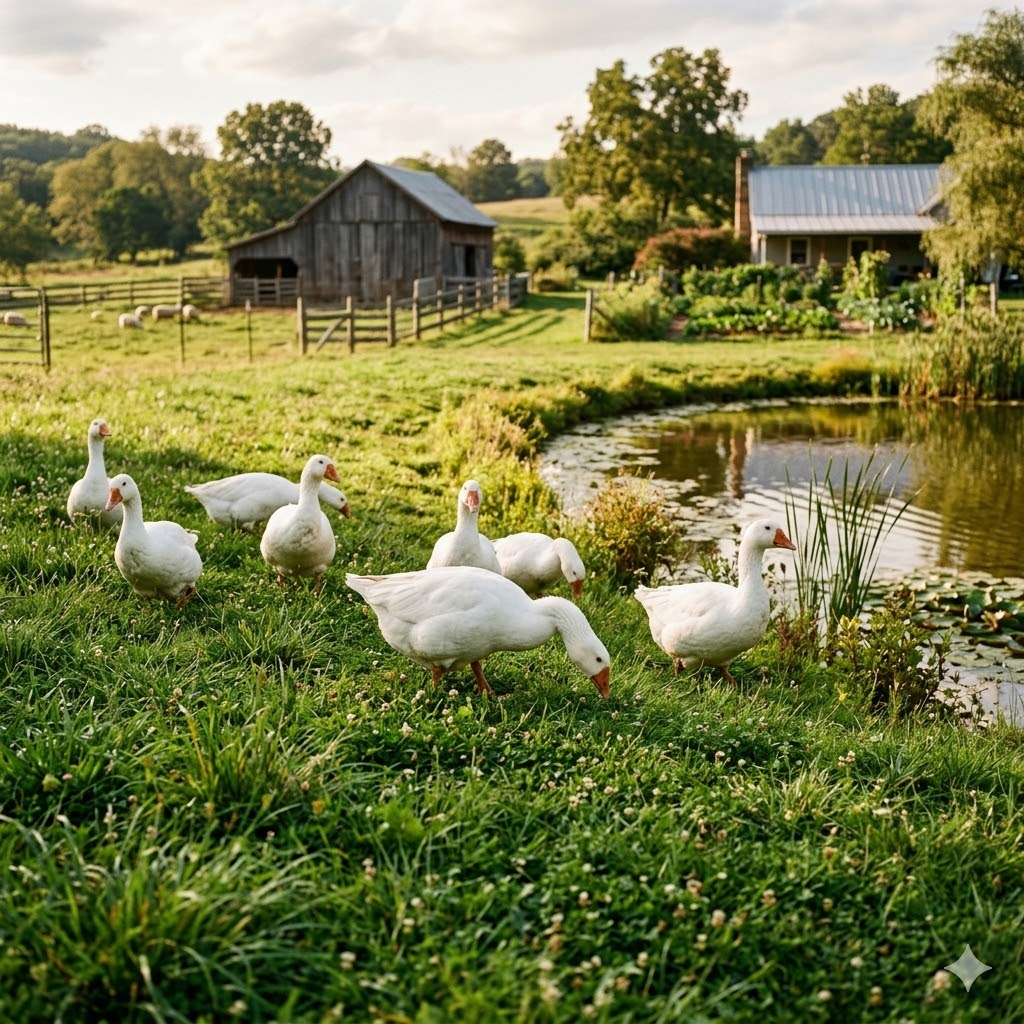
Geese are one of the most self-reliant birds you can put on a homestead. Give them grass, clean water, and a safe place to sleep, and they will largely raise themselves, grow into a big roast, and double as loud, fearless alarm birds that watch the yard better than most dogs notice. They suit anyone with open pasture and a bit of land to spare - and the patience to handle a bird with opinions. This is an intermediate project: not hard, but ganders in spring will test you.
Is it right for you?
The single biggest question is space and neighbors. Geese need grass - that is the whole point of keeping them - so you want pasture, a paddock, an orchard, or any open green area they can graze most of the day. A few geese on a bare lot is a miserable, expensive setup that misses everything geese are good at.
The second question is noise and temperament. Geese are loud, and that loudness is a feature: they sound off at strangers, hawks, dogs, and anything out of place, which is exactly why they make good guards for chickens and ducks. But that same trait means they are a poor fit close to neighbors. Check your local laws and zoning before you buy - many areas treat geese under noise or poultry rules, and what your neighbor tolerates matters as much as what the code says.
Ganders (males) can be genuinely aggressive, especially in breeding season in spring. A protective gander will hiss, chase, flap, and bite, and a big bird coming at your shins is no joke for small children or nervous visitors. Most of this is manageable once you learn to read them and stand your ground, but go in with eyes open.
If you have grass, can tolerate the racket, and want a large meat bird that mostly feeds itself, geese are a rewarding choice.
Best breeds
Pick your breed for the job you want done. A few reliable choices:
- Embden - the classic big white meat goose. Fast-growing, large, and the standard pick if a roast is your main goal.
- Toulouse - another heavy meat breed, calmer and more sedate than most, with the big-bodied "dewlap" lines getting very large.
- American Buff - a handsome, good-sized, generally docile dual-purpose bird; a sensible all-rounder for a family homestead.
- Chinese - the loudest, most alert breed and among the best layers; the top choice when guarding and eggs matter more than maximum carcass size.
- Pilgrim - a calmer, moderate-sized auto-sexing breed, meaning you can tell ganders from geese by color, which takes the guesswork out of buying.
If you mainly want meat and size, lean Embden or Toulouse. If you want a watchdog and eggs, lean Chinese. If you want an easygoing flock, American Buff or Pilgrim.
Housing and space
Geese are simple to house. They do not need a fancy coop, but they do need a predator-proof shelter to lock into at night. A draft-free shed, a sturdy three-sided structure with a closable door, or a small barn stall all work. The priority is keeping out foxes, coyotes, raccoons, dogs, and anything else that hunts after dark - night is when most losses happen. Use solid latches (raccoons open simple ones) and bury or skirt fencing if digging predators are a problem. If you keep geese alongside other poultry, it is worth reading the site's predator-protection guide and setting up your whole night routine around it.
Inside, deep, dry bedding such as straw is enough. Geese are extremely cold-hardy - their down handles hard winters far better than chickens - so heat is rarely needed. Good ventilation and a dry floor matter more than warmth. Allow roughly enough indoor space that birds are not crowded; they will only sleep there, not live there.
The real requirement is outdoor space and grass. Geese want to graze, so plan on a generous grazed area per bird and rotate them across pasture if you can to keep the grass coming and the parasites down. Fencing only needs to be modest height - geese do not fly much - but it should be solid enough to keep predators out.
Water is the other essential. Geese need clean drinking water deep enough to dip their whole heads and clear their nostrils and eyes - they will foul a shallow dish fast. A pond is a bonus and they love it, but it is not required; a deep tub, a kiddie pool, or a low trough they can dunk their heads into and bathe in works fine. Expect to refresh it often, because they make a mess of any water they can reach.
Feeding
This is where geese earn their keep. In the growing season, grass is the backbone of their diet - good pasture can supply most of what an adult goose needs, which makes them cheap to feed through spring and summer. They are efficient grazers and will keep an area cropped down without you lifting a finger.
You still supplement, especially at the two ends. Goslings need a proper start: feed them a waterfowl or poultry starter feed (unmedicated is the usual choice for waterfowl). Like ducks, growing geese have high niacin needs, and shortfalls show up as leg and joint problems - so make sure their feed supports that or supplement niacin as your feed supplier or vet recommends. Goslings also need constant access to clean water whenever they are eating.
As adults, geese graze hard in summer and need far less bagged feed. In winter, when the grass dies back, you switch to providing a maintenance poultry or waterfowl feed plus good hay, since the pasture can no longer carry them. Offer grit so they can grind their food, and a source of calcium if you are keeping laying geese. Going into breeding season, many keepers step the feed up.
The short version: lean on grass in the warm months, feed properly in winter and for goslings, and always keep clean water by the food.
Daily care and routine
Daily care is light, which is much of the appeal. Each morning, let the birds out to pasture, check and refresh their water, and top up feed if the season calls for it. Each evening, count them in and shut the shelter against predators - that nightly lock-up is the single most important habit you can keep.
Beyond that, glance over the flock as you go: watch for limping, droopy birds, dirty vents, or anyone hanging back from the group. Keep bedding dry, move water away from the shelter door so it does not turn to mud, and rotate pasture when the grass gets low or the ground gets fouled.
In spring, give ganders room and respect. If you have an aggressive one, calm, confident handling beats running - turning your back and fleeing teaches him he won. Keep an eye on small children around the flock in breeding season.
Common health issues
Geese are hardy and tend to be healthier than chickens, but a few problems come up:
- Niacin deficiency and leg problems in goslings - the most common early issue, showing as weak, bowed, or buckling legs. Prevention through proper feed is far easier than treatment.
- Bumblefoot - a swollen foot infection, often from rough or wet ground; spotted as limping and a sore, puffy footpad.
- Internal and external parasites - worms and mites; pasture rotation and clean conditions reduce the load.
Other issues turn up too - injuries, slipped wings, the occasional respiratory or reproductive problem. The honest advice is the same for all of it: if a bird is sick, off its feet, or not improving, get a diagnosis from an avian or poultry vet rather than guessing or dosing blind. A vet can identify the real problem and recommend the right treatment and amounts for your birds, which is something a guide cannot safely do for you.
What you get (and processing)
The payoff is meat, eggs, and security. A goose is a large bird, and a finished one makes a substantial roast with rich, dark meat and a lot of valuable fat for cooking. Most breeds lay seasonally in spring rather than year-round, so eggs are a bonus rather than a staple - though Chinese geese lay more. And all season long you get the guarding: a flock that announces every visitor and stands its ground against threats the chickens would never notice.
When it comes time to process a meat goose, treat it as a real task. A goose is much bigger and harder to pluck than a chicken thanks to its dense down and stubborn pin feathers - many people scald and pluck, and some skin the bird instead to save the trouble, accepting the loss of the skin and fat. Plan the time, have help, and do it calmly and cleanly; it is part of raising your own food and deserves to be done with respect for the animal. Check your local rules on home slaughter and any limits on selling meat or eggs before you start, since these vary by area.
Getting started
The simplest start is to buy goslings in spring from a hatchery or a local breeder. Brood them somewhere warm, dry, and predator-safe with starter feed and constant clean water, and move them onto grass as they feather out and the weather allows. Start with a small group - geese are social and do best with company - and keep more geese than ganders if aggression worries you. Auto-sexing Pilgrims make the sex easy to get right at purchase.
Before the birds arrive, have the basics ready: a secure night shelter, fencing, a grazed area, deep water they can dunk their heads into, and a plan for winter feed. Confirm your local zoning and noise rules first. From there, geese ask for little - daily water, a nightly lock-up, grass under their feet, and they largely take it from there.
Rough costs
Costs are modest, which is another reason geese pay off. Expect roughly:
- Goslings - about a low-to-moderate per-bird price from a hatchery, a little more for rarer or auto-sexing breeds.
- Feed - low through spring and summer because grass does most of the work; your real feed bill is winter and the gosling stage.
- Housing and fencing - often the biggest upfront cost, but a simple shelter and predator-proof fence can be built cheaply or repurposed from what you have.
- Water and odds and ends - a tub or pool, bedding, grit, and feeders, all inexpensive.
- Vet care - occasional and worth budgeting a little for, since avian vets are the right call when something goes wrong.
Overall, geese are one of the cheaper large meat birds to run once they are on grass. The main investment is a safe setup at the start and a bit of winter feed - after that, the pasture carries most of the load.