Raising Goats: Milk, Meat, and Brush Clearing on a Homestead
A practical guide to keeping dairy or meat goats for a family - covering breeds, the fencing they will absolutely test, feeding, health, and what you actually get.
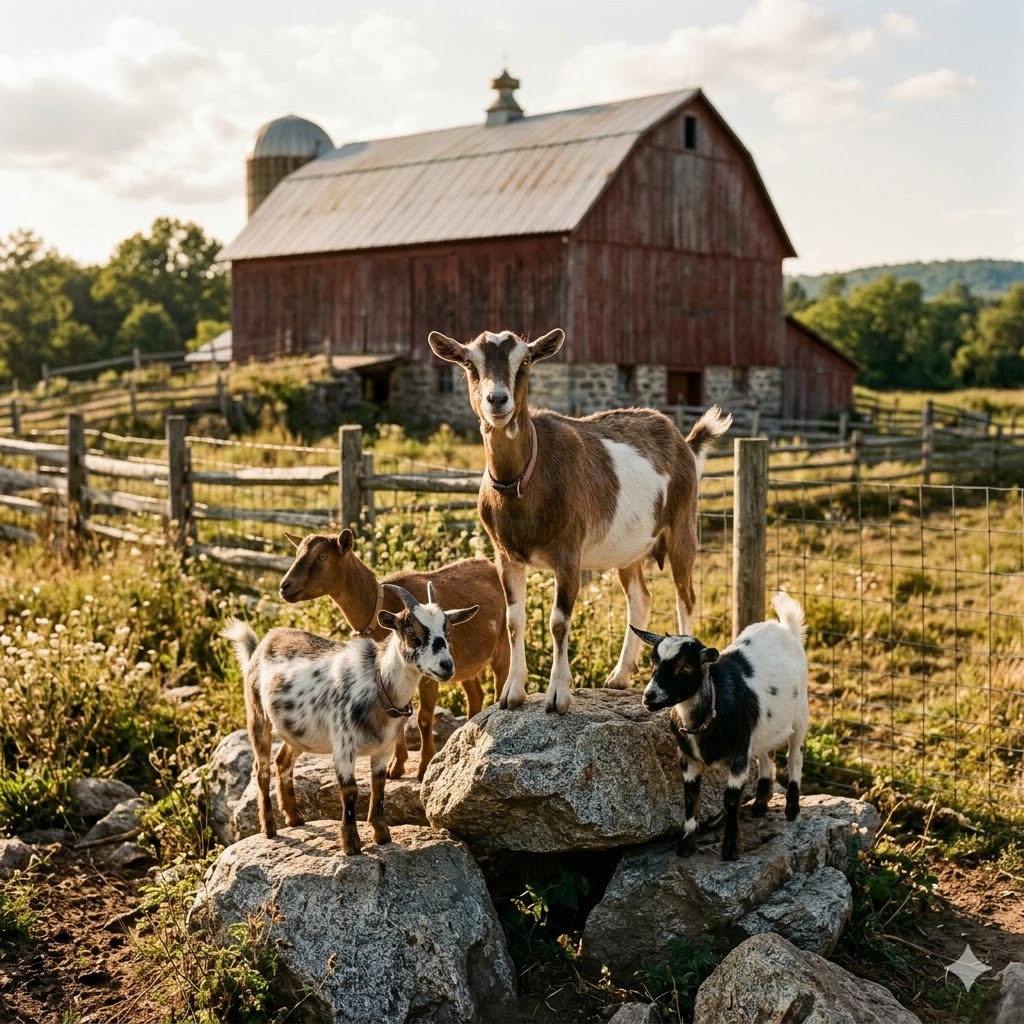
Goats are one of the most useful animals you can put on a small piece of land. Dairy goats give a family-sized supply of milk, meat breeds put on weight from browse most other stock would walk past, and all of them happily clear brush, briars, and saplings - but every goat is an escape artist, and that is the part nobody warns you about until you are chasing one down the road. Get the fence right and goats are a joy; get it wrong and they will live in your garden.
Is it right for you?
Goats are a daily commitment, not a fence-and-forget animal. They need fresh water, a look-over every morning and evening, and a fence you actually maintain. Dairy goats add a real obligation: once a doe is in milk, you are milking on a schedule, usually twice a day, and you do not get to skip it because it is raining or you slept in. That is the single biggest reason people give up dairy goats, so be honest with yourself about it before you buy.
You also need to never keep just one goat. Goats are herd animals, and a lone goat is a miserable, loud, stressed goat that will scream, pace, and look for trouble. Plan on a minimum of two, always. They are social to a fault and do far better with a buddy than alone.
Before anything else, check your local zoning. Plenty of areas restrict livestock, cap the number of head, ban intact males, or ban goats outright - and ordinances differ from one town to the next. Confirm it in writing before you build a pen or put money down.
This guide rates goats as Intermediate. They are not difficult animals, but they are smart, curious, and hard on fencing, and that combination catches a lot of beginners off guard.
Best breeds
Pick by what you want out of them. Dairy and meat breeds are bred for very different jobs, and a mismatch will frustrate you.
Dairy breeds:
- Nubian - friendly, loud, with rich high-butterfat milk; a popular family dairy goat and good for cheese.
- Nigerian Dwarf - small, easy to handle, surprisingly heavy producers of rich milk for their size; great on small acreage.
- Saanen - large, calm, and the heavy-volume milker of the dairy breeds; a steady choice if you want quantity.
- LaMancha - hardy, exceptionally gentle, dependable producers, easy to spot by their tiny ears.
Meat breeds:
- Boer - the classic meat goat, stocky and fast-growing, puts on good weight from browse and forage.
- Kiko - hardy and low-maintenance, bred for hands-off survivability and good growth on rough ground with less fuss.
If you mostly want brush cleared and the occasional meat goat, a couple of hardy meat-type or crossbred wethers (castrated males) are cheap, easygoing, and tireless on brush. If milk is the goal, start with a proven dairy breed in milk rather than a bargain you cannot identify.
Housing and fencing
Fencing is the whole game with goats, so start here. The old line holds up: if it will not hold water, it will not hold a goat. They climb, they lean, they push their heads through gaps, they test every weak post, and they will find the one spot you cut a corner on. Build for that from day one.
Two approaches work, often together. Woven wire (field fence) at roughly four to five feet, pulled tight on solid posts, makes a strong physical barrier - just be aware that horned goats can get their heads stuck in standard square-mesh, so many people add a strand of electric to keep them off it. Electric fencing, several hot strands or electric netting, is what actually trains a goat to respect a line; once they have been zapped a few times, they tend to leave it alone. A lot of homesteaders run woven wire for the perimeter and electric for cross-fencing and rotating browse. Whatever you use, walk the line regularly and fix sags, gaps, and leaning posts before they become an open gate.
For shelter, goats do not need anything fancy, but they hate being wet and drafty. A three-sided shed, a hoop shelter, or a corner of the barn is plenty - dry bedding, decent airflow without a draft, and enough room for everyone to lie down out of the rain and wind. Keep it clean; damp, dirty bedding leads straight to hoof and parasite problems.
Predators are a real threat, especially to kids - dogs, coyotes, and others will test a goat pen. A secure nighttime shelter is your baseline; see the site's predator-protection guide for fencing, guardian animals, and deterrents worth layering in.
Feeding
Goats are browsers, not grazers - they would rather eat brush, leaves, briars, and weeds at head height than graze grass like a cow or sheep. That is exactly why they are so good at clearing land. Browse and good hay are the base of the diet; if you do not have enough standing brush, quality grass or alfalfa-type hay carries them. Keep hay off the ground in a feeder, because goats waste and foul anything they have stood on.
Grain is for milkers and for does in late pregnancy or hard-working growth - a milking doe usually gets a ration on the milk stand. Do not overdo grain with wethers and dry does; too much grain causes problems and is a common cause of urinary trouble in males. Provide loose minerals formulated for goats, free choice, all the time.
One thing that separates goats from sheep: goats need copper. Sheep are sensitive to copper and their minerals leave it out, so never feed sheep minerals to goats - a goat on sheep mineral will slowly become copper-deficient. Use a goat-specific loose mineral.
And clean water, always, refreshed daily. Goats are fussy about dirty water and will drink less than they should if it is fouled, which hits milk production and overall health fast.
Daily care and routine
The daily rhythm is simple and quick once you are in it. Morning and evening, check water, top up hay or move them to fresh browse, and lay eyes on every animal - you are watching for limping, scours (diarrhea), an off-feed goat, a snotty nose, or anyone hanging back from the herd. Goats hide illness well, so that quick head-count look is your early-warning system, and catching trouble a day early often makes the difference.
If you have a doe in milk, milking anchors the day. Most people milk roughly every twelve hours on a stand with a little grain to keep her happy. Be clean and consistent - same routine, same times - both for the goat's comfort and for safe milk. It is a genuine tie to the property; line up someone who can cover if you travel.
Hoof trimming comes up every roughly six to eight weeks. Goat hooves grow like fingernails and overgrow if ignored, which leads to lameness and hoof problems, so learn to trim or have someone show you the first time - it is a fifteen-minute job per goat once you have the hang of it.
Common health issues
You do not need to be a vet, but you should know the usual suspects and build a relationship with a large-animal or livestock vet before you have an emergency. For anything beyond the routine, get a real diagnosis - goat symptoms overlap, and guessing at treatment does more harm than good.
The big one is internal parasites, especially the barber pole worm. It is a blood-sucking stomach worm that causes anemia, weakness, bottle jaw, and can kill a goat, particularly in warm, wet weather and on overgrazed ground. Rotating browse and not overcrowding help; your vet can guide a sensible parasite program and check whether and what to treat, because blanket deworming breeds resistance.
Other common issues to know:
- Bloat - a swollen left side from gas, often after a sudden change of feed or too much rich grain or wet legume; it can turn into an emergency fast.
- Hoof rot and overgrowth - lameness from neglected, overgrown, or wet-and-dirty hooves; prevented with regular trimming and dry footing.
- Coccidiosis in kids - a gut parasite that causes scours and poor growth in young goats, especially in damp, crowded conditions.
For any of these, and for anything that looks serious or unfamiliar, consult your vet for diagnosis and treatment rather than reaching for a bottle off the shelf. The point here is to recognize trouble early and know who to call.
What you get (and processing)
Three real returns: milk, meat, and cleared land.
Milk is the headline for dairy goats. A good doe in milk gives a family-sized supply - plenty for drinking, cheese, yogurt, and soap, often with extra. The trade is the twice-a-day milking commitment for the length of her lactation; if that fits your life, fresh goat milk is one of the best things a small homestead produces.
Meat is the return from meat breeds and surplus animals. Goat is lean, mild, and in real demand. Processing a meat goat is a matter-of-fact part of homesteading and worth treating with respect - a clean, calm, quick job. Many homesteaders use a local butcher or processor, which is easier, often required for any sale, and gives a better result if you are new. If you do it yourself, learn the process properly first. Either way, check your local rules: regulations on home slaughter, processing, and especially selling meat or raw milk vary a lot, and some sales are tightly restricted or off-limits.
Brush clearing is the one you get from every goat, every day, for free. Put a couple of goats on an overgrown fence line, a briar patch, or a stand of saplings and they will knock it back better and quieter than a brush cutter - one of the most underrated reasons to keep them.
Getting started
Keep the first step small and solid:
- Check zoning first. Confirm in writing that goats are allowed, how many, and whether intact males are restricted. Do this before you spend a dollar.
- Build the fence and shelter before the goats arrive. Perimeter fence they cannot beat, a dry shelter, clean water, and a hay feeder - all ready and tested.
- Decide your goal - milk, meat, or brush - and buy to match. Two animals minimum, always.
- Buy healthy stock from a decent local breeder. Look for bright eyes, good condition, sound feet, and clean records; ask about herd health and avoid the cheapest mystery goat at the sale barn.
- Line up your vet and a hoof-trimming plan now, plus someone who can cover chores - especially milking - when you are away.
Start with two or three and learn on a small herd. Goats are easy to add and hard to manage in a crowd before you know what you are doing.
Rough costs
Treat these as ballpark; prices swing by region, breed, and whether you build new or repurpose what you have.
- The goats: roughly $75-$200 each for hardy meat-type or wether brush goats, and roughly $200-$500+ for registered or proven dairy stock. Quality dairy lines run higher.
- Fencing: usually the biggest upfront cost. Plan on real money for woven wire and posts, plus an energizer for electric - often several hundred to well over a thousand dollars depending on acreage. This is the line item not to cheap out on.
- Shelter: anywhere from nearly free with salvaged materials and a barn corner to a few hundred dollars for a simple built shed.
- Feed and minerals: modest but ongoing - hay through winter or dry spells, goat mineral, and grain for milkers. Browse cuts your feed bill when the season is on.
- Ongoing: routine vet visits, parasite management, hoof trimming if you hire it out, and the occasional bag of supplies.
The honest summary: the goats themselves are often the cheap part. Good fencing is the real investment, and it pays off every single day you are not chasing an escape artist down the driveway.