Keeping a Guard Donkey: A Low-Maintenance Livestock Guardian That Bonds to Your Flock and Hates Canines
Add a single gelded jack or a jenny that bonds to your sheep or goats and drives off coyotes, foxes, and stray dogs - a hardy, cheap-to-keep guardian, kept one to a flock and never in a pair.
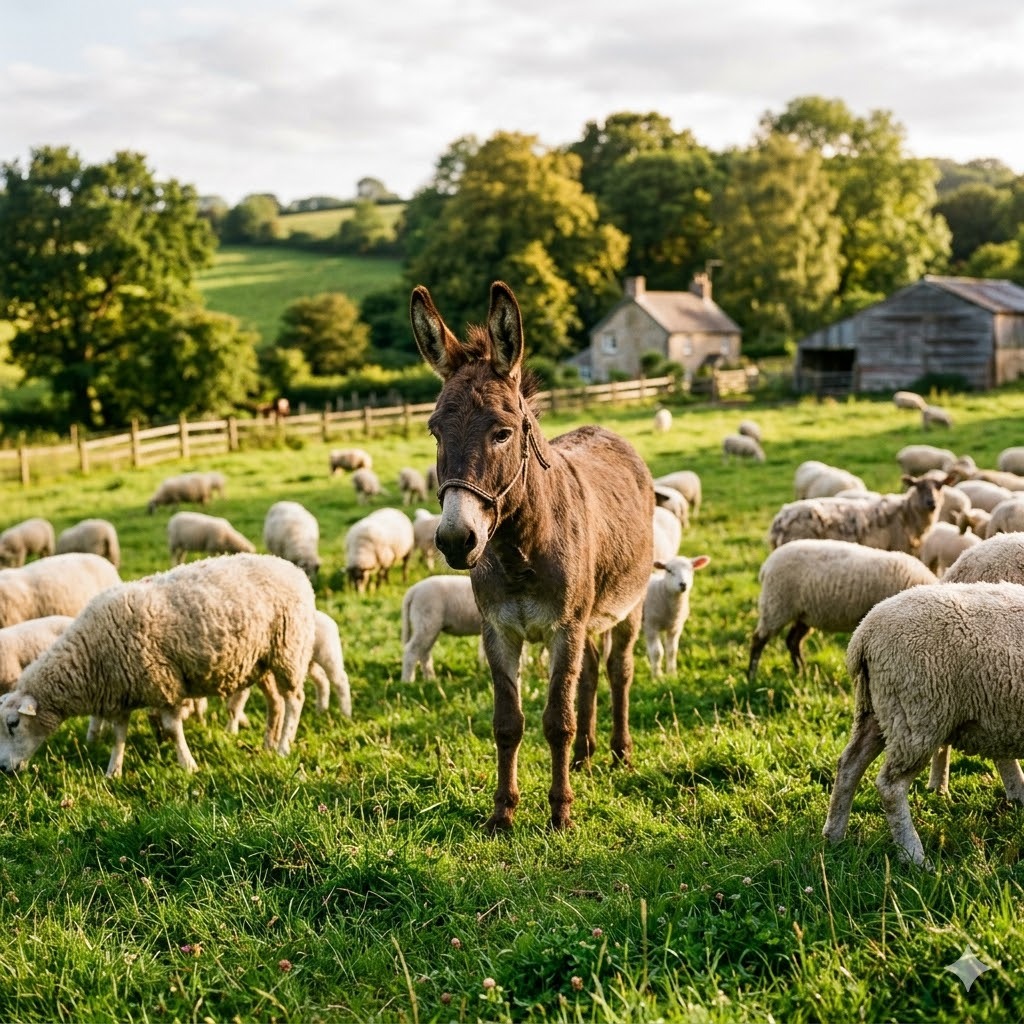
A guard donkey is not a meat or milk animal - it is a protector, and one of the simplest, cheapest livestock guardians you can keep. A single donkey placed with a flock of sheep or goats bonds to those animals as its herd and instinctively drives off canine predators like coyotes, foxes, and stray dogs. Donkeys are hardy, long-lived, and low-maintenance, thriving on the same pasture as the stock they guard. But they work by one firm rule: one donkey to a flock, never a pair, and never alongside herding dogs. Get that right and a guard donkey quietly earns its keep for decades.
Is it right for you?
A guard donkey suits any homestead that grazes sheep or goats in country with a coyote, fox, or stray-dog problem. If you are losing lambs or kids to predators, or you simply want a deterrent on pasture, a donkey is a proven, low-cost option that needs far less specialized care than a livestock guardian dog. For a beginner who already keeps a flock, it is a very manageable step up.
The whole thing works because of the donkey's natural dislike of canines. Donkeys are instinctively aggressive toward dogs, coyotes, and foxes - they will bray, charge, chase, bite, kick, and stomp an intruding canine - and a predator soon learns to avoid the field. This same trait is the reason for the two golden rules. First, keep only one guard donkey with a flock, not two or more. Donkeys are social and, given another donkey, they bond to each other instead of to the sheep or goats, and their guarding of the flock falls apart. A lone donkey adopts the flock as its companions and stays with them, which is exactly what you want. Second, a guard donkey is incompatible with herding or farm dogs - it cannot tell your helpful dog from a predator and may attack it. If you rely on working dogs around your stock, a guard donkey is the wrong choice.
Weigh those rules honestly. If you can commit to one donkey, bonded to the flock, on a property without loose farm dogs, it is an excellent fit. Check local rules on keeping equines as well, though donkeys are rarely restricted the way some livestock are.
Best breeds
For guarding, breed matters less than temperament, size, and health, but a few types are worth knowing. The key trait you want is a bold, alert, no-nonsense disposition, not any particular pedigree.
- Standard donkey - the ordinary medium-sized donkey is the classic and most common guard animal. Big enough to intimidate and drive off coyotes and dogs, hardy, and widely available. The sensible default.
- Mammoth (large standard) donkey - a larger, stronger donkey that can be even more imposing to predators; a good choice where you face bolder or larger threats, though it eats a bit more.
- Jennies and gelded jacks - for guarding you want either a jenny (female) or a gelded jack (castrated male), not an intact jack. Intact males can be aggressive and unpredictable, even toward the stock, so a jenny or a gelding is the safe, standard pick.
- Avoid miniature donkeys as guards - miniatures are charming but too small to reliably face down a coyote or a dog, and are better kept as pets than as guardians.
Whatever you choose, select a healthy, alert, confident individual - the temperament of the specific animal matters more than any label, so pick a donkey that is bold and watchful rather than timid.
Land, fencing and shelter
The great advantage of a guard donkey is that it shares the flock's ground and needs very little of its own. It lives on the same pasture as your sheep or goats, grazes the same grass, and asks for no separate paddock. Adding a donkey to an existing flock adds almost nothing to your land needs.
Fencing is really the flock's fencing, and a donkey is easy on it - donkeys are not the escape artists that goats are, and standard stock fencing that holds sheep or goats generally holds a donkey too. What the fence must do is keep the flock (and their guardian) in and give the donkey a boundary to patrol. Sound perimeter fencing that keeps predators from strolling in also helps the donkey do its job, since it can meet threats at the fence line.
Shelter is minimal and shared. A donkey is hardy and weathers cold and heat well, needing only what the flock needs: a windbreak, a three-sided run-in shed, or natural shelter from wind, wet, and harsh sun, plus dry footing. One thing to watch is diet-related rather than shelter-related, but it lives on pasture: donkeys evolved on sparse ground and can get too fat on rich grass, so the "shelter" question shades into managing grazing (more on that below). Clean water shared with the flock, and a dry place to stand out of the weather, cover the donkey's basic needs.
Feeding
Feeding a guard donkey is simple and cheap, which is a big part of its appeal - it largely eats what the flock eats. On good pasture in the growing season, a donkey needs little or nothing beyond grass, and in winter it shares the flock's hay. This is one of the lowest feed bills of any animal here.
The catch is the opposite of most stock: donkeys are prone to getting too fat, not too thin. They are desert-adapted grazers built for sparse feed, so on lush pasture or rich hay they can become overweight, which brings its own health risks. So you feed a donkey more sparingly than you might expect - plain grass hay rather than rich legume hay, and, on very rich pasture, limited grazing time if it is putting on too much condition. They rarely need grain, and a fat donkey usually needs less feed, not more.
What a donkey does need year-round is clean water, a plain salt or mineral supplement suitable for equines, and forage to keep its gut working. Donkeys also require routine hoof care as part of their "feeding and maintenance" picture (covered below), because their feet grow whether or not the grass is good. Keep the feed simple, keep the donkey lean, and it will thrive on very little.
Daily care and routine
Day to day, a guard donkey is one of the least demanding animals you can keep, because it lives with and like the flock. Your routine is really the flock's routine: check that water is clean and full, that hay is out in winter, and that everyone - donkey included - looks healthy and content. The donkey guards itself into the daily rhythm; once bonded, it stays with the sheep or goats, grazes with them, and beds down with them, watching over the group without any effort from you.
The care that is specific to the donkey is periodic rather than daily. The main one is hoof care: donkey hooves grow continuously and need trimming by a farrier every so often (typically every couple of months or as advised) to prevent overgrowth and lameness. You will also want routine deworming and the occasional health check as for any equine, and a rabies and tetanus vaccination plan is worth discussing with a vet in many areas. None of this is heavy, but it is real, and it is the part first-time owners forget - a guard donkey is low-maintenance, not no-maintenance.
Handling is easy if the donkey is used to people. Halter-train it and get it comfortable being led and having its feet handled, so the farrier and vet visits go smoothly. A calm, well-socialized donkey is a pleasure to manage; just remember that its guarding instinct means it will treat a strange dog as a threat, so keep visitors' dogs well away from the field.
Common health issues
Donkeys are hardy and long-lived, and most of their health issues come from being kept too well rather than too poorly. Obesity and its consequences top the list - an overweight donkey is prone to laminitis (a painful, serious hoof condition) and to fatty lumps and metabolic problems, so keeping the donkey lean on modest forage is the single most important health measure. Hoof problems from overgrown or neglected feet cause lameness, which is why regular farrier care matters. Internal parasites (worms) affect donkeys as they do all equines and are managed with a sensible deworming program. Dental issues can develop with age and are checked by a vet or equine dentist. Donkeys are also stoic and hide illness well, so a donkey that is dull, off its feed, or standing apart needs prompt attention.
Prevention is straightforward: keep the donkey at a healthy weight, provide routine hoof trimming and deworming, ensure clean water and a salt or mineral supplement, and build a relationship with a vet who handles equines. Ask that vet about the right vaccination and parasite plan for your area. Well cared for, a donkey commonly lives many years - often decades - so you are taking on a long-lived animal, which is worth planning for.
What you get (and processing)
What you get from a guard donkey is protection, plain and simple - there is no meat, milk, or produce in the usual homestead sense, and none is intended. The payoff is fewer losses to predators and the peace of mind that goes with it. A bonded guard donkey patrols with the flock and confronts coyotes, foxes, and stray dogs, and in country where predators take lambs and kids, that protection can pay for the donkey many times over in stock saved.
The value is measured in what does not happen: the lambs that are not killed, the kids that survive, the nights you do not lose animals. A single donkey can guard a flock effectively over a large field, works day and night without training or feeding beyond the flock's, and keeps doing the job for many years. That longevity means one modest investment protects your stock for a long time.
Because a guard donkey is a working guardian rather than a production animal, there is no processing and no harvest - it is a permanent member of the farm, not a crop. In practical terms you should plan for it as a long-term resident with decades of low-cost upkeep, valued for the service it provides rather than any product. Treat it well and it becomes both a reliable protector and, for many keepers, a genuinely liked fixture of the place.
Getting started
Start by finding a single, suitable donkey - a jenny or a gelded jack, standard-sized, healthy, alert, and ideally already used to people and to livestock. Buy from a breeder, a rescue, or a farm that keeps donkeys, and if you can, look for one with some experience around sheep or goats or a bold, watchful temperament. Remember the rule: get one donkey, not two, so it bonds to your flock rather than to another donkey.
Before or as it arrives, plan the introduction carefully. Put the donkey where it can see and gradually meet the flock, and give it time to accept the sheep or goats as its herd - most donkeys bond within days to weeks, and a slow, supervised introduction avoids any early roughness with the stock. Make sure the pasture fencing is sound, water is shared and clean, and there is basic shelter. Line up a farrier for hoof trimming and a vet for vaccinations and deworming, and halter-train the donkey so those visits are easy. Crucially, keep your own herding or farm dogs entirely away from the guard donkey, since it cannot distinguish them from predators. Once it has bonded to the flock, the donkey largely takes over its own job, and you settle into a light routine of shared feeding, water, and periodic hoof and health care.
Rough costs
A guard donkey is one of the cheapest guardians to keep, both to buy and to run.
- The donkey - purchase prices vary widely; a standard donkey from a breeder or rescue is often quite affordable, sometimes little more than the cost of transport for a rescue animal, more for a proven or larger donkey.
- Fencing and shelter - usually little or no added cost, since the donkey shares the flock's existing fencing and shelter.
- Feed - very low, as the donkey grazes with the flock in summer and shares hay in winter, needing little extra beyond a salt or mineral supplement.
- Hoof care - a real recurring cost: farrier trims every couple of months or so, modest each time but ongoing.
- Vet, deworming, and vaccinations - modest annual costs for routine equine care, deworming, and vaccinations.
Pencil it out and a guard donkey is excellent value: cheap to buy, cheap to feed, sharing the flock's ground, and protecting your stock for decades against the loss of lambs and kids. For a homestead grazing sheep or goats in predator country - and without herding dogs to conflict with it - one bonded donkey is one of the simplest and most cost-effective guardians you can keep.