Livestock Guardian Animals: Dogs, Donkeys and Llamas That Protect Your Stock
How to choose, raise and live with a guardian animal that keeps coyotes, foxes and loose dogs off your flock.
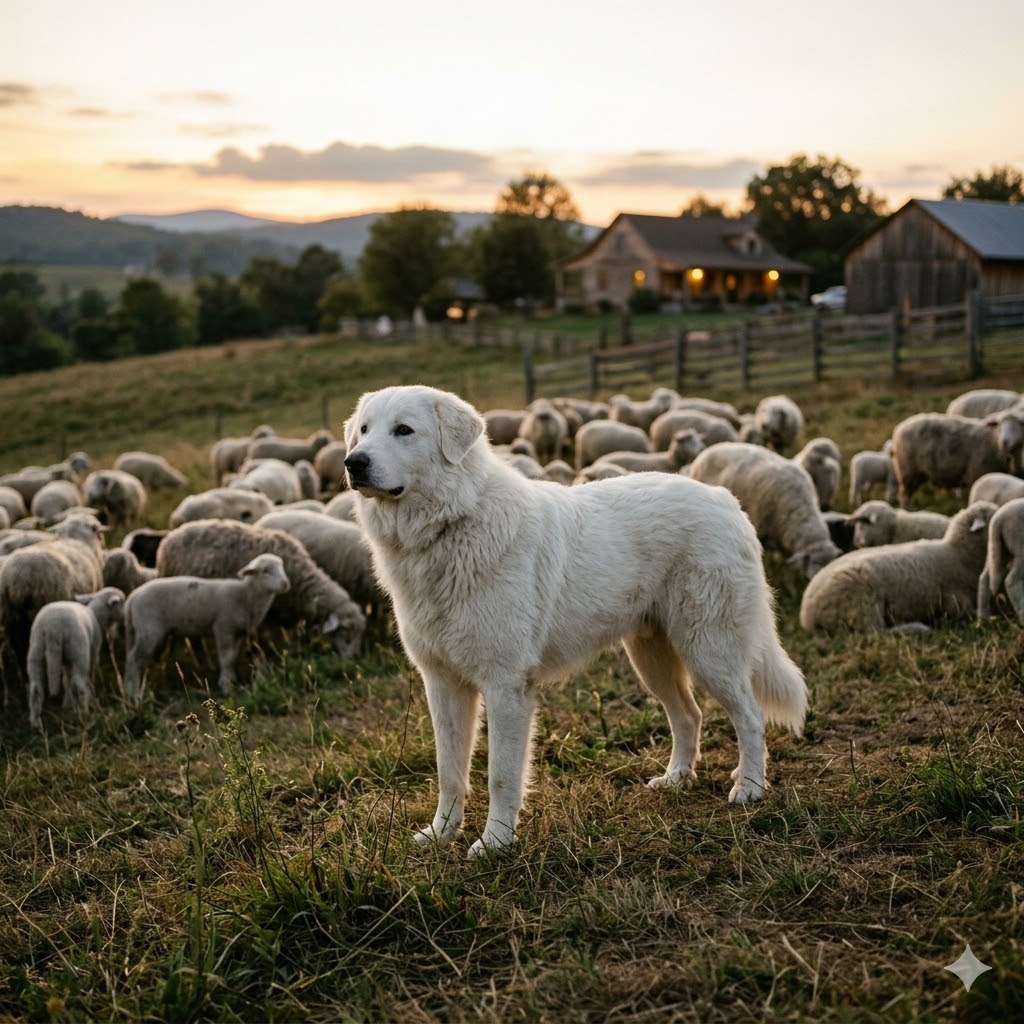
Losing an animal to predators is one of the most disheartening parts of keeping stock, and it almost always happens at the worst time - a lambing ewe, a young goat, the bird you were counting on. A guardian animal is the oldest answer to that problem: a dog, donkey or llama that lives full-time with your herd and treats your animals as its own. Done right, it is the difference between a flock that thrives and one you slowly bleed away.
Is it right for you?
A guardian animal earns its keep when you are losing stock, or know you will. If you run sheep, goats or poultry on open pasture in coyote, fox or loose-dog country, a guardian is often the single best investment you can make. It works around the clock, in weather that would keep you indoors, and it never forgets the job.
It is not free of trouble, though. A guardian is a living animal with needs, opinions and costs of its own. Livestock guardian dogs in particular bark - a lot, often all night - and that is a genuine problem if you have close neighbors. Donkeys and llamas are quieter but have their own quirks. You need decent fencing, a vet you can call, and the patience to raise a guardian properly over its first year or two. If you have only a couple of animals in a tight, secure pen close to the house, you may be better served by good fencing and locking birds up at night. This guide is rated Intermediate because the animal is easy to keep but easy to get wrong.
Your choices: dogs, donkeys and llamas
There is no single best guardian. The right one depends on your predators, your land, your neighbors and your budget. Here is an honest look at the three.
Livestock guardian dogs (LGDs) - Great Pyrenees, Anatolian Shepherd, Maremma and similar breeds - give the most complete protection by a wide margin. They handle multiple predators and large ones, patrol big areas, and work well in pairs so one can rest while the other watches. If you face packs of coyotes, loose dogs, or a mix of threats, dogs are usually the answer.
The trade-offs are real. They bark heavily, especially at night, which can sour relations with neighbors faster than almost anything. They need secure perimeter fencing and will roam for miles if not contained, which puts them in danger and gets them in trouble. And they are slow to mature - expect roughly one to two years before a pup becomes a steady, trustworthy guardian. You are signing up for a project, not a finished tool.
Guard donkeys - a single gelding or a jenny (kept alone, not in a pair) - bond naturally to a flock and are instinctively aggressive toward canines, charging, biting and stomping at coyotes and dogs. They are low cost, eat largely what your stock eats, and live a long time. For a homestead with a single-coyote or stray-dog problem rather than packs, a good guard donkey is hard to beat for the money.
Their limits matter. A donkey is best against single or smaller threats and can be overwhelmed by a determined pack. They must be raised right and bonded to the stock, and a donkey that has lived only with other donkeys may ignore your sheep entirely. Be aware too that donkeys can be aggressive toward dogs in general - including your own farm dog or a herding dog you bring in to work the flock. Keep that interaction in mind before you commit.
Guard llamas - usually a single gelded male - often work very well guarding sheep and goats against coyotes and stray dogs. They are calm, quiet, low-maintenance, share the flock's forage, and integrate without much fuss. A good guard llama is an easy animal to live with.
The catch is temperament: only certain individuals have the guarding instinct, and a llama that does not have it simply won't protect anything. Like the donkey, a llama is best for smaller, single threats rather than packs or large predators. Buy from someone who breeds or sorts for proven guarding ability, and be ready to accept that the animal in front of you may or may not turn out to be a guardian.
A short rule of thumb: heavy or varied predator pressure points to dogs; a single-predator problem on a budget points to a donkey or llama.
Housing and integration with the herd
The core principle is simple and non-negotiable: the guardian lives with the animals it protects, not in a separate pen or by the house. It needs to see the flock as its family and its territory, and it can only do that by being among them day and night.
For dogs, this starts in puppyhood and is the single thing people get wrong most often - we'll come back to it in raising and training. For all three guardians, the practical setup is the same: they share the pasture, the shelter and the daily rhythm of the stock. Provide shade, a windbreak or simple shelter, and clean water that the guardian can reach.
Fencing is essential, and it does two jobs. It keeps predators out, and it keeps your guardian in. This matters most for dogs, which will roam over the horizon given the chance and end up lost, shot, or hit on a road. Good perimeter fencing - woven wire, or net fencing for smaller stock, sometimes with a hot wire - protects the animal as much as the flock. Donkeys and llamas are far less prone to wandering but still need a sound perimeter so they are not facing predators across a flimsy line. Never rely on the guardian instead of fencing; rely on the two together.
Feeding
Feeding is one area where the choices differ.
A livestock guardian dog eats a quality dog food, the same as any large working dog, with the amount adjusted for its size, age and how hard it is working in cold weather. Feed it in a way that keeps the flock's feed away from the dog and the dog's food away from the stock - a simple separate spot or feeder solves this. Always have clean water available.
Donkeys and llamas largely live on the same forage and hay as your stock, which is a big part of their appeal - they cost little extra to feed. Both do best on grass and good hay rather than rich feed; donkeys in particular gain weight easily and should not be overfed or given too much lush pasture. Provide the appropriate mineral supplement for the species and your region, and again, clean water at all times. When in doubt about rations or minerals, ask your vet what suits your area.
Raising and training
For livestock guardian dogs, this section is everything. The key principle: an LGD must be raised with the stock and bonded to it from a young pup. It should not be brought up as a house pet, fussed over, or over-socialized to people. A dog that bonds to humans instead of to the flock will want to be with you, not guarding the pasture - and it will fail at the job no matter how good its breeding.
That does not mean ignore the dog. You still need it to accept handling, leash, vet visits and basic manners, so it can be caught and cared for. The balance is calm, low-key human contact while the dog lives among the animals it will protect. Correct the normal puppy mistakes - chasing, rough play, pulling wool or feathers - firmly and consistently, because a young guardian must learn to be gentle with stock. Expect a long apprenticeship: pups go through clumsy and unreliable stages, and most are not fully trustworthy guardians until roughly one to two years old. Patience here pays off for a decade.
Donkeys and llamas need far less training but the same bonding logic applies: they should be raised or placed with the kind of stock they will guard so they identify with it. Handle them enough to manage routine care - haltering, hoof and foot work, loading - without turning them into pets. Buying an adult animal that is already proven with a flock takes much of the guesswork out of donkeys and llamas, and is often the safer route for a first-timer.
Common health issues
Whatever guardian you choose, line up a vet before you need one and keep up routine care - vaccinations, parasite control and an annual check.
Large-breed guardian dogs carry the usual big-dog concerns, including joint and hip problems and, with their deep chests, the risk of bloat; feeding sensibly and not working a pup too hard while it grows both help. Keep their coats and feet checked, especially the heavy-coated breeds in hot weather.
Donkeys and llamas need regular hoof or foot care and dental attention - this is the part owners most often neglect, and overgrown feet or bad teeth cause real suffering and lameness. Plan for routine trimming and a periodic dental check as a normal cost of keeping them. For any specific illness, injury or parasite problem in any of these animals, consult your vet rather than guessing; this guide deliberately names no medicines or doses, because the right treatment depends on the animal and your region.
What they protect against (and the limits)
A good guardian is excellent against the everyday predators that pick off homestead stock: coyotes, foxes, raccoons and stray or feral dogs. Dogs and donkeys will actively drive these off; a watchful llama will alarm and confront them. Their presence, scent and noise alone turn many predators away before anything happens. Guardians also help against birds of prey to a degree - their alarms and movement discourage hawks and the like, though no ground animal can fully stop an aerial hunter.
Be honest about the ceiling, though. No guardian stops everything. A determined pack can overwhelm a single donkey or llama, and a bear or a big cat is more than most guardians can handle and may even kill them. Guardians reduce losses dramatically; they do not make a flock bulletproof.
The working answer is layers. Pair your guardian with good fencing, secure night housing for poultry, and removal of attractants. When predator pressure stays high despite all that, you move to active predator control - and that is where the homestead meets the hunt. For the full defensive picture, see the site's predator-protection guide at /homestead/predator-protection/, and for taking the fight to persistent predators, the predator-hunting section at /game/predators/. A guardian buys you time and cuts your losses; sometimes the lasting fix is reducing the predators themselves.
Getting started
Start by naming your problem honestly: what is killing your stock, how often, and is it lone animals or packs? That answer points you to dog, donkey or llama more than any other factor.
Then find a good source. For dogs, seek a breeder whose pups are raised on stock from working parents, not show or pet lines. For donkeys and llamas, buy an animal already proven with a flock if you can - it removes most of the risk. Get your fencing and shelter sorted before the guardian arrives, not after. Introduce the animal to the stock carefully and supervise the early weeks. And check your local rules: some areas have dog ordinances, leash laws or noise regulations that bear directly on keeping a barking LGD, and it is far better to know before a neighbor complaint than after.
Rough costs
Treat these as ballpark figures; prices vary widely by region and bloodline.
A well-bred livestock guardian dog pup from working stock typically runs roughly a few hundred dollars, and many people keep two. Ongoing cost is mainly quality dog food and routine vet care, so budget for a large dog year after year. A guard donkey is often the cheapest entry - sometimes roughly a couple hundred dollars or less for a suitable gelding, and very little to feed since it shares the stock's forage. A trained guard llama tends to sit in the low to mid hundreds, again cheap to keep.
On top of the animal, budget for fencing, basic shelter and routine care - hoof and dental work for donkeys and llamas, food and vet visits for dogs. The honest math, though, is that a single saved lambing ewe or a season without losses usually pays for the guardian many times over. The biggest cost is rarely money; it is the year or two of patient raising a young guardian asks of you.