Raising Guinea Fowl: A Homestead Guide to Nature's Best Tick and Pest Patrol
How to raise hardy, self-sufficient guinea fowl for tick and pest control, alarm-bird duty, and near-zero feed costs once they free-range your acreage.
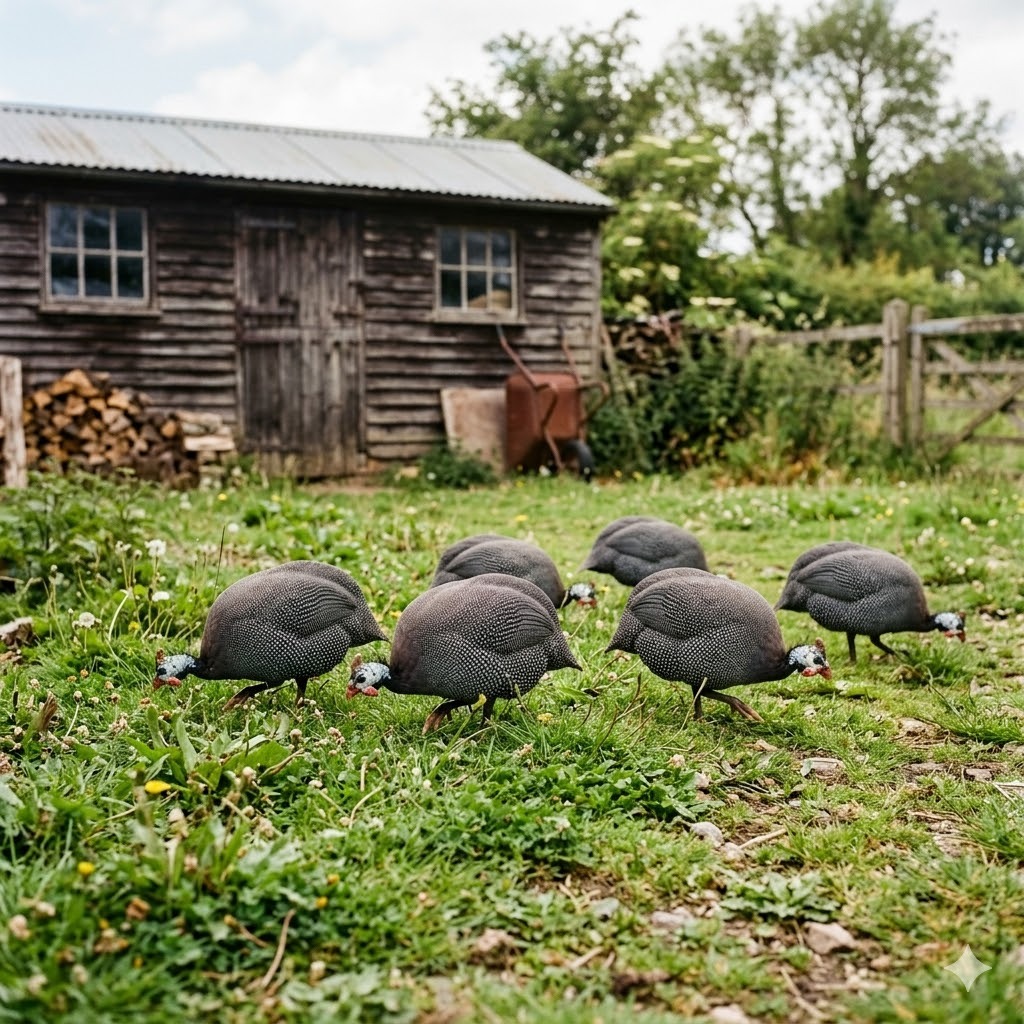
Guinea fowl are a living pest-control patrol. They hammer ticks and bugs all day, sound the alarm at every hawk and stranger, and need almost no input once they are grown. They suit anyone with real acreage who wants a hardy, hands-off bird that earns its keep working the land - and who can live with a lot of noise.
Is it right for you?
Be honest with yourself before you bring guineas home, because they are not a bird for everyone. The single biggest issue is noise. Guineas are loud - genuinely, persistently loud. They sound off at hawks, dogs, the mailman, a falling branch, a new bucket, and sometimes nothing you can identify. If you have close neighbors, this will cause problems. Guineas suit acreage and rural settings, not suburban lots.
They also roam. Guineas range far and wide, often a quarter mile or more from the coop, and they will wander off your property if something interesting is over the fence. They are independent, semi-wild birds at heart - you do not herd guineas so much as negotiate with them. They are poor mothers too: hens hide their nests in tall grass, abandon clutches, and march tiny keets through wet morning dew where many chill and die.
That said, if you have room and the right tolerance, the payoff is real. For tick control, alarm duty, and low-maintenance free-ranging, few birds beat them. Difficulty is genuinely intermediate - adults are bulletproof, but the babies will test your patience and break your heart if you are careless. Check your local laws and zoning before you start, especially any noise ordinances. Some areas restrict or ban guineas specifically because of the racket.
Best varieties
The good news here is that variety choice is almost entirely cosmetic. The common color varieties - Pearl Gray, Lavender, White, and Royal Purple - all behave the same, eat the same bugs, and make the same noise. Pearl Gray is the classic speckled "wild" look and the most widely available; Lavender and White are softer-colored and popular for looks; Royal Purple is darker and striking. Pick whatever you find locally and like the look of - performance does not depend on color.
Housing and space
Guineas free-range by day and need a secure coop at night, and the most important thing you can do is train them to that coop while they are young. This cannot be overstated. A guinea that is not coop-trained will roost in trees, and a guinea roosting in a tree is a meal waiting to happen - owls and other predators pick them off the branch in the dark. Train them to lock up at night from the start, and they will return to the coop on their own every evening for years.
The coop itself can be simple. Guineas are hardy and not fussy - a draft-free, predator-proof shelter with roosting bars is plenty. Allow roughly 3 to 4 square feet per bird inside, more if they will be confined for any length of time. They like to roost high, so give them bars near the top. The building does not need to be fancy or insulated; adult guineas handle cold well as long as they are dry and out of the wind.
Daytime is where they shine - they want to be out covering ground. You do not fence guineas in successfully; they fly well and will go over almost anything. Instead, accept that they will roam and focus on making the coop the place they want to come home to at night. For the nighttime threat, predators are your real enemy: foxes, owls, raccoons, hawks, and loose dogs all take guineas. A solid, locked coop after dark handles most of it. See the site's predator-protection guide for hardening the coop, runs, and roosts against the local lineup.
Feeding
This is one of the great advantages of guineas: once they are grown and free-ranging on real acreage, they feed themselves to a remarkable degree. Through the warm months, foraging birds eat ticks, beetles, grasshoppers, slugs, and weed seeds, and need very little supplemental feed. Many homesteaders just toss a little grain in the coop each evening - partly for nutrition, partly as a reliable lure that trains the birds to come in and lock up at night. That habit is worth keeping up even when they do not strictly need the food.
Keets and growing birds are a different story and need real nutrition. Start them on a high-protein game-bird or turkey starter, not a standard low-protein chick feed - guineas grow on more protein than chickens do, roughly in the high-20s to 30 percent range for starter. Keep that going for the first couple of months, then you can ease them toward a grower and eventually let foraging carry most of the load.
In winter, or any time forage is thin or snow-covered, increase the supplemental feed - a good poultry or game-bird ration plus some grain. Always provide clean water. For keets specifically, use a waterer with marbles or stones in the trough, or a very shallow design, because keets will drown in an ordinary open waterer with frightening ease. Offer grit if the birds do not have access to coarse soil and gravel.
Daily care and routine
The daily routine with grown guineas is about as light as poultry gets. In the morning, open the coop and let them pour out to work the land. Through the day they need essentially nothing from you - they are out doing their job. In the evening, around dusk, they will start drifting back toward the coop, especially if they have learned that a little grain shows up there. Toss the feed, do a head count, make sure they are all in, and lock the door against predators. That nightly lock-up is the most important habit in guinea keeping. Skip it and you will lose birds.
Refill water as needed and check that it is clean, particularly in heat and in freezing weather. Beyond that, keep an eye on the flock as a group: guineas stick together, and a bird that is off on its own, hunched, or missing is worth investigating. During spring and summer, watch for hens disappearing to sit on hidden nests in tall grass - if you want to manage hatching at all, you will need to find those nests, because the hens will not make it easy.
Common health issues
The headline on guinea health is simple: grown birds are extremely hardy, and the keets are extremely fragile. Adult guineas rarely get sick and shrug off cold, heat, and rough living that would trouble other poultry. Your real losses come in the first several weeks of life.
Keets die easily from chilling and damp - getting cold, getting wet, or being marched through dew-soaked grass by a careless hen will kill them fast. They also drown in waterers that are too deep, as noted above. Keep keets confined, warm, and dry until they are well feathered and sturdy. Beyond the keet stage, guineas can be affected by the usual poultry parasites - internal worms and external mites or lice - and by the standard run of poultry diseases, though they tend to be more resistant than chickens.
If a bird looks genuinely ill - lethargic, not eating, struggling to breathe, or with obvious parasites you cannot manage - consult a poultry or avian veterinarian for proper diagnosis and treatment. Do not guess at medications or doses; a vet will identify what is actually going on and prescribe what is appropriate for your birds and your area. Good husbandry - dry shelter, clean water, secure nights, and high-protein feed for the young - prevents the large majority of problems.
What you get
For the right homestead, guineas pay you back in ways that are hard to get from any other bird. The biggest return is pest and tick control. A working flock genuinely reduces ticks across a property, along with beetles, grasshoppers, and other pests, and they do it for free while you go about your day. If you live in tick country, that alone can justify keeping them.
Second is their alarm-bird role. That same loud voice that makes them hard on neighbors makes them excellent sentries. Guineas notice and announce hawks, foxes, strange dogs, and people on the property long before you would, and many keepers find their other poultry benefit from the early warning. Beyond that, you can eat the eggs (smaller and richer than hen eggs, laid mainly in the warm months) and the meat, which is lean and well regarded. But most people keep guineas for the bug patrol and the alarm system - the food is a bonus.
Getting started
The cleanest way to start is with day-old keets from a hatchery or local breeder, raised in a brooder. This is where success or failure is decided. Keep the keets confined, warm, and bone dry under a heat source for the first several weeks - resist the urge to put them outside early, because that is when the dew, chill, and damp kill them. Use a safe shallow waterer so none drown.
Just as important: brood and house them right where you want them to live, and keep them confined to that coop for several weeks before you ever let them out - this is the single most important tip in the whole guide. Guineas imprint on home. If you confine them to the coop until they treat it as home base, they will free-range by day and return to it at night for life. Let them out too soon and they will simply leave and never settle. When you do first release them, let out only a few at a time, or release them hungry near dusk so the lure of evening grain pulls them straight back in.
Start with a small group - guineas are flock birds and do poorly alone, so plan on at least a handful. Many keepers run a dozen or so. Keeping a mostly even mix or a few males is fine; they sort themselves out.
Rough costs
Costs are modest, and the running expense is genuinely low once the birds are grown. Expect roughly the following:
- Day-old keets: usually somewhere around a few dollars each, depending on variety and source, often cheaper in larger straight-run batches.
- Brooder setup: a heat lamp or brooder plate, a safe shallow waterer, and feeder - roughly a modest one-time outlay if you are starting from scratch, less if you already keep poultry.
- Coop and roosts: anywhere from near-free if you repurpose an existing shed to a few hundred for a purpose-built or kit coop. Guineas are not picky, so this is where you can save.
- Feed: the standout savings. High-protein starter for the keets is the main feed cost up front; once the birds free-range your acreage in the warm months, supplemental feed drops to very little - mostly a bit of grain each evening as a lure, with more needed in winter.
Add in clean water, grit, and the occasional parasite treatment, and that is about the whole budget. For a property with ticks and room to roam, a flock of guineas is one of the cheapest working animals you can keep - provided you can live with the noise and you get those fragile first weeks right.