Jacob Sheep: Horned Heritage Wool Breed
Jacob Sheep are a small, hardy heritage breed prized for their spotted black-and-white handspinning fleece and striking multiple horns. They suit fibre-focused homesteaders who want a low-input, easy-lambing flock.
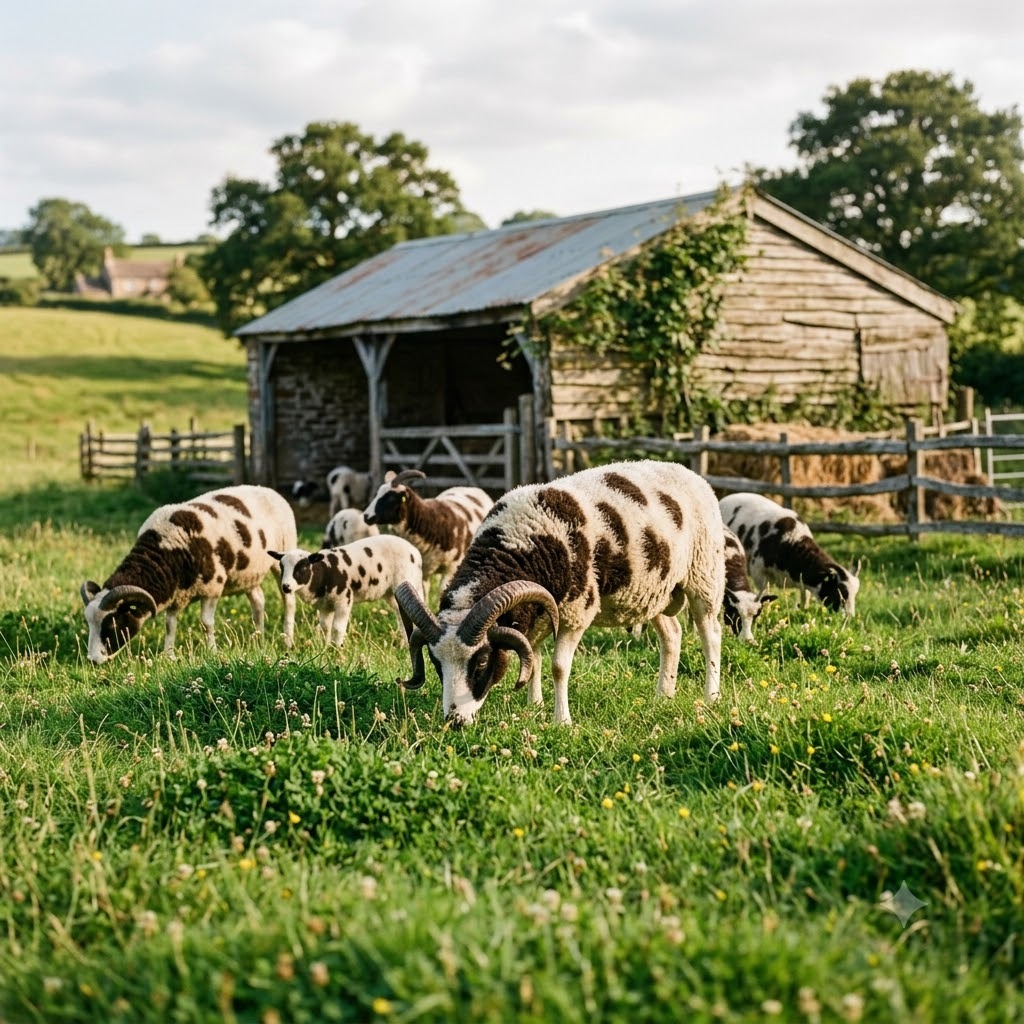
Jacob Sheep are an old, piebald British breed instantly recognizable by their black-and-white spotted fleece and their multiple horns - most carry two or four, and a few grow six. Homesteaders keep them mainly for handspinning wool, plus a small amount of lean meat, all from a hardy animal that mostly looks after itself.
Is it right for you?
Good for a fibre-minded homesteader with modest pasture who wants a low-input flock and does not need high meat or milk output. They handle cold and wet well. Beginners can manage them, but the horns and their alert nature reward a bit of stockmanship.
What you get
Fleece is the main product: roughly 3 to 6 lbs (1.4 to 2.7 kg) of medium wool per year, around 25 to 35 microns, in a distinctive two-tone that spinners love. Carcasses are small and the meat is lean and low-fat. They are not a dairy breed - milk is only enough for lambs.
Space & Housing
A simple three-sided shelter for wind and rain is enough. Give about a quarter to half an acre of decent pasture per two or three ewes, plus clean water. Fencing must be sound - horned, agile sheep test weak wire.
Feeding & Daily Care
Mostly grass and hay, with minerals and fresh water. They forage efficiently and stay in good condition on modest feed, so the bill is low outside winter hay and lambing. Daily care is a quick check plus seasonal shearing and hoof trimming.
Temperament & Handling
Alert, active, and a touch flighty compared with commercial breeds. They are intelligent and calm down with regular quiet handling, though rams' horns demand respect. Noise is moderate.
Health & Hardiness
Hardy, good foragers, and generally easy lambers with strong mothering. Watch that multiple horns grow clear of the face. For health questions, work with reputable breeders and a livestock veterinarian.
Getting Started
Start with three or four ewes from a known breeder. Ewes and rams are easy to tell apart by size and horn mass. Add one unrelated ram only if you plan to breed.
Common Mistakes
Under-building fencing; ignoring horn growth near the eyes; and expecting commercial meat or milk yields from a fibre breed.
FAQ
How many horns do Jacob Sheep have?
Usually two or four, occasionally six. Both ewes and rams are horned.
Are they good for beginners?
Yes, if you want fibre and low inputs. Their hardiness forgives a lot, but respect the horns.