Katahdin Sheep: Low-Fuss Hair Sheep for Meat
The Katahdin is an American hair sheep bred for meat that sheds its coat each spring, so there is no shearing. Hardy, docile, and grass-friendly, it is one of the easiest meat flocks for a homestead.
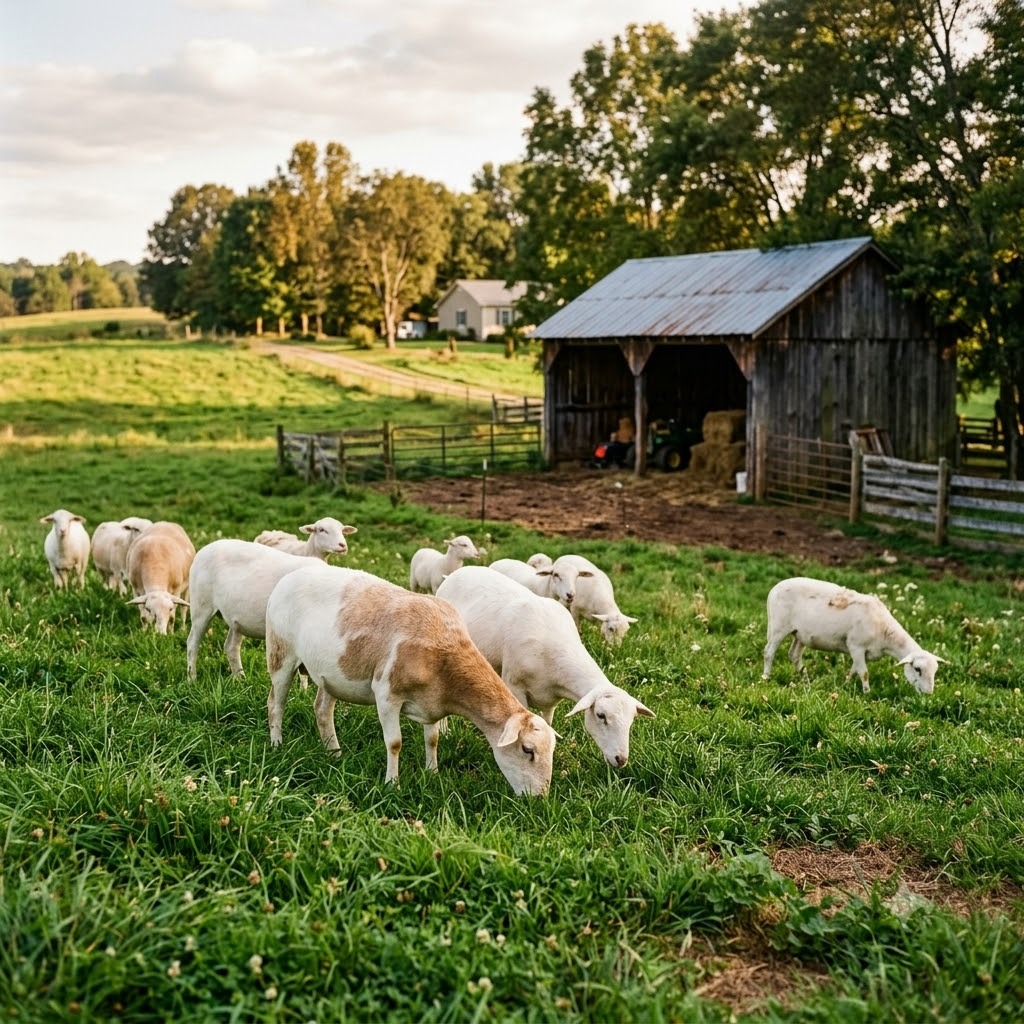
The Katahdin is an American hair sheep developed in Maine in the mid-20th century and named after the state's highest peak. Bred for meat, it sheds its coat each spring, so there is no shearing and no wool to handle. Homesteaders keep it as a low-fuss, grass-fed meat flock that mostly looks after itself.
Is it right for you?
A good fit if you want freezer lamb rather than fibre or milk, and would rather skip shearing and the gear it needs. It suits beginners, tolerates both heat and cold, and thrives on pasture across most regions. If you want wool or dairy, look elsewhere - this is a meat breed.
What you get
Meat, plainly. Ewes commonly raise twins and often breed out of season, so a small flock produces steadily. Lambs finish around 95 to 115 lb live weight at roughly 5 to 7 months, giving a mild, rarely gamey lamb. Mature ewes run about 125 to 185 lb, rams about 180 to 250 lb. No wool income.
Space & Housing
A simple three-sided shelter is plenty - they need wind and rain protection, not a heated barn. Budget a quarter to half an acre of pasture per ewe, more on poor ground. Fencing is the real expense: woven wire or several electric strands to keep sheep in and predators out.
Feeding & Daily Care
Grass and good hay are the base, plus fresh water and a sheep-appropriate mineral. Daily care is a quick check of health, water, and fence. Feed bills stay low in grazing season and rise mainly with winter hay.
Temperament & Handling
Calm, quiet, and docile. They flock well, and one person can move and handle them easily. Bottle-raised lambs turn friendly, though rams still deserve respect at breeding time.
Health & Hardiness
Hardy and adaptable, with a reputation for good tolerance of internal parasites - a real plus on wet pasture. They handle heat once shed out and cold once their winter coat grows in. Keep feet, body condition, and parasite load in view, and lean on reputable breeders and a livestock veterinarian for any health questions rather than guessing.
Getting Started
Start with three or four ewes plus a ram, or borrow a ram. Source from a reputable breeder with recorded, parasite-resistant stock. Ewes can breed in their first year, and a single ram covers a small flock. Ewe and ram lambs are easy to tell apart by hand.
Common Mistakes
Skimping on fences and losing lambs to predators or escapes. Overfeeding grain to sheep built for grass. Expecting wool income - this breed gives meat, not fibre.
FAQ
Do Katahdins need shearing?
No. They grow a thicker coat in winter and shed it naturally each spring, so there is no shearing, crutching, or wool handling.
How much land do I need?
Plan on roughly a quarter to half an acre of pasture per ewe on decent ground, plus secure fencing and a basic shelter.