Kiko Goat: Low-Input Meat Breed
A hardy, low-maintenance meat goat bred in New Zealand for fast growth and parasite resistance. A strong fit for homesteaders who want meat without constant hands-on care.
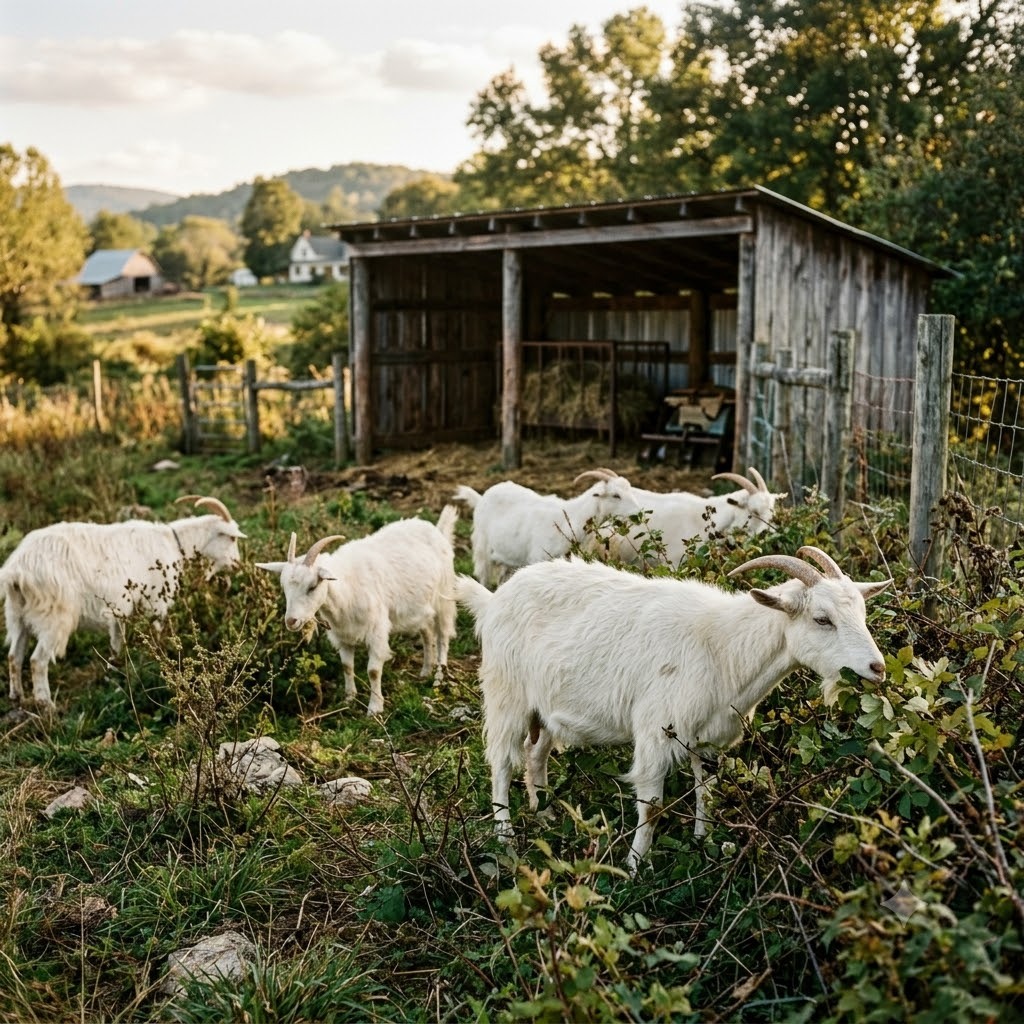
The Kiko is a meat goat developed in New Zealand in the 1980s by crossing hardy feral does with dairy bucks. The name comes from a Maori word for meat, and that is the whole point: fast-growing kids raised with minimal fuss. Homesteaders keep Kikos because they thrive on rough forage, resist worms better than most breeds, and rarely need hand-holding.
Is it right for you?
Good for anyone wanting meat from brushy or hilly land with low input. Suits beginners who can handle strong, independent animals, and rewards owners who prefer pasture over grain buckets. Not the pick if you want a cuddly pet or dairy.
What you get
Meat. Mature does run 100-150 lb, bucks 250-300 lb. Kids grow quickly and reach a market live weight around 50-70 lb by four to six months, dressing out to roughly half that in usable carcass.
Space & Housing
A simple three-sided shelter that stays dry is enough. Fencing matters most: use tight woven wire, since goats test everything. Allow browse or pasture; they clear brush happily and need room to roam.
Feeding & Daily Care
Mostly browse, pasture, and good hay, plus clean water and free-choice minerals. Kikos do well on modest feed, so the bill stays low. Daily care is a quick check for water, fencing, and health.
Temperament & Handling
Alert and independent, more self-reliant than flighty. Does are excellent, protective mothers. They are not overly tame, so calm, consistent handling and good facilities help.
Health & Hardiness
Bred in wet New Zealand hill country, Kikos tolerate cold, damp, and heat well and show strong hoof and parasite resistance. For any health questions, work with reputable breeders and a livestock veterinarian.
Getting Started
Start with two or three does and buy a proven buck separately, or borrow one. Choose registered or performance-tested stock from established breeders.
Common Mistakes
Underestimating fencing, over-graining animals built for forage, and buying weak stock that undercuts the breed's hardiness advantage.
FAQ
Are Kikos good for beginners?
Yes, thanks to low input and strong mothering, though their independence means solid fencing and calm handling are essential.
Can I milk a Kiko?
Not really. Does produce enough to raise kids well but are not a dairy breed.