Raising KuneKune Pigs: How to Fatten a Small, Docile Grazing Pig on Pasture
Keep a couple of gentle KuneKune pigs that fatten on grass rather than grain, stay small enough to handle, and turn your pasture into pork with about as little fuss as a pig can offer.
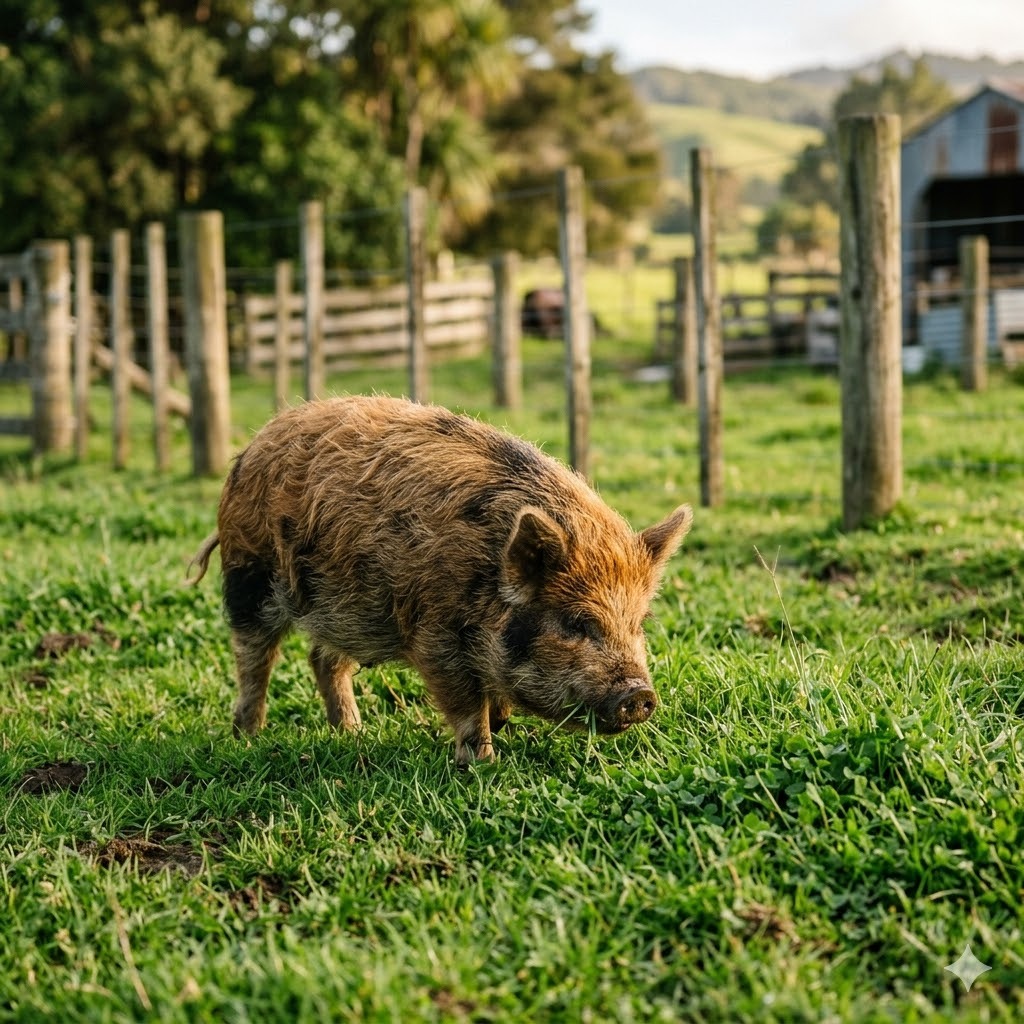
KuneKunes are the friendliest, most manageable pig a homestead can keep. They are a small heritage breed built to graze - they fatten on grass and pasture rather than sacks of grain, they stay a size you can actually handle, and they are famously docile, even affectionate. For a smallholder who wants to raise their own pork without the size, aggression, and destructive rooting of a commercial hog, the KuneKune is close to ideal. The trade-off is that they grow slowly and are easy to overfeed, so patience and a light hand on the grain are the whole game.
Is it right for you?
KuneKunes suit the homesteader who wants pork from a small, gentle, low-input animal and is not in a hurry. Where a commercial pig is big, pushy, and a determined earth-mover, a KuneKune is small, calm, and content to graze - it does far less damage to pasture and is far easier and safer to be around, which makes it a genuinely good first pig. Families with children often keep them precisely because they are so even-tempered.
The catch is speed and thrift. KuneKunes grow slowly and reach a modest finished size, so you are raising pork over many months, not a quick summer. And because they are built to run on grass, they get fat fast on rich feed - overfeeding grain is the single most common mistake new KuneKune keepers make. If you want a big carcass in a hurry, this is not your pig. If you want an easy, pasture-based animal that turns your grass into good pork with minimal fuss, it fits beautifully.
Keep at least two. Pigs are social and a lone pig is bored and unhappy; a pair keeps each other company, and the second one fills a freezer for family or a neighbor to offset your costs. Before you commit, check local zoning and any rules on keeping pigs, since swine are regulated in many areas and there can be restrictions on feeding certain scraps.
Best breeds
KuneKune is itself the breed - a heritage pig from New Zealand - and rather than choosing among pig breeds, your choices are about the individual animal and its purpose.
- Purebred KuneKune - the genuine article: small, round, grazing pigs that finish on pasture. Buy from a breeder who can show you the parents and, ideally, registration, so you know you are getting the true small, docile, grass-fattening animal and not a large crossbred sold under the name.
- Barrows and gilts for meat - not breeds but the practical choice for raising pork: a barrow (castrated male) or a gilt (young female) raised to finish. Castrating males avoids boar taint in the meat and keeps temperaments easy.
- Breeding stock - if you want to raise your own piglets, you choose a good boar and sound sows, but for most homesteaders starting out, buying weaned piglets to finish each year is simpler than keeping breeders.
Whatever you buy, choose for the classic KuneKune traits - short legs, round body, calm nature - and for health and good temperament. A friendly, well-grown piglet from a reputable breeder is worth far more than a cheap one of uncertain parentage.
Land, fencing and shelter
KuneKunes are the rare pig you can keep on grass, and that shapes everything. They are grazers first and root far less than ordinary pigs - though they will still turn over ground if the pasture is poor or they are hungry, so good grass keeps the rooting down. A modest paddock of decent pasture will support a couple of pigs, and rotating them between paddocks keeps the grass healthy and the ground from getting torn or muddy. Ask a local keeper what your ground will carry.
Fencing does not need to be as heavy as for a big commercial hog, but it must be sound. A well-installed low electric wire or two is very effective, since pigs learn quickly to respect a hot wire, backed by a decent perimeter fence. Because KuneKunes are calmer and less destructive than standard pigs, fencing them is genuinely easier - but a pig that gets out and into a garden is still a problem, so do it properly. Make sure the electric line is set low, at pig height, and kept working.
Shelter is simple. Pigs need shade and a way to cool off in heat, because they cannot sweat and can suffer badly in hot weather - a shaded shelter and access to a wallow or a place to get wet and muddy is a real welfare need, not a nicety, and a wallowing pig is a happy, cool pig. For cold and wet, a dry, draft-free hut or shed deep with straw keeps them warm; they burrow into bedding and do well in cold if they are dry. Clean water always available, both to drink and to help them stay cool, completes it.
Feeding
This is where KuneKune keeping is won or lost. They are designed to fatten on grass, and good pasture should be the base of the diet through the growing season - much of the appeal is that they turn grass you already have into pork with little bought feed. Keep the pasture good and they will do a lot of their growing on it.
Go light on grain. Because they are such efficient grazers, KuneKunes get fat quickly on concentrated feed, and an overfed KuneKune becomes an unhealthy, over-fat pig. Most keepers feed only a modest supplement of pig feed to balance the grass and provide nutrients pasture lacks, adjusting to the pig's condition rather than filling a trough. When grass is short in winter, you lean more on hay, forage, garden surplus, and a measured ration of feed, but still with restraint. Learn to read body condition and feed to keep the pig well-covered but not blocky with fat.
Pigs enjoy and benefit from suitable garden and kitchen surplus - vegetables, windfalls, and the like - but check your local rules first, because feeding certain food scraps, particularly meat or catering waste, is restricted or illegal in many places for disease reasons. Provide the right minerals through a proper pig feed, and keep clean water always in front of them.
Daily care and routine
KuneKunes are low-labor and, frankly, a pleasure to look after. The daily job is a check and a feed: are both pigs bright and content, grazing and moving well, is anyone limping, off feed, or breathing hard in heat, is the water clean and full, is the wallow or shade sound in summer and the bedding dry in winter. A measured supplement of feed given once or twice a day, plus a look, is the core of it. Their calm, friendly nature makes them easy and safe to handle compared with any other pig.
Because they are so tame, they are easy to check over closely - you can scratch a KuneKune's belly and it will flop over happily, which makes spotting a limp, a sore, or lost condition simple. Keep an eye on hooves, which can overgrow and occasionally need trimming, and watch weight closely, since the health risk with this breed leans toward too fat rather than too thin. In hot weather, checking that they can cool off is the priority; in cold, that they are dry and bedded.
A practical note: their tameness means they follow feed and people readily, which makes moving them between paddocks and, eventually, loading them straightforward and low-stress - a real advantage when the time comes.
Common health issues
KuneKunes are hardy and generally healthy, but a few things come up: obesity and its knock-on problems (by far the most common issue, from overfeeding a pig built for grass), internal and external parasites (worms, lice, and mange, managed on a vet-guided plan), sunburn and heat stress (light-skinned pigs burn and cannot cool themselves easily, so shade and wallows matter), and overgrown hooves (occasional trimming needed). Because they are a small gene pool heritage breed, buying from a careful breeder helps avoid inherited troubles.
The single most useful health habit is honest body-condition management - resist the urge to overfeed a pig that acts hungry, because a fit KuneKune is a healthy one and a fat one is heading for trouble. Beyond that, keep a simple vet-guided worming and parasite routine, provide shade and cooling in summer, and find a vet who will see pigs before you need one, since not every practice does. Never guess at pig medicines or doses, and ask about withdrawal times for any treatment so nothing carries through to the meat.
What you get (and processing)
The payoff is pork, and KuneKune pork has a real reputation - well-marbled, richly flavored, and a favorite of chefs, partly because of the grass-based diet and the breed's tendency to lay down good fat. You will not get the huge carcass of a commercial hog; a finished KuneKune yields a modest but very good amount of pork - chops, roasts, belly, sausage, and, for many keepers, wonderful lard for cooking. Even the smaller carcass fills a good part of a family's freezer, which is another reason to raise two and split one.
You will use a licensed processor for the harvest and butchering rather than doing it in the yard, both because it is a skilled job and because in most places selling or even sharing pork brings rules about proper processing and inspection. As with any meat animal, book the processor's appointment well in advance, since good ones fill up, and tell them how you want the pork cut, cured, or made into sausage. Their calm nature makes the loading and the day itself far less stressful than with a large, panicky pig, which is better for the animal and for the meat.
Check your local rules on whether the pork is for your own use only or can be sold or shared, since that shapes what processor and inspection you need. Treat the day with respect - it is the honest end of raising your own food, and a calm animal and a good processor make it as it should be.
Getting started
Start with two weaned piglets in spring from a reputable KuneKune breeder - ideally one who can show you the parents, so you know you are getting the genuinely small, grass-fattening, docile animal. Look for a bright, active, well-grown piglet with a good coat and no coughing or scouring, and ask what it has had for worming and whether the males are castrated. Buying local also means the pigs suit your climate and you have someone to ask.
Before they arrive, have the setup ready: sound low electric and perimeter fencing, a dry bedded shelter, shade and a wallow spot for summer, clean water, and a plan for feed and pasture. Line up a pig-friendly vet and, well ahead, book a processor for finishing time so you are raising the pigs to meet a date. Then graze them, feed them lightly, keep them cool in summer and dry in winter, and enjoy them - few meat animals are as easy or as pleasant to raise, and fewer still turn your own grass into pork this good.
Rough costs
KuneKune costs are among the most modest of any meat animal, since grass does much of the feeding.
- The piglets - weaned KuneKune piglets typically run from a modest sum to a few hundred dollars each depending on quality and whether they are registered, with breeding stock costing more.
- Fencing and shelter (upfront) - a low electric fence, a perimeter, and a simple bedded hut are the main setup costs, generally modest since KuneKunes need less heavy infrastructure than a commercial hog.
- Feed - low compared with ordinary pigs: mostly pasture plus a measured supplement of pig feed and some winter forage, which is much of the breed's appeal.
- Vet, worming, and incidentals - routine parasite control, occasional hoof trimming, and the odd vet visit, ongoing but modest.
- Processing - paid at the end, generally a few hundred dollars for kill, cut, and wrap, depending on the carcass and any curing or sausage-making.
Penciled out, a couple of KuneKunes are one of the cheapest and easiest ways to put homegrown pork in the freezer. They ask for patience rather than money - a slow grow-out and a disciplined hand on the grain - and in return they hand you excellent pork from your own pasture, from an animal that is genuinely a pleasure to keep.